Workflow
关税战
icon
Search documents
特朗普对俄最后通牒,威胁加码制裁,美媒:对美国自己都极其危险
Sou Hu Cai Jing· 2025-07-17 08:36
美国总统最近公开威胁俄罗斯,宣称如果俄罗斯在50天内不停火,美国将会加码制裁俄罗斯,并且是通过关税的方式。特朗普给出了最后通牒,已经让美国 国内也感到了担忧,美国媒体直接用"对美国自己都极其危险"来形容美国总统特朗普的最后通牒。特朗普提出所谓50天内要俄罗斯停火,已经暴露了如今特 朗普对于没有兑现承诺的愤怒,特朗普之前多次公开炫耀,宣称很快就会实现俄乌冲突的停火,然而经过了无数个"24小时",俄乌冲突还在继续,为此就有 了最近的恼羞成怒,不仅仅公开抨击俄罗斯总统普京,而且还宣布恢复对于乌克兰的军事援助。 美国媒体认为特朗普的决定会伤害美国,不仅仅是因为美国要对俄罗斯加征100%的关税,而是因为美国要对和俄罗斯有贸易往来的国家加征100%的关税。 美国在发动关税战的时候,已经是碰的鼻青脸肿,如今美国要对贸易伙伴加征比关税战更为严苛的关税,显然会让美国更为受伤。特朗普的表态,是在美国 国会推动所谓的二级制裁法案的时候的动作,所谓的二级制裁是指美国要对和俄罗斯维持贸易的国家加征关税,从特朗普的回应来看,美国至少是要给予 100%的关税。 实际上目前西方国家也维持了和俄罗斯的贸易往来,因为西方国家要从俄罗斯进口必要的 ...
宏观研究:关税战后的全球新秩序
Minmetals Securities· 2025-07-17 01:45
Group 1: Tariff War Objectives - The primary goals of the tariff war initiated by President Trump include reducing the U.S. trade deficit, promoting the return of American manufacturing, and ensuring national security by curbing China's development[2] - The U.S. trade deficit with China was approximately $500 billion annually, which Trump viewed as a significant economic issue[22] - The tariff strategy is expected to result in a final average tariff rate slightly above 10%, which is considered acceptable by the market[35] Group 2: Economic Impact - The World Bank revised its global economic growth forecast for 2025 down from 2.7% to 2.3% due to the impact of U.S. tariffs[38] - The cumulative impact of the tariff war on the U.S. economy is estimated to be between 0.3% and 2.1% by 2026, depending on various scenarios[39] - China's economy is projected to face a short-term impact of less than 0.5 percentage points due to the tariff war, with a long-term effect expected to be limited[42] Group 3: Global Trade Dynamics - The tariff war has led to a significant decline in China's exports to the U.S., with a year-on-year drop of 21% in April and 35% in May[43] - The global supply chain is undergoing restructuring, which is expected to exacerbate supply-demand imbalances and increase investment demand[5] - The trend of de-globalization is becoming more pronounced, with tariffs creating lasting fractures in global trade relationships[19] Group 4: Currency and Commodity Outlook - The U.S. dollar is anticipated to enter a long-term downtrend, influenced by factors such as trade deficit reduction and rising government debt concerns[4] - Commodity prices are expected to rise in the long term due to the inverse relationship with the dollar cycle and increased demand from major economies shifting towards high-tech manufacturing[5]
铜冠金源期货商品日报-20250717
Group 1: Report Industry Investment Rating - No relevant content provided Group 2: Core Views of the Report - Overseas, rumors of Trump dismissing Powell led to a "triple kill" in the US stock, bond, and foreign exchange markets, followed by a resurgence of the TACO trade. The US June PPI同比 dropped to 2.3%, hitting a nearly one - year low. Trump insists on a 25% tariff on Japan and is promoting an agreement with India, while the EU is preparing a 72 - billion - euro retaliatory list [2]. - Domestically, Li Qiang chaired the State Council Executive Meeting to study key policy measures for strengthening the domestic cycle, promote consumption, and standardize the new energy vehicle industry. A - shares are in a shrinking adjustment, and the bond market is under pressure. The short - term is expected to continue to fluctuate and adjust [3]. - Due to the intensifying rumors of a change in the Fed's leadership and geopolitical tensions, precious metals are expected to show a volatile and upward - biased pattern, and silver prices are expected to perform well in the future [4][5]. - For copper, overseas spot tightness has eased. With factors such as price increases and cost pressures from tariffs, and some mine production increases, both Lun copper and Shanghai copper are expected to fluctuate in the short term [6][7]. - Aluminum prices are in a volatile adjustment. With the increase in ingot production and the arrival of the consumption off - season, the short - term is expected to remain weak [8][9]. - Alumina is expected to fluctuate in the short term, and there is still significant medium - to - long - term supply pressure [10]. - Zinc prices are in a narrow - range fluctuation. With weak fundamentals and limited short - selling power from funds, they are expected to run weakly in the short term [11]. - Lead prices are affected by the tariff on exported batteries and are in a weak state. Although supply tightening may provide some support, they are expected to fluctuate weakly in the short term [12][13]. - Tin prices are affected by macro factors and have large intraday fluctuations. With limited fundamental changes, they are expected to maintain a wide - range fluctuation in the short term [14]. - Industrial silicon is expected to run strongly and fluctuate in the short term under the impetus of new policies, despite weak demand in some downstream industries [15][16]. - Lithium carbonate prices are fluctuating. Affected by mine - end disturbances, they are in a strong state in the short term, but may return to fundamentals in the future [17][18]. - Nickel prices are fluctuating. With the easing of the shortage of nickel ore in Indonesia and the weakening of cost pressure, they are expected to be affected by tariff disturbances in the short term [19]. - Crude oil prices are fluctuating. The uncertainty of the Israel - Iran conflict makes it advisable to wait and see [20]. - Steel futures are in a high - level volatile state. Policy expectations boost the market, but fundamentals are weak, and demand is expected to remain weak [21][22]. - Iron ore futures are expected to fluctuate strongly in the short term. Macro sentiment is positive, but iron water production is expected to remain weak [23]. - Bean and rapeseed meal are expected to fluctuate strongly in the short term. The US - Indonesia agreement improves export expectations, but bean meal inventory is increasing [24]. - Palm oil is expected to fluctuate and adjust. Malaysian palm oil production increased in the first half of July, while demand decreased [25][26]. Group 3: Summaries According to Relevant Catalogs 1. Metal Main Varieties Yesterday's Trading Data - The table shows the closing data of major metal futures contracts, including copper, aluminum, zinc, lead, nickel, tin, gold, silver, etc., including closing prices, price changes, price change percentages, trading volumes, and open interest [27]. 2. Industrial Data Perspective - For copper, data such as SHFE and LME copper prices, inventory, spot quotes, and spreads are presented, showing changes from July 11th to July 14th [28]. - For nickel, similar data including SHFE and LME nickel prices, inventory, and spreads are provided, indicating changes during the same period [28]. - Similar data for zinc, lead, aluminum, alumina, tin, precious metals, steel, iron ore, coke, coking coal, lithium carbonate, industrial silicon, and bean and rapeseed meal are also presented, reflecting their price and inventory changes [28][30][31][32][33][34][35].
芯片断供,机器人要凉?王兴兴冷笑:没全球合作,谁也别想赢!
Xin Lang Cai Jing· 2025-07-16 15:26
Group 1 - The core viewpoint emphasizes the need for global collaboration in the humanoid robotics industry, as isolationist policies like tariffs can hinder technological progress and increase costs for everyone involved [1][5][10] - The humanoid robotics sector is still in its early stages, with significant technical challenges remaining before robots can perform tasks autonomously and reliably [3][4][10] - Current humanoid robots are often overhyped, with many companies focusing on fundraising rather than delivering functional products, leading to a situation where most are merely "PPT robots" [4][5][10] Group 2 - The complexity of humanoid robots requires a diverse supply chain, with components sourced globally, making it impractical to rely solely on domestic production [5][6][9] - The industry is characterized by a few key players globally, and collaboration among these companies is essential for sharing knowledge and advancing technology [6][9][10] - The ultimate goal of humanoid robots is to enhance human life by taking over mundane tasks, which is a universal need that transcends national boundaries [9][10] Group 3 - The article argues that the current tariff wars may backfire, ultimately harming the very industries they aim to protect by stifling innovation and increasing costs [6][10][11] - A long-term perspective is necessary for the development of the robotics industry, as immediate reactions to geopolitical tensions can obscure the path to progress [10][11] - The future of robotics is seen as a necessity for everyday life, similar to smartphones today, and global cooperation is crucial to make this a reality [11]
特朗普动了什么手脚?美国竟然实现盈余
Sou Hu Cai Jing· 2025-07-16 14:39
Group 1 - The U.S. government achieved a budget surplus of $27 billion in June, with total revenue of approximately $526 billion and total expenditure of about $499 billion [2][3]. - A significant portion of the surplus came from tariffs, with June's tariff revenue reaching $26.6 billion, a substantial increase from $6.7 billion in June of the previous year [5][6]. - The increase in tariff revenue is attributed to the implementation of a 10% baseline tariff and additional tariffs on steel and aluminum, which were raised to 50% starting June 4 [7][8]. Group 2 - The budget surplus in June is viewed as a temporary achievement, as it does not reflect the overall fiscal health of the U.S. government, which has a significant deficit [24][25]. - The U.S. federal debt has reached $37.1 trillion, indicating a dire financial situation for the government [12]. - The reliance on tariffs to generate revenue highlights the challenges in increasing government income through traditional means, as previous administrations have done [13][14]. Group 3 - Trump's administration is focused on using tariffs as a primary means to address the fiscal deficit, with the expectation of generating over $200 billion from the 10% baseline tariff on imports [9][18]. - The administration's approach to tariffs is characterized by unpredictability, as Trump has shown a willingness to adjust rates at any time based on perceived needs for revenue [19][37]. - The potential for increased tariffs, including a proposed 500% tariff on countries purchasing Russian oil, illustrates the aggressive stance of the administration in seeking revenue [39][40]. Group 4 - The current fiscal strategy is reminiscent of historical precedents where high tariffs led to economic downturns, raising concerns about the long-term implications of such policies [45]. - The ongoing trade tensions and tariff adjustments may hinder international trade agreements, as other countries pursue their own trade partnerships [44]. - The situation reflects a broader trend of economic nationalism, with the U.S. government increasingly relying on tariffs as a tool for fiscal management [43].
为特朗普“爸爸”帮腔,北约秘书长威胁制裁巴西中国印度
Huan Qiu Shi Bao· 2025-07-16 11:01
Group 1 - NATO Secretary General Mark Rutte warned that Brazil, China, and India could face severe "secondary sanctions" if they continue trading with Russia, urging these countries to reassess their cooperation with Russia [1][3] - Rutte emphasized the potential serious consequences for Brazil, India, and China, suggesting they should communicate with Putin regarding the importance of peace negotiations [3] - The context of Rutte's comments includes a recent announcement by U.S. President Trump about new sanctions against Russia, which could impose a 100% secondary tariff on countries purchasing Russian exports if a peace agreement is not reached within 50 days [3] Group 2 - India has significantly increased its purchase of Russian oil, which now constitutes one-third of its total imports, potentially facing challenges if new Western sanctions are implemented [3] - The Indian government is exploring alternative supply channels in the Middle East to mitigate the impact of potential sanctions, despite these options being more expensive [3] - China's Foreign Ministry reiterated its stance that dialogue and negotiation are the only viable solutions to the Ukraine crisis, opposing unilateral sanctions and coercive measures [4]
外交部:关税战没有赢家 胁迫施压解决不了问题
news flash· 2025-07-16 07:30
Core Viewpoint - The Chinese government emphasizes that there are no winners in a trade war and that coercion and pressure cannot resolve issues, advocating for dialogue and negotiation as the only viable solution to crises [1] Group 1 - The Chinese stance is that dialogue and negotiation are essential for resolving crises, particularly in the context of the Ukraine situation [1] - The Chinese government firmly opposes any illegal unilateral sanctions and extraterritorial jurisdiction [1] - The call is made for all parties to create a conducive atmosphere for political resolution of the Ukraine crisis and to engage in actions that promote peace talks [1]
杨德龙-关税战下的资产走向
2025-07-16 06:13
Summary of Conference Call Records Industry or Company Involved - The discussion primarily revolves around the impact of U.S. tariff policies initiated by former President Trump on the global capital markets, particularly focusing on the U.S. economy and stock market dynamics. Core Points and Arguments 1. **Tariff Policy Impact**: Trump's tariff strategy is viewed as a significant risk, described as both a "gray rhino" and a "black swan," aimed at reducing the U.S. trade deficit and bringing manufacturing jobs back to the U.S. However, the logic behind this strategy is deemed flawed as it contradicts the established global monetary trade system post-World War II [1] 2. **U.S. Economic Outlook**: The U.S. economy is potentially heading towards recession, with soaring prices and a significant drop in the stock market. As of April 7, the stock market had seen a decline of over 10%, which is alarming given that over 50% of American household assets are invested in the stock market [2] 3. **Market Volatility**: The stock market has experienced a substantial decline over the past six months, and caution is advised before making investment moves. The potential for further declines exists, and investors are encouraged to wait for clearer signals before attempting to "buy the dip" [3] 4. **Investment Trends**: In the past five years, there has been an increase of 60 trillion in capital waiting for investment opportunities. The focus of state-backed investments has been primarily on large-cap ETFs, while retail investors are leaning towards small-cap stocks [4] 5. **Monetary Policy Adjustments**: The PPI target of 2% necessitates increased policy measures, such as potential rate cuts. The central bank's role includes stabilizing the economy and the currency, with recent agreements to use the RMB for trade with ASEAN countries, reducing reliance on the U.S. dollar [5] 6. **Currency Stability**: There is a consensus that devaluing the currency to stimulate exports is unnecessary, and maintaining currency stability is crucial. Gold is highlighted as a rising asset, with predictions of it reaching $3,000 per ounce, and recent prices have already approached $3,500 [6] 7. **Investment Strategies**: Investors are advised to consider dollar-cost averaging in their asset purchases to mitigate risks associated with market volatility. Key sectors for investment include home appliances, smartphones, and automotive materials, with a strong emphasis on manufacturing advantages [7] 8. **Technological Development**: The discussion touches on the relationship between smart vehicles and robotics, indicating that companies producing automotive components are likely to see stable growth due to the increasing demand for sensors and operating systems, which are essential for both industries [8] Other Important but Possibly Overlooked Content - The potential for a significant shift in trade practices towards using the RMB for international transactions is a noteworthy development that could alter the dynamics of global trade and investment strategies [5] - The emphasis on the importance of manufacturing capabilities in the U.S. and the potential for certain sectors to thrive despite broader economic challenges is a critical insight for investors looking for stability in uncertain times [7]
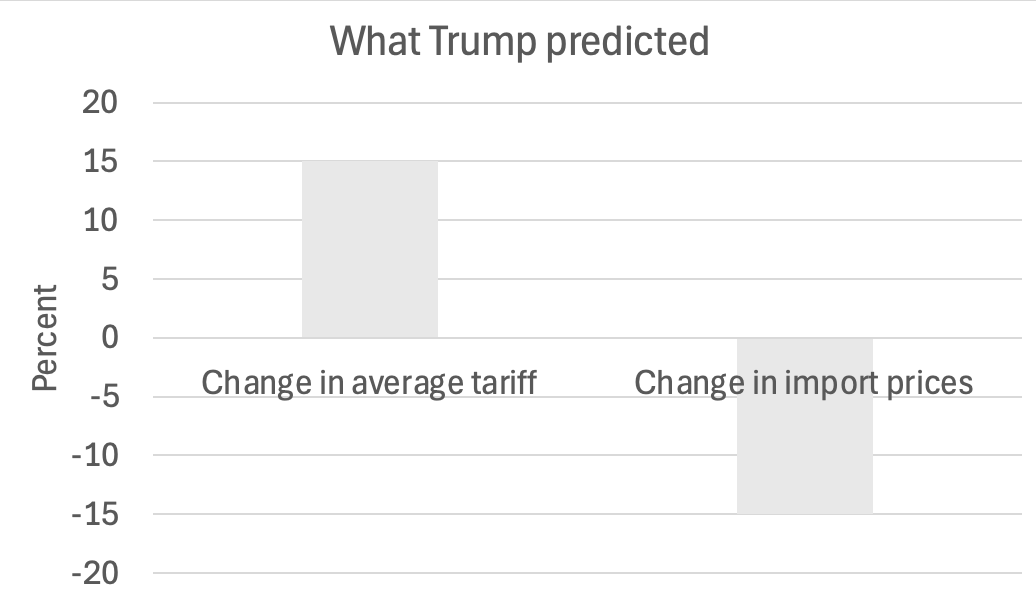
美国的贸易伙伴大多数未能对特朗的关税战进行报复,让这位被嘲笑为“总是临阵退缩”的美国总统以很少的成本增加了近500亿美元的额外关税收入。
news flash· 2025-07-16 04:30
Group 1 - The majority of America's trade partners have not retaliated against Trump's tariff war, allowing the U.S. president to increase additional tariff revenue by nearly $50 billion at minimal cost [1]
中国用一组数据告诉全球,中美关税战分出胜负,特朗普应感到庆幸
Sou Hu Cai Jing· 2025-07-16 03:57
Group 1: Trade Data and Trends - In the first half of 2025, China and the US experienced a significant decline in trade, with total import and export value at 2.08 trillion yuan, a year-on-year decrease of 9.3% [1] - Exports from China amounted to 1.55 trillion yuan, down 9.9%, while imports were 530.35 billion yuan, down 7.7% [1] - Despite the decline in US-China trade, China's overall foreign trade reached a historical high of 21.79 trillion yuan, growing by 2.9% year-on-year [1] Group 2: US Tariff Policies - The US has expanded its tariff measures globally, targeting not only China but also countries like Japan, South Korea, and Canada, aiming to reshape global trade rules [3] - The US has implemented policies to limit the use of Chinese materials in renewable energy projects and has canceled tax exemptions for packages under $800, impacting Chinese cross-border e-commerce [3][5] - Trump's approach is characterized as coercive, aiming to pressure allies into compliance, which disrupts global supply chains [3] Group 3: China's Response and Trade Strategy - China is pursuing a more open trade policy, offering zero-tariff treatment to all least developed countries and planning to extend this to 53 African nations [5] - China is actively enhancing trade cooperation with ASEAN, the EU, Central Asia, and Africa, demonstrating its commitment to open markets [5] - The Chinese government emphasizes dialogue and cooperation as the path forward, rejecting coercive tactics from the US [7][8] Group 4: Global Economic Implications - The ongoing trade tensions and tariff measures are seen as detrimental to global economic stability, with a stable trade environment being a common aspiration among nations [8] - The trajectory of US-China trade relations is critical not only for the two countries but also for the recovery and growth of the global economy [8]