
区块链

Search documents
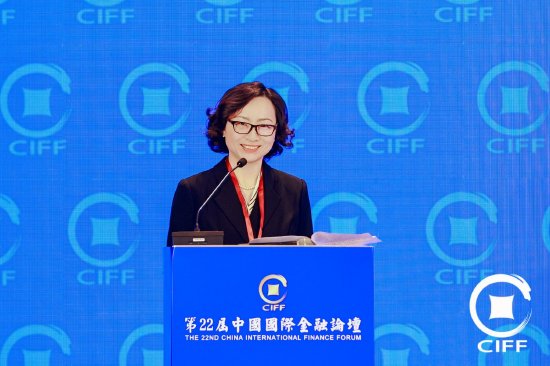
宦晓琴:“如何构筑稳健、开放、可持续智能金融生态”已成为推进金融强国建设的关键议题
Xin Lang Cai Jing· 2025-12-19 07:43
Core Viewpoint - The 22nd China International Financial Forum focuses on building an intelligent financial ecosystem in the digital economy era, highlighting the transformative impact of digital technologies on the global financial landscape [1][4]. Group 1: Digital Economy and Financial Transformation - The digital economy is reshaping the global financial landscape, with intelligent technology driving significant changes in the financial ecosystem [3][6]. - New technologies such as artificial intelligence, cloud computing, blockchain, and data elements are accelerating iterations and shifting financial services from a "product-oriented" approach to "scene integration" and from "institution-led" to "ecosystem collaboration" [3][6]. Group 2: Key Issues and Goals - Constructing a robust, open, and sustainable intelligent financial ecosystem is crucial for advancing the construction of a financial powerhouse and enhancing the capabilities of the Shanghai International Financial Center [3][6]. - The forum aims to gather wisdom and explore pathways to inject new momentum into the construction of the Shanghai International Financial Center [3][6].

数码视讯涨1.33%,成交额1.06亿元,后市是否有机会?
Xin Lang Cai Jing· 2025-12-19 07:33
来源:新浪证券-红岸工作室 (免责声明:分析内容来源于互联网,不构成投资建议,请投资者根据不同行情独立判断) 资金分析 12月19日,数码视讯涨1.33%,成交额1.06亿元,换手率1.56%,总市值75.86亿元。 异动分析 云计算+数据安全+区块链+网络安全+互联网金融 1、2023年2月2日互动易:公司拥有融合云视频平台方案,立足于视频云计算SaaS的综合服务,汇集深 度学习和大数据分析的AI技术,可满足会议媒体、监控媒体、办公媒体、业务媒体多应用场景的融合 业务,实现系统、设备、视频流全方位接入,所有资源统一接入、统一处理、统一调度、统一存储、统 一分发。 2、2022年5月18日公司互动回复:公司在数据安全领域拥有自主产权的底层数字安全架构技术服务能力 和信息化综合处理平台。公司的核心技术在于可信计算环境开发及国密算法能力。平台具有完全自主知 识产权的安全隔离与信息交换系统,可以实现向网络数字安全、政企的数据安全、物联网安全领域延 伸。公司可提供数字内容加密技术、数字内容水印技术及数字内容传输链路保护技术。同时,公司已实 现包括采集、核心传输交换、存储、编转码、安全、监测、终端等超高清视频全产业链布 ...

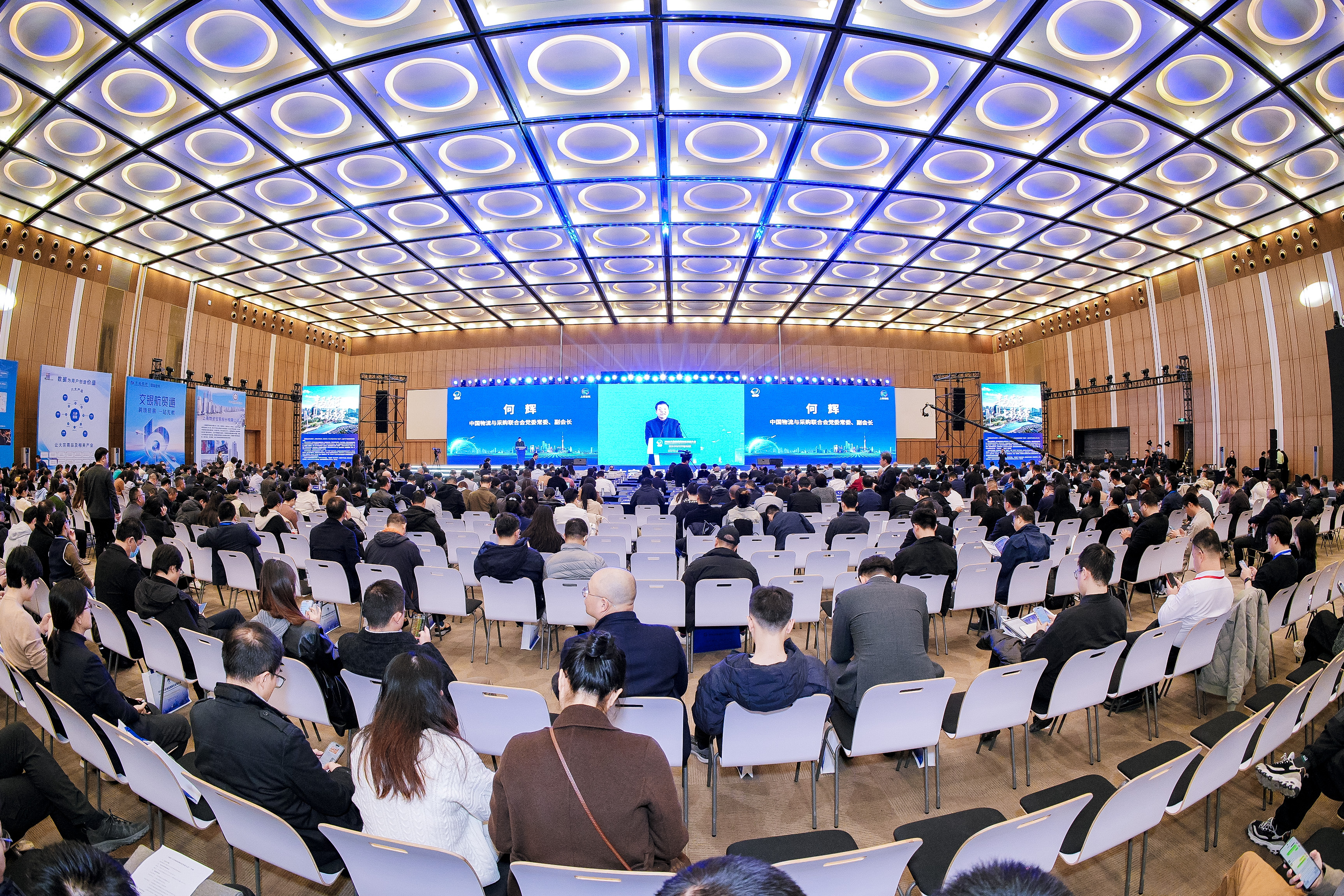
中物联何辉:2025年全社会物流总额预计达380万亿元
Xin Hua Cai Jing· 2025-12-19 06:15
Core Insights - The total logistics volume in China is expected to reach approximately 380 trillion yuan by 2025, with the sales of bulk commodity production materials projected to exceed 1 trillion yuan for the first time, highlighting the market's resilience against external risks and its role as a core engine for global bulk commodity trade growth [1][4]. Group 1: Current Logistics Performance - From January to October this year, China's total social logistics volume reached 293.7 trillion yuan, marking a year-on-year increase of 5.1%, indicating steady expansion in logistics demand and ongoing structural optimization [4]. - The total revenue of the logistics industry was 11.8 trillion yuan, reflecting a year-on-year growth of 4.5%, demonstrating steady improvement in the quality and efficiency of industry development [4]. - The China Bulk Commodity Price Index (CBPI) stood at 114.1 points in November 2025, with a month-on-month increase of 0.8% and a year-on-year increase of 1.6%, indicating a recovery in supply-demand relationships and enhanced business confidence [4]. Group 2: Challenges and Opportunities - The global bulk commodity supply chain has developed an interdependent structure, but challenges from global economic uncertainties, geopolitical tensions, and financial market fluctuations remain significant [4]. - Trust deficits in trade are increasingly seen as a major constraint on global economic growth, necessitating a restructured international trade rule system centered on trust to promote sustainable global economic development [4][5]. Group 3: Future Development Strategies - To enhance the global bulk commodity supply chain, three key strategies are proposed: 1. Accelerate the development of new productive forces in bulk commodities, integrating modern supply chains and digital economies while fostering high-quality talent skilled in AI, big data, and blockchain [5][6]. 2. Improve global resource allocation capabilities by leveraging China's vast market advantages and enhancing the competitiveness of bulk commodity circulation enterprises through various financial strategies [6]. 3. Establish a fair, stable, and sustainable global supply chain by utilizing digital technologies to create new mechanisms for shared interests and risk-sharing, while promoting green and low-carbon development [6].
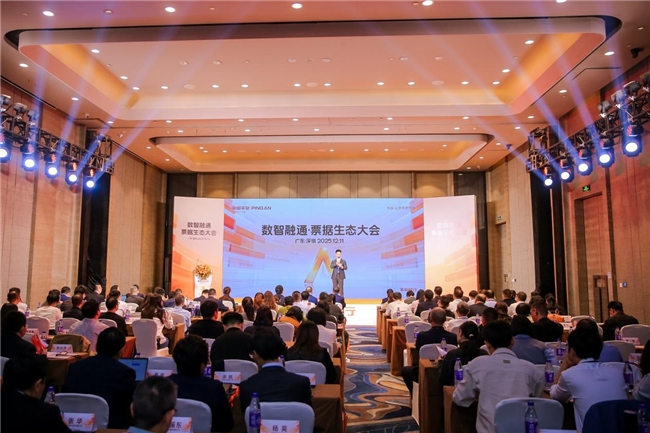
平安银行举办“数智融通·票据生态大会”,携手各方共绘票据生态数智化新蓝图
Cai Fu Zai Xian· 2025-12-19 06:10
Core Insights - The conference hosted by Ping An Bank focused on leveraging technology to empower enterprises for high-quality development through cost reduction, quality improvement, and efficiency enhancement [1][4][8] Group 1: Digital Transformation and Economic Trends - Digital economy is identified as a core engine for social development, with digital transformation becoming a necessity for enterprises [3] - Experts provided a forward-looking analysis of the global macroeconomic situation, highlighting a new landscape of opportunities and risks for 2026 [4] Group 2: Empowering Enterprises through Smart Services - Ping An Bank is committed to empowering enterprises' digital transformation by focusing on three main areas: smart treasury, smart supply chain, and smart management [5] - The bank's digital asset management solutions aim to enhance financial control and efficiency for enterprises [5] Group 3: Practical Experiences and Innovations - Several benchmark enterprises shared their experiences in building a bill ecosystem and digital practices, showcasing successful collaborations with Ping An Bank [7] - The integration of advanced technologies such as AI, big data, and blockchain is emphasized as a means to enhance enterprise treasury management [8] Group 4: Future of Bill Business and Financial Management - The future of bill business and enterprise financial management is expected to evolve towards ecological, digital, and intelligent integration [8] - Ping An Bank aims to create an open, collaborative, and win-win new ecosystem for bills, supporting enterprise transformation and enhancing industry chain efficiency [8]

金一文化涨2.00%,成交额8076.85万元,主力资金净流出349.79万元
Xin Lang Cai Jing· 2025-12-19 05:30
Group 1 - The core viewpoint of the news is that Jin Yi Culture's stock has shown fluctuations in price and trading volume, with a current market value of 8.138 billion yuan and a year-to-date price increase of 14.18% [1] - As of December 19, the stock price of Jin Yi Culture is 3.06 yuan per share, with a trading volume of 80.7685 million yuan and a turnover rate of 1.01% [1] - The company has experienced a net outflow of main funds amounting to 3.4979 million yuan, with significant buying and selling activities recorded [1] Group 2 - Jin Yi Culture, established on November 26, 2007, and listed on January 27, 2014, specializes in the research, design, and sales of precious metal crafts and jewelry [2] - The company's revenue composition includes 29.90% from the jewelry industry, 20.10% from software and IT services, and various other segments [2] - As of December 10, the number of shareholders is 73,000, a decrease of 2.19%, with an average of 36,421 circulating shares per person, an increase of 2.24% [2] Group 3 - Jin Yi Culture has distributed a total of 121 million yuan in dividends since its A-share listing, with no dividends paid in the last three years [3] - As of September 30, 2025, Hong Kong Central Clearing Limited is the eighth largest circulating shareholder, holding 28.156 million shares as a new shareholder [3]

北大荒涨2.06%,成交额2.98亿元,主力资金净流入296.55万元
Xin Lang Zheng Quan· 2025-12-19 05:27
Core Viewpoint - The stock of Beidahuang Agricultural Co., Ltd. has shown a modest increase in price and trading activity, reflecting a stable performance in the agricultural sector despite some fluctuations in revenue and profit margins [1][2]. Group 1: Stock Performance - On December 19, Beidahuang's stock rose by 2.06%, reaching a price of 14.85 yuan per share, with a trading volume of 298 million yuan and a turnover rate of 1.14%, resulting in a total market capitalization of 26.399 billion yuan [1]. - Year-to-date, Beidahuang's stock price has increased by 4.58%, with a slight rise of 0.81% over the last five trading days, 0.07% over the last twenty days, and 2.63% over the last sixty days [1]. - The company has appeared on the "Dragon and Tiger List" twice this year, with the most recent instance on April 11, where it recorded a net buy of -178 million yuan [1]. Group 2: Company Overview - Beidahuang Agricultural Co., Ltd. was established on November 27, 1998, and went public on March 29, 2002. Its main business activities include land leasing, cultivation and sales of grains, beans, and oilseeds, agricultural technology services, and real estate development [2]. - The revenue composition of Beidahuang includes land leasing fees (62.16%), agricultural material sales (33.85%), and other sales/services (4.99%) [2]. - As of September 30, 2025, the company reported a total revenue of 4.108 billion yuan, a year-on-year decrease of 5.73%, while the net profit attributable to shareholders was 1.357 billion yuan, reflecting a year-on-year increase of 0.70% [2]. Group 3: Shareholder Information - Beidahuang has distributed a total of 11.157 billion yuan in dividends since its A-share listing, with 2.507 billion yuan distributed over the past three years [3]. - As of September 30, 2025, the number of shareholders decreased by 10.26% to 104,500, while the average circulating shares per person increased by 11.43% to 17,013 shares [2][3]. - Among the top ten circulating shareholders, Hong Kong Central Clearing Limited holds 13.9947 million shares, while Southern CSI 500 ETF and Huatai-PineBridge Consumer ETF have also seen changes in their holdings [3].

神州泰岳涨2.06%,成交额2.14亿元,主力资金净流入517.37万元
Xin Lang Cai Jing· 2025-12-19 05:22
Core Viewpoint - Shenzhou Taiyue's stock price has shown fluctuations, with a recent increase of 2.06% on December 19, 2023, while the company faces a decline in revenue and profit for the year [1][2]. Financial Performance - For the period from January to September 2025, Shenzhou Taiyue reported a revenue of 4.068 billion yuan, a year-on-year decrease of 9.86%, and a net profit attributable to shareholders of 724 million yuan, down 33.77% year-on-year [2]. - The company has cumulatively distributed 1.297 billion yuan in dividends since its A-share listing, with 372 million yuan distributed over the last three years [3]. Stock Market Activity - As of December 19, 2023, Shenzhou Taiyue's stock price was 11.41 yuan per share, with a total market capitalization of 22.445 billion yuan. The trading volume reached 214 million yuan, with a turnover rate of 1.03% [1]. - The stock has experienced a decline of 0.70% year-to-date, with a slight increase of 0.18% over the last five trading days and a 2.06% increase over the last twenty days. However, it has dropped 19.65% over the past sixty days [1]. Shareholder Information - As of December 10, 2023, the number of shareholders for Shenzhou Taiyue was 103,200, reflecting a 0.19% increase from the previous period. The average number of circulating shares per shareholder decreased by 0.19% to 17,863 shares [2]. - The largest circulating shareholder is the Huaxia CSI Animation Game ETF, holding 56.4599 million shares, an increase of 9.6514 million shares from the previous period [3].

美年健康涨2.16%,成交额23.40亿元,主力资金净流出4.13亿元
Xin Lang Cai Jing· 2025-12-19 02:07
Core Viewpoint - Meinian Health's stock price has shown significant growth this year, with a year-to-date increase of 34.37% and a recent surge of 25.77% over the past five trading days, indicating strong market interest and performance [1]. Financial Performance - For the period from January to September 2025, Meinian Health reported a revenue of 6.925 billion yuan, reflecting a year-on-year decrease of 3.01%. However, the net profit attributable to shareholders was 51.86 million yuan, which represents a substantial year-on-year increase of 110.53% [2]. Stock Market Activity - As of December 19, Meinian Health's stock price reached 6.15 yuan per share, with a trading volume of 2.34 billion yuan and a turnover rate of 9.85%. The total market capitalization stands at 24.073 billion yuan [1]. - The company has appeared on the "龙虎榜" (a list of stocks with significant trading activity) three times this year, with the most recent appearance on December 18, where it recorded a net buying of 171 million yuan [1]. Shareholder Information - As of September 30, 2025, Meinian Health had 152,000 shareholders, a decrease of 11.85% from the previous period. The average number of circulating shares per person increased by 13.44% to 25,490 shares [2]. - The top ten circulating shareholders include notable ETFs, with Huabao Zhongzheng Medical ETF holding 88.664 million shares, a decrease of 15.1218 million shares from the previous period [3].

DiamondLake Wants To Tokenize Your Business
International Business Times· 2025-12-18 19:54
Core Insights - Diamond Lake Minerals Inc. (DLMI) aims to leverage its long-standing history and new leadership to enhance ethical business growth in the digital age [2][3] Company Strategy - The new CEO, Brian J. Esposito, brings over 20 years of experience and aims to create new revenue streams through security tokens backed by real management and companies [4][6] - DLMI is adopting a traditional approach by adhering to banking regulations while developing a digital currency [5] - The company is transforming into a multi-strategy operating entity, utilizing its historical securities to market to existing companies under the Esposito Intellectual Enterprises (EIE) umbrella [6] Advisory Board - DLMI has established a strong advisory board featuring industry leaders from various sectors, including finance, entertainment, and technology, to guide its strategic direction [7][10] - The board's expertise spans multiple industries, ensuring tailored support for DLMI's diverse client base [8][9] Market Potential - The digital securities market is projected to grow from $10 billion in 2022 to $1 trillion by 2028, indicating a compound annual growth rate (CAGR) of 45% [12] - The global blockchain market is expected to increase from $3 billion in 2020 to $39.7 billion by 2025, reflecting a CAGR of 67.3% [12] - The investment management market is projected to rise from $100 trillion in 2020 to $178 trillion by 2025, representing a CAGR of 7.2% [13] Client Engagement - DLMI selectively partners with companies that align with its values and can benefit from its expertise in sustainable growth [14][18] - The company is positioned to facilitate the tokenization of numerous businesses, especially as regulatory barriers for U.S. citizens are lifted [17][19] Challenges and Opportunities - The primary challenge for DLMI is navigating the evolving regulatory landscape, particularly with the SEC's role in developing a cryptocurrency framework [15] - DLMI's hybrid approach of combining traditional finance with cryptocurrencies allows it to engage a broad range of investors and businesses [15]

中信建投证券金剑华:资本市场转向系统赋能 机构服务应实现“三个转变”
Shang Hai Zheng Quan Bao· 2025-12-18 18:24
Core Viewpoint - The capital market is undergoing profound institutional changes and ecological restructuring, with a shift in focus from merely being a financing channel to becoming a key hub connecting technology, industry, and capital [1] Group 1: Policy and Market Changes - The logic of the securities industry in serving technological innovation has transitioned from "auxiliary support" to "system empowerment" following the implementation of the new "National Nine Articles" [1] - Multi-level capital market reforms have evolved from expanding sectors to optimizing functions, with a policy support system moving from single-point breakthroughs to systematic construction [1] - New policies such as the "Sixteen Articles on Technology," "Eight Articles on the Sci-Tech Innovation Board," and "Six Articles on Mergers and Acquisitions" have been introduced, creating a comprehensive policy framework for the entire lifecycle of technology companies [2] Group 2: Financing and Investment Trends - The bond market has become a crucial support for technological innovation, with securities firms underwriting 539 sci-tech bonds in 2024, totaling 613.69 billion yuan, reflecting a year-on-year growth of over 60% [2] - The influx of medium- and long-term funds into the market is changing the capital structure, with insurance and pension funds increasing their allocation to technology stocks, providing stable funding support for tech companies [2] - The structure of A-share listed companies is shifting from being dominated by finance, real estate, and traditional manufacturing to being driven by technological innovation, advanced manufacturing, and green industries [2] Group 3: Company Strategy and Services - The company has established "serving high-level technological self-reliance" as a core strategy, leading to comprehensive business restructuring and organizational changes [2] - The company emphasizes a "banking + investment + research" service model to enhance comprehensive service capabilities for clients, covering traditional investment banking services and extending to innovative areas like asset securitization and REITs [3] - The company has set up specialized industry groups to strengthen services for specialized and innovative enterprises, with a focus on sectors such as TMT, advanced manufacturing, chemicals, and healthcare [3] Group 4: Future Outlook - The company envisions playing multiple roles in building a technologically strong nation, from early-stage PE/VC investments in startups to providing IPO services and supporting technological iterations and scale expansions [4] - The company aims to continue deepening its collaborative model of "banking + investment + research" while embracing cutting-edge technologies like generative AI and blockchain to create an intelligent financial service system [4]
