
物联网

Search documents
新一轮“国补”来了!有一个大变化
Ke Ji Ri Bao· 2026-01-02 02:15
Core Viewpoint - The 2026 "National Subsidy" policy aims to enhance consumer spending on digital and smart products, addressing the current trend of technological consumption and promoting industry upgrades through targeted subsidies [1]. Group 1: Subsidy Scope - The 2026 "National Subsidy" expands the category of subsidized products from "digital products" to "digital and smart products," including smartphones, tablets, smartwatches, and for the first time, smart glasses [2]. - Local governments are allowed to implement subsidies for smart home products, including those designed for the elderly, based on regional needs [2]. - The policy aligns with the trend of increasing demand for smart products, facilitating the market cultivation of innovative technologies [2]. Group 2: Implementation Mechanism - The policy stipulates a 15% subsidy on the purchase price of digital and smart products, capped at 500 yuan per item for products priced under 6000 yuan [3]. - It combines a "national unified" approach with "local autonomy," ensuring equal treatment for consumers across regions while allowing local adaptations to meet specific market demands [3]. - A pre-allocation system for subsidy funds is introduced to alleviate financial pressure on businesses and stimulate market competition [3]. Group 3: Ensuring Accurate Distribution of Benefits - The policy emphasizes strict regulation to prevent issues such as fraudulent claims and delays in subsidy payments, with a commitment to expose and penalize violations [4]. - Enhanced regulatory measures include price management and the establishment of a digital data-sharing system to verify subsidy eligibility and prevent misuse [4]. - Increased transparency and improved complaint channels are designed to reduce opportunities for corruption and ensure consumers benefit from the subsidies [5].
2026年“国补”利好“科技购” 不仅是补贴换新,更为培育未来市场
Ke Ji Ri Bao· 2026-01-02 02:12
Group 1 - The 2026 "National Subsidy" policy expands the subsidy categories to include both digital and smart products, with smart glasses being newly included and local governments allowed to implement subsidies for smart home products [2] - The policy aims to address the current trends in consumer demand for smart and convenient products, facilitating the growth of the smart consumption industry and related sectors like artificial intelligence and the Internet of Things [2] - The emphasis on green and smart consumption in the policy is expected to encourage companies to invest more in green technology research and development, laying the groundwork for industry upgrades and expanded consumption [2] Group 2 - The implementation mechanism of the 2026 "National Subsidy" policy includes a uniform national subsidy standard for digital and smart products, providing a 15% subsidy on products priced under 6000 yuan, with a maximum subsidy of 500 yuan per item [3] - The policy combines national uniformity with local autonomy, allowing local governments to set specific subsidy categories and standards to better meet local market needs [3] - The funding distribution method has been optimized to ensure that subsidy funds reach the market efficiently, with a pre-allocation system to alleviate the financial pressure on companies [3] Group 3 - The policy addresses past issues such as inconsistent subsidies and fraudulent claims by implementing strict regulations and oversight to ensure that subsidies reach consumers effectively [4] - Measures include rigorous price management and the establishment of a digital data-sharing system among multiple departments to verify subsidy eligibility and prevent fraud [4] - Enhanced enforcement and transparency measures are introduced to reduce opportunities for misconduct and ensure that consumers benefit from the subsidies [5]
2026年“国补”利好“科技购” 不仅是补贴换新 更为培育未来市场
Ke Ji Ri Bao· 2026-01-02 00:56
Core Viewpoint - The 2026 "National Subsidy" policy aims to enhance consumer spending on digital and smart products, addressing the current trend of technological consumption and promoting the upgrade of related industries [1][2]. Group 1: Subsidy Scope - The subsidy will expand to include not only digital products like smartphones and tablets but also smart products, with smart glasses being added for the first time [1]. - Local governments are allowed to implement subsidies for smart home products, including those designed for the elderly, based on regional needs [1][2]. Group 2: Implementation Mechanism - The policy stipulates a 15% subsidy on the purchase price of digital and smart products, capped at 500 yuan per item for products priced under 6000 yuan [3]. - A combination of national uniform standards and local autonomy in subsidy implementation is established, ensuring equal treatment across regions while allowing local customization [3]. Group 3: Ensuring Accurate Distribution of Benefits - The policy emphasizes strict regulation to prevent issues such as fraudulent claims and delays in subsidy payments, with a commitment to tackle violations promptly [4]. - Enhanced transparency and improved complaint channels are introduced to minimize manipulation and ensure that subsidies effectively reach consumers [5].
研之有理|双向奔赴 促进城乡融合发展
Xin Lang Cai Jing· 2026-01-01 22:54
Core Viewpoint - The integration of urban and rural development is a necessary requirement for Chinese-style modernization, with significant achievements noted in Heilongjiang Province during the 14th Five-Year Plan period, although challenges such as regional imbalances and inefficient resource allocation remain [1]. Group 1: Key Strategies for Urban-Rural Integration - Establish a dual-direction flow mechanism for population, enhancing the management of migrant populations and improving policies for urbanization of agricultural workers [2]. - Develop a multi-source funding mechanism to encourage financial institutions to innovate agricultural credit products and attract social capital for rural infrastructure [2]. - Optimize land resource allocation by matching land supply with population growth and enhancing land management practices [2]. Group 2: Public Service Equitability - Create a public resource allocation mechanism based on permanent population, ensuring that educational, medical, and cultural resources are distributed equitably across urban and rural areas [3]. - Improve rural infrastructure to enhance living conditions and establish a long-term maintenance mechanism for facilities [3]. - Promote digital transformation of public services by building a comprehensive digital service platform that bridges urban-rural information gaps [3]. Group 3: Industrial Collaboration - Break traditional barriers between urban and rural industries, promoting deep integration of agriculture with secondary and tertiary industries [4]. - Focus on developing new types of urban-rural industries such as deep processing of agricultural products and rural tourism, leveraging local resources [4]. - Establish a modern rural industrial system that utilizes technology to meet market demands and encourages urban capital and talent to flow into rural areas [4][7]. Group 4: County-Level Development Mechanism - Recognize counties as fundamental units for urban-rural integration, tailoring development strategies based on local resources and industrial foundations [5]. - Strengthen the functional roles of counties by fostering leading industries and enhancing mechanisms that connect agriculture with rural development [6]. - Create modern supply chain systems for agricultural products within counties to facilitate market access for small farmers [6].
华安鑫创出资46万元成立北京华保鑫城汽车技术有限公司,持股46%
Jin Rong Jie· 2026-01-01 14:10
Group 1 - The core point of the article is the establishment of Beijing Huabao Xincheng Automotive Technology Co., Ltd. by Huazhong Xinchang Holdings (Beijing) Co., Ltd. with an investment of 460,000 RMB, holding a 46% stake [1] - Beijing Huabao Xincheng Automotive Technology Co., Ltd. was founded on October 31, 2024, with a registered capital of 1 million RMB and is located in Beijing [1] - The company is involved in various technological services and development, including smart vehicle equipment manufacturing, software development, and artificial intelligence application software development [1] Group 2 - The company operates in the technology promotion and application service industry [1] - The legal representative of the company is He Pan [1] - The business activities include technology consulting, information system integration services, and IoT technology services, among others [1]
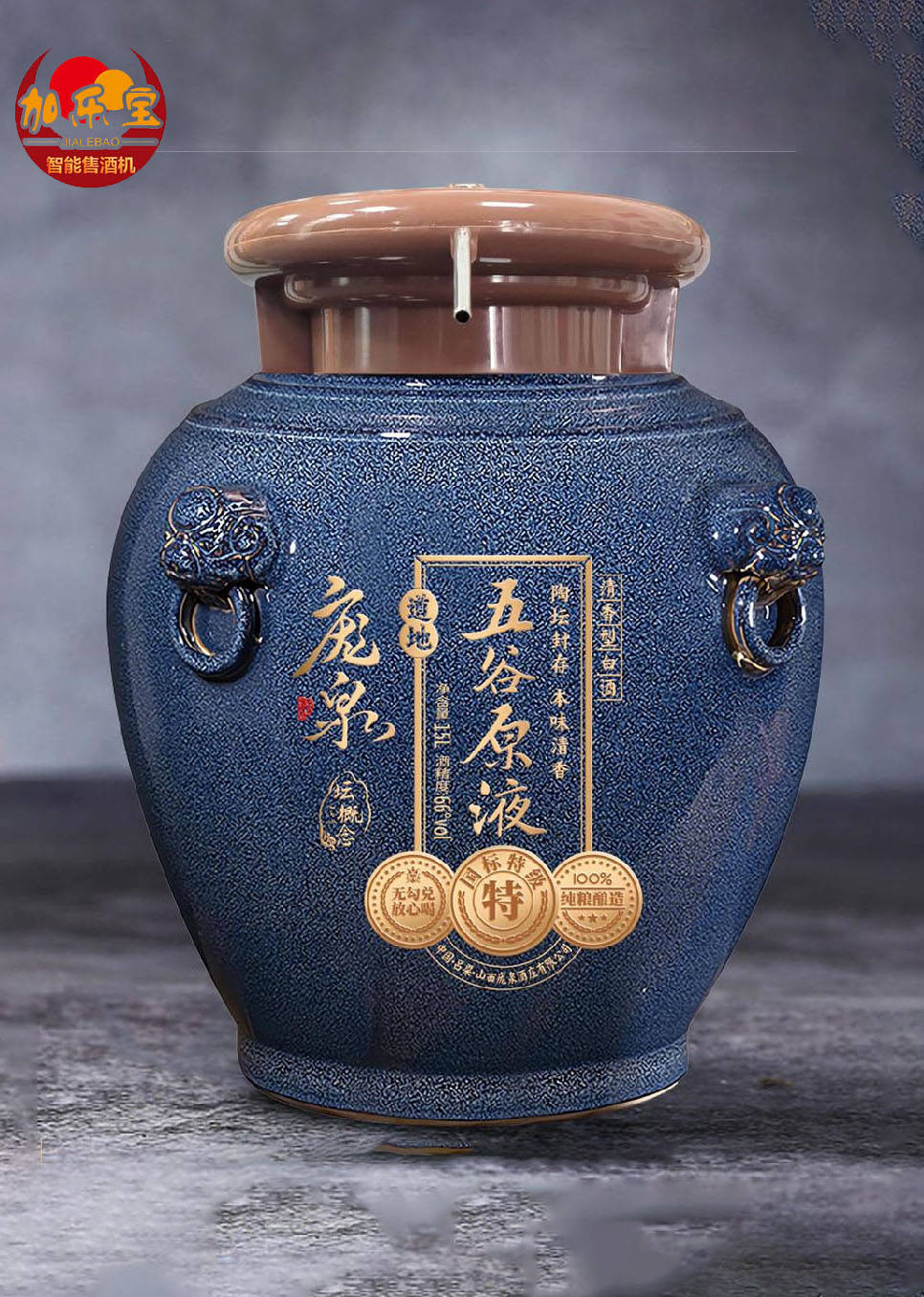
坛子售酒机
Sou Hu Cai Jing· 2026-01-01 13:45
在传统零售模式面临深刻变革的今天,一个融合了古老酒文化与前沿科技的业态正悄然兴起——坛子售酒机。这种以智能售酒机为载体 的新型无人自助售酒设备,正以其独特的模式,预示着散白酒行业一场深刻的洗牌,并可能在未来几年内催生新的市场机遇。 引言:从传统桎梏到智能破局 长久以来,散白酒的销售严重依赖层层分销的"传统生意"模式,面临着库存压力大、资金周转慢、终端管控难等诸多痛点。与此同时, 消费者对于购酒便利性、产品新鲜度及消费灵活性的需求日益增长。正是在这种矛盾中,集合了物联网、新零售、大数据与云计算技术 的智能售酒机应运而生,它不仅是设备的革新,更是商业逻辑的重构。 核心优势:为何坛子售酒机代表未来趋势? 1. 消费模式革新:从"按瓶"到"按需" 传统白酒销售以整瓶为单位,无形中设置了消费门槛。而如加乐宝等品牌推出的智能售酒机,彻底 改变了这一规则。它允许消费者通过扫码支付,按毫升购买,实现了"想喝多少就买多少"的自由。这种模式不仅降低了单次尝鲜成本, 吸引了更广泛的消费群体,也减少了因购买整瓶而产生的浪费,契合了现代理性消费的趋势。 行业观察指出,散白酒新零售模式正在洗牌,而智能售酒机正是这场变革的先锋。它通过物联 ...

厦门织宇工贸有限公司成立,注册资本500万人民币
Sou Hu Cai Jing· 2026-01-01 06:34
经营范围含产业用纺织制成品制造;科技推广和应用服务;面料纺织加工;纺纱加工;家用纺织制成品 制造;纤维素纤维原料及纤维制造;服装制造;服饰制造;纺织专用设备制造;日用品生产专用设备制 造;产业用纺织制成品销售;针纺织品及原料销售;针纺织品销售;服装辅料销售;合成材料销售;物 联网应用服务;物联网技术研发;区块链技术相关软件和服务;技术服务、技术开发、技术咨询、技术 交流、技术转让、技术推广;供应链管理服务;智能港口装卸设备销售;港口设施设备和机械租赁维修 业务;信息技术咨询服务;信息咨询服务(不含许可类信息咨询服务);信息系统集成服务;人工智能 应用软件开发;软件开发;工程和技术研究和试验发展;专业设计服务;装卸搬运;普通货物仓储服务 (不含危险化学品等需许可审批的项目);国际货物运输代理;国内货物运输代理;货物进出口;技术 进出口。(除依法须经批准的项目外,凭营业执照依法自主开展经营活动) 企业名称厦门织宇工贸有限公司法定代表人吴莲花注册资本500万人民币国标行业制造业>纺织业>棉纺 织及印染精加工地址厦门市翔安区新圩镇新镇路1号1号楼301室之一企业类型有限责任公司(自然人投 资或控股的法人独资)营业期限 ...
“齐鲁农云”平台上线
Zheng Quan Shi Bao Wang· 2026-01-01 03:35
Core Viewpoint - The "Qilu Agricultural Cloud" digital agriculture and rural comprehensive management service platform in Shandong Province is set to officially launch on December 31, 2025, aiming to drive the digital transformation of agricultural governance, industry development, and rural management through advanced technologies [1] Group 1 - The platform will feature a structure that includes "1 data warehouse, 1 agricultural code management platform, and six foundational capabilities: artificial intelligence, blockchain, satellite remote sensing, Internet of Things, visual Internet, and GIS geographic information" [1] - It will support 16 application scenarios to enhance various aspects of agricultural and rural services [1] Group 2 - The initiative aims to comprehensively utilize big data, cloud computing, and artificial intelligence to promote digital transformation in agriculture and rural sectors [1]
愿景引擎(天津)新能源科技有限公司成立,注册资本1000万人民币
Sou Hu Cai Jing· 2026-01-01 02:39
Group 1 - The establishment of Vision Engine (Tianjin) New Energy Technology Co., Ltd. has been registered with a capital of 10 million RMB, and the legal representative is Li Deyu [1] - The sole shareholder of the company is Yungong Zhiyuan (Tianjin) New Energy Technology Co., Ltd., which holds 100% of the shares [2] - The company's business scope includes various services such as intelligent control system integration, software development, artificial intelligence applications, and renewable energy technology research and development [2] Group 2 - The company is located at 35 Cai Zhi Dao, Hai Lan De Building, 26th Floor, Room 2613, Xiqing District, Tianjin [2] - The business registration is valid until December 31, 2025, with no fixed term thereafter [2] - The company is classified under the national standard industry of scientific research and technical services, specifically in engineering and technical research and experimental development [2]
深圳市衡感智能科技有限公司成立,注册资本200万人民币
Sou Hu Cai Jing· 2026-01-01 01:31
Core Viewpoint - Shenzhen Henggan Intelligent Technology Co., Ltd. has been established with a registered capital of 2 million RMB, focusing on various technology and artificial intelligence applications [1] Company Overview - The legal representative of Shenzhen Henggan Intelligent Technology Co., Ltd. is Li Wenlong [1] - The company is a limited liability entity with an operational period until December 31, 2025, with no fixed term thereafter [1] - The company is located at 188 Tangxing Road, Tanglang Community, Nanshan District, Shenzhen [1] Shareholding Structure - Shareholding distribution is as follows: - Shenzhen Huilong Xingda Technology Co., Ltd. holds 50% - Li Wenlong holds 30% - Shenzhen Huigan Enterprise Management Consulting Co., Ltd. holds 20% [1] Business Scope - The business scope includes: - General projects such as artificial intelligence general application systems, sales of intelligent instruments, and manufacturing of intelligent basic manufacturing equipment [1] - Development and sales of network and information security software, as well as information security devices [1] - Technical services, development, consulting, and software development related to artificial intelligence applications [1] - Sales of electronic products and Internet of Things (IoT) devices [1]