世界反法西斯战争

Search documents
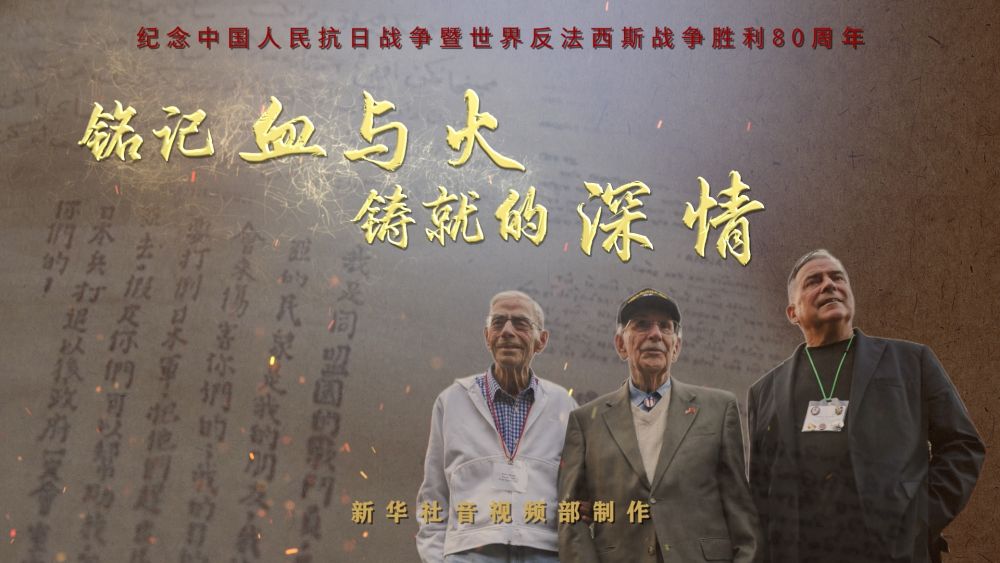
历史的回响丨铭记血与火铸就的深情
Xin Hua She· 2025-08-28 12:23
Core Points - The article highlights the historical connection between American Flying Tigers and Chinese villagers during World War II, emphasizing the sacrifices made by over 2,000 American pilots and the rescue efforts by Chinese civilians [2] - It reflects on the deep friendship forged between the Chinese and American people during the fight against Japanese fascism, underscoring the significant contributions of the Chinese people to the global anti-fascist war [2] - In 2023, President Xi Jinping reaffirmed this friendship by responding to the chairman of the China-U.S. Aviation Heritage Foundation and veterans of the Flying Tigers, indicating that the memory of their sacrifices remains alive in China [2] Summary by Sections - **Historical Context**: The article recounts the efforts of the Flying Tigers during the war, including the construction of airstrips by Chinese people without heavy machinery, showcasing their dedication and sacrifice [2] - **Friendship and Cooperation**: It emphasizes the solidarity between the Chinese and American people during the war, highlighting the shared struggle against a common enemy and the lasting bonds formed as a result [2] - **Modern Recognition**: The article notes the recent acknowledgment by Chinese leadership of the contributions made by the Flying Tigers and the ongoing remembrance of their legacy in fostering U.S.-China relations [2]

海外人士谈抗战|专访:中国抗战为世界反侵略斗争树立榜样——访坦桑尼亚学者莫希
Xin Hua She· 2025-08-28 02:46
Core Viewpoint - The article emphasizes the significant sacrifices made by the Chinese people during the war against Japanese militarism, highlighting their struggle for sovereignty and its role as an example for other nations fighting against invasion and seeking independence [1][2] Group 1: Historical Context - The Chinese people's resistance during the Anti-Japanese War is framed as a national liberation struggle that contributed importantly to the global anti-fascist war [1] - This historical context showcases the strong will of the Chinese people to resist invasion and uphold justice [1] Group 2: China's Role in Global Affairs - China is portrayed as a steadfast opponent of invasion and colonialism, advocating for multilateralism and peaceful development, which has earned it widespread respect and trust in the international community [1] - In the latter half of the 20th century, China actively supported the independence movements in Asia, Africa, and Latin America, establishing itself as a reliable partner for these nations [1] Group 3: Current Geopolitical Landscape - In the context of rising geopolitical uncertainties, China is distinguished from some Western countries by its advocacy for cooperation and peace [1] - The commemoration of the 80th anniversary of the victory in the Anti-Japanese War serves as a reminder of the long-term commitment to oppose invasion and oppression, which is framed as a shared responsibility of humanity [1][2]
观点丨中国人民抗日战争开辟世界反法西斯战争东方主战场
Zhong Yang Ji Wei Guo Jia Jian Wei Wang Zhan· 2025-08-28 00:31
Core Points - The article commemorates the 80th anniversary of the victory in the Chinese People's Anti-Japanese War and the World Anti-Fascist War, highlighting China's significant contributions to the global anti-fascist efforts [2][18] - It emphasizes that the Chinese People's Anti-Japanese War was the first and longest-lasting front in the global anti-fascist struggle, starting in 1931 and lasting for 14 years [6][11] - The article underscores the immense sacrifices made by the Chinese people, with over 35 million casualties and significant economic losses due to Japanese aggression [7][8] Summary by Sections Historical Context - The article discusses the origins of the World Anti-Fascist War, noting that the first shot was fired by China in 1931 during the Mukden Incident, which marked the beginning of Japanese aggression [3][4] - It details the escalation of conflict with the Marco Polo Bridge Incident in 1937, leading to a full-scale war and the unification of various Chinese factions against Japanese imperialism [5][14] Contributions to the War Effort - China's resistance tied down a significant portion of Japanese military forces, impacting Japan's ability to engage in other theaters of war, particularly against the Soviet Union [9][10] - The article highlights the formation of the international anti-fascist alliance, with China playing a crucial role in the Washington Declaration of 1942, which united 26 nations against the Axis powers [5][10] Impact and Legacy - The article asserts that the Chinese Anti-Japanese War not only contributed to the defeat of Japan but also elevated China's international standing and respect among peace-loving nations [12][17] - It concludes with a call to remember the historical significance of China's contributions to the anti-fascist victory and the importance of maintaining a correct view of World War II history [18]
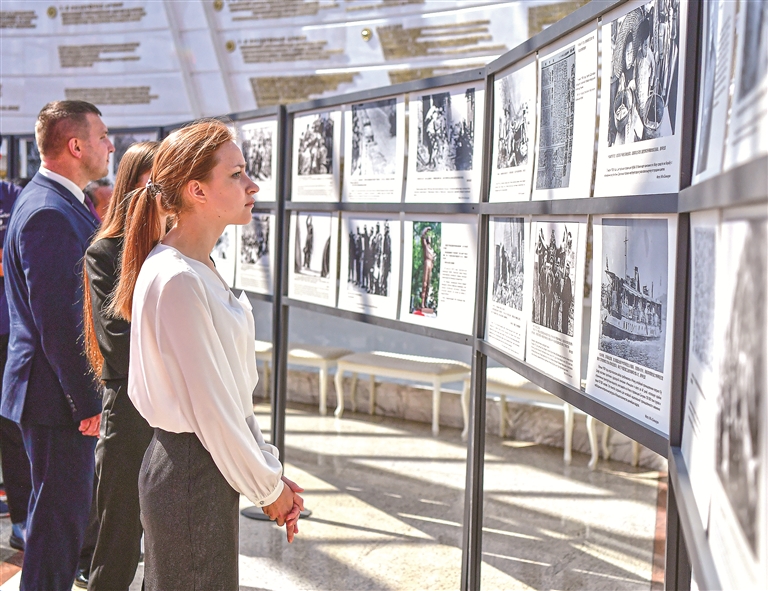
展现维护和平决心 增强人民爱国热情
Ren Min Ri Bao· 2025-08-27 22:19
Core Viewpoint - The commemoration of the 80th anniversary of the victory in the Chinese People's Anti-Japanese War and the World Anti-Fascist War is a significant event that highlights China's commitment to maintaining post-war international order and world peace, while also fostering national pride among the Chinese people [1][2][3]. Group 1: Historical Significance - The Chinese People's Anti-Japanese War is recognized as a crucial part of the World Anti-Fascist War, with China serving as the Eastern main battlefield, playing a decisive role in defeating Japanese militarism [1][2]. - China's resistance against Japanese aggression contributed to the formation of the global anti-fascist alliance, as evidenced by the signing of the United Nations Declaration in 1942 with the US, UK, and USSR [2]. - The article emphasizes the importance of remembering the historical significance of the war to prevent the repetition of such tragedies in the future [1][3]. Group 2: International Perspectives - Various international media outlets have called for a balanced view of the World Anti-Fascist War, recognizing the significant contributions of China and other Global South countries, while condemning attempts to distort historical narratives [2][3]. - The commemoration activities, including a grand military parade, are seen as a reflection of China's national pride and a means to promote unity among its people [2][3]. Group 3: Commemoration Activities - China plans to hold a grand military parade and various commemorative events, including exhibitions and film screenings, to honor the sacrifices made during the war [3]. - The military parade will showcase domestically produced military equipment, highlighting China's advancements in defense technology and its role as a peace builder [3].
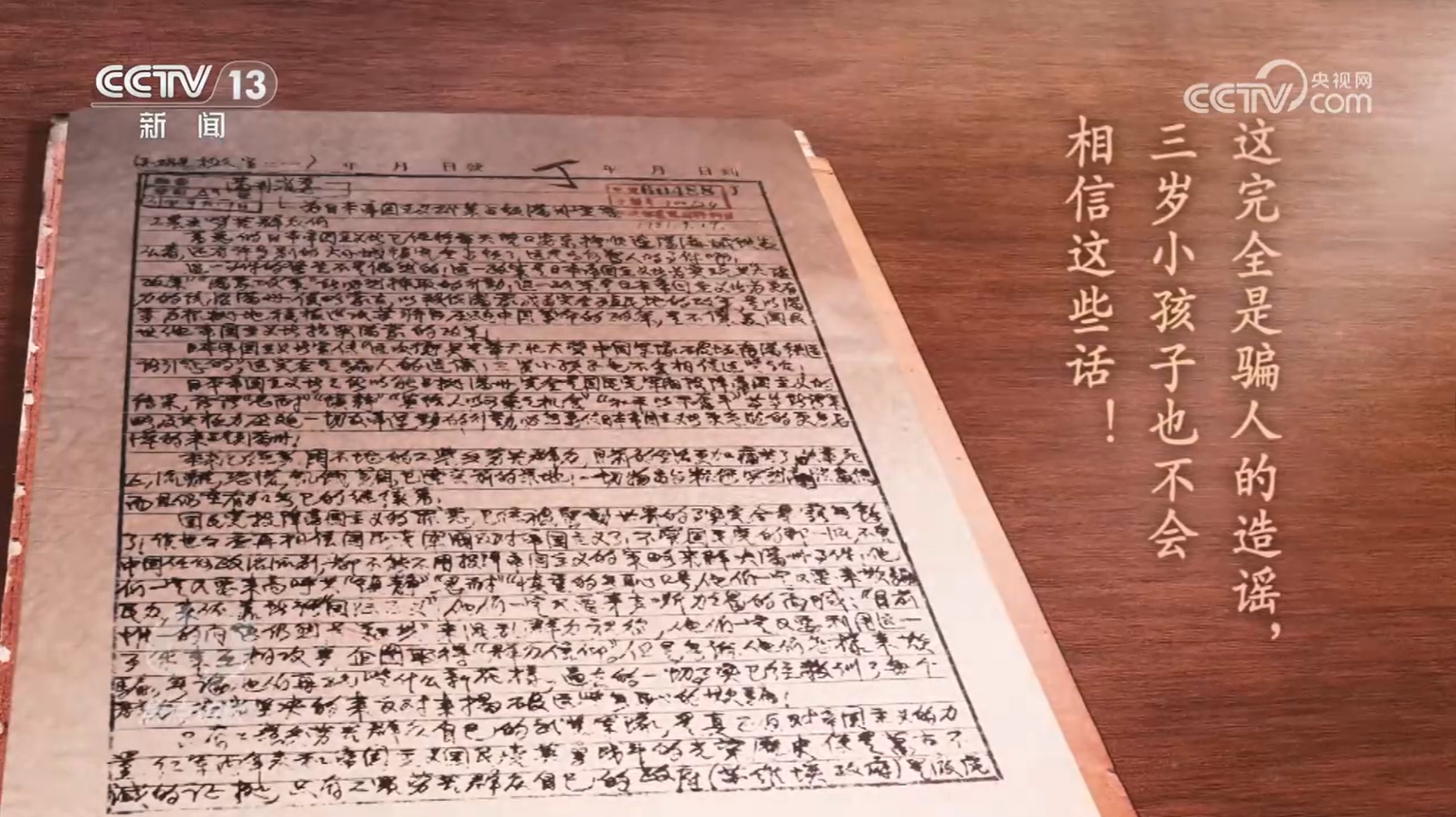
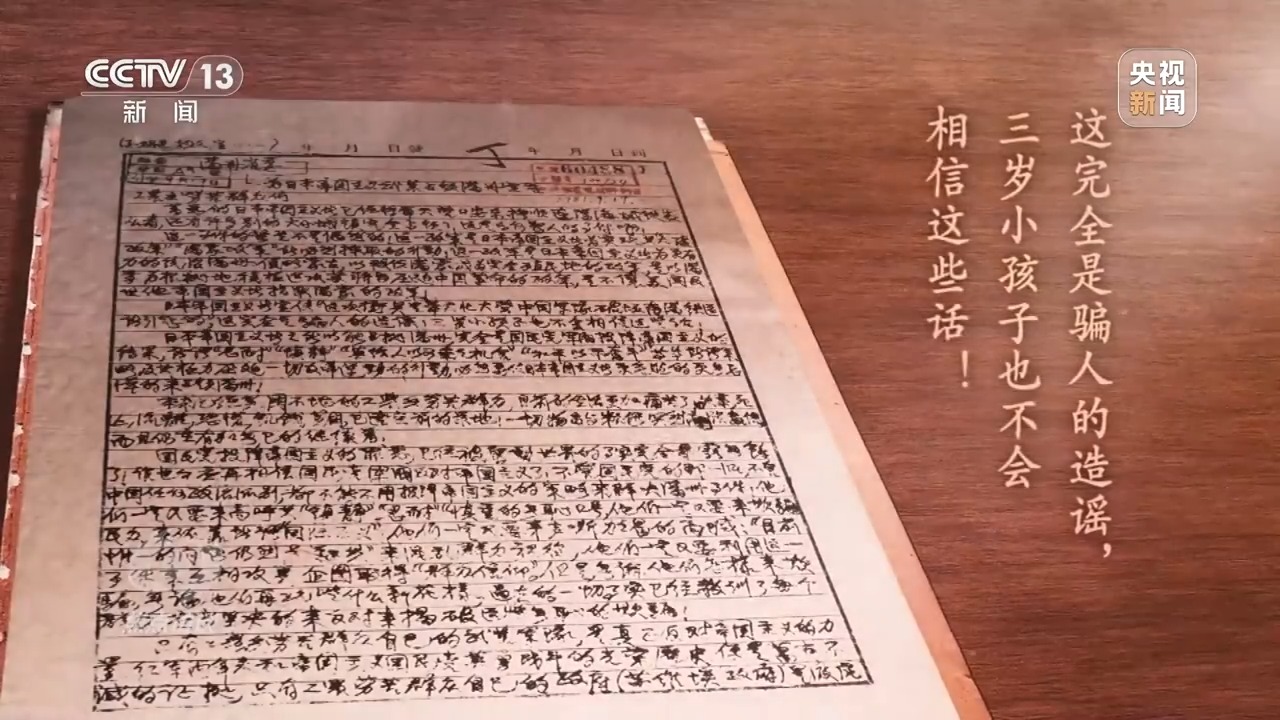
焦点访谈丨擎起全民族抗战大旗!揭开14年浴血奋战序幕
Yang Shi Xin Wen Ke Hu Duan· 2025-08-27 13:54
Core Points - The article commemorates the 80th anniversary of the victory in the Chinese People's War of Resistance Against Japanese Aggression and the World Anti-Fascist War, highlighting China's significant contributions and sacrifices during this period [1][2][15] - It emphasizes the role of the Chinese Communist Party (CCP) as the earliest promoter and mobilizer of resistance against Japanese imperialism, particularly through the issuance of the "919 Declaration" shortly after the September 18 Incident [4][6][10] Group 1: Historical Context - The September 18 Incident, which occurred in 1931, marked the beginning of the Chinese People's War of Resistance and was a pivotal moment in the global anti-fascist struggle [2][15] - The CCP's response to the invasion was immediate, with the issuance of the "919 Declaration" that denounced Japanese aggression and called for resistance [4][6] Group 2: CCP's Role in Resistance - The CCP actively organized armed resistance, forming the Northeast Anti-Japanese United Army, which grew to over 30,000 troops by 1937 [6][8] - The CCP's efforts were contrasted with the Nationalist government's policy of non-resistance, which allowed for further Japanese advances [6][10] Group 3: Impact of the War - The Chinese resistance significantly tied down over 50% of Japanese military forces, impacting Japan's strategic plans and providing crucial time for Allied forces [15][17] - The human cost of the war for China was immense, with over 35 million casualties and substantial economic losses estimated at over $6 trillion in today's value [17]
海外人士谈抗战丨专访:中国为世界反法西斯战争胜利作出杰出贡献——访俄罗斯科学院东方学研究所现代中国研究中心主任维诺格拉多夫
Xin Hua Wang· 2025-08-27 07:53
新华社莫斯科8月27日电 专访:中国为世界反法西斯战争胜利作出杰出贡献——访俄罗斯科学院东方 学研究所现代中国研究中心主任维诺格拉多夫 新华社记者黄河 今年是中国人民抗日战争暨世界反法西斯战争胜利80周年,俄罗斯科学院东方学研究所现代中国研究中 心主任安德烈·维诺格拉多夫日前接受新华社记者专访时说,中国为世界反法西斯战争胜利作出杰出贡 献。 维诺格拉多夫说,第二次世界大战给人类带来巨大创伤,他对中国人民在抗日战争中承受的苦难感同身 受。在苏联伟大卫国战争中,几乎每个俄罗斯家庭都有人参战。"我的祖父和外祖父当时都在军队服 役,家族中当时的男性成员也基本都参加了战争,我祖母的父亲及他的两位兄弟都在战争中英勇牺 牲。" 作为历史学家,维诺格拉多夫对抗日战争时期的中国历史、中共党史、中苏人民并肩作战等有广泛研 究。在他看来,日本侵华开始后,中国共产党号召抗日并开始团结全国所有爱国力量共同抗日,这极大 影响了中国社会舆论,凝聚了中国社会共识,推动了抗日民族统一战线的建立。 "抗日民族统一战线凝聚了当时中国所有爱国力量,反映了中国人民维护国家主权、独立、民族和文化 存续的深切愿望和朴素情感。"维诺格拉多夫说。 过去40多 ...
“中国在世界反法西斯战争中发挥了重要作用”——访约翰·拉贝之孙托马斯·拉贝
Ren Min Ri Bao· 2025-08-27 02:54
Core Viewpoint - The legacy of John Rabe, a German national who played a crucial role in protecting Chinese civilians during the Nanjing Massacre, is being actively preserved and promoted by his grandson, Thomas Rabe, who emphasizes the importance of humanitarianism and Sino-German friendship [2][3][5]. Group 1: Historical Context - John Rabe was a key figure in establishing the Nanjing Safety Zone during the Japanese invasion in 1937, providing refuge for over 200,000 Chinese civilians [2]. - His diary, "The Rabe Diary," is considered one of the most important historical records of the Nanjing Massacre, highlighting his commitment to protecting those in danger [2]. Group 2: Legacy and Preservation Efforts - Thomas Rabe is dedicated to preserving and promoting his grandfather's legacy, having donated the manuscript of "The Rabe Diary" to the Central Archives of China [3]. - He has established six John Rabe Exchange Centers globally to promote humanitarian values and foster peace and friendship among younger generations [3]. Group 3: Contributions to Healthcare - Thomas Rabe, a professor and experienced obstetrician, expresses admiration for China's advancements in healthcare infrastructure, medical technology, and public health systems [4]. - He is committed to enhancing Sino-German cooperation in the medical field [4]. Group 4: Recognition and Awards - Thomas Rabe has received several honors, including the "China People's Anti-Japanese War Victory 70th Anniversary" medal and the Friendship Award from the Chinese government, recognizing the Rabe family's contributions to Sino-German friendship [5].

弘扬伟大抗战精神 推动世界和平发展(权威论坛·铭记历史 开创未来)
Ren Min Ri Bao· 2025-08-26 22:22
Core Viewpoint - The commemoration of the 80th anniversary of the victory in the Chinese People's Anti-Japanese War and the World Anti-Fascist War highlights China's significant contributions and sacrifices in the fight against fascism, emphasizing the importance of peace and historical memory [5][12][15]. Historical Contribution - The Chinese People's Anti-Japanese War began in 1931 and lasted for 14 years, resulting in over 35 million casualties and economic losses exceeding 6,000 billion USD, playing a crucial role in the overall victory of the World Anti-Fascist War [5][6][8]. - China successfully tied down a significant portion of Japanese military forces, alleviating pressure on Allied forces in the Pacific and contributing to the strategic conditions necessary for victory [6][7]. Spirit of Resistance - The spirit of resistance developed during the Anti-Japanese War remains a vital source of motivation for the Chinese people, inspiring them to overcome challenges and pursue national rejuvenation [9][11]. - The Communist Party of China played a central role in fostering this spirit, which has been passed down and continues to drive progress in various sectors, including poverty alleviation and technological innovation [10][11]. Peaceful Development - China emphasizes the importance of peace and cooperation, advocating for dialogue over confrontation and promoting a shared future for humanity [12][14]. - The country has consistently maintained a peaceful development path, contributing to global stability and development through initiatives like the Belt and Road Initiative and active participation in international organizations [16].
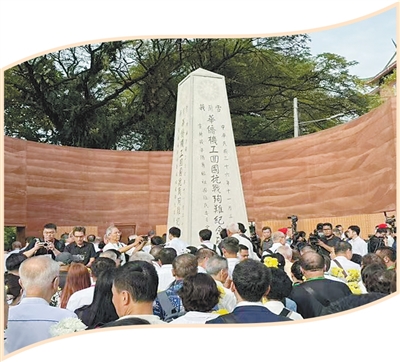
“中国在世界反法西斯战争中发挥了重要作用”(伟大胜利·历史贡献)
Ren Min Ri Bao· 2025-08-26 22:22
Core Viewpoint - The article highlights the legacy of John Rabe, a German who played a significant role in protecting Chinese civilians during the Nanjing Massacre, and how his grandson, Thomas Rabe, is dedicated to preserving and promoting this history and humanitarian spirit [2][3][5]. Group 1: Historical Context - John Rabe was a key figure in establishing the Nanjing Safety Zone during the Japanese invasion in 1937, providing refuge for over 200,000 Chinese people [2]. - Rabe's diary serves as one of the most important and detailed historical records of the Nanjing Massacre, which has been recognized by Chinese leaders for its humanitarian significance [2]. Group 2: Family Legacy and Contributions - Thomas Rabe is actively involved in preserving his grandfather's legacy by organizing historical documents and promoting Rabe's humanitarian spirit through various initiatives, including the establishment of six John Rabe exchange centers globally [3]. - He has donated the manuscript of "Rabe's Diary" to the Central Archives of China and is working on a book titled "Rabe and China," which recounts Rabe's experiences in China over 30 years [3]. Group 3: Medical Contributions and Cooperation - Thomas Rabe, a professor and experienced obstetrician, expresses admiration for China's advancements in healthcare infrastructure, medical technology, and public health systems, emphasizing the importance of international cooperation in global health [4]. Group 4: Recognition and Awards - Thomas Rabe has received several honors, including the "China People's Anti-Japanese War Victory 70th Anniversary" medal and the "Friendship Award" from the Chinese government, reflecting the deep appreciation for his family's contributions to Sino-German friendship [5].
焦点访谈|回望九一八 擦亮中国人民14年不屈抗战的历史记忆
Yang Shi Wang· 2025-08-26 14:29
Core Viewpoint - The article commemorates the 80th anniversary of the victory in the Chinese People's War of Resistance Against Japanese Aggression and the World Anti-Fascist War, highlighting China's significant contributions and sacrifices during this period, including 35 million casualties [1][18]. Historical Context - The article discusses the historical significance of the September 18 Incident (Jiuyiba Shibian) in 1931, which marked the beginning of China's 14-year resistance against Japanese aggression and the broader World Anti-Fascist War [1][3][4]. - The Chinese Communist Party (CCP) issued the "9·19 Declaration" the day after the incident, which was the first declaration of resistance against fascism by an invaded nation [1][4]. CCP's Role - The CCP emerged as a key player in mobilizing resistance against Japanese imperialism, issuing a series of declarations calling for armed resistance and uniting various anti-Japanese forces [5][7]. - The CCP's actions contrasted sharply with the Nationalist government's policy of non-resistance, which allowed for the rapid expansion of Japanese control over Northeast China [7][9]. Military Engagement - The Northeast Anti-Japanese United Army, formed under the CCP's leadership, engaged in guerrilla warfare against Japanese forces, demonstrating resilience despite severe hardships [9][16]. - The article notes that from 1931 to 1936, the Nationalist government allocated significantly more resources to suppressing the CCP than to defending against Japan, highlighting the CCP's commitment to national unity and resistance [9][18]. Contribution to the War Effort - China's prolonged engagement in the war significantly impacted the overall strategy against fascism, tying down over 50% of Japanese military forces and delaying their plans [16][18]. - The article emphasizes that China's sacrifices during the war, including direct economic losses exceeding $1 trillion (adjusted for 1937 values), were greater than those of many European nations involved in the conflict [18].