
台独

Search documents
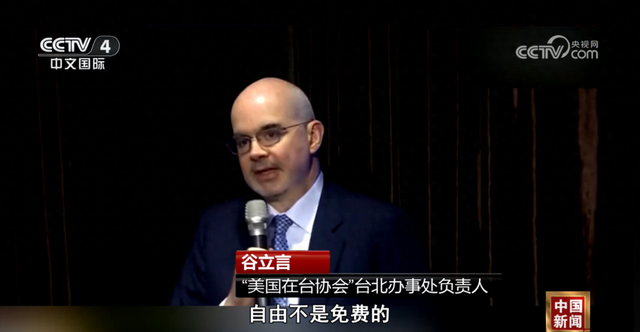
叫嚣“自由不是免费的”,美在台协会公开索要保护费
Xin Lang Cai Jing· 2026-01-25 03:48
在蓝白民代的合力阻挡下,台立法机构至今仍未审查通过1.25万亿新台币的对美军购特别预算案。22 日,"美国在台协会"台北办事处负责人谷立言竟然公开叫嚣,"自由不是免费的"。岛内舆论痛批,这根 本是公开向台湾索要保护费,但事实却是再多的"保护费"也换不来台湾的安全和自由。 岛内舆论:再多保护费也换不来和平与自由 "美国在台协会"台北办事处负责人谷立言近日在一次公开活动上扬言"自由不是免费的",并直言民进党 提出的1.25万亿新台币防务特别预算很重要。 "美国在台协会"台北办事处负责人谷立言: 自由不是免费的,美国只能在朋友们自助的程度内提供协助。 外界认为,谷立言的言论是公然催促台立法机构尽快通过天价防务特别预算,形同直接索要"保护费"。 台湾时事评论员周锡玮: 台湾网红CHEAP: 非常明目张胆地勒索。 国民党民意代表赖士葆: 他讲说"自由不是免费的",他的意思就是,你为了要自由,我们保护你,你要付出代价,这是保护费的 概念。 国民党桃园市议员詹江村: 我们每年9000万的预算,难道我们没有花钱吗?你们美国卖给我们的东西,每一样都比市价还要贵,我 们难道没有付出我们的代价吗?现在不只是买武器而已,还必须要对美 ...

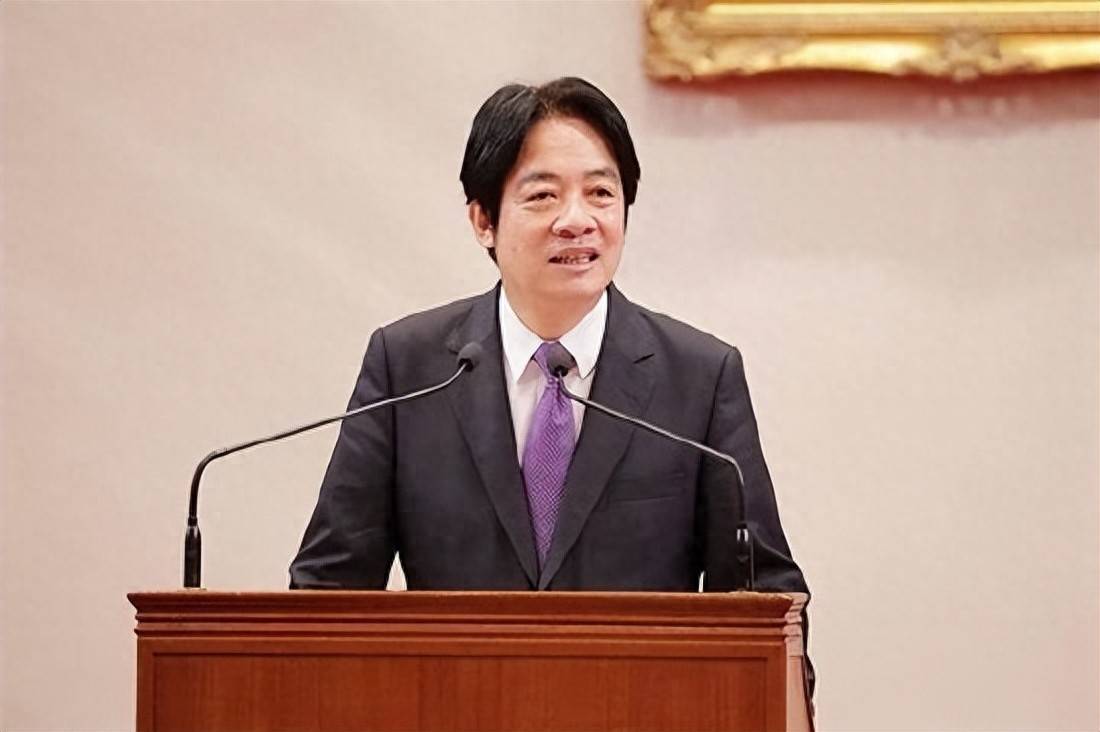
特朗普让中国给面子,大陆惩戒名单出炉,赖清德家人已逃亡美国?
Sou Hu Cai Jing· 2026-01-24 15:49
Group 1 - The core viewpoint of the article highlights the dissatisfaction within Taiwan regarding the recent trade agreement with the United States, which is perceived as detrimental to Taiwan's industrial foundation and a form of "selling out" by the Lai Ching-te administration [2][4]. - The agreement involves a reduction of the tariff rate on Taiwan's goods to 15% without cumulative calculations, but this is seen as a minimal concession rather than a significant achievement [2][4]. - Taiwan's semiconductor industry is required to transfer up to 40% of its production capacity to the U.S., which poses a risk to Taiwan's economic structure and is viewed as a systematic hollowing out of its key industries [4]. Group 2 - Taiwan's government has announced a $500 billion investment plan in the U.S., which exceeds the investment commitments of South Korea ($350 billion) and approaches that of Japan ($550 billion), raising questions about the economic rationale behind such a scale [4]. - A special military procurement budget of NT$1.5 trillion has been approved, but lacks clarity on specific purchases and timelines, representing an open-ended financial commitment to the U.S. [4]. - The Lai administration's approach to negotiations has been criticized for being opaque, with no public involvement or disclosure of details, leading to widespread discontent among the Taiwanese populace [5]. Group 3 - Lai Ching-te's family members have established lives in the U.S., which has led to public scrutiny and accusations of hypocrisy, as he promotes a strong anti-China stance while his family benefits from U.S. residency [7]. - The administration's policies, such as extending mandatory military service, have sparked significant backlash from the youth in Taiwan, who feel they are being unfairly burdened [7]. - The increasing pressure from mainland China and the perception of Lai's actions as self-serving have contributed to a growing sentiment among the Taiwanese people against his administration [9][10].
统一大道光明,“台独”死路一条
Xin Lang Cai Jing· 2026-01-23 09:38
Group 1 - The article discusses the rapid changes in the international landscape, highlighting the shift away from U.S. hegemony and the emergence of a new world order, with various leaders expressing skepticism towards U.S. intentions [1][2] - It emphasizes the forced relocation of 40% of advanced semiconductor production to the U.S. and the implications for Taiwan's economy, portraying Taiwan as vulnerable and exploited under current political leadership [2][3] - The commentary reflects on the disillusionment among Taiwanese youth regarding their future, questioning the viability of independence and recognizing the importance of economic opportunities and development [3][4] Group 2 - The narrative suggests that Taiwan's future lies not in the pursuit of independence but in the integration with the mainland, framing unification as a path towards shared prosperity and stability [4] - It critiques the current Taiwanese administration for its ineffective governance and reliance on U.S. support, which is portrayed as increasingly unreliable [2][3] - The article concludes with a call for unity among Chinese people, emphasizing that the path to a brighter future is through collaboration rather than division [4]
总台海峡时评:赖清德当局卖台媚美必定自食恶果!
Xin Lang Cai Jing· 2026-01-22 15:08
近日,美台达成所谓"贸易协议"。面对这份美挥舞关税"大棒"对台实施经济掠夺的不公平、不合理协 议,赖清德当局却一路跪迎。对此,国台办发言人彭庆恩1月21日一针见血指出,该"贸易协议"实质是 外部势力与"台独"分裂势力相互勾结,掠夺台湾民众血汗、掏空台湾产业根基的"卖身契"。 为谋"独"私利,赖当局卑躬屈膝、迎合讨好,媚美跪美无原则、卖台害台无底线。此次其签署"卖台"协 议,把"护台神山"和台半导体产业拱手奉美,承诺在美巨额投资5000亿美元,出卖的是台湾利益,损害 的是民众福祉。其以约台湾外汇存底80%的5000亿美元向美交政治献金,将严重拖垮台湾经济;其以 40%台半导体产能为筹码向美输诚,将使台湾核心产业优势荡然无存;其以牺牲台湾民众相关就业红利 为代价为美创造高薪就业机会,将导致台湾失业问题加剧……赖当局如此任人宰割,只会彻底断送台湾 前途。 卖台媚美,赖当局必定自食恶果。一方面,"倚美谋独"的卑劣伎俩已骗不了岛内民众,此次赖当局"砸 锅卖铁式妥协"遭到岛内民众强烈反对就是最好证明。中国国民党主席郑丽文严厉指责赖当局为取悦美 国不惜"变卖家当";岛内舆论直指赖清德的短视操作毁台害台;岛内许多网友更要求下 ...
总台海峡时评丨赖清德当局卖台媚美必定自食恶果!
Xin Lang Cai Jing· 2026-01-22 15:07
Group 1 - The recent trade agreement between the US and Taiwan is viewed as an unfair and unreasonable deal that exploits Taiwan's economy, with the Taiwanese government accused of capitulating to external pressures [1] - The agreement involves a commitment of $500 billion in investments from the US, which is seen as detrimental to Taiwan's economic stability and a significant sacrifice of its semiconductor industry [1] - The Taiwanese government is criticized for compromising the welfare of its citizens and risking job losses in exchange for creating high-paying jobs in the US, which could exacerbate unemployment issues in Taiwan [1] Group 2 - There is strong opposition within Taiwan against the government's actions, with public sentiment reflecting a rejection of the perceived betrayal of national interests [2] - The Taiwanese government is warned that its reliance on the US for independence will ultimately lead to abandonment once the semiconductor industry is fully exploited [2] - The narrative emphasizes that without a strong backing from the mainland, Taiwan risks becoming a target for external forces, highlighting the importance of unity with the mainland for Taiwan's future [2]
卢特尼克的三巴掌,打不破“台独”的信息茧房
经济观察报· 2026-01-21 12:45
Core Viewpoint - The implementation of the Taiwan-US agreement signifies a continuous decline in the importance of semiconductors in Taiwan's economic landscape, while the military-industrial complex in Taiwan is experiencing significant growth [1][4]. Group 1: Taiwan-US Agreement and Semiconductor Industry - On January 16, the US announced a consensus with Taiwan regarding tariffs and investments, with Taiwan committing to an investment of up to $500 billion, including TSMC's factory in the US [2]. - US Commerce Secretary Gina Raimondo expressed that Taiwan needs to keep the US president happy, indicating a power dynamic where Taiwan's semiconductor industry may face heavy tariffs if commitments are not met [2]. - The commentary from Taiwanese media reflects a split in perception, with the blue camp criticizing the government for selling out Taiwan's interests, while the green camp attempts to portray the agreement as a significant victory [4]. Group 2: Military-Industrial Complex Growth - The Taiwan People's Party leader Huang Kuo-chang revealed a special budget of NT$1.25 trillion aimed at strengthening Taiwan's defense, with concerns raised about the allocation of these funds [5]. - Reports indicate irregularities in defense procurement, with companies unrelated to military supplies winning contracts, raising questions about potential corruption and misallocation of defense budgets [8]. - The commentary suggests that as long as the pro-independence Democratic Progressive Party remains in power, Taiwan's defense budget will continue to grow, leading to an increase in the military-industrial complex [10].

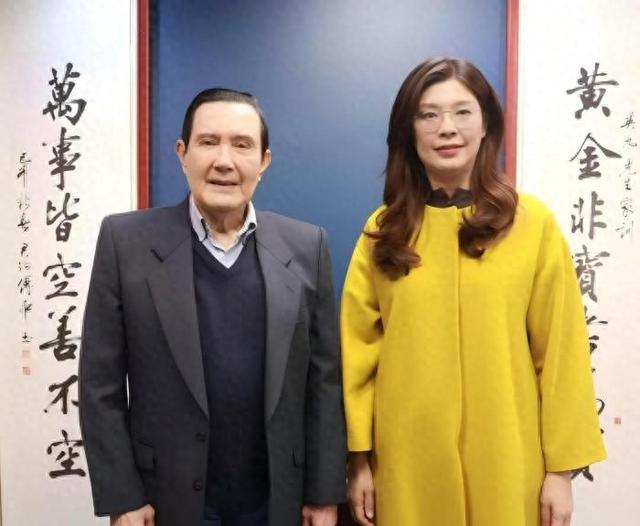
马英九叮嘱郑丽文访陆不穿高跟鞋、勤练书法,萧旭岑独家解读
Xin Lang Cai Jing· 2026-01-21 11:18
Core Viewpoint - The meeting between KMT Chairperson Zheng Liwen and former KMT Chairman Ma Ying-jeou highlights the ongoing concern for cross-strait relations and the support for KMT's efforts to promote dialogue and exchanges with mainland China [1][5]. Group 1 - Zheng Liwen conveyed that Ma Ying-jeou expressed strong support for the KMT's approach to cross-strait exchanges and breaking the ice in relations [1][5]. - Ma Ying-jeou criticized Lai Ching-te's self-identification as a "pragmatic Taiwan independence worker," stating that "pragmatism" and "Taiwan independence" are fundamentally incompatible, and emphasized that there is no international support for Taiwan independence, labeling it a dead end [2][5]. - Ma Ying-jeou offered practical advice to Zheng Liwen for her potential visit to mainland China, suggesting she avoid wearing high heels and practice calligraphy, which he believes reflects the importance of Chinese culture [2][5]. Group 2 - KMT Vice Chairman Hsiao Hsu-tsen explained that Ma Ying-jeou's suggestions were made in a warm manner, aiming for Zheng Liwen to present her best self during any future visits to the mainland [5]. - Hsiao Hsu-tsen noted that Ma Ying-jeou's recommendations stem from his own experiences visiting mainland China, encouraging Zheng Liwen to engage more with mainland friends [5]. - Ma Ying-jeou expressed confidence in Zheng Liwen's leadership and her commitment to advancing cross-strait relations since taking over as party chair [5].
国台办:5000亿美元政治献金是对台湾民众敲骨吸髓
Xin Lang Cai Jing· 2026-01-21 10:25
Core Viewpoint - The recent Taiwan-US tariff negotiations resulted in Taiwan agreeing to a significant investment commitment of $500 billion, which raises concerns about potential fiscal risks and the future of Taiwan's semiconductor industry [2][3][4]. Group 1: Investment Commitments - Taiwan has committed to at least $250 billion in direct investments to expand its advanced semiconductor, energy, and AI sectors in the US, along with an additional $250 billion in credit guarantees to support further investments in the US semiconductor supply chain [2][3]. - The total investment of $500 billion is approximately 80% of Taiwan's foreign exchange reserves, equating to about 680,000 New Taiwan Dollars (approximately 150,000 RMB) per citizen [9]. Group 2: Tariff Negotiations - The tariff rate was negotiated down from 20% to 15%, which has been criticized as an unfair exchange for Taiwan's substantial investment commitments [3][8]. - US Commerce Secretary stated that Taiwanese chip companies not establishing factories in the US would face a 100% tariff penalty, aiming to shift 40% of Taiwan's semiconductor supply chain to the US [8][9]. Group 3: Industry Concerns - There are fears that the negotiations could lead to the hollowing out of Taiwan's core industries and a significant outflow of talent, undermining Taiwan's competitive advantage in technology [2][4]. - Critics argue that the agreement represents a capitulation to US economic pressure, potentially damaging Taiwan's industrial future and welfare [4][9].
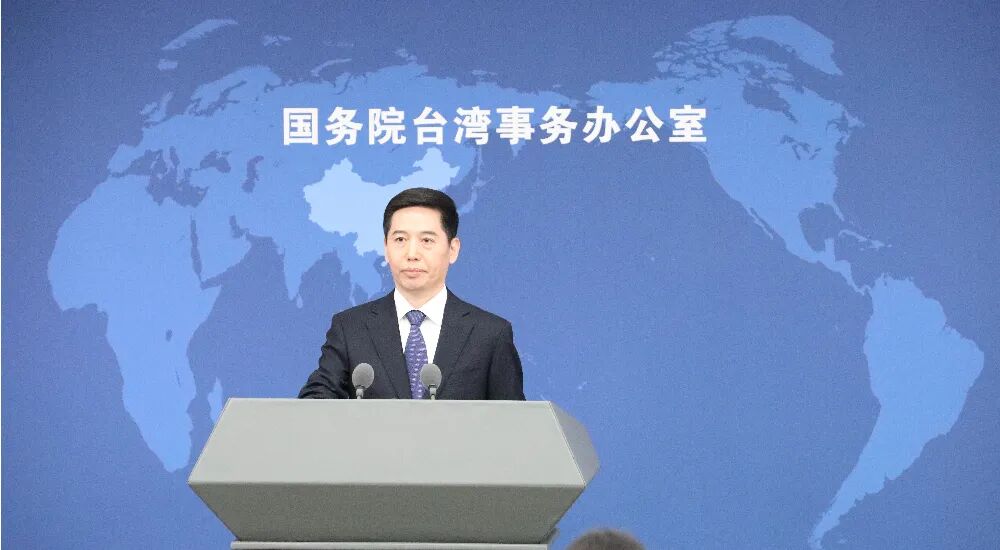
国台办:对于迫害大陆配偶的“台独”帮凶爪牙 将依法追责严惩不贷
Zhong Guo Xin Wen Wang· 2026-01-21 10:19
Core Viewpoint - The spokesperson for the Taiwan Affairs Office condemned the actions of the Democratic Progressive Party (DPP) for infringing on the rights of mainland spouses and threatening their legitimate interests, emphasizing the need for accountability and punishment for those involved in such actions [1]. Group 1 - The DPP has been accused of severely undermining the rights of mainland spouses, reflecting its "Taiwan independence" nature [1]. - Recent comments from a mainland spouse expressing a desire for unification and simplified characters have sparked controversy, leading to stricter residency application processes for mainland spouses [1]. - The Taiwan Immigration Agency revoked the residency permit of a mainland spouse influencer due to her pro-unification statements, indicating a crackdown on such expressions [1].
民进党当局称与美关税谈判达成预定目标 国台办:卑躬屈膝的投降书
Zhong Guo Xin Wen Wang· 2026-01-21 09:53
Group 1 - The core viewpoint of the article is that the recent trade negotiations between Taiwan and the U.S. are seen as a capitulation by the Taiwanese authorities, compromising the welfare and industrial interests of the Taiwanese people in the face of economic pressure from the U.S. [1][2] - The U.S. has announced that the tariff rate applicable to Taiwanese goods will not exceed 15%, down from 20%, while Taiwan is expected to make a substantial investment of at least $250 billion in the U.S. semiconductor and technology sectors [1][2] - The Taiwanese authorities are criticized for attempting to present this compromise as a significant breakthrough, while in reality, it is viewed as a detrimental move that could lead to the hollowing out of Taiwan's core industries [2] Group 2 - Taiwan is facing a commitment to invest $500 billion, which is approximately 80% of its foreign exchange reserves, equating to about 680,000 New Taiwan dollars per citizen, in exchange for reduced tariffs [2] - There is a significant risk that 40% of Taiwan's semiconductor supply chain may be relocated to the U.S., which could undermine Taiwan's industrial advantages and transform it from a "technology island" to an "empty island" [2] - The results of the trade negotiations highlight the precarious position of Taiwan, suggesting that reliance on external powers is not a viable strategy for its future [3]