
市场化债转股

Search documents
招银金融资产投资有限公司获批开业 注册资本150亿元
Zhong Guo Jin Rong Xin Xi Wang· 2025-11-22 01:51
Core Viewpoint - China Merchants Bank has received official approval from the National Financial Regulatory Administration to establish China Merchants Financial Asset Investment Co., marking it as one of the first batch of joint-stock bank financial asset investment companies approved in the country [1] Group 1: Company Overview - China Merchants Financial Asset Investment Co. is a wholly-owned subsidiary of China Merchants Bank, registered in Shenzhen with a registered capital of 15 billion RMB, making it the financial asset investment company with the highest initial registered capital at its establishment [1] Group 2: Business Focus - The company will engage in market-oriented debt-to-equity swap business, leveraging the comprehensive operational and collaborative advantages of China Merchants Bank's multiple asset management licenses to provide integrated services of "funding + capital" [1] Group 3: Strategic Direction - China Merchants Financial Asset Investment will focus on intelligent, green, and integrated development, supporting the construction of a manufacturing power, quality power, aerospace power, transportation power, and network power [1] - The company aims to utilize long-term and patient capital advantages to promote technological innovation, industrial innovation, and assist enterprises in reducing leverage, facilitating transformation and upgrading, and fostering a virtuous cycle among technology, industry, and finance [1]

注册资本150亿元,招商银行旗下AIC获批开业
Mei Ri Jing Ji Xin Wen· 2025-11-21 15:36
Core Points - China Merchants Bank has received approval from the National Financial Supervision Administration to establish its financial asset investment company, marking it as one of the first joint-stock banks to do so [1][2] - The establishment of this company aligns with national development goals and aims to enhance the bank's comprehensive operational capabilities while providing diversified financing support to enterprises [1][2] Group 1 - The newly established company, China Merchants Jin Investment, is a wholly-owned subsidiary of China Merchants Bank, with a registered capital of 15 billion RMB, making it the highest initial registered capital among financial asset investment companies [1] - The company will focus on market-oriented debt-to-equity conversion and equity investment pilot businesses, leveraging the bank's multiple asset management licenses for integrated services [2] - It aims to support the construction of a modern industrial system, emphasizing intelligent, green, and integrated development, while promoting innovation in technology and industry [2] Group 2 - The company will target key areas such as technological innovation, green low-carbon initiatives, and advanced manufacturing to assist enterprises in reducing leverage and facilitating transformation [2] - It is positioned as a driving force for the construction of a strong manufacturing nation, quality nation, aerospace nation, transportation nation, and network nation [2]
注册资本150亿元,招银金融资产投资有限公司获批开业
Xin Lang Cai Jing· 2025-11-21 15:16
Core Insights - China Merchants Bank has received official approval from the National Financial Regulatory Administration to establish China Merchants Financial Asset Investment Co., Ltd, marking it as one of the first batch of joint-stock bank financial asset investment companies approved in the country [1] Company Overview - China Merchants Financial Investment is a wholly-owned subsidiary of China Merchants Bank, registered in Shenzhen with a registered capital of 15 billion RMB, making it the highest initial registered capital amount for a financial asset investment company at its establishment [1] Strategic Importance - The establishment of China Merchants Financial Investment represents a significant step for China Merchants Bank in responding to national financial reform initiatives and supporting the real economy [1] Business Focus - The company will engage in market-oriented debt-to-equity swap business, leveraging China Merchants Bank's comprehensive asset management licenses to provide integrated financial services combining "funds + capital" [1] Development Goals - As a key player in modern industrial system construction, China Merchants Financial Investment aims to focus on intelligent, green, and integrated development, supporting the construction of a strong manufacturing nation, quality nation, aerospace nation, transportation nation, and cyber nation [1] Investment Areas - The company will concentrate on key sectors such as technological innovation, green low-carbon initiatives, and advanced manufacturing, assisting enterprises in reducing leverage, promoting transformation and upgrading, and fostering a virtuous cycle among technology, industry, and finance [1]
招商银行(03968.HK):招银金融资产投资获准开业
Ge Long Hui· 2025-11-21 14:51
格隆汇11月21日丨招商银行(03968.HK)公告,公司收到《国家金融监督管理总局关于招银金融资产投资 有限公司开业的批覆》(金覆[2025]667号)。根据上述批覆,公司筹建的招银金融资产投资有限公司获准 开业,公司将按照有关规定和程序前往市场监督管理部门办理工商注册登记手续,领取企业法人营业执 照,并在所有工作准备就绪后依照有关规定完成招银金融资产投资有限公司的开业工作。 招银金融资产投资有限公司注册资本为人民币150亿元,为公司全资子公司。设立招银金融资产投资有 限公司后,公司将通过专业化开展市场化债转股业务,深化产融协同与集团协同,服务实体经济;同时 积极开展股权投资试点业务,赋能科技创新,进一步提升公司综合化经营能力,全面推动高质量发展。 ...
招商银行(03968) - 关於招银金融资產投资有限公司获准开业的公告
2025-11-21 14:45
招商銀行股份有限公司 香港交易及結算所有限公司及香港聯合交易所有限公司對本公告的內容概不負責,對其準確性 或完整性亦不發表任何聲明,並明確表示,概不對因本公告全部或任何部份內容而產生或因倚 賴該等內容而引致之任何損失承擔任何責任。 招商銀行股份有限公司(「本公司」)收到《國家金融監督管理總局關於招銀金融資 產投資有限公司開業的批覆》(金覆[2025]667號)。根據上述批覆,本公司籌建的 招銀金融資產投資有限公司獲准開業,本公司將按照有關規定和程序前往市場監 督管理部門辦理工商註冊登記手續,領取企業法人營業執照,並在所有工作準備 就緒後依照有關規定完成招銀金融資產投資有限公司的開業工作。 招銀金融資產投資有限公司註冊資本為人民幣150億元,為本公司全資子公司。 設立招銀金融資產投資有限公司後,本公司將通過專業化開展市場化債轉股業 務,深化產融協同與集團協同,服務實體經濟;同時積極開展股權投資試點業 務,賦能科技創新,進一步提升本公司綜合化經營能力,全面推動高質量發展。 招商銀行股份有限公司董事會 2025年11月21日 於本公告日期,本公司的執行董事為王良及鍾德勝;本公司的股東董事(非執行 董事)為繆建民、石 ...
兴业银行旗下AIC开业,招商银行也提上日程!另有2家已获批筹建
Xin Lang Cai Jing· 2025-11-21 11:02
另有2家银行获批筹建 11月19日,在深圳国际金融大会上,王良表示,旗下AIC将于近期即将开业。金监总局官网 显示,7月3日,招商银行获批筹建招银金投。同时,此前有媒体报道称,该公司获批在深筹 建。 又有股份行旗下金融资产投资公司(AIC)即将开业! 11月19日,招商银行行长王良在深圳国际金融大会上表示,旗下AIC将于近期即将开业。此 前,该行发布公告称,招银金融资产投资有限公司(以下简称"招银金投")注册资本150亿 元,为其全资子公司。而在三日前,兴业银行旗下AIC兴银投资在福州揭牌成立并举行签约 仪式,标志着我国首家股份行AIC正式成立。此外,邮储银行、中信银行AIC均已获批筹 建。 自2017年国内首批大行设立AIC以来,至今已有八年时间,彼时的工商银行、农业银行、中 国银行、建设银行、交通银行相继成立了各自的AIC,成为首批持牌机构,主要聚焦科技、 绿色等"五篇大文章"重点领域。 招商银行旗下AIC即将开业, 另外,招银金投注册资本为150亿元,超过兴业银行和中信银行旗下AIC的100亿元注册资 本。 此前,招商银行发布公告称,设立招银金投系招商银行积极响应国家号召,主动融入国家发 展大局的重要举 ...


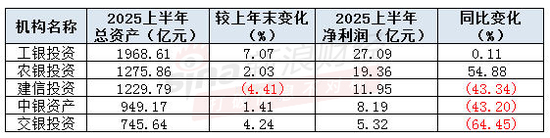
注册资本100亿!首家股份行AIC兴银投资成立
Xin Lang Cai Jing· 2025-11-16 23:50
Core Points - The establishment of Xingyin Financial Asset Investment Co., Ltd. marks the first licensed Asset Investment Company (AIC) initiated by a joint-stock bank in China, transitioning the AIC landscape from a "state-owned era" to a "joint-stock era" [1][2][4] - Xingyin Investment has a registered capital of 10 billion yuan and will focus on market-oriented debt-to-equity swaps to support the capital structure optimization and leverage reduction of technology and private enterprises [2][4] - The launch of Xingyin Investment aligns with national strategies to empower the real economy and enhance financial services for technology-driven companies, with a notable increase in technology loans by Xingyin Bank [4][5] Company Overview - Xingyin Investment is the sixth licensed AIC approved in China, following five major state-owned banks, and aims to innovate financial service models while strengthening risk management [2][5] - The company is expected to leverage the resources of its parent bank, Xingyin Bank, to create value through comprehensive financial services [2][4] Industry Context - The AIC sector has seen rapid expansion in 2025, with regulatory support from the National Financial Supervision Administration to broaden the scope of AIC trials, allowing more commercial banks to engage in market-oriented debt-to-equity swaps and equity investment [5][6] - The establishment of AICs is anticipated to enhance the financial market structure, creating a complementary landscape of "state-owned + joint-stock" banks, and facilitating the transition of banks from "credit intermediaries" to "comprehensive financial service providers" [6]
全国首家股份制银行AIC成立
Zheng Quan Ri Bao· 2025-11-16 16:51
Core Viewpoint - The establishment of Xingyin Financial Asset Investment Co., Ltd. marks the first national joint-stock bank financial asset investment company (AIC) in China, aimed at enhancing support for technology innovation and private enterprises through market-oriented debt-to-equity swaps [1] Group 1 - Xingyin Investment was officially established in Fuzhou on November 16, following the approval from the National Financial Supervision Administration in March to expand AIC pilot programs [1] - Xingyin Bank became the first national joint-stock bank to be approved for the establishment of an AIC on May 7, and after six months of preparation, it received approval to commence operations on November 7 [1] - The registered capital of Xingyin Investment is RMB 10 billion, and it is located in Fuzhou, Fujian Province [1] Group 2 - The company will focus on professional and market-oriented debt-to-equity swaps and related businesses to support technology innovation and private enterprises, aiming to optimize capital structures and effectively reduce leverage [1] - Chairman Chen Wei emphasized the importance of optimizing governance structures, enhancing internal control systems, and building a clear accountability framework while prioritizing risk control mechanisms [1] - The company plans to adopt a differentiated competitive strategy, starting from Fujian and expanding nationwide, with a focus on market-oriented debt-to-equity swaps to support traditional industry upgrades and the growth of emerging industries [1]
首家股份制银行AIC落地,兴银投资在福州揭牌成立
Bei Jing Shang Bao· 2025-11-16 12:40
Core Points - The establishment of Xingyin Financial Asset Investment Co., Ltd. marks the first joint-stock bank financial asset investment company (AIC) in China [1] - The company aims to support technology innovation and private enterprises by optimizing capital structures and reducing leverage [1] Group 1: Company Establishment - Xingyin Investment was officially established in Fuzhou on November 16, following the approval from the financial regulatory authority [1] - The registered capital of Xingyin Investment is RMB 10 billion, located in Fuzhou, Fujian Province [1] Group 2: Regulatory Background - In March, the financial regulatory authority issued a notice to expand the pilot program for financial asset investment companies [1] - Xingyin Bank was the first joint-stock bank approved to establish an AIC in May, and it received operational approval in November [1] Group 3: Strategic Focus - The company will focus on market-oriented debt-to-equity swaps, supporting traditional industry upgrades and emerging industries [2] - Xingyin Investment signed strategic cooperation agreements with four investment institutions and project cooperation agreements with 12 enterprises, with a total intended amount exceeding RMB 10 billion [2]
投贷联动市场格局即将改变,银行业迎发展新机遇,银行ETF基金(515020)延续涨势
Mei Ri Jing Ji Xin Wen· 2025-11-12 06:17
Core Insights - The bank ETF fund (515020) continues its upward trend, reaching a record high of 756 million shares and a scale of 1.352 billion yuan as of November 11 [1] - The approval of the first asset investment company (AIC) for joint-stock banks marks their entry into the market-oriented debt-to-equity swap business, previously exclusive to state-owned banks [1] - Debt-to-equity swaps allow banks to convert debt into equity, transforming the creditor-debtor relationship into a shareholding relationship, which can help alleviate non-performing assets [1] Group 1 - The establishment of AICs is expected to increase the number of joint-stock banks entering the debt-to-equity swap market, enhancing the financial landscape [1] - AICs are anticipated to facilitate the flow of funds towards technological innovation and tech-oriented enterprises, improving the efficiency of financial resource allocation [1] - The bank sector is currently at a historical low, highlighting the investment value of bank stocks, as the bank ETF fund tracks the CSI Bank Index with 42 constituent stocks [1]