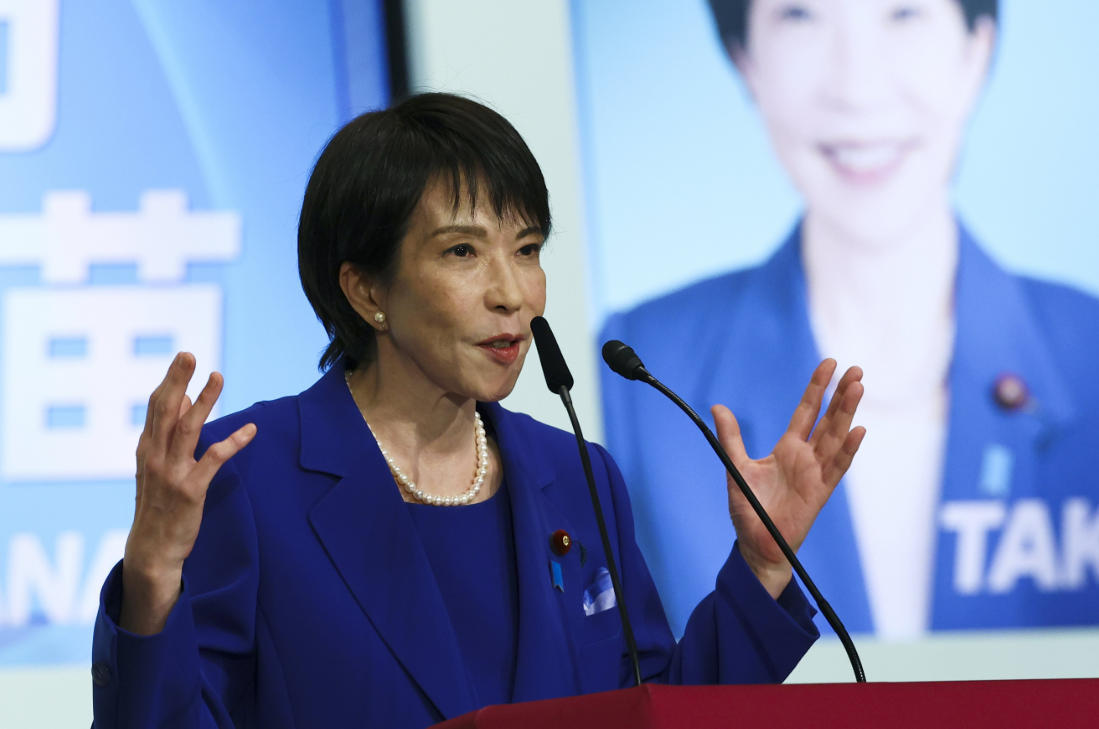
早苗经济学

Search documents
“早苗经济学”:“安倍经济学”的2.0版本?
Hua Er Jie Jian Wen· 2025-10-06 02:34
Core Insights - The unexpected victory of Sanae Takaichi as the new president of Japan's ruling Liberal Democratic Party signals the introduction of a new economic policy framework known as "Takaichi Economics" [1] - This policy is perceived as a continuation of former Prime Minister Shinzo Abe's "Abenomics," but with a stronger emphasis on fiscal expansion [1][3] - Market participants are closely monitoring the implications of this political shift on Japan's monetary policy, fiscal discipline, and yen exchange rate [1] Economic Policy Framework - "Takaichi Economics" is structured around three main pillars, reminiscent of "Abenomics" [2] - The first pillar focuses on enhancing national crisis management capabilities and promoting economic growth [3] - The second pillar advocates for expansionary fiscal policies, emphasizing the need to raise taxes and utilize existing government funds to avoid increasing Japan's national debt [3] - The third pillar clarifies that the government will be responsible for monetary policy, while the Bank of Japan retains autonomy in selecting specific policy tools [3] Central Bank Policy Outlook - The policy stance of Takaichi aligns with that of Bank of Japan Governor Kazuo Ueda, both recognizing the current inflation as cost-push rather than demand-driven [4] - Nomura Securities maintains its forecast that the Bank of Japan will raise interest rates in January 2026, with a potential pause thereafter [4] - However, there are uncertainties; a rapid depreciation of the yen or a stock market rally could lead to an earlier rate hike, while fiscal expansion could hinder rate increases [4] Yen Exchange Rate Outlook - The yen is expected to face short-term selling pressure, with the dollar-yen exchange rate potentially testing the critical level of 150 [5][6] - The sustainability of the yen's weakness will depend on Takaichi's public statements regarding the independence of the central bank [7] - Any signals perceived as attempts to curb or prevent interest rate hikes could lead to further depreciation of the yen [7] Upcoming Political Events - Takaichi is expected to be nominated as Prime Minister around October 15 [8] - A significant diplomatic event is the anticipated visit of U.S. President Donald Trump from October 27 to 29, focusing on trade agreements, including Japan's $550 billion foreign direct investment [8] - The new government is expected to draft a supplementary budget for fiscal year 2025 in late November, which will reveal the actual scale of fiscal expansion [8]

自民党选出首位女总裁,11天后日本或产生首位女首相
Yang Shi Xin Wen Ke Hu Duan· 2025-10-04 13:38
Core Viewpoint - The election of Sanae Takaichi as the 29th president of Japan's ruling Liberal Democratic Party (LDP) marks a significant milestone as she becomes the first female president in the party's history and is likely to be Japan's first female prime minister [1][2]. Group 1: Background of Sanae Takaichi - Sanae Takaichi, born in 1961, has a diverse background, having studied at the prestigious Matsushita Institute of Government and Management and later pursued further education in the United States [1][2]. - Takaichi has been a member of the House of Representatives since 1993, initially running as an independent before joining the LDP, and has held various cabinet positions, including Minister of Economic Security and Minister of Internal Affairs [2][4]. Group 2: Political Position and Ideology - Takaichi is known for her strong conservative stance, advocating for the establishment of a National Intelligence Agency and increased defense spending, aligning closely with the legacy of former Prime Minister Shinzo Abe [5][6]. - She has been labeled as a "hardline conservative" and has faced criticism within her party for her right-wing views, including her visits to the Yasukuni Shrine [6]. Group 3: Challenges Ahead - Following her election, Takaichi will face significant challenges, including the upcoming prime ministerial election scheduled for October 15, where the LDP currently lacks a majority in the Diet [7][8]. - Key challenges include the need for coalition-building with other parties, addressing internal party issues, and restoring public trust amid economic pressures such as rising prices [9].


自民党选出首位女总裁 11天后日本或产生首位女首相
Yang Shi Xin Wen· 2025-10-04 07:36
Core Viewpoint - The election of Sanae Takaichi as the 29th president of Japan's ruling Liberal Democratic Party (LDP) marks a significant milestone as she becomes the first female president in the party's history and is likely to be Japan's first female prime minister [1][11]. Group 1: Election Details - The LDP presidential election took place on October 4, where Takaichi defeated her opponent, Agriculture Minister Koizumi Shinjiro, after two rounds of voting [1]. - Takaichi's victory is seen as a potential shift in Japan's political landscape, with her strong conservative stance and alignment with former Prime Minister Shinzo Abe's policies [9][10]. Group 2: Background of Sanae Takaichi - Born in 1961, Takaichi has a diverse background, having studied at the prestigious Matsushita Institute of Government and Management and later in the United States [4]. - She has been a member of the Japanese House of Representatives since 1993 and has held various significant cabinet positions, including Minister of Economic Security and Minister of Internal Affairs [6]. Group 3: Political Stance and Challenges - Takaichi is known for her hardline conservative views, advocating for the establishment of a National Intelligence Agency and increased defense spending [10]. - Following her election, she faces immediate challenges, including a temporary national assembly scheduled for October 15, where she is expected to be nominated as the new prime minister [11][13]. - The LDP currently lacks a majority in the Diet, complicating her position, but internal disarray among opposition parties may work in her favor [13][14]. - Takaichi must also address internal party issues, including unity and public trust, while navigating Japan's economic pressures and social challenges [15].