非利息收入

Search documents
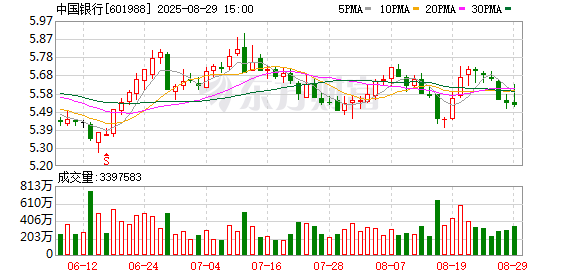
“有信心、有能力为投资者创造更多价值回报!”中国银行拟中期派息352.5亿元!
Zheng Quan Ri Bao· 2025-08-30 02:45
Core Viewpoint - China Bank reported a solid performance in the first half of 2025, focusing on shareholder returns and strategic goals amidst a challenging low-interest environment [2][3] Group 1: Shareholder Returns - Since its reform and listing, China Bank has distributed over 940 billion yuan in dividends, maintaining a high payout ratio of 30% since 2015 [3] - For the first half of 2025, the bank plans to distribute a cash dividend of 1.094 yuan per share, totaling 35.25 billion yuan [3] - The bank's revenue grew by 3.61% year-on-year, indicating a strong performance relative to other state-owned banks [3] Group 2: Operational Strategy - The bank aims to improve its asset-liability structure and increase non-interest income in response to the domestic low-interest environment [4] - Key operational strategies include enhancing global competitiveness, maintaining net interest income, and optimizing customer and business structures [4] - The bank emphasizes the importance of technology and data-driven services to improve operational efficiency [4] Group 3: Industry Focus - China Bank is focusing on key industries such as new energy vehicles and photovoltaics, adjusting credit policies to support quality capacity while controlling excess capacity [5] - The bank supports market-driven mergers and acquisitions within these industries to enhance concentration among leading enterprises [5] - The bank's credit business in key industries remains stable, with a focus on risk management and identifying business opportunities in industry consolidation [5] Group 4: Revenue Generation - In the first half of 2025, China Bank achieved non-interest income of 114.6 billion yuan, with net fee income contributing 46.8 billion yuan [6] - The bank plans to enhance its wealth management services and capitalize on the recovering capital market to boost overall revenue [6] - The bank is also focusing on improving transaction banking services to meet growing demand for account management and settlement [6] Group 5: Financial Market Operations - China Bank is leveraging opportunities from the internationalization of the renminbi and enhancing its offshore RMB product offerings [7] - The bank aims to provide comprehensive risk management and cross-border financing services while balancing risk and return in a volatile market [7]


六大行上半年合计净赚约6825亿元 拟“大手笔”中期分红超2000亿元
Shang Hai Zheng Quan Bao· 2025-08-29 19:49
Core Viewpoint - The six major banks in China reported a total net profit of approximately 682.5 billion yuan for the first half of the year, with all banks showing year-on-year revenue growth, although some experienced "revenue growth without profit growth" [1][2]. Financial Performance - The six major banks' operating income grew year-on-year by 1.6%, 0.8%, 3.76%, 2.15%, 0.77%, and 1.50% respectively [2]. - Industrial and Commercial Bank of China (ICBC), China Bank (CB), and China Construction Bank (CCB) reported slight declines in net profit attributable to shareholders of 1.4%, 0.85%, and 1.37% respectively, while Agricultural Bank of China (ABC), Bank of Communications (BoCom), and Postal Savings Bank of China (PSBC) saw net profit increases of 2.7%, 1.61%, and 0.85% respectively [2]. Net Interest Margin - The net interest margin (NIM) continued to narrow across the six banks, impacting net interest income [2]. - ICBC attributed the NIM contraction to factors such as the reduction in loan market quotation rates (LPR) and changes in deposit term structures, although the pace of decline has shown signs of stabilization [2]. Non-Interest Income - Non-interest income became a significant growth driver for the banks, with increases in investment income, asset management, investment banking, and wealth management services [3]. - Non-interest income accounted for over 30% of the operating income for some banks, helping to mitigate the impact of interest rate cuts [3]. Financial Support for Key Sectors - The six banks have optimized financial support for key sectors such as technology innovation, consumption stimulation, and small and micro enterprises [4]. - ICBC reported over 10% growth in loans for manufacturing, strategic emerging industries, and green finance [4]. - ABC's county-level loans reached 10.77 trillion yuan, with a growth rate of 9.3%, exceeding the bank's average [4]. Asset Quality and Capital Adequacy - The asset quality of the six banks remained stable, with non-performing loan (NPL) ratios of 1.33%, 1.28%, 1.24%, 1.33%, 1.28%, and 0.92% respectively [5]. - The core tier one capital adequacy ratios were reported as 13.89%, 11.11%, 12.57%, 14.34%, 11.42%, and 10.52% respectively, indicating a solid capital position [5]. Dividend Plans - The six banks announced a substantial mid-term dividend plan totaling approximately 204.65 billion yuan for 2025 [6]. - Specific proposed dividend amounts include 50.40 billion yuan for ICBC, 41.82 billion yuan for ABC, 35.25 billion yuan for CB, 48.61 billion yuan for CCB, 13.81 billion yuan for BoCom, and 14.77 billion yuan for PSBC [6].


Powell Hints at Policy Shift: Time to Load Up on JPM Stock?
ZACKS· 2025-08-25 14:16
Core Viewpoint - Federal Reserve Chair Jerome Powell indicated a potential rate cut as early as September, shifting from a "higher-for-longer" stance to a more flexible approach, which positively impacted market sentiment and expectations for JPMorgan's performance [1][10]. Impact of Rate Cuts on JPMorgan's Net Interest Income (NII) - JPMorgan's balance sheet is highly asset-sensitive, leading to expected downward pressure on NII due to lower asset yields on variable-rate loans and securities [3]. - Management anticipates the near-term impact of rate cuts to be manageable, raising 2025 NII guidance to nearly $95.5 billion, up from a previous estimate of $94.5 billion for this year [4]. - JPMorgan's NII has shown a five-year CAGR of 10.1%, driven by high-interest rates since 2022 and the acquisition of First Republic Bank [5]. Non-Interest Income Outlook - The anticipated shift towards easier monetary policy is expected to enhance client activity, deal flow, and asset values, leading to potential growth in non-interest income streams [7][26]. - Lower borrowing costs are likely to revive corporate financing activity, boosting investment banking and advisory fees, with JPMorgan maintaining a leading position in global IB fees [8]. - Increased volatility in fixed income, currencies, and commodities is expected to benefit JPMorgan's trading revenues, as higher volumes in equities trading are anticipated [9]. Asset Quality and Credit Performance - Lower rates are expected to support asset quality by easing debt-service burdens and improving borrower solvency, particularly benefiting variable-rate consumer and leveraged corporate portfolios [12]. - Management expects Fed cuts to stabilize or modestly improve overall credit performance, especially in consumer and corporate loan books, with a projected card net charge-off rate of approximately 3.6% for 2025 [13]. Strategic Initiatives - JPMorgan continues to expand its branch network, with plans to add 500 branches by 2027, enhancing its competitive edge in relationship banking [14]. - The company has pursued strategic acquisitions, including a larger stake in Brazil's C6 Bank and the purchase of First Republic Bank, to diversify revenues and grow digital offerings [15]. - As of June 30, 2025, JPMorgan maintains a strong balance sheet with total debt of $485.1 billion and cash and deposits of $420.3 billion, supporting its robust liquidity position [16]. Shareholder Returns and Valuation - JPMorgan has consistently rewarded shareholders, increasing its quarterly dividend by 7% to $1.50 per share and authorizing a $50 billion share repurchase program [17]. - The stock has risen 23.5% this year, outperforming the S&P 500 Index, but is trading at a forward P/E of 14.80X, above the industry average of 14.65X, indicating a stretched valuation [20][21]. - Earnings estimates for 2025 suggest a 1.3% decline year-over-year, with non-interest expenses projected to rise to $95.5 billion [23].


Why Is Capital One (COF) Down 2.2% Since Last Earnings Report?
ZACKS· 2025-08-21 16:31
Core Viewpoint - Capital One's recent earnings report shows a significant increase in adjusted earnings and revenues, driven by higher net interest income and non-interest income, despite rising expenses and provisions [2][4]. Financial Performance - Adjusted earnings for Q2 2025 were $5.48 per share, exceeding the Zacks Consensus Estimate of $3.83 and up from $4.06 in the previous quarter [2]. - Total net revenues reached $12.49 billion, a 25% sequential increase, surpassing the Zacks Consensus Estimate of $12.22 billion [4]. - Net interest income (NII) increased by 25% year over year to $10 billion, with net interest margin (NIM) expanding by 69 basis points to 7.62% [4]. - Non-interest income grew 26% to $2.5 billion, driven by higher service charges and customer-related fees [4]. Expense and Provision Analysis - Non-interest expenses rose to $6.99 billion, an 18% increase, attributed to nearly all cost components except other expenses [5]. - Provision for credit losses surged to $11.43 billion from $2.37 billion in the prior quarter, indicating increased risk management measures [6]. Credit Quality Metrics - The allowance for credit losses as a percentage of reported loans held for investment was 5.43%, up 20 basis points [6]. - The 30-plus-day-performing delinquency rate decreased by 16 basis points to 3.13%, while the net charge-off rate declined by 16 basis points to 3.24% [6]. Capital Ratios - As of June 30, 2025, the Tier 1 risk-based capital ratio improved to 15.1% from 14.9%, and the common equity Tier 1 capital ratio rose to 14% from 13.6% [7]. Share Repurchase Activity - During the reported quarter, Capital One repurchased 0.76 million shares for $150 million [8]. Future Outlook - Management anticipates that the full quarter benefit from the Discover acquisition will contribute an additional 40 basis points increase in NIM [10]. - Integration costs from the acquisition are expected to exceed the previously announced $2.8 billion [10]. - Despite a downward trend in estimates, Capital One holds a Zacks Rank 2 (Buy), indicating expectations for above-average returns in the coming months [13].


KeyCorp Matches EPS Expectations in Q2
The Motley Fool· 2025-07-22 21:39
Core Viewpoint - KeyCorp reported steady performance in Q2 2025, with earnings per share matching analyst forecasts, but faced challenges with rising credit loss provisions and cost growth [1][5][9] Financial Performance - GAAP earnings per share for Q2 2025 were $0.35, aligning with analyst expectations, while GAAP revenue was $1.80 billion, slightly below consensus [1][2] - Year-over-year net income attributable to shareholders increased by 63%, and return on average tangible common equity rose to 11.09% from 10.39% [5][12] - Net interest income climbed 27.9% year-over-year, reflecting improved loan and deposit dynamics [5][14] Loan and Deposit Trends - Average loans totaled $105.7 billion, a decline of 3.0% from the previous year, with commercial loans increasing by 5.5% and consumer loans decreasing by 7.1% [6][10] - Total deposits reached $146.9 billion, showing less than 1% growth from Q2 2024, with a total deposit cost decreasing to 1.99% [11][12] Noninterest Income and Expenses - Noninterest income grew by 10.0%, driven by a 41.3% increase in investment banking and debt placement fees [7][8] - Total noninterest expense rose 7.0% year-over-year to $1.15 billion, primarily due to higher personnel and technology investments [8][9] Credit Quality - Net loan charge-offs increased to $102 million, up 12.1% year-over-year, while nonperforming loans represented 0.65% of total loans [9][10] - Management added $36 million to reserves as a precautionary measure in response to economic conditions [9] Business Segments - Consumer Bank revenue increased by 20.3% year-over-year, with net income more than doubling, while the Commercial Bank segment saw a 26.8% revenue increase and a 69.4% rise in net income [10][11] Regulatory and Capital Position - Common Equity Tier 1 ratio stood at 11.7%, well above required minimums, with tangible common equity as a share of total assets rising to 7.8% [12][15] - Book value per share increased by 17.0% year-over-year, indicating a solid capital position [12] Strategic Focus - KeyCorp is prioritizing regulatory compliance, competitive positioning, digital banking investments, and personnel growth to enhance client relationships [4][13] - The bank aims to increase front-line bankers by 10% in 2025 to support business growth [13] Outlook - Net interest income is projected to grow by around 20% for 2025, with adjusted fee income expected to increase by 5% or more [14][15] - Share repurchases of up to $1 billion are authorized, contingent on economic conditions [15]


Fee Income & NII to Drive KeyCorp's Q2 Earnings, Provisions to Hurt
ZACKS· 2025-07-17 13:11
Core Insights - KeyCorp (KEY) is expected to report second-quarter 2025 results on July 22, with solid improvements in lending activities noted during the quarter [1] - The demand for commercial and industrial (C&I) loans, which make up about 50% of KeyCorp's average loan balances, was strong, alongside an increase in consumer loan demand [1] Loan Balances and Earnings Estimates - The average loan balance for KeyCorp is projected to be $105.5 billion, reflecting a 3.2% year-over-year decline [2] - The Zacks Consensus Estimate for average earning assets is $171.2 billion, indicating a slight increase from the previous year, while the estimate is $173.5 billion [2] Net Interest Income and Margin - The Federal Reserve maintained interest rates at 4.25%-4.5%, which is expected to support KeyCorp's net interest income (NII) and net interest margin (NIM) through higher yields on interest-earning assets [3] - The consensus estimate for NII on a fully tax-equivalent basis is $1.14 billion, suggesting a year-over-year increase of 26.5% [4] Non-Interest Income Factors - Despite interest rate cuts in 2024, mortgage rates remained stable, leading to decent refinancing and origination volumes, which is expected to improve income from KeyCorp's mortgage banking business [5] - The consensus estimate for commercial mortgage servicing fees is $72.1 million, indicating an 18.2% year-over-year increase, while consumer mortgage income is estimated at $14.7 million, reflecting an 8% decline [6] Trading and Investment Banking - Increased client activity and market volatility are anticipated to positively impact KeyCorp's trading business, with a resurgence in the IPO market and decent bond issuance volumes [7] - The consensus estimate for investment banking and debt placement fees is $167.4 million, indicating a 32.9% surge, while the estimate is $178.4 million [7] Total Non-Interest Income and Expenses - The consensus estimate for total non-interest income is $671.9 million, suggesting a year-over-year increase of 7.2% [9] - Total non-interest expenses are estimated at $1.16 billion, reflecting a 7.9% year-over-year rise due to operational efficiency initiatives and investments in technology [10] Asset Quality and Credit Losses - KeyCorp is expected to build reserves for credit losses, with an estimated provision of $120.2 million, indicating a 20.2% rise year-over-year [11] - The consensus estimate for non-performing assets (NPAs) is $744.9 million, suggesting a 2.5% increase, while non-performing loans (NPLs) are estimated at $738.5 million, reflecting a 4% increase [12] Earnings Predictions - The Zacks Consensus Estimate for KeyCorp's second-quarter earnings is pegged at 34 cents, indicating a 36% jump from the prior year, with sales estimated at $1.80 billion, reflecting an 18.9% rise [15]

42家上市银行年报收官:七成营收增速实现回升,11家归母净利润增速超10%
Cai Jing Wang· 2025-05-07 07:18
Core Insights - The 2024 performance report of 42 listed banks in A-shares shows a slight increase in operating income and net profit, indicating a recovery in revenue despite ongoing pressure on net interest margins [1][2][3] Financial Performance - Total operating income for the 42 listed banks reached 5.65 trillion yuan, a year-on-year increase of 0.08%, while net profit attributable to shareholders was 2.14 trillion yuan, up 2.35% [1][2] - 31 banks reported positive growth in both operating income and net profit, with 30 banks showing improved revenue growth compared to 2023 [2][3] - Notably, Nanjing Bank's revenue growth surged from 1.24% in 2023 to 11.32% in 2024 [2] Revenue Structure - The net interest margin continued to decline, with only two banks maintaining a margin above 2% [1][5] - Interest income for the listed banks collectively decreased by 2.1% to 4.16 trillion yuan, with 17 banks reporting positive growth [5][6] - Non-interest income saw a decline in fee and commission income by 9.38%, while investment income increased significantly by 20.32% to 512.8 billion yuan [7][8] Asset Growth - Total assets of the listed banks reached 302 trillion yuan, with major state-owned banks like ICBC, ABC, and CCB each surpassing 40 trillion yuan in assets [10][11] - ICBC's total assets were 48.82 trillion yuan, while ABC and CCB reported 43.24 trillion yuan and 40.57 trillion yuan, respectively [10] Loan and Deposit Trends - The total loan amount across the 42 banks reached 174 trillion yuan, with corporate loans showing robust growth [12] - Personal deposits increased across all listed banks, with 29 banks reporting growth exceeding 10% [13] - Agricultural Bank led in personal deposits with 18.7 trillion yuan, followed closely by ICBC with 18.54 trillion yuan [13]



北部湾银行2024年营收净利双增 不良率持续上行压力初步缓解
2 1 Shi Ji Jing Ji Bao Dao· 2025-05-06 03:28
Core Viewpoint - Guangxi Beibu Gulf Bank has reported a resilient performance in its 2024 annual report, overcoming economic challenges and maintaining double-digit growth in key operational metrics [1] Financial Performance - As of the reporting period, the total assets of the bank reached 520.37 billion yuan, an increase of 49.24 billion yuan, or 10.45% year-on-year [1] - The loan balance stood at 296.52 billion yuan, reflecting a year-on-year increase of 12.84% [1] - Total deposits amounted to 384.23 billion yuan, up 11.40% year-on-year [1] - The bank achieved total operating revenue of 22.11 billion yuan, a year-on-year increase of 2.81% [1] - Net profit reached 3.11 billion yuan, marking a 7.02% increase year-on-year [1] Interest and Non-Interest Income - The net interest income for 2024 was 6.88 billion yuan, showing a slight decrease of 0.01% year-on-year [2] - The net interest margin was 1.67%, down 0.17 percentage points year-on-year [1] - Non-interest income grew significantly, with a year-on-year increase of 4.04 billion yuan, or 13.63% [2] - Investment income rose from 2.40 billion yuan in 2023 to 3.06 billion yuan in 2024, a growth of 27.80% [2] Asset Quality and Risk Management - The non-performing loan (NPL) ratio was stable at 1.43% for 2024, unchanged from 2023 [4] - The bank has been actively managing credit risk through various measures, including debt collection and asset disposal [5] - As of mid-2024, the bank's securities investment assets totaled 172.68 billion yuan, accounting for 34.11% of total assets [3] Management and IPO Progress - The bank has seen leadership changes, with new appointments in key positions aimed at driving the bank's IPO efforts [5] - The bank announced plans for an initial public offering (IPO) in 2023, with ongoing preparations despite not yet completing the listing guidance [5]
Financial Institutions(FISI) - 2025 Q1 - Earnings Call Transcript
2025-04-29 13:32
Financial Data and Key Metrics Changes - Net interest income increased by more than 12% from the fourth quarter and 17% year over year, with net interest margin expanding by 44 and 57 basis points respectively [4] - Non-interest income was $10,400,000, supported by enhancements to the company-owned life insurance portfolio and increased investment advisory income [5] - Net income for the first quarter was $16,900,000, with diluted EPS at $0.81, driven by improved net interest income and effective non-interest expense management [16] - The efficiency ratio was 59%, consistent with the full-year target of below 60% [5] Business Line Data and Key Metrics Changes - Total loans increased by 1.7% during the quarter, driven by both commercial and industrial (C&I) and commercial real estate (CRE) lending [7] - Commercial business loans rose by 6.6% during the quarter, while commercial mortgage loans increased by 1.3% [8] - Consumer indirect balances were up just shy of 1% from December 31, but down 7% year over year [10] - Residential lending decreased by 1% from both the linked and year-ago quarters due to high competition and tight housing inventory [12] Market Data and Key Metrics Changes - Deposits increased by 5.3% from year-end 2024, driven by seasonally higher public deposit balances and an increase in brokered deposits [12] - Cash-related deposits totaled approximately $55,000,000 as of March 31, 2025, with expectations for a portion to remain on the balance sheet into the third quarter [13] Company Strategy and Development Direction - The company is focused on driving internal efficiency, controlling credit extension, and maintaining a disciplined approach to management [6] - The strategic focus includes sustainable customer growth and service excellence across its retail network and banking locations [25] - The company plans to continue evaluating options for subordinated debt facilities moving forward [14] Management's Comments on Operating Environment and Future Outlook - Management expressed a cautious outlook for the industry due to uncertainties in the political and macroeconomic environments [6] - The company remains committed to a low single-digit growth guidance for 2025, reflecting a conservative approach amid economic volatility [8] - Management reiterated confidence in maintaining profitability and credit discipline despite the uncertain economic landscape [24] Other Important Information - The company welcomed a new executive with extensive experience in consumer banking, expected to contribute to strategic objectives [25] - The company filed its 2025 proxy statement, with new directors nominated to enhance corporate governance [26] Q&A Session Summary Question: Loan growth outlook for the year - Management is comfortable with their guidance, noting that uncertainty has led customers to pause anticipated investments [30][31] Question: NIM guidance and levers for improvement - Key levers include cash flow from the portfolio and deposit repricing, with about $500,000,000 of CDs maturing in the next nine months [33][34] Question: Expected COLI income over the next quarters - COLI income is expected to be elevated in the second quarter before normalizing, with a significant increase in yield due to restructuring [41][42] Question: Provision outlook for credit - The guided ACL to average loans ratio is expected to hover around 107 to 108 basis points for the rest of the year [45]

First Western(MYFW) - 2025 Q1 - Earnings Call Transcript
2025-04-25 17:00
Financial Data and Key Metrics Changes - The company generated net income of $4,200,000 or $0.43 per diluted share in the quarter, representing substantial increases from the prior quarter [8] - Tangible book value per share increased by 1.6% this quarter [8] - Gross revenue increased by 3.4% from the prior quarter, driven by increases in both net interest income and noninterest income [13] Business Line Data and Key Metrics Changes - New loan production was $71,000,000 in the first quarter, offset by $72,000,000 in loan payoffs, resulting in a slight decrease in total loans [10] - The average rate on new loan production was 6.89%, higher than the average rate on loan payoffs, contributing positively to the loan portfolio's yield [10] - Total deposits were up slightly from the end of the prior quarter, with inflows of noninterest bearing deposits from existing clients and new relationships [11] Market Data and Key Metrics Changes - The company saw a $144,000,000 decrease in assets under management in the first quarter, primarily due to net withdrawals in fixed fee accounts [12] - The company continues to experience strong demand for commercial real estate loans as borrowers seek to take advantage of lower property valuations [10] Company Strategy and Development Direction - The company is focused on growing its Trust Investment Management business and has added a new Head of Wealth Planning from Goldman Sachs to enhance this area [20] - The management anticipates continued positive trends in asset quality, net interest margin, and overall efficiencies as processes improve throughout the organization [19] Management Comments on Operating Environment and Future Outlook - Management expressed that while profitability has improved, they are not satisfied with the current performance level and aim to achieve a return on assets (ROA) of 1% [40] - There is uncertainty regarding the macroeconomic outlook, which could impact loan demand later in the year [20] - The company expects to see continued growth in net interest income due to a reduction in the cost of funds and redeployment of cash from the sale of OREO properties [15] Other Important Information - The company successfully resolved its two largest OREO properties, selling them for a net gain [8] - Noninterest expense decreased by $1,000,000 from the prior quarter, primarily due to a write-down recorded in the previous quarter [16] Q&A Session Summary Question: Can you isolate any interest recoveries on a dollar basis? - Management noted that there was a $200,000 increase in amortized loan fees that contributed to the uptick in loan yields [24][25] Question: What is the spot rate on deposits and average margin in March? - The cost of deposits was 2.98%, and the cost of funds was approximately 3.05% [28] Question: What is the outlook for nonperforming loans? - Management expects to sell one remaining OREO property this year and is working through the resolution of a substantial nonperforming loan [30][31] Question: Will there be a significant increase in expenses due to new hires? - Management indicated that while expenses are expected to remain flat, new hires may take time to become accretive to the bottom line [72] Question: How does the origination pipeline relate to new hires? - Management acknowledged that new hires are contributing positively, but the exact impact is difficult to quantify [47] Question: Are there any markets that are softer in terms of loan originations? - Management noted that the front range of Colorado remains healthy, while resort communities and newer markets like Bozeman are performing well [68]