Artificial General Intelligence (AGI)

Search documents
奥特曼秘密持股OpenAI!法庭文件曝光Brockman日记:2017年就想转盈利踢走马斯克了
量子位· 2026-01-17 02:53
Core Viewpoint - The ongoing lawsuit between Elon Musk and OpenAI has revealed significant and controversial details, particularly regarding the leadership's intentions and actions within OpenAI, which may impact the company's future and its relationship with Musk [2][23]. Group 1: Lawsuit Developments - The court has unsealed over 100 witness statements, leading to surprising revelations that have heightened public interest in the case [2][3]. - Musk expressed eagerness for the trial, suggesting that the outcomes and testimonies will be shocking [2] Group 2: OpenAI's Response - OpenAI has created a dedicated page on its website to counter Musk's claims, indicating a proactive approach to managing public perception [3]. - The organization argues that Musk is misrepresenting facts and that he had previously agreed to a profit-oriented structure for OpenAI's future [26]. Group 3: Leadership Controversies - Sam Altman, OpenAI's CEO, was found to have concealed his indirect ownership of OpenAI shares through the YC Fund, contradicting his earlier statements about not holding any shares [4][12]. - Greg Brockman's private diary entries from 2017 reveal intentions to remove Musk from the organization and shift towards a profit-driven model, despite publicly maintaining a non-profit stance [15][20]. Group 4: Musk's Allegations - Musk allegedly sought significant control over OpenAI, including a majority stake and CEO position, which was rejected by the board [27]. - OpenAI claims that Musk's ongoing litigation is a strategy to delay their progress and benefit his own company, xAI [29]. Group 5: Trial Timeline - The trial is scheduled to begin on April 27, 2026, and is expected to last approximately four weeks, with the judge noting the presence of numerous disputed evidences suitable for jury deliberation [31][32].


2025 AI 年度复盘:读完200篇论文,看DeepMind、Meta、DeepSeek ,中美巨头都在描述哪种AGI叙事
3 6 Ke· 2026-01-12 08:44
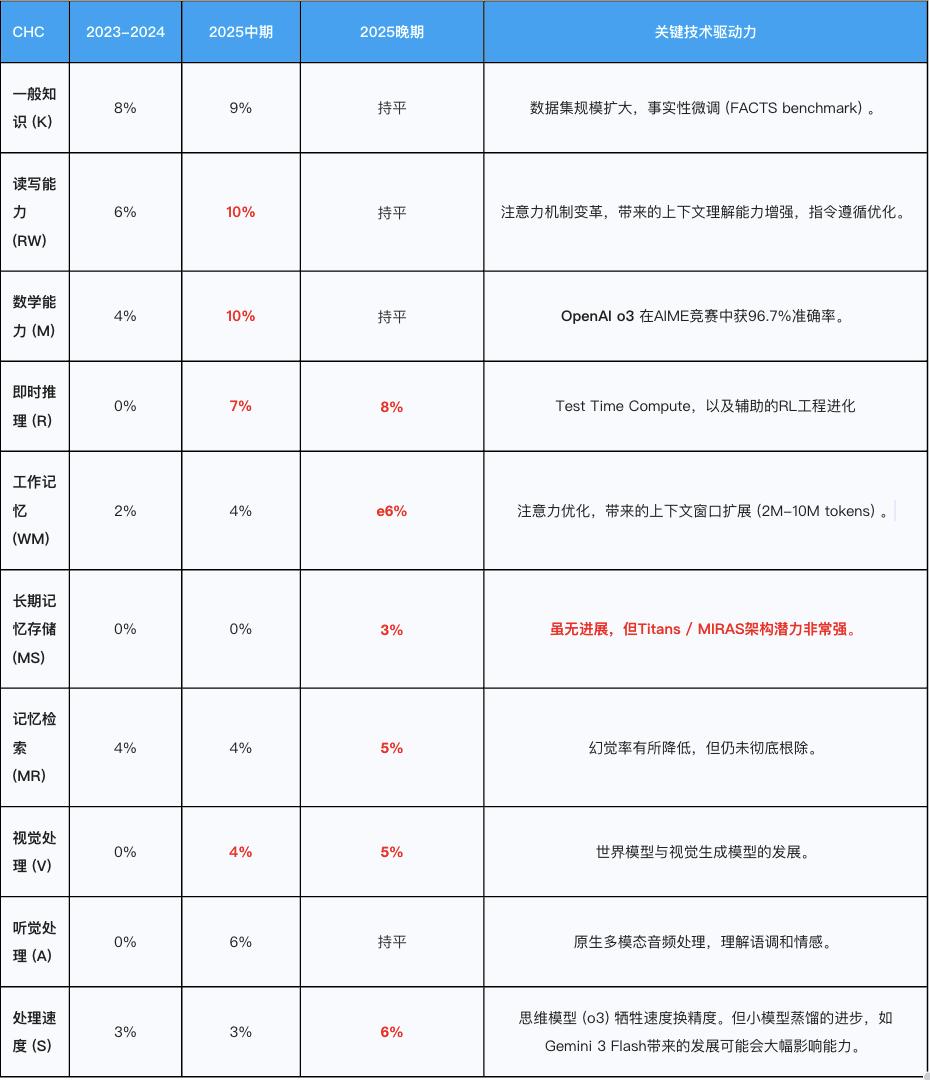
Core Insights - The article discusses the evolution of artificial intelligence (AI) in 2025, highlighting a shift from merely increasing model parameters to enhancing model intelligence through foundational research in areas like fluid reasoning, long-term memory, spatial intelligence, and meta-learning [2][4]. Group 1: Technological Advancements - In 2025, significant technological progress was observed in fluid reasoning, long-term memory, spatial intelligence, and meta-learning, driven by the diminishing returns of scaling laws in AI models [2][3]. - The bottleneck in current AI technology lies in the need for models to not only possess knowledge but also to think and remember effectively, revealing a significant imbalance in AI capabilities [2][4]. - The introduction of Test-Time Compute revolutionized reasoning capabilities, allowing AI to engage in deeper, more thoughtful processing during inference [6][10]. Group 2: Memory and Learning Enhancements - The Titans architecture and Nested Learning emerged as breakthroughs in memory capabilities, enabling models to update their parameters in real-time during inference, thus overcoming the limitations of traditional transformer models [19][21]. - Memory can be categorized into three types: context as memory, RAG-processed context as memory, and internalized memory through parameter integration, with significant advancements in RAG and parameter adjustment methods [19][27]. - The introduction of sparse memory fine-tuning and on-policy distillation methods has mitigated the issue of catastrophic forgetting, allowing models to retain old knowledge while integrating new information [31][33]. Group 3: Spatial Intelligence and World Models - The development of spatial intelligence and world models was marked by advancements in video generation models, such as Genie 3, which demonstrated improved physical understanding and consistency in generated environments [35][36]. - The emergence of the World Labs initiative, led by Stanford professor Fei-Fei Li, focused on generating 3D environments based on multimodal inputs, showcasing a more structured approach to AI-generated content [44][46]. - The V-JEPA 2 model introduced by Meta emphasized predictive learning, allowing models to grasp physical rules through prediction rather than mere observation, enhancing their understanding of causal relationships [50][51]. Group 4: Reinforcement Learning Innovations - Reinforcement learning (RL) saw significant advancements with the rise of verifiable rewards and sparse reward metrics, leading to improved performance in areas like mathematics and coding [11][12]. - The GPRO algorithm gained popularity, simplifying the RL process by eliminating the need for a critic model, thus reducing computational costs while maintaining effectiveness [15][16]. - The exploration of RL's limitations revealed a ceiling effect, indicating that while RL can enhance existing model capabilities, further breakthroughs will require innovations in foundational models or algorithm architectures [17][18].



GPT-5.2考赢人类,OpenAI警告:大模型能力已过剩,AGI天花板不是AI
3 6 Ke· 2026-01-12 01:08
Core Insights - OpenAI's co-founder Greg Brockman announced that GPT-5.2 surpassed human baseline levels in the ARC-AGI-2 benchmark test, highlighting a performance paradox where models excel in tests but struggle in real-world applications [1][2] - The ARC-AGI-2 benchmark, designed to assess AI's abstract reasoning and inductive capabilities, aims to differentiate genuine reasoning from mere pattern matching [1][2] Benchmark and Performance - The ARC-AGI-2, developed by François Chollet and his team, tests AI's ability to handle unseen tasks without relying on large training datasets, thus eliminating the possibility of achieving high scores through data memorization [1][2] - Poetiq, an AI company focusing on meta-system architecture, achieved a 75% accuracy rate on the ARC-AGI-2 dataset with its GPT-5.2X-High model, surpassing the previous state-of-the-art (SOTA) by 15 percentage points [5][6] - Prior to Poetiq's introduction, GPT-5.2 was already close to human average performance, which is approximately 60% on the ARC-AGI-2 benchmark [5] Capability Overhang - OpenAI's recent communication emphasized the concept of "Capability Overhang," indicating a significant gap between what current models can do and how they are utilized in practice [10] - The future progress of AGI will depend not only on model advancements but also on effective usage and integration into real-world applications [10][11] Human-Machine Collaboration - Achieving AGI requires collaboration between models and humans, emphasizing the need to teach users how to effectively utilize AI [11] - The challenge lies in integrating AI into workflows, as many organizations purchase AI solutions without altering existing processes [12] Future Directions - The emergence of Poetiq and OpenAI's insights suggest a shift in AI competition from merely model parameters to system design, processes, and human-machine collaboration [18][19]

姚顺雨对着唐杰杨植麟林俊旸贴大脸开讲!基模四杰中关村论英雄
Xin Lang Cai Jing· 2026-01-10 14:39
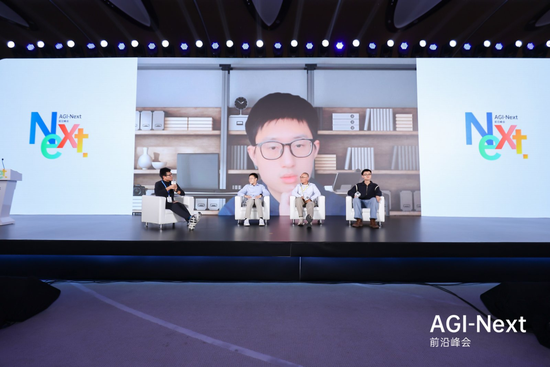
Core Insights - The AGI-Next summit organized by Tsinghua University gathered key figures in the AI industry, showcasing high-density technical discussions and insights into the future of AI development [1][3]. Group 1: AI Development Trends - The evolution of large models has transitioned from simple tasks to complex reasoning and real-world applications, with expectations for significant advancements by 2025 [8][10]. - The current trajectory of AI models reflects a growth pattern similar to human cognitive development, moving from basic tasks to more sophisticated reasoning and real-world problem-solving [9][12]. - The introduction of Reinforcement Learning with Verified Rewards (RLVR) aims to enhance model capabilities by allowing autonomous exploration and feedback acquisition [15][16]. Group 2: Challenges and Opportunities - The challenge of generalization remains a core issue, with models needing to improve their ability to apply learned knowledge to new, unseen problems [11][13]. - The integration of coding and reasoning capabilities into AI models represents a significant shift from conversational AI to task-oriented AI, marking a pivotal change in the industry [19][20]. - The need for a hybrid approach combining API and GUI interactions is emphasized to enhance AI's operational capabilities in real-world environments [25][26]. Group 3: Future Directions - The focus on multi-modal capabilities, memory structures, and self-reflective abilities in AI models is seen as essential for achieving higher levels of intelligence and functionality [31][34][36]. - The exploration of new paradigms for scaling AI capabilities beyond traditional methods is crucial for future advancements in the field [49][50]. - The development of models that can autonomously define their learning tasks and reward functions is highlighted as a potential breakthrough in AI research [49][50]. Group 4: Competitive Landscape - Chinese open-source models are gaining significant traction and influence in the global AI landscape, with expectations for continued growth and leadership in the field [28][73]. - The advancements in AI capabilities, particularly in coding and reasoning, position Chinese models competitively against leading international counterparts [72][73].

姚顺雨对着唐杰杨植麟林俊旸贴大脸开讲!基模四杰中关村论英雄
量子位· 2026-01-10 13:17
Core Viewpoint - The AGI-Next summit organized by Tsinghua University highlights the rapid advancements in AI, emphasizing the transition from conversational AI to task-oriented AI, indicating a significant shift in the AI landscape [4][34]. Group 1: Key Insights from Speakers - Tang Jie stated that with the emergence of DeepSeek, the era of chatbots is largely over, and the focus should now be on actionable AI [7]. - Yang Zhilin emphasized that creating models is fundamentally about establishing a worldview [7]. - Lin Junyang expressed skepticism about China's ability to overtake in the AI race, suggesting that a 20% improvement in capabilities would be optimistic [7]. - Yao Shunyu noted that most consumers do not require highly intelligent AI for everyday tasks [7]. Group 2: Development Trajectory of Large Models - The development of large models has progressed from solving simple tasks to handling complex reasoning and real-world programming challenges, with expectations for continued improvement by 2025 [18][21]. - The evolution of models reflects human cognitive development, moving from basic reading and arithmetic to complex reasoning and real-world applications [19]. - The introduction of HLE (Human-Level Evaluation) tests models on their generalization capabilities, with many questions being beyond the reach of traditional search engines [20]. Group 3: Challenges and Innovations in AI - Current challenges include enhancing models' generalization abilities and transitioning from scaling to true generalization [22][25]. - The path to improving generalization involves scaling, aligning models with human intentions, and enhancing reasoning capabilities through reinforcement learning [28][29]. - The introduction of RLVR (Reinforcement Learning with Verified Rewards) aims to allow models to explore autonomously and improve through verified feedback, addressing the limitations of human feedback [29]. Group 4: Future Directions and Expectations - The future of AI development will focus on multi-modal capabilities, memory structures, and self-reflective abilities, which are essential for achieving AGI [59][61][64]. - The integration of self-learning mechanisms is seen as crucial for models to adapt and improve continuously [69][73]. - The exploration of new paradigms beyond scaling is necessary to achieve breakthroughs in AI capabilities [89]. Group 5: Open Source and Global Positioning - The open-source movement in China has gained significant traction, with many models emerging as influential in the global landscape [53]. - The ongoing development of models like KimiK2 aims to establish new standards in AI, particularly in agent-based tasks [110]. - The emphasis on creating a diverse range of models reflects a commitment to advancing AI technology while addressing various application needs [125][134].


刚刚,AI企业IPO最速纪录刷新!MiniMax的技术野心,价值超800亿港元
AI前线· 2026-01-09 03:37
Core Insights - MiniMax, founded by Yan Junjie, has achieved the fastest IPO timeline for an AI company globally, taking only 4 years from inception to listing [1] - The company's ToC revenue has surpassed ToB revenue, a rare occurrence among Chinese large model companies [1] - MiniMax's IPO was highly successful, with a subscription oversubscription rate of 1209 times and total subscription amounts exceeding 253.3 billion HKD [4][2] Financial Performance - MiniMax plans to issue approximately 25.4 million H shares at an opening price of 235.4 HKD, with the stock price soaring over 60% shortly after listing, leading to a market capitalization exceeding 82 billion HKD (approximately 73.8 billion RMB) [2][4] - The company has accumulated over 2 billion personal users and serves more than 100,000 enterprise and developer clients across 200+ countries and regions [3][10] Technological Advancements - MiniMax is recognized for its technology-driven approach, with significant investments in R&D, which reached 10.6 million USD in 2022, increasing to 70 million USD in 2023, and projected to reach 189 million USD in 2024 [23] - The company has developed advanced models such as MiniMax-01 and MiniMax-M1, focusing on efficiency and long-context processing capabilities [7][10] - MiniMax has introduced a hybrid expert system (MoE) model, which significantly enhances computational efficiency compared to traditional models [8][9] Competitive Landscape - MiniMax faces competition from established players like Claude Codex, which has generated nearly 1 billion USD in annual revenue within six months of launch [21] - The company is adopting a unique efficiency-driven technical route, focusing on long-context capabilities and engineering consistency to compete effectively in the global market [22] Team and Leadership - The core team at MiniMax is young, with an average age of 29, and consists of experienced professionals from top tech companies and research institutions [15][19] - Yan Junjie, the founder, has a strong academic background and previous leadership experience at SenseTime, emphasizing a commitment to advancing AGI [16][20]
光合创投被投企业智谱上市:捕捉Top 1%的超线性回报
36氪· 2026-01-08 13:35
Core Viewpoint - The article discusses the successful IPO of Zhiyuan Technology, the first global AI large model company, highlighting its unique self-research approach and the investment strategies that led to its recognition as a top-tier company in the AI sector [3][4][12]. Company Overview - Zhiyuan Technology was founded in 2019 and is based on technology from Tsinghua University, focusing on general artificial intelligence (AGI) with its proprietary GLM pre-training architecture [3]. - The company ranked first among independent general large model developers in China and second globally based on projected 2024 revenue [3]. Investment Insights - The investment firm Guanghe Venture Capital recognized the potential of Zhiyuan Technology early on, leading to significant investments in 2022 and 2023 [4][12]. - Guanghe's investment philosophy emphasizes identifying and supporting top 1% companies in various sectors, which aligns with their long-term commitment to Zhiyuan [5][19]. Market Context - The article notes that three years ago, many teams opted for the OpenAI technology route, while Zhiyuan chose a self-research path, which was initially seen as risky [4][14]. - The rapid evolution of AI technology and market demand accelerated Zhiyuan's growth, leading to its successful IPO in January 2026 [7][19]. Talent and Team Dynamics - The article highlights the importance of talent density in the large model field, with many core researchers at Zhiyuan being young and highly skilled, contributing to the company's competitive edge [11][10]. - The team’s ability to balance academic rigor with practical application in the commercial space is noted as a key factor in their success [10][11]. Future Outlook - Guanghe Venture Capital continues to focus on identifying and investing in top-tier companies, maintaining a dynamic list of potential investments that meet their high standards [19][20]. - The article concludes that Zhiyuan's IPO represents a significant milestone in the development of China's AGI industry and reflects Guanghe's successful investment strategy [7][20].
Aurora Mobile Congratulates Zhipu on Successful Hong Kong Listing
Globenewswire· 2026-01-08 12:00
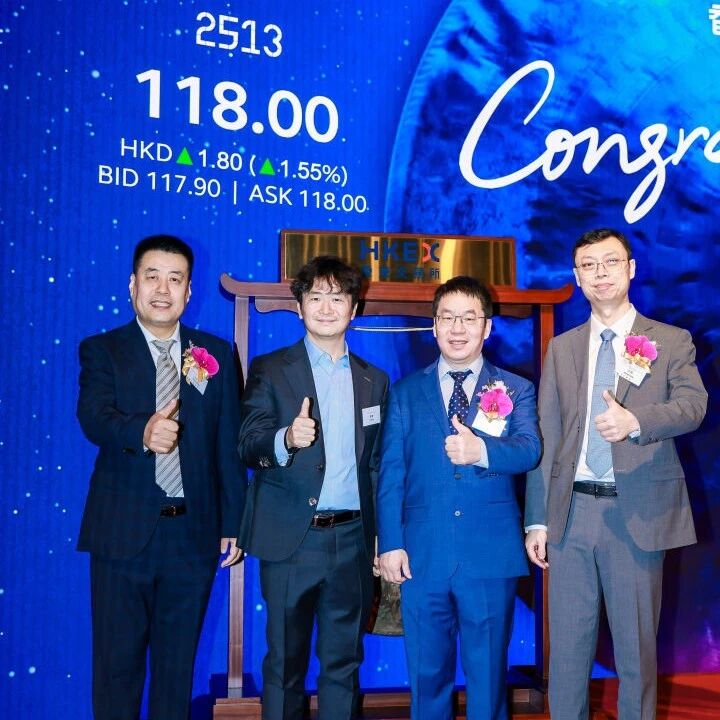
Core Insights - Aurora Mobile Limited congratulates Zhipu on its successful listing on the Main Board of the Stock Exchange of Hong Kong, marking a significant milestone for the company [1] - Zhipu is recognized as the world's first publicly listed company focused on artificial general intelligence (AGI) foundational models, raising approximately HK$4.35 billion through its global offering priced at HK$116.20 per share [2] - The commercialization of AI is driving demand for robust digital infrastructure, particularly in high-concurrency message delivery and secure identity verification solutions [3] Company Overview - Aurora Mobile, founded in 2011, is a leading provider of customer engagement and marketing technology services in China, focusing on stable and efficient messaging services [5] - The company has developed innovative solutions such as Cloud Messaging and Cloud Marketing to enhance omnichannel customer reach and support enterprises in their digital transformation [5] - Aurora Mobile is committed to supporting AI-driven enterprises like Zhipu by providing the necessary infrastructure for reliable user engagement and account protection [4]


China's AGI Pioneer and Leader Z.ai Listed on Hong Kong Stock Exchange
Prnewswire· 2026-01-08 08:41
Core Insights - Z.ai, a leader in artificial general intelligence in China, successfully listed on the Hong Kong Stock Exchange on January 8, 2026, becoming the world's first publicly listed large language model company [1][5] - The company issued shares at HK$116.20, opening at HK$120.00, with a market capitalization of HK$52.83 billion [1] Company Overview - Founded in 2019, Z.ai commercializes technological achievements from Tsinghua University, focusing on making machines think like humans [2] - The company has developed significant models, including China's first 10-billion-parameter model and the first open-source 100-billion-parameter model [2] Product Development and Achievements - Z.ai's GLM series, particularly the GLM-4.7 model, has achieved top-tier performance in various benchmarks, surpassing GPT-4 in coding evaluations [3] - The GLM series supports over 40 domestic chips and has established itself as a primary programming model solution for Chinese developers, with 150,000 global users [3] Market Impact and Client Base - Z.ai has become China's largest independent large language model developer, serving over 12,000 enterprise customers and enabling more than 80 million end-user devices [4] - The company operates across multiple sectors, including finance, education, and industrial manufacturing [4] Future Outlook - CEO Zhang Peng emphasized the company's commitment to advancing AGI capabilities and enhancing the GLM model series [5] - Qiming Venture Partners highlighted Z.ai's potential to lead in AI innovation and its importance in the broader technology investment landscape [5]
光合创投蔡伟:智谱是国内大模型的「争气机」,盼持续引领全球AGI产业发展
IPO早知道· 2026-01-08 02:18
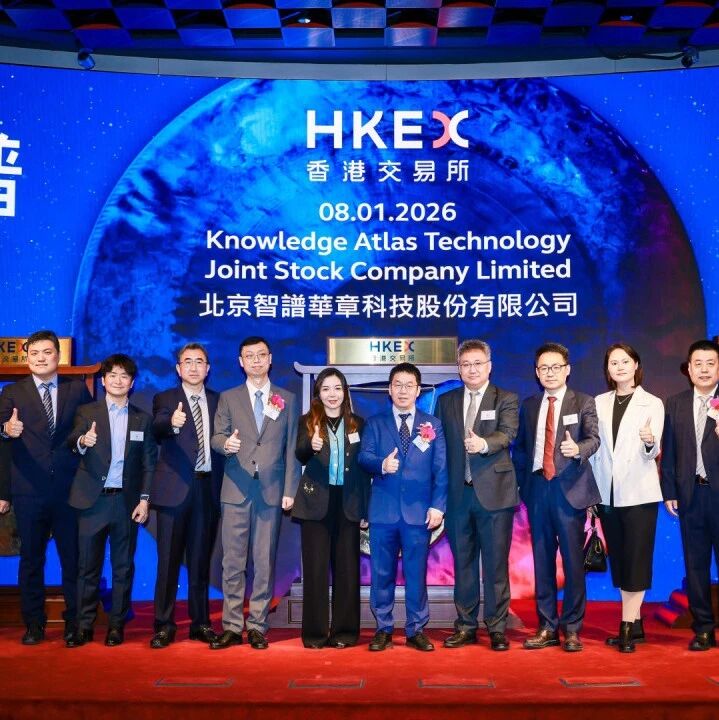
Core Viewpoint - Beijing Zhipu Huazhang Technology Co., Ltd. (referred to as "Zhipu") officially listed on the Hong Kong Stock Exchange on January 8, 2026, becoming the "first global large model stock" [3] Group 1: Company Overview - Zhipu has received support from numerous well-known institutions, industrial capital, and local government state-owned assets since its establishment [3] - The company has demonstrated its independent innovation in the underlying technology of artificial intelligence and its global competitiveness in model performance over six years [3] Group 2: Investment Insights - The initial investment interest in the new generation of AI began with the emergence of the Transformer architecture, leading to a shift from traditional "small model + tuning paradigm" to a new paradigm based on massive data [4] - The investment team conducted systematic research and comparisons with all emerging large model teams, finding Zhipu's model capabilities to be at a leading level during their evaluations [4] Group 3: Strategic Decisions - A key decision for Zhipu is to build an open-source ecosystem, allowing more developers to use their models and establish their own ecosystem [5] - The company’s extreme pursuit of technology and strategic layout in the open-source ecosystem have created a competitive moat in a fiercely competitive industry [5] Group 4: Broader Industry Context - The AI sector is entering a new round of industrial transformation, which is viewed as a long-term track [5] - The investment firm has also invested in leading companies in AI and hard technology, as well as various AI application fields, indicating a comprehensive approach to capturing development opportunities during the technological paradigm shift [5]