XR

Search documents
芯报丨“智聚芯联”完成数千万A轮融资
Xin Lang Cai Jing· 2025-12-09 13:36
Group 1 - Shenzhen Xinsong Semiconductor has successfully completed a C-round financing of approximately 269 million yuan, marking a significant milestone in its development and a key step for the Chinese automotive electronics industry [1][2] - Fuman Microelectronics announced that 2,498,750 restricted shares will be listed for trading on December 11, 2025, representing 1.14% of the company's total share capital [1][2] - Rockchip's flagship SoC product RK3588 has achieved a high market share in the robotics sector, collaborating with well-known companies such as Yushutech and Cloud Deep Technology [1][2] - China’s Kangqiang Electronics reported that 18.76 million shares held by China Resources Trust have been judicially auctioned and transferred, resulting in a passive reduction of holdings [1][2] Group 2 - Google announced an Android XR special event scheduled for December 8, focusing on XR-related content and the integration of AI capabilities into XR devices [1][2] - Former President Trump approved Nvidia's export of H200 AI chips to China, requiring a 25% sales commission, which could help Nvidia recover significant business losses in key global markets [1][2] - Intel has become the first major customer for Tata Electronics' upcoming semiconductor manufacturing facility in India, which is part of a broader investment of approximately $14 billion in semiconductor manufacturing [3]



Google眼镜杀回来了!最强AI上头,两大潮牌站台,还有一款中国造
36氪· 2025-12-09 13:35
Core Viewpoint - Google is re-entering the smart glasses market with a new strategy focused on Android XR and AI capabilities, aiming to create a robust ecosystem for XR devices and applications [4][47]. Group 1: Android XR Overview - Android XR is a new system designed for XR devices, compatible with most applications from the Google Play Store, providing a comprehensive platform for developers and manufacturers [12][15]. - The system is expected to attract more third-party manufacturers, expanding the XR ecosystem and increasing the production of applications and content [17][49]. - Google has partnered with various companies, including Samsung and XREAL, to develop Android XR, which is seen as a more open and appealing platform compared to competitors like Meta and Apple [44][47]. Group 2: Product Launches - Google introduced several XR devices, including Project Aura, a wired XR glasses product that offers dual-eye XR effects in a lightweight form, suitable for outdoor use [21][30]. - Two additional wireless glasses were announced, focusing on fashion and everyday wear, with one being an AI glasses model without a display and the other featuring a single AR display for basic notifications [33][40]. - The new products are set to launch in 2024, with Google emphasizing the importance of user experience and privacy features [31][39]. Group 3: Market Position and Future Outlook - Google aims to learn from past experiences with Google Glass, focusing on a more structured approach to product development and market entry [47][51]. - The company is optimistic about the growth potential of the XR market, leveraging its existing app ecosystem and AI capabilities to create unique use cases for smart glasses [49][54]. - Future developments will include a wireless dual-eye XR glasses product, which is expected to be a significant upgrade but will not be available until 2027 [46].



大厂竞逐AI眼镜,谷歌携Android XR入局
2 1 Shi Ji Jing Ji Bao Dao· 2025-12-09 12:24
Core Insights - Google is preparing to challenge Meta in the AI glasses market, aiming to take the lead in the next generation of computing platforms [1][5] - The company is set to launch its first AI glasses in 2026, focusing on two types: voice assistant glasses and display-enabled glasses [1][2] Group 1: Product Development - Google is collaborating with partners to develop AI glasses that integrate voice assistance and display capabilities, allowing users to interact without screens [1][2] - The "Project Aura" AI glasses, developed with Chinese AR company Xreal, will operate independently without a smartphone connection and feature advanced optical technology [3] - The Android XR platform will support diverse hardware forms, enhancing user experience through visual understanding and intelligent task execution [2][3] Group 2: Market Strategy - Google aims to differentiate itself from Meta by focusing on software platform empowerment rather than vertical integration of hardware and software [5] - The company is leveraging its Android XR platform and Gemini model to test market responses ahead of the AI glasses launch [5] - Google is forming partnerships with hardware manufacturers like Samsung and Qualcomm to build a competitive ecosystem against Meta [5] Group 3: Market Trends - The smart glasses market is expected to experience significant growth, with projections indicating that global shipments could exceed 23.68 million units by 2026 [7] - The Chinese smart glasses market is anticipated to reach over 4.91 million units in the same year, marking a critical turning point for large-scale growth [7] - Analysts believe that the evolution of AI capabilities will lead to unique applications in high-frequency scenarios, transforming smart glasses from novelty items to essential tools [8][9]
谷歌XR眼镜时隔13年回归 中国团队加持核心硬件研发
Zhong Guo Jing Ying Bao· 2025-12-09 09:16
Core Insights - Google is re-entering the AR/AI glasses market with Project Aura, marking a long-term strategic investment in the next generation of computing platforms after 13 years since Google Glass [4][6] - The launch of three XR smart glasses, including wired XR glasses Project Aura and two AI glasses in collaboration with Samsung, Gentle Monster, and Warby Parker, highlights the integration of Android XR platform and Gemini AI [2][4] - The collaboration with Chinese AR glasses manufacturer XREAL signifies a shift in global XR industry dynamics, with Chinese companies leading in manufacturing while international giants focus on system integration [2][9] Group 1: Product Development - Project Aura features a significant upgrade in optical systems and spatial computing chips, primarily developed by a Chinese team, showcasing a complete closed-loop of "see-understand-interact" [5][8] - The X-Prism optical system enhances the field of view to 70°, surpassing the early Google Glass and meeting the maximum practical field standard for consumer AR [6] - The X1S spatial computing chip, designed for AR scenarios, addresses previous AR device shortcomings such as inaccurate positioning and delayed responses [6] Group 2: Market Positioning - The Android XR operating system aims to resolve the long-standing issue of ecological fragmentation in the XR industry, allowing developers to adapt existing applications to AR environments without rebuilding ecosystems [7] - The focus on lightweight, scenario-based applications indicates a shift from attempting to replace smartphones to creating "AI + visual" auxiliary terminals [4][7] - The partnership with XREAL provides a dual benefit for the Chinese XR industry, enhancing XREAL's brand value and technical standards while pushing domestic supply chains towards high-value segments [9] Group 3: Future Outlook - Project Aura is set to launch globally in 2026, with developers already able to access technical documentation [9] - The collaboration reflects a new trend in global XR industry division, where Chinese firms dominate manufacturing while international companies profit from system integration [9] - The potential for this partnership to lead to the accumulation of independent intellectual property and foster cluster innovation in the supply chain is a key area to watch [9]
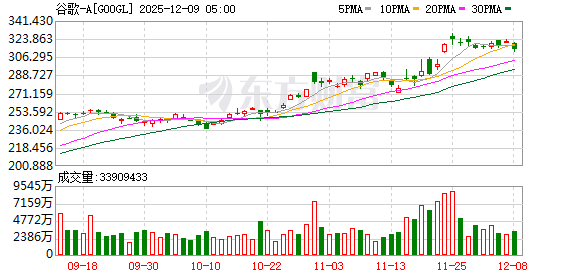
谷歌把Gemini放进AI眼镜了,Meta和苹果能一战吗?
Di Yi Cai Jing· 2025-12-09 07:16
Core Insights - Google is re-entering the smart glasses market, leveraging advancements in generative AI and a mature hardware supply chain, following the failure of Google Glass years ago [1][4] - The company aims to create a diverse range of smart glasses that seamlessly integrate AI and XR into users' lives, addressing different consumer needs and styles [5][6] - Google is positioning itself as a competitor to Apple and Meta in the XR space, with the potential for significant market impact due to its advancements in AI models like Gemini [4][15] Product Development - Google announced a collaboration with Samsung and XREAL to develop three different models of smart glasses, with a focus on integrating AI capabilities [1][5] - The Galaxy XR headset, priced at $1,799, is positioned as a direct competitor to Apple's Vision Pro, which costs $3,500 [5] - Upcoming products include Project Aura, a wired XR glasses model set for release in 2026, which will combine features of heavy headsets and lightweight glasses [6][10] Features and Functionality - The Galaxy XR will receive a system update introducing features like virtual displays, digital avatars, and travel modes, enhancing user experience [6] - Future smart glasses will include a lightweight AI model with built-in speakers, microphones, and cameras for natural interaction with the Gemini AI [10][13] - Display-type AI glasses will feature screens that provide useful information, such as navigation and translation, directly in the user's line of sight [13] Strategic Vision - Google's strategy in the XR field aims to unify hardware, software, and AI through the Android XR platform, allowing it to compete effectively in the smart glasses market [15] - The collaboration with XREAL is seen as a significant step towards realizing the potential of AI in everyday applications, with expectations for a transformative impact on consumer technology [15] - Industry experts predict that by 2027 and 2028, smart glasses may replace smartphones, driven by the emergence of AI-native multimodal operating systems [15]
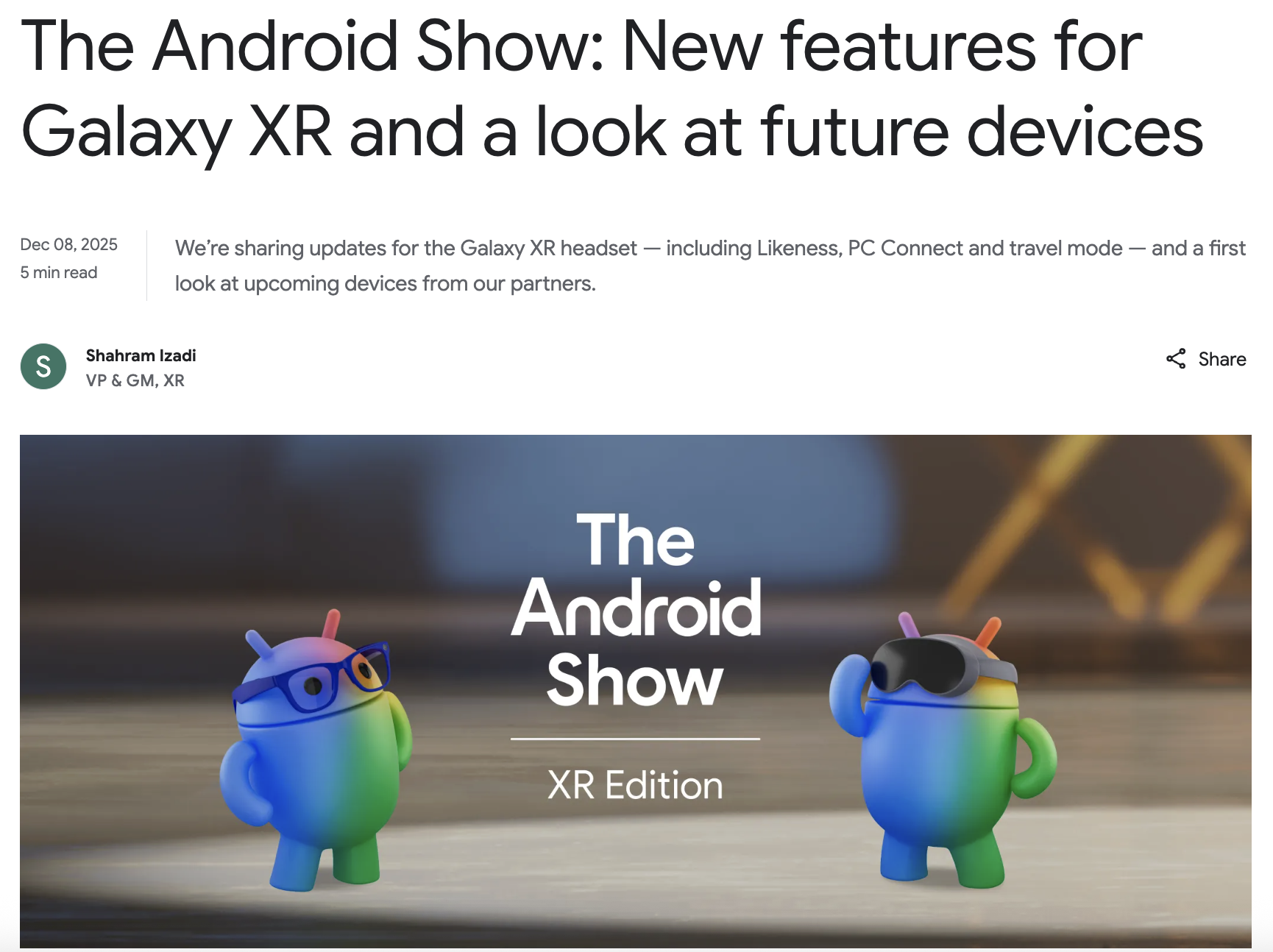
【券商聚焦】中邮证券维持瑞声科技(02018)“买入”评级 以核心硬件赋能豆包AI手机
Xin Lang Cai Jing· 2025-12-09 05:55
Group 1 - Company signed a final agreement to acquire shares and other equity securities of Finnish AR diffraction waveguide technology leader Dispelix Oy, with the transaction expected to be completed in the first half of 2026, making Dispelix a wholly-owned subsidiary [1][3] - The acquisition stems from a long-term strategic partnership established in 2022, aiming to deepen synergies between Dispelix's expertise in waveguide design and manufacturing and the company's strengths in optics, precision manufacturing, and system-level integration [1][3] - The collaboration will leverage the company's global presence and key customer resources to accelerate the commercialization of AR waveguide technology in consumer and enterprise wearable devices [1][3] Group 2 - The company has already partnered with several leading OEM clients to develop the next generation of AR devices and is collaborating with top mobile terminal ecosystem builders to advance XR reference design hardware platforms [1][3] - Following the acquisition, Dispelix's products will enhance the company's XR product portfolio and solution capabilities, helping to solidify their global market leadership in diffraction optics [1][3] - This move is also a significant step for the company to expand into new product areas and create new growth engines [1][3] Group 3 - The company is also involved in the launch of the "Doubao AI phone" in collaboration with ZTE, which supports voice and side button wake-up methods, simulating human operations to complete complex tasks across applications [2][4] - This collaboration aligns with the trend of AI functionality transitioning from software to integrated hardware and software solutions, enhancing user experience [2][4] - The company aims to continue driving innovation across multiple fields by focusing on "AI + perception" and providing diverse perception solutions for the next generation of AI phones and wearable devices [2][4]
谷歌自曝三大AI眼镜计划
Mei Ri Jing Ji Xin Wen· 2025-12-08 23:44
每经AI快讯,北京时间12月9日凌晨,谷歌发布了安卓XR生态的多项全新进展:首款安卓XR头显三星 Galaxy XR上线三大新功能;与中国创企XREAL合作的有线XR眼镜Project Aura确认将于2026年发布; AI眼镜原型机首次用上谷歌Nano Banana图像编辑能力;同时,面向安卓XR开发者的整套SDK与API全 面升级。 ...
谷歌将举行Android XR特别发布会 端侧AI或迎重磅催化
Ju Chao Zi Xun· 2025-12-08 17:08
Core Insights - Google announced a special event for Android XR on December 8, focusing on XR-related content, including smart glasses and head-mounted devices, enhanced by the Gemini AI model for interactive demonstrations [1][3] - The event is seen as a critical step from vision to product realization, with potential for mass production and open development kits, which could lower entry costs for manufacturers and developers [3][4] Group 1: Technology and Development - Google aims to integrate AI capabilities into edge devices, reducing reliance on cloud services while enhancing response speed and privacy [3] - The successful deployment of Gemini's lightweight or layered inference capabilities on wearable devices could drive advancements in chips, sensors, low-power neural network engines, and system-level scheduling [3] - The actual implementation of edge AI requires collaboration across software, hardware, and ecosystem components, including developer tools and power management [3] Group 2: Market Impact and Industry Response - AI smart glasses and head-mounted devices are becoming a competitive focus for tech giants, with potential benefits for related A-share companies such as Changying Precision, Hengxuan Technology, GoerTek, Crystal Optoelectronics, and Dongshan Precision [4] - The announcement may boost sentiment and valuation for related concept stocks in the short term, while long-term success will depend on product shipment rates, supply yield, and channel expansion [4] - Key details to watch from the event include hardware partnerships, developer support specifics, and timelines for the first commercial models, which will directly influence investment and inventory strategies in the supply chain [4]
华勤技术(603296.SH):为北美客户提供的主流XR头显产品已经实现了大规模的量产交付
Ge Long Hui· 2025-12-05 07:40
Core Viewpoint - The company has achieved large-scale mass production and delivery of mainstream XR headsets for North American clients, showcasing its advanced technological capabilities and extensive patent portfolio [1] Group 1: Product Development - The company has a team of experts in optical, acoustic, thermal, and system software optimization fields, which enhances its R&D capabilities for VR/AR glasses [1] - The R&D team leverages cross-platform wearable hardware and software development, AI model application, algorithm debugging, and motion health function design to provide comprehensive solutions and complete products to clients [1] Group 2: Manufacturing and Global Strategy - The company possesses advantages in automated manufacturing and global layout, which supports its expansion in the technology sector [1] - The company aims to continue expanding its product lineup in various AIOT products by following client terminal innovations and maintaining its position as a core supplier for global technology companies [1]

10’25双11预售叠加新品浪潮,驱动国内消费级XR市场同比增长64%
CINNO Research· 2025-12-02 23:40
Core Insights - The article highlights a significant growth in the domestic consumer-grade XR market, driven by the 10'25 Double Eleven pre-sale and a wave of new product launches, resulting in a year-on-year increase of 64% [2][4]. Group 1: Market Sales Trends - The sales trend of the consumer-grade AR/VR market in China from October 2024 to October 2025 shows a robust upward trajectory, indicating strong consumer demand and market expansion [4]. Group 2: Market Structure Trends - The structure of the consumer-grade AR/VR market in China is evolving, with new entrants and innovations reshaping the competitive landscape [4]. Group 3: Price Segment Trends - The price segments within the consumer-grade AR/VR market are experiencing shifts, reflecting changes in consumer preferences and technological advancements [4]. Group 4: Brand Trends - Brand dynamics in the consumer-grade AR/VR market are changing, with certain brands gaining prominence due to their innovative offerings and marketing strategies [4]. Group 5: Display Technology Trends - The trends in screen display technology for consumer-grade AR/VR products are advancing, with improvements in resolution and refresh rates enhancing user experience [4]. Group 6: Optical Technology Trends - Developments in optical technology are influencing the consumer-grade AR/VR market, leading to better performance and more immersive experiences [4]. Group 7: Top Rankings in AR and VR Markets - The top rankings for consumer-grade AR and VR products in October 2025 reflect the competitive positioning of various brands and their market share [4]. Group 8: Upstream Industry and New Product Information - Insights into the upstream XR industry and new product information for November 2025 provide a comprehensive view of the market landscape and future opportunities [4].