Interest rate cut

Search documents
Intercorp Financial Services to Report Q2 Earnings: What's in Store?
ZACKS· 2025-08-07 13:36
Core Insights - Intercorp Financial Services Inc. (IFS) is expected to report second-quarter 2025 results on August 11, with anticipated year-over-year earnings growth driven by higher revenues despite increased provisions for credit losses and expenses [1][10]. Revenue Factors - A significant portion of IFS's revenue comes from spread income, and a recent 25 basis point cut in Peru's benchmark interest rate to 4.50% is expected to support loan demand [3]. - The company is likely to have experienced a decline in deposit costs, contributing to an increase in net interest and similar income, as well as an expansion in net interest margin due to lower deposit repricing [4]. - Strong asset inflows from a decent equity market performance are expected to enhance IFS's assets under management, benefiting its wealth management operations and increasing net fee income from banking services and credit card activity [5][10]. Expense Factors - Higher salaries, employee benefits, and administrative expenses are anticipated to keep the expense base elevated, alongside increased costs related to the company's digitization efforts [6][10]. Earnings Expectations - The consensus estimate for IFS's earnings is $1.07 per share, reflecting a 62.1% increase from the previous year [2][10]. - The company's earnings surprise history shows it has surpassed the Zacks Consensus Estimate in four of the last five quarters, with an average beat of 17.26% [2]. Zacks Model Insights - The quantitative model indicates that IFS lacks the necessary combination of positive Earnings ESP and a Zacks Rank better than 3 (Hold) for a conclusive prediction of an earnings beat this time [7][8].



Fed to Cut Rates Ahead? Growth ETFs to Play
ZACKS· 2025-08-07 11:26
Group 1: Labor Market Insights - The labor market in the U.S. is showing signs of weakness, with only 73,000 jobs added in July and an unemployment rate rising to 4.2% [2] - The three-month average job gains have dropped to just 35,000, indicating a slowdown in hiring [2] - Fed President Mary Daly expressed concern that further slowing in the labor market could lead to a rapid decline [2] Group 2: Inflation and Tariffs - Tariffs are expected to temporarily increase inflation, but Daly does not foresee a lasting impact [3] - Underlying inflation, excluding tariffs, has been gradually decreasing and is expected to continue this trend due to restrictive monetary policy and a slowing economy [3] Group 3: Federal Reserve's Stance - Fed Chair Jerome Powell has stated that no decision has been made regarding a potential rate cut in September, emphasizing the need to monitor tariff impacts closely [4] - New York Fed President John Williams acknowledged the job market remains solid but expressed concern over downward revisions in hiring [4] Group 4: Investment Opportunities in Growth Stocks - Growth stocks are likely to perform better in a low-rate environment, as lower borrowing costs facilitate company expansion [5] - The attractiveness of fixed-income investments diminishes with lower rates, prompting investors to seek higher returns in equity markets [5] Group 5: Recommended ETFs - Several top-ranked growth-based exchange-traded funds (ETFs) are highlighted for potential investment if the Fed begins cutting rates: - Vanguard Growth ETF (VUG) – Zacks Rank 1 (Strong Buy) [6] - Invesco S&P 500 Pure Growth ETF (RPG) – Zacks Rank 2 (Buy) [6] - Invesco Large Cap Growth ETF (PWB) – Zacks Rank 1 [6] - Vanguard S&P 500 Growth ETF (VOOG) – Zacks Rank 1 [6] - iShares S&P 500 Growth ETF (IVW) – Zacks Rank 1 [6]

Consider This Bank ETF Before The Fed Cuts Rate This Fall
MarketBeat· 2025-08-04 13:28
Core Viewpoint - The Federal Reserve has maintained its benchmark effective federal funds rate (EFFR) in the range of 4.25% to 4.50%, citing elevated uncertainty about the economic outlook, which has led to a sell-off in the financial sector despite the anticipated nature of the announcement [1] Financial Sector Performance - The financials sector has increased by over 9% in 2025, outperforming the S&P 500, with only communication services, utilities, technology, and industrials showing higher gains [2] - Bank stocks have shown strong performance, with notable gains from major banks such as JPMorgan Chase & Co. (24.85%) and Goldman Sachs Group (27.09%) [8] Future Expectations - There is an 82-83% probability of a rate cut in the upcoming September FOMC meeting, a significant increase from 38% prior to the July jobs report [5] - The likelihood of a rate cut by the October FOMC meeting stands at approximately 85% [5] - A potential rate cut could stimulate borrowing and refinancing, positively impacting the financial sector [7] Invesco KBW Bank ETF Insights - The Invesco KBW Bank ETF (KBWB) has outperformed both the S&P 500 and the broader financials sector, with institutional inflows significantly exceeding outflows over the past year [12] - KBWB has a low expense ratio of 0.35% and a dividend yield of 2.15%, making it an attractive option for investors anticipating a Fed rate cut [14] - The ETF's holdings are heavily weighted towards major banks, which account for nearly 48% of its portfolio [10] Market Sentiment - Institutional ownership of KBWB has increased, with a ratio of 149 institutional buyers to 74 sellers, indicating strong market confidence [12] - Short interest in KBWB has decreased, suggesting a positive sentiment among investors [13]

Defensive ETFs to Gain Attention Amid Soft Jobs Data?
ZACKS· 2025-08-04 11:31
Economic Overview - The U.S. economy added only 73,000 jobs in July, significantly below the expected 104,000, with downward revisions in May and June erasing a total of 258,000 jobs, marking the largest two-month revision since May 2020 [1] - The unemployment rate increased to 4.2%, aligning with forecasts but remaining near historic lows [1][2] Market Reactions - Wall Street analysts are reassessing their economic forecasts due to the disappointing July jobs report, indicating a potential loss of strength in the labor market [2] - Following the weak labor market data, market expectations for a Federal Reserve interest rate cut in September surged to 80%, up from 38% the previous day [3] Federal Reserve Insights - Leslie Falcone from UBS Global Wealth Management anticipates the Fed will begin cutting rates in September, with a total of about 100 basis points in consecutive cuts [4] - Fed officials had previously expressed concerns about labor market softness, which now appear to be validated [5] Trade Tensions - Recent escalations in trade tensions, including a surprise 39% tariff on Switzerland by President Trump, have added to investor uncertainty, catching markets off guard [6] Investment Strategies - In light of economic uncertainty, investors are advised to consider defensive exchange-traded funds (ETFs) that may provide stability [7] - Specific ETFs mentioned include: - Invesco QQQ Low Volatility ETF (QQLV), which tracks low volatility stocks within the Nasdaq-100 Index and charges 25 basis points in fees [8] - Cullen Enhanced Equity Income ETF (DIVP), focusing on large-cap, dividend-paying companies with a yield of 7.31% and charging 55 basis points in fees [9] - S&P 500 Dividend Aristocrats ETF (NOBL), targeting companies with a history of increasing dividends for at least 25 years, charging 35 basis points in fees [10] - First Trust Utilities AlphaDEX Fund (FXU), designed to identify stocks from the Russell 1000 Index that may generate positive alpha, charging 63 basis points in fees [11][12] - US Aerospace & Defense iShares ETF (ITA), measuring the performance of the aerospace and defense sector, charging 40 basis points in fees [13]

Huntsman(HUN) - 2025 Q2 - Earnings Call Transcript
2025-08-01 15:00
Financial Data and Key Metrics Changes - The second quarter results were in line with expectations, showing a rebound in Advanced Materials, which offset sluggish construction activity and tariff uncertainties, particularly in polyurethanes [5][6] - Positive cash flow was generated in the second quarter, despite a $25 million EBITDA impact due to aggressive inventory and working capital management [7] Business Line Data and Key Metrics Changes - Advanced Materials showed normalized earnings, while construction activity remained weak, impacting overall performance [5][6] - Polyurethanes utilization rates were reported in the low to mid-80s percentile, with North America slightly higher than China [11][20] Market Data and Key Metrics Changes - Order books in July were described as stable, with customers ordering just in time due to low inventories [14][15] - The automotive sector in China continues to perform well, contrasting with struggles in Europe and North America [20][21] Company Strategy and Development Direction - The company remains focused on maintaining a strong balance sheet and prudent capital spending, emphasizing value creation over volume [6][8] - There is an ongoing review of the asset portfolio, with a focus on bolt-on acquisitions in Advanced Materials rather than in the more volatile polyurethane sector [43][44] Management's Comments on Operating Environment and Future Outlook - Management expressed cautious optimism about potential improvements in construction and consumer confidence, particularly in the long term [6][30] - The impact of tariffs and trade disputes remains a concern, with management advocating for clarity in trade policies to reduce volatility [35][40] Other Important Information - The closure of the Maleka anhydride facility was attributed to a lack of competitiveness in the European market, with the decision made after exploring all options [58][59] - The company does not foresee new MDI plants being built under current market conditions, citing sufficient existing capacity [48][102] Q&A Session Summary Question: MDI utilization rates in the second quarter and expectations for the third quarter - Management indicated that the industry is operating in the low to mid-80s percentile, with North America slightly higher and China lower [11][20] Question: Update on order books in July - Management described the situation as stable, with customers ordering just in time due to low inventories [14][15] Question: Thoughts on the dividend - The board is carefully considering the dividend, focusing on cash generation and market conditions, with no immediate changes expected [26][30] Question: Impact of trade finality on customer behavior - Management noted that volatility is the primary concern, and customers prefer clarity in trade policies to stabilize purchasing behavior [35][40] Question: Future of the European footprint and MDI facility - Management believes the Rotterdam facility will remain competitive for several years, despite market challenges [60][61] Question: Price declines in polyurethanes - A 5% year-over-year price decline was noted, primarily driven by competitive dynamics in Europe [89] Question: Expectations for MTBE margins - Management indicated that MTBE typically performs best during driving seasons, but struggles are expected to continue through the end of the year [113]

美联储降息救市!7月30日,凌晨爆出的五大消息已全面来袭
Sou Hu Cai Jing· 2025-07-30 21:42
Group 1 - The Federal Reserve is considering a significant interest rate cut from the current range of 4.25%-4.5% to 3%, a reduction of 125-150 basis points, due to inflation nearing targets and stagnation in private sector job growth [3][4] - Nvidia's founder announced the approval for AI chip exports to China, leading to a surge in Nvidia's stock price and a market capitalization exceeding $4.1 trillion, highlighting the interplay between finance and technology [1][3] - The internal division within the Federal Reserve is becoming apparent, with some officials advocating for rate cuts while others express concerns about potential long-term inflation due to tariffs [3][4] Group 2 - Trump's call for a drastic 300 basis point rate cut and the suggestion of firing Fed Chair Powell has led to market volatility, with predictions of Powell's dismissal rising significantly [4][6] - The 30-year U.S. Treasury yield has surpassed 5%, indicating a potential long-term high-interest rate environment, alongside a national debt of $37 trillion [8][11] - Inflation data shows a core CPI increase of 2.9% year-on-year, exceeding the Fed's 2% target, with businesses planning to pass on tariff costs to consumers, raising concerns about stagflation [8][11]

X @Cointelegraph
Cointelegraph· 2025-07-18 03:30
Regulatory Landscape & Policy - Fed's Waller advocates for a 25 basis point (0.25%) interest rate cut at the next FOMC meeting [1] - SEC is considering an innovation exception from regulations to promote tokenization [1] - The White House supports de minimis tax exemption for Bitcoin and crypto [1] - All three crypto bills have passed the House – CLARITY Act, GENIUS Act, and Anti-CBDC Act [2] Market Trends & Investment - Bit Origin plans to raise up to $500 million to buy Dogecoin, potentially becoming the first U S -listed company to adopt $DOGE as a core treasury asset [3] - Trump is reportedly planning to open the U S retirement market to crypto investments [4] - Canary Capital has filed with the SEC to launch a Staked Injective ETF [4] - BlackRock files to add staking to its Spot Ethereum ETF [4] - SharpLink Gaming files for $5 billion share offering & plans to use proceeds to purchase more $ETH [4] Cryptocurrency Performance - Ethereum has entered the top 30 global assets with a $416 17 billion market cap, surpassing Johnson & Johnson [4]
C Clears 2025 Fed Stress Test: Make Investment or Still Wait?
ZACKS· 2025-06-30 16:35
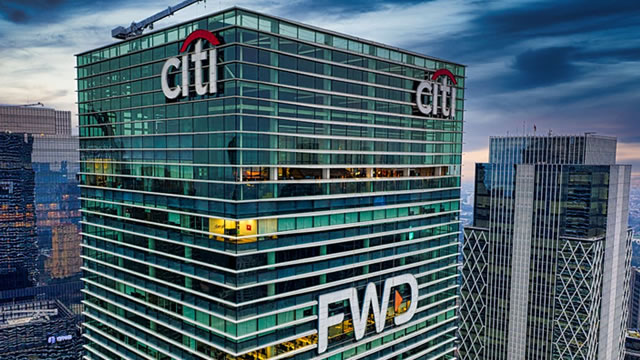
Core Insights - Citigroup Inc. has successfully passed the Federal Reserve's 2025 stress test, allowing the bank to return excess capital to shareholders through dividends and share repurchases, indicating strong capital resilience during severe economic downturns [1][2][9]. Capital and Financial Health - Citigroup's common equity tier 1 (CET1) capital ratio is projected at 10.4%, significantly above the minimum requirement of 4.5%, reflecting robust capital health [3][8]. - The bank currently offers a dividend yield of 2.65%, higher than competitors Bank of America and Wells Fargo, and has a payout ratio of 35% [4][8]. - Citigroup's board has authorized a $20 billion share repurchase plan, with $1.75 billion already repurchased in Q1 2025, indicating confidence in its financial position [7][8]. Business Restructuring and Operational Efficiency - Citigroup is undergoing a significant restructuring, including a plan to eliminate 20,000 jobs to streamline operations and reduce costs [10][11]. - The bank aims to lower its expenses to below $53.4 billion in 2025, down from $53.9 billion in 2024 [12]. - Citigroup is focusing on core operations by exiting non-core markets, including consumer banking in 14 markets across Asia and EMEA, to allocate capital towards higher-return segments [13][15]. Revenue and Market Performance - Citigroup anticipates improved performance in its Markets and Banking segments, projecting mid to high-single-digit revenue growth year-over-year for Markets and mid-single-digit growth for Investment Banking [16]. - The bank's net interest income (NII) for Q1 2025 was reported at $14 billion, a 4% increase from the previous year, benefiting from lower funding costs [17][19]. - Citigroup shares have outperformed the industry, gaining 21.7% over the past six months, compared to 17.7% for the industry and lower gains for peers [20]. Valuation Analysis - Citigroup is currently trading at a forward 12-month price-to-earnings (P/E) ratio of 10.13X, below the industry average of 14.53X, indicating it is undervalued relative to peers [22][24]. - The bank's stock is seen as a potential value opportunity for long-term investors, despite near-term uncertainties due to ongoing restructuring and macroeconomic challenges [26][30].

Take the Zacks Approach to Beat the Markets: Ubiquiti, Flotek Industries & Goldman Sachs in Focus
ZACKS· 2025-06-30 13:31
Market Performance - The three major U.S. indexes saw significant increases last week, with the Nasdaq Composite rising by 3.27%, the Dow Jones Industrial Average by 2.91%, and the S&P 500 by 2.45% [1] - Investor optimism was driven by a ceasefire agreement in the Middle East, particularly regarding the Israel-Iran situation, and expectations of an interest rate cut by the Federal Reserve [1] Economic Indicators - The Department of Commerce reported a 0.1% increase in personal consumption expenditure (PCE) in May, with a year-over-year rise to 2.3% from 2.2% [2] - The U.S. economy contracted by 0.5% in Q1 2025, a deeper contraction than the previously estimated 0.2%, marking the first negative GDP reading since Q1 2022 [3] - Consumer confidence fell to 93 in June, down from 98 in May, while personal income, spending, and savings also declined [3] Stock Performance - Banco Bradesco S.A. shares increased by 30% since being upgraded to a Zacks Rank 2 (Buy) on April 24, outperforming the S&P 500's 14.8% increase [4] - Ubiquiti Inc. shares rose by 28.7% since its upgrade to a Zacks Rank 2 on April 25, also outperforming the S&P 500's 12.4% increase [5] - Zacks Rank 1 (Strong Buy) stocks returned +6.51% in May 2025, compared to +4.47% for the S&P 500 [6] Portfolio Performance - A hypothetical portfolio of Zacks Rank 1 stocks has returned -2.59% in 2025 (through June 2), underperforming the S&P 500's -1.12% [6] - The Zacks Focus List portfolio returned +2.90% year-to-date (through May 31, 2025), outperforming the S&P 500's +1.07% [15] - The Zacks Earnings Certain Admiral Portfolio (ECAP) returned +3.20% in Q1 2025, compared to the S&P 500's -4.30% decline [18] Notable Stock Upgrades - Flotek Industries, Inc. shares surged by 101% since being upgraded to Outperform by Zacks on May 6 [9] - Goldman Sachs has returned 20.6% year-to-date as part of Zacks' Top 10 Stocks for 2025 list [24] - Fastenal Company returned 10.2% over the past 12 weeks, while 3M Company increased by 5% during the same period [21]


金属周报 | 宏观risk on叠加供应约束,铜价向上突破、黄金继续回调
对冲研投· 2025-06-30 10:51
Core Viewpoints - The market sentiment improved as the Israel-Palestine conflict eased, and U.S. macro data showed resilience, leading to increased expectations for three interest rate cuts this year, resulting in a "risk on" environment where risk assets generally rose, particularly copper prices which increased while gold prices fell [1][3]. Precious Metals Market Overview - Gold prices fell last week, with COMEX gold down 2.9% and SHFE gold down 1.5%, while silver prices showed a slight increase [2][21]. - The easing of the Israel-Palestine conflict led to a decrease in market risk aversion, and subsequent dovish signals from Federal Reserve officials raised expectations for interest rate cuts, causing the dollar and U.S. Treasury yields to decline [4][20]. - Despite the short-term decline in gold prices, the ongoing geopolitical uncertainties suggest limited downside potential for gold in the medium to long term, with a recommendation to wait for stabilization [4][49]. Base Metals Market Review - Copper prices rose significantly, with COMEX copper increasing by 4.86% and SHFE copper by 2.79%, driven by a combination of favorable market sentiment and supply constraints from overseas smelting plants [2][3]. - The copper market is expected to enter a traditional off-season with low inventory levels, which may support price increases if inventory does not accumulate during this period [5][49]. - The copper concentrate TC weekly index rose slightly, indicating a "strong mine, weak smelting" market dynamic, with smelting plants facing production losses due to low processing fees [8][10]. Inventory and Positioning - COMEX gold inventory decreased by approximately 530,000 ounces, while COMEX silver inventory increased by about 3.62 million ounces, indicating mixed trends in precious metal inventories [35]. - The positioning data from CFTC shows that non-commercial short positions in gold remain low, suggesting a lack of strong directional signals from positioning alone [7][40]. Market Outlook - The overall market sentiment is expected to remain positive for copper, with low inventory levels potentially leading to price increases, while gold may experience limited downside due to ongoing geopolitical uncertainties [49].