
企业出海

Search documents
津上俊哉:出海遇到难题时,请再坚持一下 | 出海峰会
吴晓波频道· 2025-06-29 16:37
点击上图▲立即报名 上世纪八九十年代,日本企业曾经发生过与当今中国非常相似的出海浪潮。 一方面,当时的日本遭遇了国内产能饱和困局;另一方面,美国对日本发动了贸易 战, 对其半导体和汽车产业进行关税打击 。 为了破局,日本企业踏上出海之路。经历数十年的出海发展,日本已构建起庞大的跨 国生产与经营网络,在海外的法人主体多达2.22万家,海外净资产规模占GDP比重 高达75%。 如今,中国企业也在相似的经贸环境下,掀起了新一轮出海浪潮。尽管充满挑战,却 可以通过向前路者学习,从而获取经验、少交学费。 第二届出海全球峰会上,我们邀请日本著名国际经济学者和中国问题专家津上俊哉, 为大家带来《向前路者学习:日本经验启示》主题演讲,分享了日本企业70年出海经 验与启示。 津上老师出生于1957年,经历了日本从贸易战到企业大规模出海的整个经济周期, 曾在日本驻华使馆从事协助中国入关工作之后在日本经济产业省历任东北亚课课长 ,并对现代中国和中国经济发展有深刻研究。 以下是津上老师在峰会上的演讲精华,与你分享。 演讲 / 津上俊哉 整理 / 巴九灵(微信公众号: 吴晓波频道) 第四,中国企业已经具备足够的竞争优势,出海的时间到了 ...


李陟:判断海外市场是否有机会,不妨先看看企业家们是否用脚投票
Feng Huang Wang Cai Jing· 2025-06-29 07:10
Core Insights - The "2025 China Enterprises Going Global Summit" was held in Shenzhen, focusing on creating a high-end platform for Chinese companies to address challenges in international expansion and explore collaborative transformation paths in the context of global industrial chain restructuring [1] Group 1: Market Insights - The Middle East is identified as a popular region for Chinese enterprises to expand, characterized by significant market diversity and varying economic fundamentals across countries [2] - For instance, Turkey's annual deposit interest rate is around 50%, reflecting substantial currency depreciation over the past three years [2] - The presence of nearly 300,000 Chinese individuals in Dubai compared to only about 1,500 Chinese enterprises in Turkey indicates differing levels of market opportunity [2] Group 2: Strategic Positioning - Companies are encouraged to shift their perspective on "going global" from merely exporting products to positioning themselves as global companies, with China being just one part of the global market [2] - Emerging markets such as the Middle East, Southeast Asia, Latin America, and Africa should be included in the strategic landscape for global expansion [2] Group 3: Operational Considerations - It is normal for companies to not turn a profit in the first year of international expansion due to the need for localization and adaptation to unfamiliar markets [2] - Companies should prepare for a potential 20% increase in operational costs in the first year, even in culturally similar regions like Southeast Asia, and aim to control costs to match domestic levels within three years [2] Group 4: Industry Trends - Two key patterns in China's industrial overseas expansion are identified: industry clusters going abroad and a phased approach to market entry [3] - The evolution of the ASEAN class at Cheung Kong Graduate School of Business illustrates the stages of overseas expansion, from passive capacity transfer to active risk diversification and brand development [5] Group 5: Middle East Market Dynamics - Companies should consider the significant influence of the U.S. and Western countries in the Middle East, as well as the strengthening ties between China and the region [5] - Middle Eastern countries are pursuing economic diversification away from energy dependence, presenting long-term opportunities in sectors like digital economy and green energy [5] - The high proportion of young people in the Middle East indicates a growing consumer market, which is an important factor for companies to monitor [5]

腾讯云副总裁许华彬:企业出海突围需凭借优势能力项,打造“尖刀连”
Feng Huang Wang Cai Jing· 2025-06-29 01:19
Group 1 - The "2025 China Enterprises Going Global Summit" was held in Shenzhen, focusing on providing a high-end platform for Chinese companies to tackle challenges in global expansion amidst deep restructuring of global industrial chains [1] - The summit aimed to facilitate thought exchange, resource connection, and regulatory dialogue among participants to explore paths for ecological win-win transformation [1] Group 2 - Tencent Cloud's Vice President Xu Huabin highlighted the company's 26 years of technological accumulation as a core advantage in serving outbound enterprises, emphasizing rapid deployment capabilities in international markets [3] - Tencent Cloud operates in 21 regions with 56 availability zones and over 3,200 global acceleration nodes, providing localized digital infrastructure for Chinese companies [3] - The company offers comprehensive solutions across various industries, including entertainment, education, and consumer electronics, enabling startups to quickly access overseas infrastructure and implement localized solutions [3] - To compete against international giants like Amazon and Google, Tencent aims to leverage its strengths in audio-visual and AI technologies, positioning these as key capabilities to support enterprises in achieving cloud-edge collaboration [3][4]

赵喜平:汇率是企业出海首要风险,投1元需5倍回报才能抵消汇率损失
Feng Huang Wang Cai Jing· 2025-06-29 00:45
Group 1 - The "2025 China Enterprises Going Global Summit" was held in Shenzhen, focusing on providing a high-end platform for Chinese companies to address challenges in international expansion and explore win-win transformation paths amid global supply chain restructuring [1] - The summit was co-hosted by the Global Council for Chinese Enterprises Going Global, emphasizing the theme "For an Open World" [1] Group 2 - Zhaoxiping, General Manager of Shenzhen Anya Electronic Technology Co., Ltd, highlighted two major risks for companies expanding into overseas markets, particularly Africa [3] - Currency fluctuation is the primary risk, with an example showing that the exchange rate of the Nigerian Naira to the US Dollar changed from approximately 1:300 in 2018-2019 to a peak of 1:1800 post-pandemic, potentially leading to a 3-4 times loss in book value for companies [3] - Zhaoxiping emphasized that companies typically lack sufficient profit margins to offset such losses, requiring a fivefold return on investment to compensate for currency losses [3] - Personal safety risks are also significant, with expatriates facing local security issues such as extortion and kidnapping, as well as health threats like malaria due to inadequate local medical facilities [3] - Companies are advised to assess the political stability of target countries before entering, using Nigeria as an example where despite lucrative opportunities in certain products, the overall investment environment remains challenging [3]
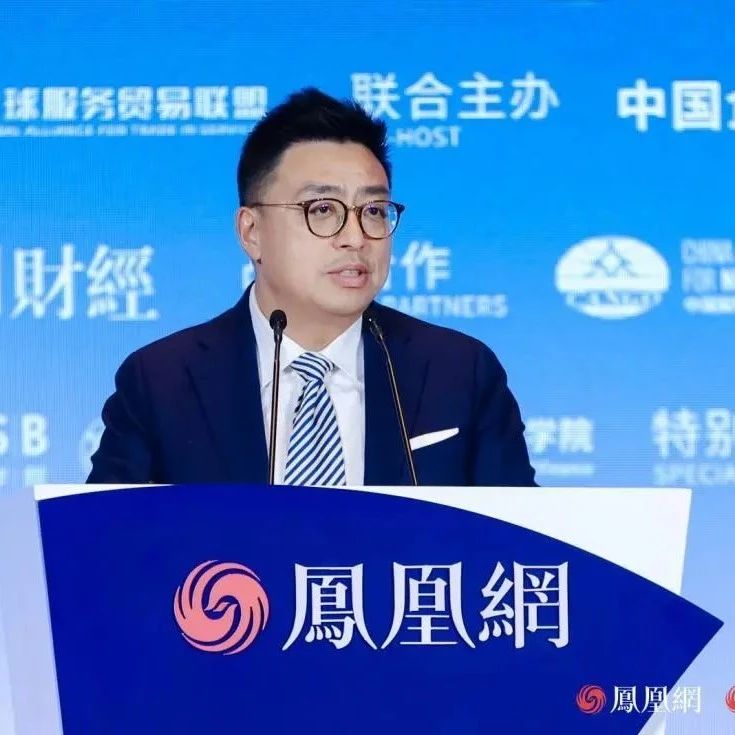
Peter Chen:中国内卷问题在海外是非常难适应的,希望能够尊重当地文化
凤凰网财经· 2025-06-28 14:03
凤凰网财经讯 6月28-29日,"2025中国企业出海高峰论坛"在深圳举行,本次论坛由凤凰网主办,雪花超 高端系列品牌-醴首席赞助合作,中国企业出海全球化理事会联合主办,以"为开放的世界"为主题,旨 在全球产业链深度重构之际,为中国企业搭建思想碰撞、资源对接、规则对话的高端平台,系统性破解 出海难题,共探生态共赢转型路径。 Tikehau Capital执行董事、大中华区业务负责人Peter Chen(陈侱儫)指出:"东南亚有11个国家组成, 每一个国家的语言、文化都不一样,如果你只是拿一个产品去一个地方销售,同样的语言,同样的标 识,当地的消费者是没有办法看懂的。同样,如果说你要把企业带到海外,中国的很多内卷的问题在海 外是非常难适应的,所以希望能够尊重当地的文化。" Peter Chen强调,投资不仅仅是一个资本的运作,更多的是一个我们帮助品牌完成全球化叙事的过 程。"我们在欧洲、亚洲做了很多投资,我们今天发现成功的品牌通常具有明确的国际化路径、跨文化 的管理能力,还有重视品牌的长期建设和治理能力。"Peter Chen建议,新加坡是中国品牌的一个试水国 际化和优化国际战略的最佳试验田。 扫描下 方 图片 ...
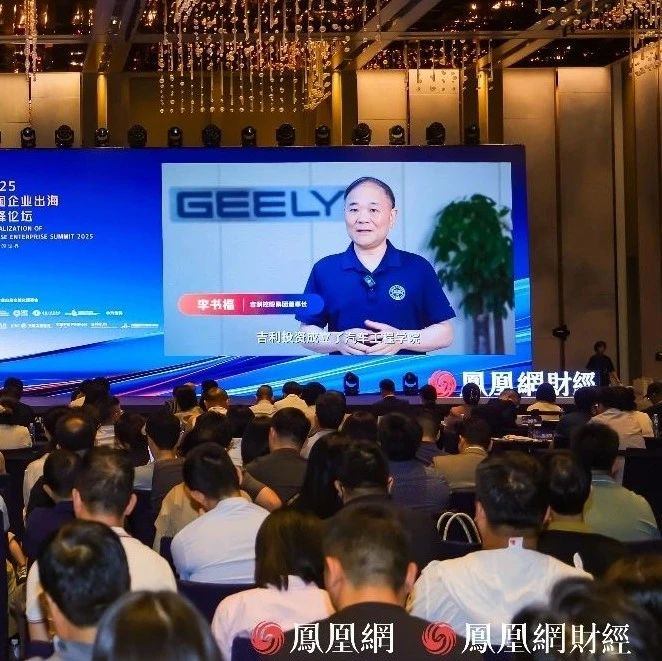
李书福:为学习世界一流技术与经验,吉利不惜冒风险、投巨资收购世界一流车企
凤凰网财经· 2025-06-28 14:03
Group 1 - The "2025 China Enterprises Going Global Summit" was held in Shenzhen, focusing on creating a high-end platform for Chinese companies to tackle challenges in global expansion and explore win-win transformation paths amid deep restructuring of global industrial chains [1] - Geely Holding Group's Chairman Li Shufu emphasized the importance of learning world-class technology and experience to gain an advantage in the global automotive industry, advocating for significant investments in acquiring and collaborating with top automotive companies [2] - Li Shufu highlighted the concept of "root culture" as a fundamental principle for Geely's development, stressing the necessity of a solid foundation in global investments and acquisitions to enhance the company's automotive capabilities [2][3] Group 2 - The summit featured a dedicated "Enterprise Going Global Matching Conference" aimed at facilitating closed-door discussions among government representatives, investors, and business leaders from ASEAN and the Middle East, focusing on practical solutions for companies' international expansion strategies [3][4] - The conference aimed to address critical questions such as the risks faced by outbound enterprises in the past year, the most promising regions and industries for investment this year, and mechanisms for connecting with sovereign and national funds [4]

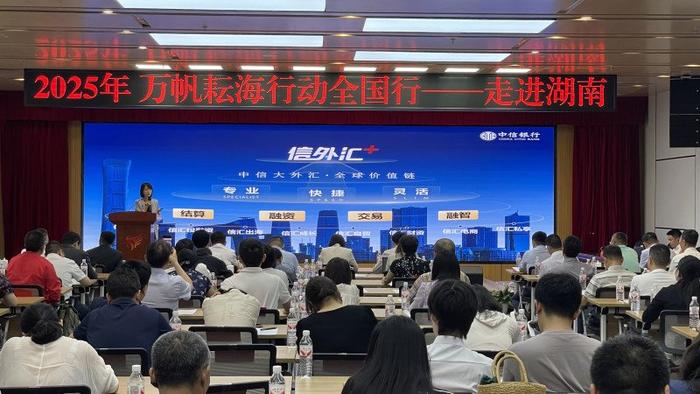
中信银行长沙分行助推湘企扬帆出海 “万帆耘海”助力湖南外贸企业高质量发展
Chang Sha Wan Bao· 2025-06-28 13:00
Group 1 - The event "Wanfanyunhai Action National Tour - Entering Hunan" was held to support small and micro foreign trade enterprises in response to the national "going out" strategy, attracting over 150 participating companies [1][3] - Hunan's open economy has shown a trend of growth, with an average annual import and export growth rate of 3.7% since the 14th Five-Year Plan, and the number of trade partners reaching a historical high [3] - The event focused on challenges faced by small and micro enterprises in overseas expansion, including cross-border settlement, exchange rate fluctuations, financing channels, compliance risk control, and market information asymmetry [3] Group 2 - China CITIC Bank Changsha Branch served as the sole financial partner for the event, providing comprehensive cross-border financial services through its "Xin Waihui+" system [4][5] - The bank has been recognized as an A-class bank by the foreign exchange bureau for 15 consecutive years and has maintained a leading position in international payment and foreign exchange business in the province [5] - This year, the bank has provided cross-border financial services to over 400 enterprises and has supported more than 300 small and micro foreign trade enterprises with financing exceeding $1 billion [5]

虎牙罗亮建议:企业应在主营业务有稳定的基本盘后,再考虑出海拓展
Feng Huang Wang Cai Jing· 2025-06-28 11:36
Group 1 - The "2025 China Enterprises Going Global Summit" was held in Shenzhen, focusing on creating a high-end platform for Chinese companies to address challenges in international expansion and explore collaborative transformation paths [1] - The summit was co-hosted by the Global Council for Chinese Enterprises Going Global, emphasizing the theme of "An Open World" amidst the deep restructuring of global industrial chains [1] Group 2 - The head of overseas business at Huya, Luo Liang, highlighted that user concerns primarily revolve around service quality and content rather than the origin of the service [3] - Luo Liang noted that Huya's operations in the entertainment sector in Europe and the United States are less affected by geopolitical risks, although challenges may arise in payment and commercialization processes [3] - Huya's strategy involves adjusting content and growth methods based on regional market characteristics, such as integrating local payment channels in developed markets and establishing local payment solutions in emerging markets [3] - Luo Liang advised that companies should ensure a stable foundation in their core business before considering international expansion, recommending the establishment of a minimal viable product (MVP) track to validate market potential before scaling [3]

陈航:群核科技的Coohom在海外的注册用户数突破了1000万
Feng Huang Wang Cai Jing· 2025-06-28 10:44
Group 1 - The "2025 China Enterprises Going Global Summit" was held in Shenzhen, focusing on providing a high-end platform for Chinese companies to tackle challenges in global expansion and explore paths for ecological win-win transformation [1] - The summit was co-hosted by the Phoenix Network and the Global Council for Chinese Enterprises Going Global, emphasizing the theme "For an Open World" amidst the deep restructuring of global industrial chains [1] Group 2 - Qunhe Technology, one of the "Hangzhou Six Little Dragons," has gained attention following the success of DeepSeek, with its cloud design software Coohom achieving over 10 million registered users globally [2] - The CEO of Qunhe Technology, Chen Hang, provided three key suggestions for companies going global: to be brave in exploring different market opportunities, to have confidence in the strength of user data and talent in the AI era, and to maintain their original mission focused on technological innovation [2] - Chen emphasized the importance of open and shared technology, which can attract global talent and recognition, as demonstrated by DeepSeek [2]

李书福:怀着对汽车产业敬畏的心态,我们天天如履薄冰
Feng Huang Wang Cai Jing· 2025-06-28 06:16
吉利控股集团董事长李书福 吉利控股集团董事长李书福出席本次论坛,并在"深度全球化:更开放、更包容、更共赢"分论坛发表主旨演讲《吉利的"汽车与道"》。 凤凰网财经讯6月28-29日,"2025中国企业出海高峰论坛"在深圳举行,本次论坛由凤凰网主办,雪花高端系列品牌-醴首席赞助合作,中国企业出海全球化 理事会联合主办,以"为开放的世界"为主题,旨在全球产业链深度重构之际,为中国企业搭建思想碰撞、资源对接、规则对话的高端平台,系统性破解出海 难题,共探生态共赢转型路径。 李书福表示,要在全球汽车产业的马拉松中占据优势,必须学习世界一流的技术与经验。李书福表示:"为此,吉利不惜冒风险、投巨资收购和投资世界一 流汽车公司,深度参与专业技术合作。通过这种方式,吉利从根本上学习、掌握汽车产业的马拉松路径,将世界汽车的优势产业基因与自身融合,打造出具 有世界级水平根基的吉利汽车产业群。" 李书福还谈到,"根文化"是吉利发展的基本理念,打造过硬的基本功必须有根基,而在全球投资、收购有特色优势的汽车企业,正是为了寻找全球汽车产业 优秀基本功的根基。他强调:"每一辆汽车的诞生,都离不开背后基本功的支撑,没有基本功的企业,其产品就如 ...