生态文明建设

Search documents
“两山”理念指明正确发展方向(国际观澜)
Ren Min Ri Bao· 2025-08-03 21:55
1992年6月,在巴西里约热内卢召开的联合国环境与发展大会达成《21世纪议程》,勾勒出一条迈向可 持续发展的道路。自此,国际社会便将生态保护与经济增长相结合视为共同愿景。 在此背景下,中国提出"绿水青山就是金山银山"理念,为兼顾生态保护与经济发展提供了创新理念和实 践路径,揭示了环境保护与经济收益可以并行不悖、相辅相成,强调绿色健康的环境是经济发展的根 基,"绿水青山"能孕育"金山银山",人类福祉与地球命运休戚与共。这一创新性理念在西方环保领域引 发共鸣,为开展对话搭建了桥梁,有助于构建万物共生的全球发展框架。 "两山"理念指明了正确发展方向。它不仅体现在经济行为、生态治理、农业生产等各个领域的具体项目 上,还融入教育体系——中国的高校和学术机构开设相关课程,培训和培养践行"两山"理念的人才,助 力生态文明建设。在"两山"理念的实践层面,中国始终推动实现经济发展、产业升级与环境改善的协同 共进。中国在太阳能、电动汽车等行业的全球引领,以及在高铁网络建设、空气治理、植树造林、粮食 安全等领域取得的发展成绩都是生动例证。 自1985年首次到访中国以来,我见证了中国的快速发展,特别是在生态文明建设和环境保护领域取得 ...
江西坚定不移走生态优先绿色发展之路
Ren Min Ri Bao· 2025-08-02 22:01
Group 1 - The core viewpoint emphasizes the importance of ecological development and the transformation of ecological advantages into developmental benefits in Jiangxi province, as highlighted by President Xi Jinping during his visit [1] - Jiangxi has a forest coverage rate of 63.35%, with a total forestry output value nearing 700 billion yuan [1] - The province is accelerating the construction of a national ecological civilization pilot zone and exploring pathways for realizing the value of ecological products [1] Group 2 - Chongyi County has a high forest coverage rate of 87.32% and is piloting sustainable forest management, improving average annual growth rates for both coniferous and broadleaf forests [2] - The average annual growth rate for pine forests increased from 0.72 cubic meters to over 1 cubic meter per mu, while broadleaf forests improved from 0.3 cubic meters to 0.5 cubic meters per mu [2] - Jiangxi is recognized as a key province for sustainable forest management trials, promoting a cooperative model between state-owned and collective forests [2] Group 3 - In Wan'an County, the oil tea industry is thriving, with government subsidies facilitating the expansion of processing facilities and improvements in production techniques [3] - Jiangxi accounts for over 25% of the national output of camellia oil, with initiatives underway to enhance quality and brand influence [4] - The provincial government aims to increase the income of 2 million households by over 3,000 yuan each by the end of the year through the promotion of the oil tea industry [4] Group 4 - Jiangxi is advancing the quality upgrade of specialty forestry industries, including oil tea and bamboo, through the establishment of a 10,000 mu forestry industry technology demonstration park [5] - The park is successfully trialing high-value forest products, such as edible fungi, leveraging technology and talent [5] Group 5 - Jiangxi is implementing a "green book" system to support new project developments, allowing companies to secure financing based on forestry operating rights [6] - Since June 2024, Jiangxi has issued forestry operating rights certificates, attracting capital into eco-tourism and forest health industries [6] - The province has issued a total of 38.707 billion yuan in forestry-related loans, with cumulative transaction values for ecological products exceeding 138 billion yuan [6][7]


辉煌60年•我们的家园│行走在高原之上:触摸新时代幸福西藏的脉搏
Yang Shi Wang· 2025-08-02 14:11
Core Viewpoint - The article highlights the significant ecological, cultural, and economic developments in Tibet, showcasing the region's transformation and the harmonious coexistence of nature and society in the new era [1][8][34]. Ecological Development - The afforestation project in the Gongga section of Lhasa has successfully transformed barren mountains into green landscapes, demonstrating the commitment to ecological restoration despite challenging conditions [3][6][8]. - The ecological corridor along the Lhasa River enhances urban ecology, providing recreational spaces for citizens and fostering a connection between people and nature [6][10]. Cultural Heritage - The article emphasizes the importance of cultural transmission, illustrated by the traditional arts and crafts in the ancient Shazha Courtyard, which reflect the rich history and ongoing cultural evolution in Tibet [9][11][15]. - The Zaza clothing in Zhazha Village serves as a living representation of cultural heritage, intertwining history with contemporary identity [11][15]. Economic Innovation - The operation of the world's highest wind farm in the Zhaozha Grassland signifies a breakthrough in technology and green development, embodying the spirit of resilience and innovation in the region [16][18]. - Modern agricultural practices in Lhasa, including the establishment of demonstration zones, illustrate the integration of technology and ecological principles, contributing to local economic growth and rural revitalization [18][21]. Social Harmony - The article describes the harmonious coexistence of various ethnic groups in Lhasa, highlighting community support and mutual assistance as a reflection of national unity [26][30]. - Community service stations in Lhasa exemplify the warmth of social services, fostering a sense of belonging and cooperation among residents [30][34].
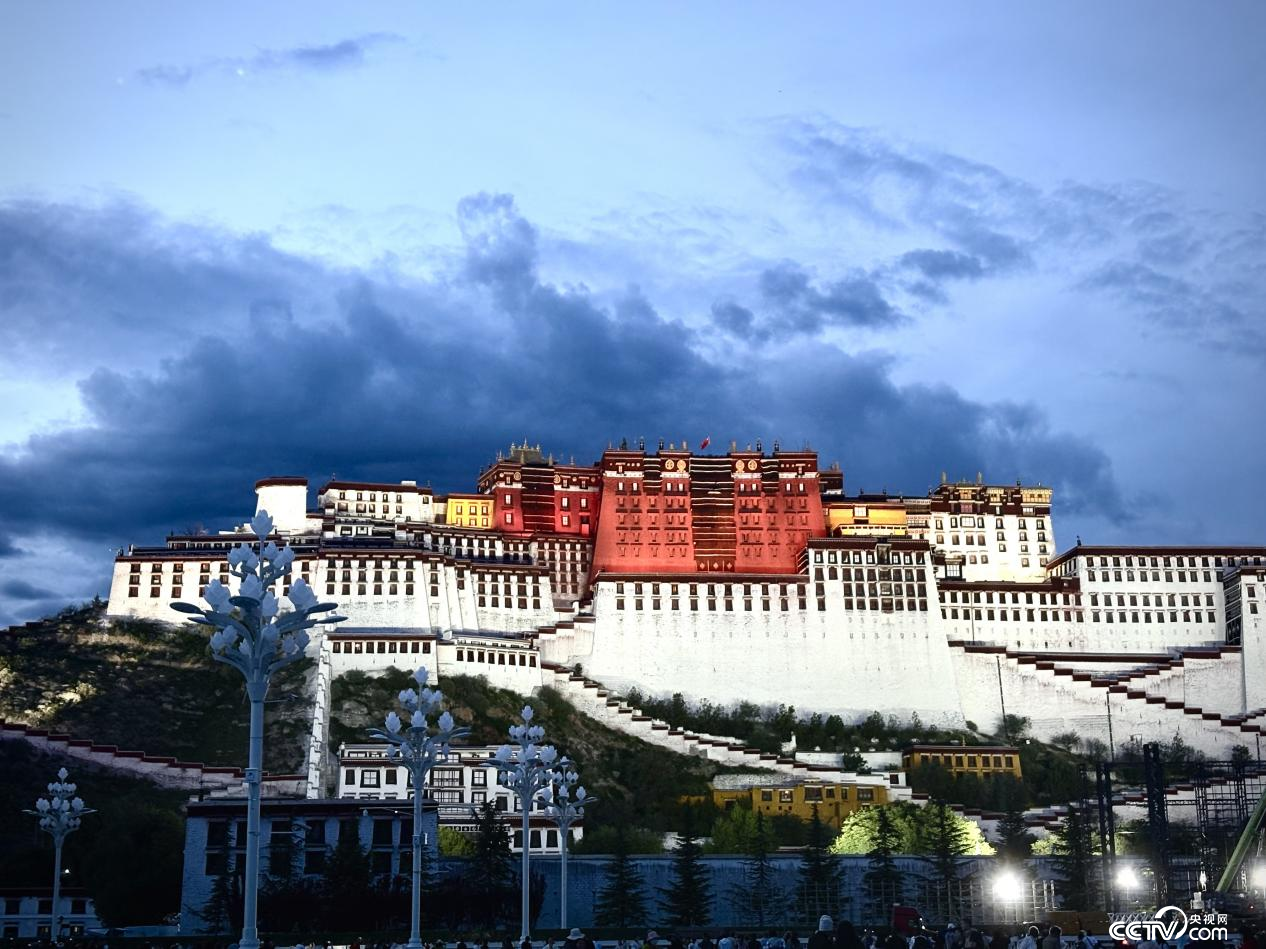
辉煌60年•我们的家园│行走在高原之上:触摸新时代幸福西藏的脉搏——“辉煌60年·我们的家园 幸福美丽西藏”网络主题活动手记
Yang Shi Wang· 2025-08-02 14:09
Core Viewpoint - The article highlights the transformative development and ecological restoration efforts in Tibet, showcasing a harmonious relationship between nature and human activities, as well as cultural preservation and innovation in various sectors [1][8][33]. Group 1: Ecological Restoration - The ecological restoration project in the Gongga section of Lhasa has successfully transformed barren landscapes into green areas, demonstrating the commitment to environmental protection and sustainable development [3][6][8]. - The planting of saplings, such as the Chinese fir, in challenging conditions reflects the dedication of builders to restore the fragile ecosystem of the Tibetan plateau [3][7]. Group 2: Cultural Heritage - The preservation of cultural heritage is evident in places like the ancient Shazha Courtyard, where traditional Tibetan art and stories are interwoven with modern life, showcasing the continuity of cultural practices [9][11][15]. - The Zaza clothing, representing cultural narratives, serves as a living testament to the region's rich history and traditions [11][15]. Group 3: Innovative Development - The operation of the world's highest wind farm in Zhaozha demonstrates technological advancements and a commitment to green energy in Tibet [16][18]. - Modern agricultural practices, including the establishment of agricultural demonstration zones, highlight the integration of technology and ecological principles to enhance local livelihoods and promote self-sufficiency [18][21]. Group 4: Social Harmony - The coexistence of multiple ethnic groups in Lhasa, characterized by mutual support and community bonds, exemplifies the spirit of unity and cooperation among diverse populations [25][29]. - Community service stations in Lhasa provide essential support and foster a sense of belonging, reinforcing the idea that social harmony is built on everyday interactions and assistance [29][32].
辉煌60年 我们的家园│行走在高原之上:触摸新时代幸福西藏的脉搏——“辉煌60年·我们的家园 幸福美丽西藏”网络主题活动手记
Yang Shi Wang· 2025-08-02 13:12
Core Viewpoint - The article highlights the significant ecological, cultural, and economic developments in Tibet, showcasing the region's transformation and the harmonious coexistence of nature and society in the new era [1][34]. Group 1: Ecological Development - The afforestation project in the Gongga section of Lhasa has successfully transformed barren mountains into green landscapes, demonstrating the commitment to ecological restoration despite challenging conditions [3][6][8]. - The ecological corridor along the Lhasa River enhances urban ecology, providing recreational spaces for citizens and fostering a harmonious relationship between people and nature [6][10]. Group 2: Cultural Heritage - The article emphasizes the importance of cultural transmission, with traditional arts like Thangka painting being preserved and celebrated in modern contexts, reflecting the rich history of the region [9][11][15]. - The Zaza clothing in Zhazha Village serves as a living representation of cultural heritage, intertwining ancient stories with contemporary identity [11][15]. Group 3: Economic Innovation - The operation of the world's highest wind farm in the Zhaomei area symbolizes technological advancement and commitment to green development in Tibet [16][18]. - Modern agricultural practices, including space-bred crops, are being implemented to enhance local food security and economic self-sufficiency, contributing to rural revitalization [21][25]. Group 4: Social Harmony - The article illustrates the spirit of unity among diverse ethnic groups in Lhasa, where mutual support and community engagement are prevalent, embodying the essence of social cohesion [26][30]. - Community service stations in Lhasa are designed to be welcoming and supportive, fostering a sense of belonging and cooperation among residents [30][33].
陕西省人民代表大会常务委员会关于加强野生鸟类保护的决定
Shan Xi Ri Bao· 2025-08-02 00:41
Core Viewpoint - The decision made by the Shaanxi Provincial People's Congress Standing Committee aims to strengthen the protection of wild birds, maintain biodiversity, and promote ecological civilization, ensuring harmony between humans and nature [2][4]. Summary by Sections Protection Principles - Wild bird resources are owned by the state, and all units and individuals in the province must comply with relevant laws and regulations for their protection [4]. - The protection of wild birds follows principles of prioritizing protection, regulated use, strict supervision, and public participation [5]. Classification and Responsibilities - Wild birds are classified into national key protection, provincial key protection, and those with significant ecological, scientific, or social value for graded protection [6]. - County-level governments are responsible for wild bird protection in their jurisdictions, with specific departments assigned relevant duties [6]. Hunting and Trade Regulations - Hunting, killing, or trading of national key protected wild birds is prohibited, with exceptions requiring special permits [7][8]. - Illegal transportation, carrying, or mailing of wild birds and their products is banned, and strict regulations apply to their sale and purchase [8]. Habitat and Environmental Protection - Governments must protect and restore wild bird habitats and migration routes, ensuring compliance with ecological protection standards [9][10]. - Measures to reduce pollution and promote green development are emphasized, including the use of environmentally friendly technologies [10]. Public Awareness and Participation - The government will organize campaigns to raise awareness about wild bird protection, with a designated "Love Birds Week" each April [14]. - Citizens and organizations are encouraged to participate in conservation efforts through donations, volunteer work, and reporting illegal activities [14][17]. Enforcement and Penalties - Violations of the decision will result in administrative penalties or criminal charges, with responsibilities for ecological damage clearly defined [17].
金句 | 推进生态文明建设,总书记作出重要论述
Xin Hua She· 2025-08-02 00:22
Core Viewpoint - The speech by General Secretary Xi Jinping emphasizes the need for a higher level of ecological environment protection as China accelerates its transition to a green and low-carbon high-quality development stage [1][2]. Group 1: Ecological Civilization Construction - Since the 18th National Congress, ecological civilization construction has been recognized as a fundamental strategy for the sustainable development of the Chinese nation, leading to unprecedented efforts and achievements [2]. - There has been a significant transformation in the understanding of ecological civilization construction, evolving from practical exploration to a scientific theoretical framework [3]. Group 2: Current Environmental Challenges - Structural, root, and trend pressures on ecological environment protection have not fundamentally eased, with significant resource pressures and limited environmental capacity remaining [4]. - The quality of the ecological environment is still not firmly established, indicating ongoing challenges in achieving sustainable development [4]. Group 3: High-Quality Development and Protection - High-quality development and high-level protection are complementary; ecological priority and green low-carbon development can only be achieved through high-level protection [5]. - Development should be planned with a focus on harmony between humans and nature, ensuring that economic activities remain within the limits of natural resources and ecological capacity [6]. Group 4: Systematic Environmental Governance - Ecological environment governance is a systematic project that requires comprehensive consideration of environmental factors, ecosystem integrity, and sustainable socio-economic development [7]. - A holistic approach to environmental protection and governance should be adopted, integrating natural recovery and artificial restoration methods [9]. Group 5: Carbon Neutrality Goals - Achieving carbon peak and carbon neutrality cannot be rushed; a steady and progressive approach is essential, avoiding "carbon rush" or "campaign-style carbon reduction" [12]. - Precision in pollution control and legal enforcement is necessary to continuously improve ecological environment quality [13]. Group 6: Green Development Strategies - Green low-carbon development should be viewed as a fundamental strategy for addressing ecological environment issues, promoting green production and lifestyle [14]. - National ecological security and sustainable development must be prioritized to ensure a healthy environment for future generations [16]. Group 7: Policy Implementation - A comprehensive "1+N" policy system should be implemented to achieve carbon peak and carbon neutrality, emphasizing national coordination and risk prevention [18]. - Resources across various fields should be integrated to support the construction of a beautiful China through a combination of legal, market, technological, and policy measures [22].
徐曙海主持召开市政府常务会议 加快建设现代化人民城市 以更优服务繁荣文旅市场
Zhen Jiang Ri Bao· 2025-08-01 23:58
Group 1: Urban Development and Governance - The meeting emphasized the importance of fully understanding and implementing the spirit of the Central Urban Work Conference, focusing on the concept of "People's City built by the people, for the people" [1] - The city aims to accelerate the construction of a modernized people's city, with a vision of being an "innovation and entrepreneurship paradise, a garden city" [1] - There is a commitment to high-level planning to support high-quality development, integrating production, living, and ecological spaces [1] Group 2: Ecological Environment Protection - The meeting highlighted that ecological civilization construction is fundamental for the sustainable development of the Chinese nation [2] - There is a strong focus on implementing ecological environment protection tasks, addressing feedback from ecological inspections, and ensuring strict compliance with rectification measures [2] - The city aims to continue efforts in protecting blue skies, clear waters, and clean land, while promoting high-end, intelligent, and green industrial development [2] Group 3: Science and Technology Promotion - The meeting recognized that science and technology popularization is essential for achieving innovative development [2] - There is a plan to enhance science popularization capabilities and improve infrastructure for science communication, aiming to elevate public scientific literacy [2] - The integration of science popularization with technological innovation is a priority, with efforts to create platforms for the dissemination of scientific achievements [2] Group 4: Cultural and Tourism Development - The meeting discussed the need for innovative collaborative mechanisms to better serve the cultural and tourism market [3] - There is a focus on market-oriented approaches, emphasizing demand-side reforms to support the development of immersive and digital cultural tourism products [3] - The city aims to expand consumption scenarios and enhance service standards, promoting regional cooperation to convert cultural tourism resources into consumption growth [3]
以美丽中国建设全面推进人与自然和谐共生的现代化
Bei Jing Wan Bao· 2025-08-01 09:12
新华社电 8月1日出版的第15期《求是》杂志将发表中共中央总书记、国家主席、中央军委主席习近平 2023年7月17日《在全国生态环境保护大会上的讲话》。 责任编辑:蒋露瑶 文章指出,我国经济社会发展已进入加快绿色化、低碳化的高质量发展阶段,生态文明建设仍然处于压 力叠加、负重前行的关键期。新征程继续推进生态文明建设需要处理好几个重大关系。一是高质量发展 和高水平保护的关系。要站在人与自然和谐共生的高度谋划发展,通过高水平保护,不断塑造发展的新 动能、新优势,持续增强发展的潜力和后劲。二是重点攻坚和协同治理的关系。要坚持系统观念,抓住 主要矛盾和矛盾的主要方面,对突出生态环境问题采取有力措施,同时强化目标协同、多污染物控制协 同、部门协同、区域协同、政策协同,不断增强各项工作的系统性、整体性、协同性。三是自然恢复和 人工修复的关系。要把自然恢复和人工修复有机统一起来,因地因时制宜、分区分类施策,努力找到生 态保护修复的最佳解决方案。四是外部约束和内生动力的关系。要激发起全社会共同呵护生态环境的内 生动力,始终坚持用最严格制度最严密法治保护生态环境,保持常态化外部压力。五是"双碳"承诺和自 主行动的关系。我们承诺 ...
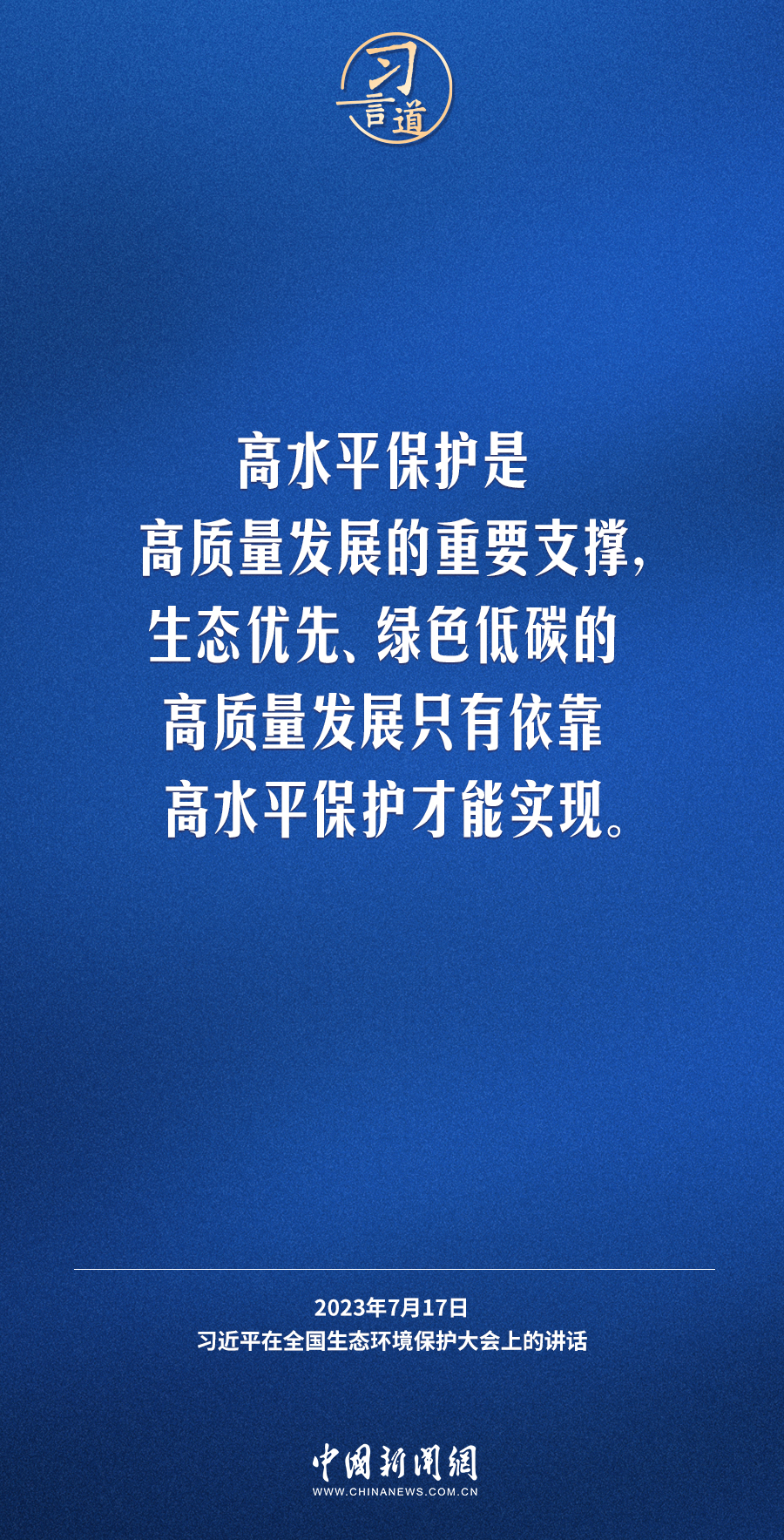
习言道|生态文明建设功在当代、利在千秋
Zhong Guo Xin Wen Wang· 2025-08-01 01:31
2023年7月17日 习近平在全国生态环境保护大会上的讲话 WWW.CHINANEWS.COM.CN 8月1日出版的《求是》杂志发表中共中央总书记、国家主席、中央军委主席习近平2023年7月17日《在全国生态环境保护大会上 的讲话》。 2023年7月17日 习近平在全国生态环境保护大会上的讲话 良好生态环境 是最公平的公共产品, 图 狗 网 冠 WWW.CHINANEWS.COM.CN 是最晋惠的民生福祉。 生态环境没有替代品, 用之不觉、失之难存, 不仅关系经济发展质量, 而且攸关每个人的生活品质。 2023年7月17日 习近平在全国生态环境保护大会上的讲话 实现碳达峰碳中和, 等不得也急不得, 不可能毕其功于一役, 必须坚持 稳中求进、逐步实现, 决不能搞 "碳冲锋"、"运动式减碳" 2023年7月17日 习近平在全国生态环境保护大会上的讲话 中國 狗闻網 WWW.CHINANEWS.COM.CN 要下大气力解决 老百姓"家门口"的 噪声、油烟、恶臭等问题, 积极回应人民群众关切。 2023年7月17日 习近平在全国生态环境保护大会上的讲话 中國 狗闻 網 WWW.CHINANEWS.COM.CN 各级党 ...