
多边主义

Search documents
中方:立即、无条件、彻底取消!
券商中国· 2025-12-05 01:56
Core Viewpoint - The article emphasizes the call for the immediate, unconditional, and complete cancellation of unilateral coercive measures by a few Western countries, highlighting their detrimental impact on international law, human rights, and global governance [1][2]. Group 1: Unilateral Coercive Measures - Unilateral coercive measures are spreading and severely violate the purposes and principles of the UN Charter, infringing on basic human rights such as the right to life and development [1]. - These measures obstruct the implementation of the 2030 Sustainable Development Agenda and undermine multilateralism and the global governance system [1]. - The international community, especially the Global South, has long opposed unilateral coercive measures, with over 100 resolutions passed by the UN General Assembly on this issue [1]. Group 2: Global Governance Initiatives - China, as a significant member of the Global South and a victim of unilateral coercive measures, aims to promote global governance initiatives to resist such measures and uphold a UN-centered international system [2]. - The UN General Assembly has designated December 4 as "International Day Against Unilateral Coercive Measures," coinciding with the adoption of the Declaration on the Right to Development on December 4, 1986 [2].

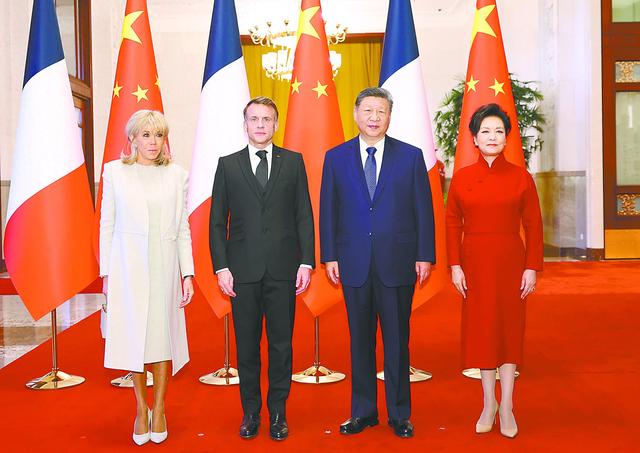
中法携手为世界注入确定性
Huan Qiu Shi Bao· 2025-12-05 01:50
●本报驻法国特约记者 邵 琦 董 铭 ●本报记者 白云怡 褚大业 12月4日上午,国家主席习近平在北京人民大会堂同来华进行国事访问的法国总统马克龙举行会谈。这 是会谈前,习近平和夫人彭丽媛同马克龙总统夫妇合影。 (新华社) 4日上午,国家主席习近平在北京人民大会堂同来华进行国事访问的法国总统马克龙举行会谈。习近平 强调,无论外部环境如何变化,中法两国都应当始终展现大国的战略眼光和独立自主,在彼此核心利益 和重大关切问题上相互理解和支持,维护好中法关系的政治基础。马克龙表示,法中保持密切高层交 往,始终相互信任、相互尊重。法方重视对华关系,坚定奉行一个中国政策,愿持续深化法中全面战略 伙伴关系。会谈后,两国元首共同见证签署核能、农食、教育、生态环境等领域多项合作文件。法国 《费加罗报》将马克龙此访形容为一次"至关重要的战略性访问"。随代表团访华的法国苏伊士集团首席 执行官夏弘业4日接受《环球时报》记者采访时表示,此次中法高层交流体现出两国合作的持久活力与 巨大潜力,也彰显国际合作在应对全球范围内一些挑战方面的关键作用。接受《环球时报》记者采访的 专家表示,马克龙此访传递出两国关系保持稳定、在合作方面存在连续性的 ...
第四届链博会荷兰推介会在阿姆斯特丹举行
Xin Hua She· 2025-12-05 00:39
Core Viewpoint - The fourth China International Supply Chain Promotion Expo was held in Amsterdam, emphasizing the need for enhanced international cooperation in supply chains amidst rising political and security concerns affecting global trade [1] Group 1: Global Supply Chain Cooperation - The current trend of politicization and security concerns in global supply chains poses significant challenges to free trade and multilateralism, highlighting the urgent need for strengthened international collaboration [1] - The Chairman of the China-Netherlands Business Council, Hakma, stated that enhancing global supply chain cooperation is essential to address global challenges, advocating for deeper cooperation between Europe and China across various fields [1] Group 2: Event Participation and Focus Areas - The event saw participation from over a hundred representatives from Chinese and Dutch business communities and industry associations, focusing on topics such as smart logistics, green agriculture, and supply chain finance [1] - Zhao Feng, Deputy Representative of the China Council for the Promotion of International Trade in the EU, provided an overview of the arrangements and details for the fourth Supply Chain Expo [1]
中方呼吁少数西方国家立即、无条件、彻底取消单边强制措施
Zhong Guo Xin Wen Wang· 2025-12-04 23:33
Core Viewpoint - China calls for the immediate, unconditional, and complete cancellation of unilateral coercive measures by a few Western countries, emphasizing the negative impact of such measures on international law, human rights, and global governance [1][2]. Group 1: Unilateral Coercive Measures - Unilateral coercive measures are spreading and violate the purposes and principles of the UN Charter, undermining the foundation of international law and human rights [1]. - These measures hinder the implementation of the 2030 Sustainable Development Agenda and disrupt multilateralism and the global governance system [1]. - Many developing countries and their populations suffer significantly due to these unilateral actions [1]. Group 2: International Response - The international community, especially the Global South, has long called for the opposition to unilateral coercive measures, with over 100 resolutions passed by the UN General Assembly on this issue over the decades [1]. - China urges member states, the UN system, and other international organizations to collectively resist these illegal actions and assist affected countries in alleviating their difficulties [1][2]. - The establishment of December 4 as the "International Day Against Unilateral Coercive Measures" serves to raise awareness of the serious harms caused by such measures [2].
张弘:中俄战略对表提升全球安全
Huan Qiu Wang· 2025-12-04 23:05
Group 1 - The core viewpoint of the articles emphasizes the importance of the China-Russia strategic security consultation mechanism as a platform for deepening bilateral cooperation and addressing global and regional security challenges [1][2][4] - The 20th round of strategic security consultations between China and Russia aims to implement the consensus reached by the leaders of both countries, focusing on core interests such as sovereignty, security, and development [1][4] - The mechanism is seen as a high-level institutional guarantee for the comprehensive strategic partnership between China and Russia, promoting a new paradigm of cooperation that transcends camp confrontations [4] Group 2 - The articles highlight the significance of China and Russia's collaboration in providing a balanced approach to global security, particularly in the context of rising global trade frictions and regional conflicts [2][3] - The strategic dialogue between China and Russia is positioned as a means to enhance global security levels and counteract unilateralism and hegemonism, advocating for a more just and reasonable international order [2][3] - The ongoing geopolitical crises, particularly in Europe, are noted as significant threats to global security, with China advocating for a fair and lasting peace agreement to address the root causes of these crises [3]
中方呼吁国际社会共同抵制单边强制措施
Xin Hua She· 2025-12-04 22:50
Core Viewpoint - The article emphasizes the growing prevalence of unilateralism and the imposition of unilateral coercive measures, calling for their immediate and unconditional cancellation by certain Western countries [1][2] Group 1: Unilateral Coercive Measures - Unilateral coercive measures violate the purposes and principles of the UN Charter and undermine the fundamental norms of international law [1] - These measures infringe upon basic human rights, including the right to life and development, and hinder the implementation of the 2030 Sustainable Development Agenda [1] - Many developing countries and their populations are suffering due to these measures, which have not been effectively curtailed [1] Group 2: International Response - The call to oppose unilateral coercive measures is a long-standing appeal from the international community, particularly from the Global South, with over 100 resolutions passed by the UN General Assembly on this issue [1] - The article highlights the importance of recognizing the severe harm caused by unilateral measures and advocates for a collective effort to practice true multilateralism and uphold international justice [1] - China, as a significant member of the Global South and a victim of unilateral measures, aims to promote a fairer global governance system and contribute to world peace and development [2]
让中法全面战略伙伴关系在“新甲子”走得更稳更好
Si Chuan Ri Bao· 2025-12-04 22:49
Group 1 - The meeting between Chinese President Xi Jinping and French President Emmanuel Macron emphasizes the importance of multilateralism and the need for both countries to take responsibility in the face of global challenges [3] - Both leaders agree on the necessity of maintaining a strong political foundation for Sino-French relations, highlighting mutual understanding and support on core interests [3] - Xi Jinping outlines opportunities for cooperation in traditional sectors like aviation, aerospace, and nuclear energy, as well as emerging fields such as green economy, digital economy, biotechnology, artificial intelligence, and new energy [3] Group 2 - Macron expresses France's commitment to deepening the comprehensive strategic partnership with China, emphasizing mutual respect and trust [3] - The French side welcomes increased Chinese investment in France and aims to provide a fair and non-discriminatory business environment [3] - Both leaders discuss the importance of cooperation in addressing global issues such as climate change, biodiversity protection, and governance of artificial intelligence [3]
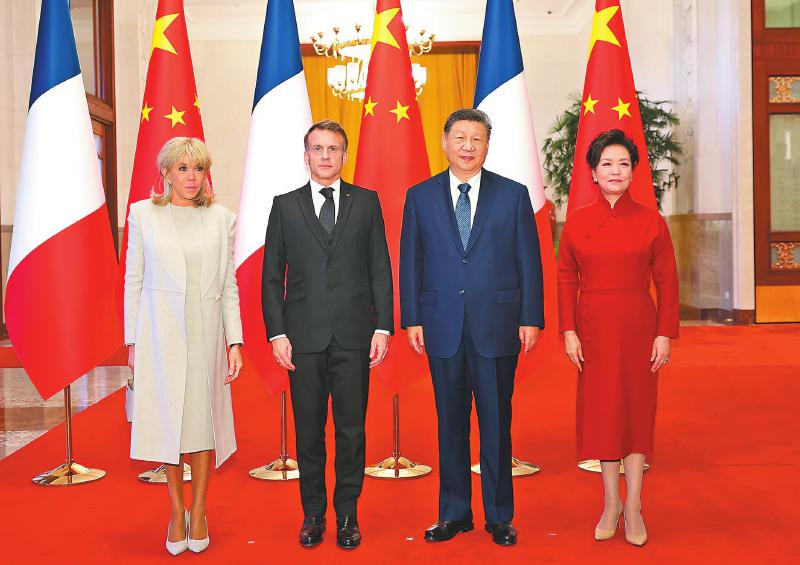
高举多边主义旗帜,站在历史正确一边,中法携手为世界注入确定性
Huan Qiu Shi Bao· 2025-12-04 22:44
【环球时报驻法国特约记者 邵琦 董铭 环球时报记者 白云怡 褚大业】4日上午,国家主席习近平在北京人民大会堂同来华进行国 事访问的法国总统马克龙举行会谈。习近平强调,无论外部环境如何变化,中法两国都应当始终展现大国的战略眼光和独立自 主,在彼此核心利益和重大关切问题上相互理解和支持,维护好中法关系的政治基础。马克龙表示,法中保持密切高层交往, 始终相互信任、相互尊重。法方重视对华关系,坚定奉行一个中国政策,愿持续深化法中全面战略伙伴关系。会谈后,两国元 首共同见证签署核能、农食、教育、生态环境等领域多项合作文件。法国《费加罗报》将马克龙此访形容为一次"至关重要的战 略性访问"。随代表团访华的法国苏伊士集团首席执行官夏弘业4日接受《环球时报》记者采访时表示,此次中法高层交流体现 出两国合作的持久活力与巨大潜力,也彰显国际合作在应对全球范围内一些挑战方面的关键作用。接受《环球时报》记者采访 的专家表示,马克龙此访传递出两国关系保持稳定、在合作方面存在连续性的信号。 " 中法都是有远见、有担当的独立自主大国 " 习近平在会谈中指出,中法都是有远见、有担当的独立自主大国,是推动世界多极化、促进人类团结合作的建设性力量 ...
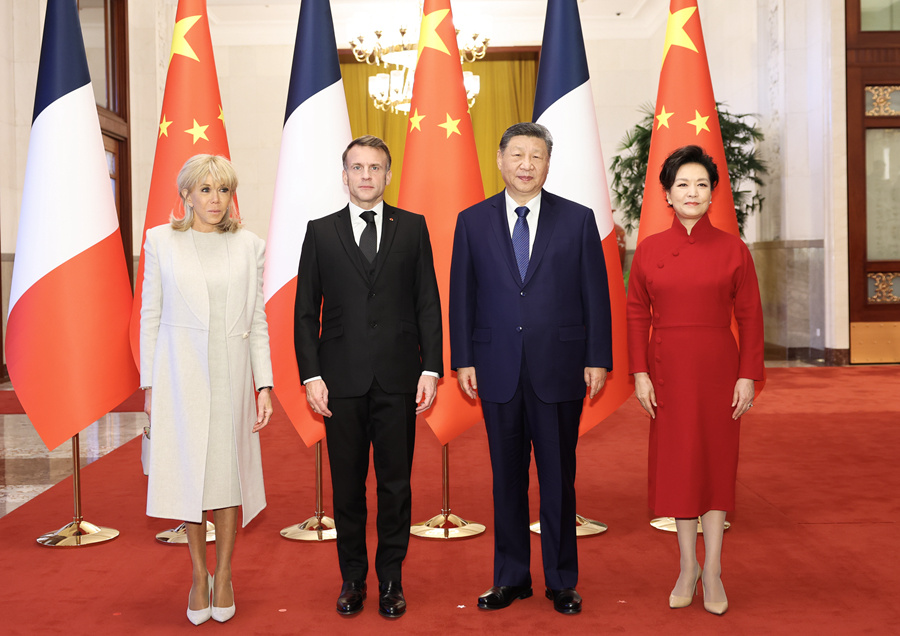
马克龙访华 以中法韧性促中欧合作
Zhong Guo Qing Nian Bao· 2025-12-04 22:23
12月3日,北 京,法国总统马克龙(右)和夫人布丽吉特乘机抵达首都国际机场,开启为期3天的访华之行。视觉中 国供图 12月3日傍晚,法国总统马克龙及夫人布丽吉特乘专机抵达北京,开启为期3天的访华之行。这既是马克 龙时隔两年半再次访华,也是他自2017年就任法国总统以来第四次对中国进行国事访问,更是对习近平 主席在去年中法建交60周年之际对法国进行历史性国事访问的回访。 "马克龙多次访华本身就体现了中法关系在传统基础上的韧性。这是在面对复杂多变的国际局势时,中 法关系始终保持稳定的重要因素。"北京外国语大学欧盟与区域发展研究中心主任崔洪建在接受中青报· 中青网记者采访时表示,马克龙及其代表的精英群体在法国政治中具有代表性,他们希望长期保持对中 国的高度关注与合作需求。"只要中法关系保持稳定并继续深化,就意味着中欧关系中相当重要的一部 分能够维持合作与稳定的态势。" 将"竞争力焦虑"转化为合作动力 法国是第一个与新中国建立大使级外交关系的西方大国,中法同为联合国安理会常任理事国。在全球局 势更趋动荡的大背景下,中法元首外交的重要性愈发凸显。上海外国语大学法语系副研究员、上海全球 治理与区域国别研究院法国与法语国家 ...
“2025·中国—南非人权研讨会”在比勒陀利亚举行
Ren Min Ri Bao· 2025-12-04 22:16
Group 1 - The seminar titled "2025 China-South Africa Human Rights Seminar" was held in Pretoria, focusing on "Multilateralism and the Realization of Development Rights" [1][2] - Key discussions included the challenges facing global human rights development and the need for China and South Africa to strengthen communication and cooperation to promote development rights [1][2] - Experts emphasized the importance of multilateralism and the need to address unilateralism and protectionism, which threaten the development rights of people in global South countries [1][2] Group 2 - The seminar was co-hosted by the China Human Rights Development Foundation and the African-China Research Center at the University of Johannesburg, with over 50 experts and representatives from various sectors attending [2] - Participants agreed on the alignment of China and South Africa in promoting multilateralism and shared development, advocating for deeper exchanges in human rights civilization [2]