通用人工智能(AGI)

Search documents
真·首个进家的人形机器人来了!两万美元,开启预定
机器之心· 2025-10-29 09:25
Core Viewpoint - The article discusses the launch and features of NEO Beta, a humanoid robot designed for home use by 1X Technologies, which aims to assist with household tasks and provide companionship while emphasizing safety and user control over data [2][57]. Product Features - NEO Beta is a bipedal robot, standing 168 cm tall and weighing 30 kg, designed to be safe and non-threatening in appearance [9][10]. - The robot's exterior is made of a 3D-printed honeycomb mesh fabric that provides both structural strength and flexibility, ensuring a gentle touch [14][19]. - NEO has 22 degrees of freedom in its hands and 55 degrees of freedom overall, allowing it to perform tasks like folding clothes and cleaning [19][22]. - It utilizes a tendon-driven system for movement, which is quieter and smoother compared to traditional gear systems, and can lift up to 70 kg [22][24]. - The robot is powered by a custom battery with a capacity of 0.75 kWh, allowing for a runtime of 4 hours and a daily operating cost of less than $1 [40]. Interaction and Learning - NEO can understand and execute commands through a combination of voice recognition and a visual feedback system, breaking down tasks into manageable steps [28][34]. - It can engage in conversations, suggest recipes based on available ingredients, and provide interior design advice [36]. - Users can monitor NEO's activities through a mobile app and can also invite remote experts to assist in training the robot for new tasks [34][46]. Market Position and Future Plans - 1X Technologies plans to mass-produce NEO in Norway, with a goal of delivering units to customers by 2026 and scaling production to hundreds of thousands by 2027 [55]. - The company is seeking $1 billion in funding, aiming for a valuation of $10 billion, positioning itself not just as a home robotics company but as a bridge to general artificial intelligence (AGI) [57][58].


完成“盈利化重组”,OpenAI为IPO“铺平道路”,AI最高潮要来了?
Hua Er Jie Jian Wen· 2025-10-29 09:23
Core Insights - OpenAI and Microsoft have completed a corporate restructuring, transitioning OpenAI into a Public Benefit Corporation (PBC), paving the way for a future IPO [1][2][3] Group 1: Corporate Restructuring - Microsoft retains a 27% stake in OpenAI, valued at $135 billion based on OpenAI's latest valuation of $500 billion [1] - The restructuring allows both companies greater freedom to collaborate with competitors, while Microsoft maintains rights to OpenAI's intellectual property until 2032 [1][7] - OpenAI's CEO Sam Altman indicated that an IPO is a potential option due to significant capital needs, with projected expenses of $115 billion by 2029 against an expected revenue of only $13 billion this year [1][2] Group 2: Financial Obligations and IPO Path - OpenAI has incurred $1.4 trillion in financial obligations due to commitments related to data center capacity, creating a substantial funding gap [2] - The restructuring converts early investors' investments into common equity and removes caps on financial returns, enhancing appeal to public market investors [2][3] - The restructuring has received approval from the attorneys general of Delaware and California, ensuring compliance with OpenAI's original mission to benefit humanity [2] Group 3: Stakeholder Impact - OpenAI Foundation now holds 26% of the restructured company, valued at $130 billion, and aims to support health research and address AI-related societal risks [3] - The restructuring has alleviated concerns for investors and employees, with SoftBank's board approving a $22.5 billion investment contingent on the restructuring's completion [6] - Current and former employees collectively hold about 26% of the equity, reflecting strong market demand for shares as the company's valuation rises [6] Group 4: Intellectual Property and Collaboration - Microsoft retains permanent rights to use OpenAI's intellectual property developed before 2032, including models related to general artificial intelligence (AGI) [7] - OpenAI is now free to collaborate with other cloud service providers without Microsoft's permission, while Microsoft can also engage with OpenAI's competitors [7] - The agreement explicitly excludes consumer hardware, allowing OpenAI to independently explore new business opportunities in AI-driven consumer electronics [7]

奥特曼:OpenAI上市,势在必得
Sou Hu Cai Jing· 2025-10-29 08:25
编辑:艾伦 新智元报道 OpenAI开启了激动人心的新篇章:这家5000亿美元估值的AI先锋经过近一年的争议与努力,完成了架构重组,为IPO铺平道路。与此同时,奥特曼深夜 现身直播,首次公开OpenAI内部的AGI路线图,豪言十年内迈入AGI时代。 昨天,OpenAI正式宣布公司完成重大重组,结束了与微软这场旷日持久的重组谈判拉锯战。 非营利母体更名为OpenAI基金会并继续握有公司控制权,持有约26%股权(当前估值约1300亿美元),旗下营利实体转变为特拉华州注册的公共利益公 司OpenAI Group PBC,使其得以摆脱此前盈利回报上限的束缚,拥有自由增发股票和IPO上市的资格。 作为OpenAI最重要的战略伙伴,微软明确支持这一转型,不仅将原先32.5%的股权调整为约27%(价值约1350亿美元),续约双方独家云计算与模型合作 至2032年,还放宽了诸多限制: OpenAI可与第三方联合开发非云端产品、在满足安全标准前提下开源部分模型,微软则取消了独家云服务优先权,双方各自获得了与竞争对手合作探索 AGI的自由。 同日,奥特曼携首席科学家雅各布·帕乔基(Jakub Pachocki)罕见地进行了一场一 ...
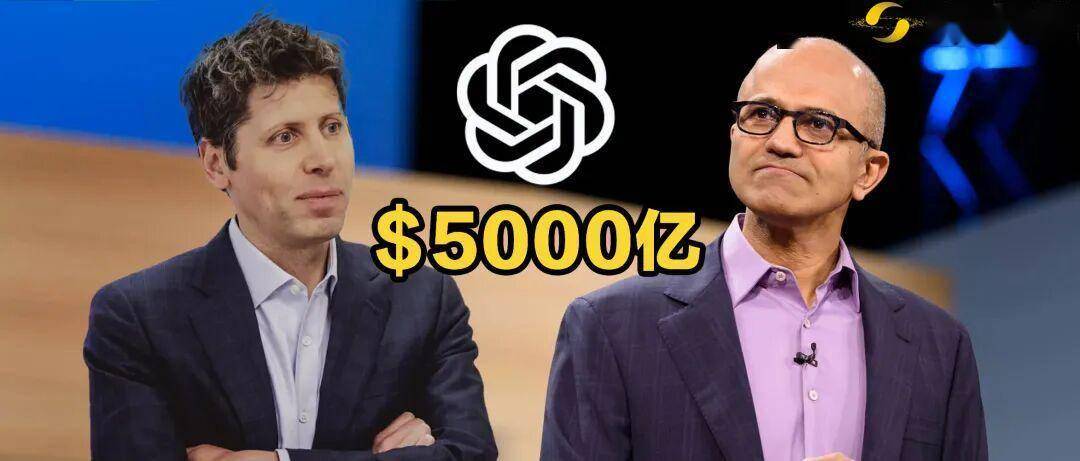
速递|OpenAI完成营利性转型,微软获27%股权估值1350亿美元,锁定技术至2032年
Z Potentials· 2025-10-29 05:16
Core Insights - OpenAI has reached a restructuring agreement with Microsoft, granting the latter a 27% equity stake in OpenAI, valued at approximately $135 billion, which eliminates major uncertainties for both parties and paves the way for OpenAI's transition to a profit-oriented entity [1][2] - Microsoft will retain rights to 20% of OpenAI's revenue, with the possibility of increased payments in the future, until an independent expert panel confirms the achievement of Artificial General Intelligence (AGI) [2][7] - OpenAI's restructuring has been completed, simplifying its corporate structure while ensuring that the non-profit entity retains control over the profit-making arm until AGI is realized [4][5] Group 1: Restructuring Details - The newly formed profit-oriented division is named OpenAI Group PBC, which will be overseen by the non-profit entity now called OpenAI Foundation, holding 26% equity and a warrant for additional shares if the profit entity's stock price increases significantly over 15 years [5] - OpenAI plans to utilize its equity holdings, valued at approximately $130 billion based on a $500 billion valuation, to fund initiatives aimed at accelerating breakthroughs in healthcare and addressing AI-related risks [5] - The restructuring faced scrutiny from state attorneys general, who ultimately supported the plan after ensuring that the non-profit would maintain control and prioritize safety and governance [4] Group 2: Financial Implications - Microsoft’s stock rose by 4.2% following the announcement, reflecting market confidence in the resolution of uncertainties surrounding its relationship with OpenAI [6] - The revised agreement allows Microsoft access to OpenAI's products and models until 2032, which is seen as a critical term for Microsoft's ongoing development of its own AI models [6] - OpenAI's restructuring also sets the stage for a potential public offering, although no specific timeline has been established [10] Group 3: Future Outlook - OpenAI's chief scientist anticipates that superintelligent AI could emerge within the next decade, with a goal to develop AI capable of independently completing large research projects by March 2028 [9] - Microsoft has lost its exclusive rights to OpenAI's new cloud infrastructure business, allowing OpenAI to seek services from other providers while still committing to a $250 billion investment in Azure [9] - The restructuring process has been complicated by legal challenges, including a lawsuit from Elon Musk, which is still pending [9]

签订“离婚时刻表”!微软和OpenAI“友好分手”,开启AI大时代的“世纪联姻”落幕
美股IPO· 2025-10-29 04:07
Core Viewpoint - Microsoft and OpenAI have restructured their partnership, marking a transition from a deep collaboration to a more independent development phase while retaining a core cooperation framework [3][4][5]. Group 1: Agreement Details - The new agreement extends Microsoft's intellectual property (IP) licensing to 2032 and commits Microsoft to provide OpenAI with $250 billion in Azure cloud services, while Microsoft relinquishes its status as the preferred cloud provider [1][6][7]. - The restructuring is seen as a "friendly separation," allowing both companies to pursue independent paths while maintaining essential collaboration [4][5]. Group 2: Market Reactions - JPMorgan views the agreement as a significant reduction of uncertainty for Microsoft, suggesting that the stock's recent stagnation was influenced by concerns over the OpenAI partnership [6]. - Morgan Stanley emphasizes a strategic shift, indicating that the agreement signifies a transition from alliance to competition among tech giants in the AGI race [10][11]. Group 3: Implications for Microsoft - The extension of the IP licensing period to 2032 is crucial, as it alleviates the risk of immediate termination upon OpenAI achieving AGI, which previously posed a significant threat to Microsoft's business continuity [6][7]. - The $250 billion commitment is seen as a positive surprise, helping to rebalance concerns about Microsoft's competitive position against Oracle [7][10]. Group 4: OpenAI's New Flexibility - OpenAI gains the ability to collaborate with third parties and develop non-API products, as well as provide API access to U.S. government clients, regardless of the cloud service provider [8][9]. - This flexibility allows OpenAI to explore new revenue streams and partnerships, enhancing its operational independence [8][9]. Group 5: Future Considerations - Morgan Stanley raises questions about the revenue-sharing mechanism, accounting details, and the timeline for AGI verification, which could impact the financial dynamics between Microsoft and OpenAI [12][13]. - The timeline for AGI realization is critical, as it will determine the potential revenue cliff for Microsoft related to OpenAI [13].
OpenAI完成历史性重组:微软获27%股权,市值突破4万亿美元
Huan Qiu Wang Zi Xun· 2025-10-29 03:55
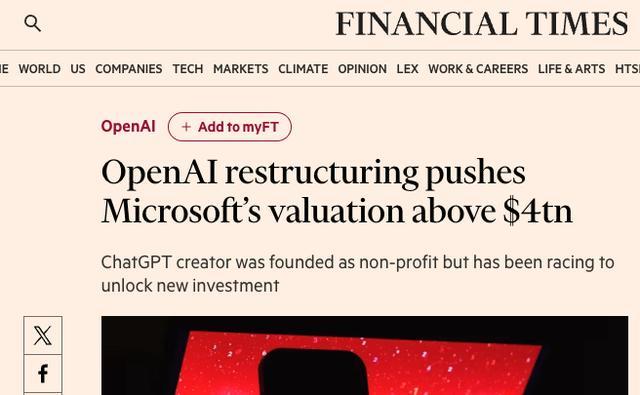
Core Insights - OpenAI has completed a restructuring by transferring $135 billion worth of shares to its largest shareholder, Microsoft, which has pushed Microsoft's market value to over $4 trillion [1][3]. Group 1: Restructuring Details - Microsoft will hold 27% of OpenAI Group, becoming its single largest shareholder as part of the restructuring aimed at releasing traditional equity financing capabilities [3]. - The restructuring involves the formation of OpenAI Group as a for-profit entity, separating core operations from the original non-profit structure [3]. - OpenAI Group's valuation has surged to $500 billion, a 16-fold increase from $29 billion in January 2023 [3]. Group 2: Financial Implications - Microsoft’s investment in OpenAI, which began with $1 billion in 2019, has significantly increased in value due to the AI business boom, with Microsoft's market cap rising from $2 trillion to $4 trillion [3]. - The cost of training the next-generation model, GPT-5, is projected to exceed $10 billion, with computational needs increasing by 40 times compared to previous models [3]. Group 3: Future Funding Strategies - OpenAI's CEO, Sam Altman, stated that the establishment of a for-profit entity is essential to meet future funding requirements [4]. - OpenAI Group plans to utilize equity financing, strategic investments, and a potential IPO to support the development of Artificial General Intelligence (AGI) [4]. - Although no specific timeline for an IPO has been set, it is considered the most likely option for capitalizing the company, given the substantial annual capital expenditure needs [4].
签订“离婚时刻表”!微软和OpenAI“友好分手”,开启AI大时代的“世纪联姻”落幕
Hua Er Jie Jian Wen· 2025-10-29 03:31
Core Viewpoint - Microsoft and OpenAI have restructured their partnership, transitioning from a deep collaboration that began in 2019 to a more independent development phase while retaining a core cooperation framework [1] Group 1: Microsoft and OpenAI Relationship - The restructuring marks the end of a significant partnership that initiated the AI era, with both companies now pursuing independent paths while maintaining essential collaboration [1] - The new agreement extends Microsoft's intellectual property rights until 2032, providing a seven-year certainty window for business continuity, even in scenarios involving AGI [2][3] - OpenAI gains flexibility to collaborate with third parties and develop non-API products, which allows it to operate independently in sensitive areas like national security [3][4] Group 2: Market Reactions - JPMorgan views the restructuring as a "liberation moment" for Microsoft, reducing key uncertainties that have affected its stock performance [2] - Morgan Stanley emphasizes the strategic shift towards a competitive landscape, indicating a transition from alliance to competition in the AGI race [4] - Both firms maintain a bullish outlook on Microsoft, with JPMorgan setting a target price of $565 and Morgan Stanley a higher target of $625, reflecting confidence in the company's future prospects [6] Group 3: Financial Implications - The $250 billion Azure cloud services commitment is seen as a significant rebalancing of Microsoft's position, especially after concerns about competition from Oracle [2] - Morgan Stanley anticipates that the new contract will substantially increase Microsoft's commercial bookings and remaining performance obligations in the upcoming fiscal quarter [5] - The revenue-sharing arrangement and the timeline for AGI verification are critical factors that could impact future financial outcomes for both companies [7]


2900亿,孙正义又开赌了
3 6 Ke· 2025-10-29 03:14
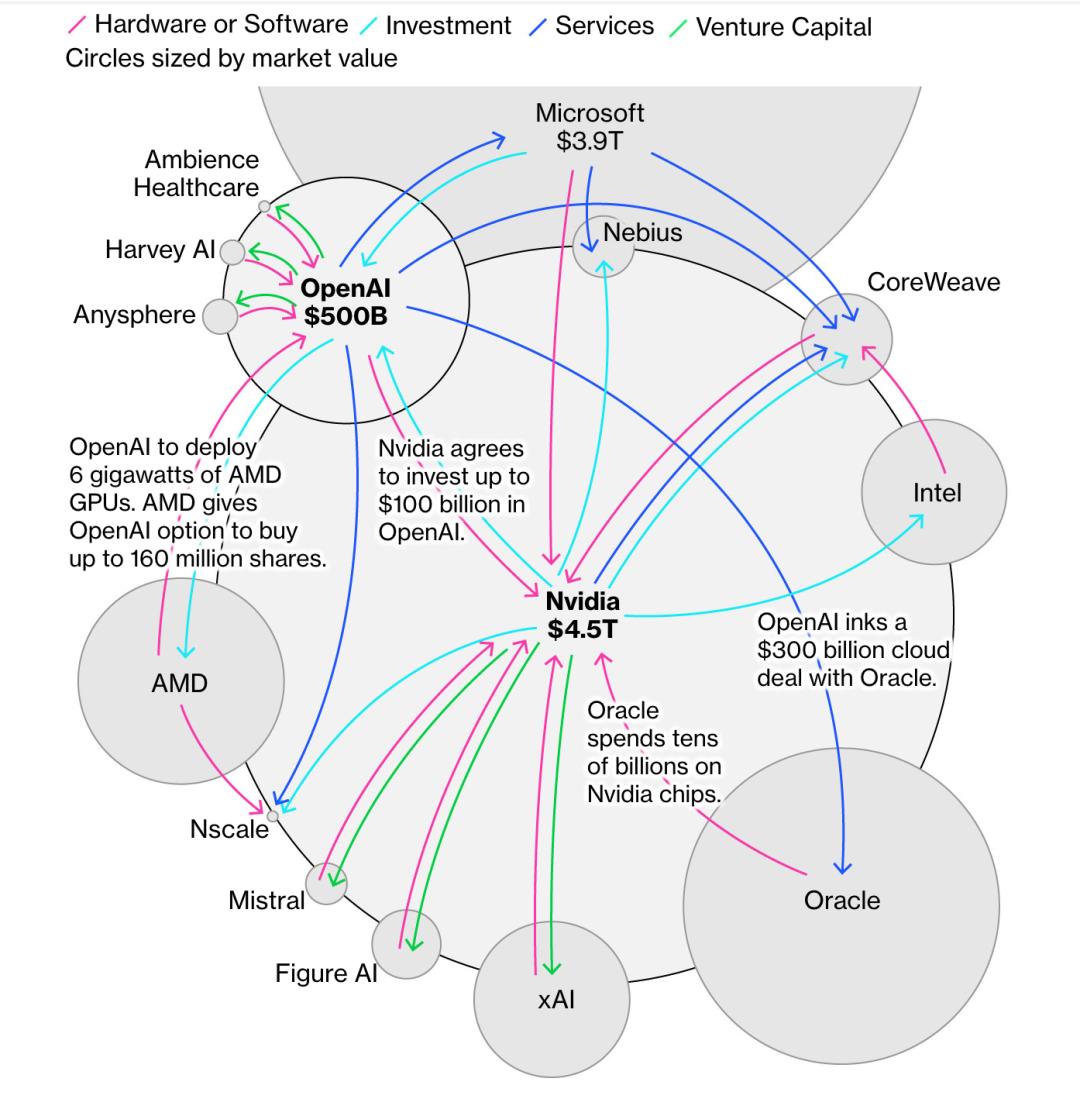
Core Insights - OpenAI has officially completed a capital restructuring, with SoftBank investing approximately $41 billion, signaling a strong bet on the future of AI [1][7] - SoftBank's CEO, Masayoshi Son, expressed ambitions to lead the global "super artificial intelligence" era within the next decade, indicating a shift from being a passive investor to an active organizer in the AI industry [1][8] - The restructuring transforms OpenAI from a non-profit entity to a profit-driven organization while maintaining oversight by a newly established non-profit foundation [2][10] Restructuring Details - The non-profit OpenAI Foundation will hold 26% of the equity in the newly formed OpenAI Group PBC, valued at approximately $130 billion based on a $500 billion valuation [2][3] - OpenAI's co-founder and CEO, Sam Altman, will not hold any equity post-restructuring, a move aimed at eliminating potential conflicts of interest [2][10] - Microsoft emerges as a significant beneficiary, acquiring about 27% equity, valued at approximately $135 billion, reflecting a nearly tenfold increase in its initial investment of $13.8 billion [2][3] Microsoft Agreement - The new agreement extends Microsoft's access to OpenAI's latest AI models and products until 2032, while introducing an "AGI verification mechanism" for future claims of achieving AGI [3][6] - Microsoft has relinquished its exclusive procurement rights for OpenAI's new cloud business, allowing OpenAI to engage with other cloud providers, notably Oracle, which has a $300 billion cloud service agreement with OpenAI [3][14] - This strategic shift allows OpenAI to adopt a "dual-cloud" strategy, utilizing both Azure and Oracle for its computational needs [3][14] SoftBank's Investment Strategy - SoftBank's investment in OpenAI totals approximately $30 billion, with a staged funding approach that includes an initial $10 billion commitment and an additional $22.5 billion contingent on the successful restructuring [7][9] - This investment positions SoftBank to acquire a 5-10% stake in OpenAI, enhancing its strategic involvement in the AI sector [7][9] - The broader financing round led by SoftBank totals $41 billion, with contributions from other investors like Dragoneer and Thrive [7][9] Industry Dynamics - The restructuring reflects a broader trend in the U.S. AI industry, characterized by collaboration among major players, with capital, hardware, software, and data interlinked [13][16] - Companies like NVIDIA and AMD are crucial suppliers of GPU power, while cloud providers like Microsoft and Oracle compete to meet the growing demands of AI model training [14][16] - OpenAI's role as a central player in this ecosystem highlights its importance in transforming hardware and computational resources into AI capabilities [15][16] Ethical Considerations - The restructuring raises concerns about OpenAI's commitment to its original mission of benefiting humanity, as it transitions towards a profit-driven model [10][11] - Critics, including co-founder Elon Musk, have voiced concerns over OpenAI's alignment with its founding principles, suggesting a shift towards becoming a profit-centric entity [10][11] - The balance between profit motives and ethical responsibilities remains a critical challenge for OpenAI as it navigates its new structure [10][11]

OpenAI终于快要上市了,也直面了这23个灵魂拷问。
数字生命卡兹克· 2025-10-29 01:33
Core Viewpoint - OpenAI has completed a significant restructuring to transition from a non-profit organization to a profit-oriented entity while maintaining a commitment to its original mission of benefiting humanity through AGI development [4][12][13]. Summary by Sections Restructuring Announcement - OpenAI announced its restructuring plan, which aims to release its limited-profit subsidiary from direct control of the non-profit parent organization, allowing for stock issuance and potential IPO [4][12]. Historical Context - OpenAI was founded in 2015 as a non-profit with the goal of ensuring AGI benefits all of humanity, emphasizing long-term research without profit constraints [5][6]. - The organization faced funding challenges as the costs of developing AGI grew, leading to the establishment of a "capped-profit" subsidiary in 2019 to attract investment while limiting returns to investors [6][8]. New Structure - The new structure includes the OpenAI Foundation, which holds 26% of the equity and retains control, and the OpenAI Group PBC, which is a public benefit corporation eligible for IPO [13]. - Microsoft holds approximately 27% of the new structure, with the remaining shares distributed among employees and early investors, pushing OpenAI's valuation to around $500 billion [15][13]. Market Reaction - Following the restructuring announcement, Microsoft's stock rose by 4%, contributing to a market capitalization exceeding $4 trillion [14]. Future Goals - OpenAI aims to develop an AI assistant capable of conducting research by September 2026 and a fully automated AI researcher by March 2028 [20]. - The organization is focused on accelerating scientific discovery as a long-term impact of AGI [20]. Q&A Highlights - OpenAI addressed various user concerns during its first Q&A session, including the balance between user safety and freedom, the future of its models, and the potential for AI to automate cognitive tasks [24][30][44]. - The company acknowledged the need for age verification to enhance user autonomy while ensuring safety [26][30]. Financial Projections - OpenAI anticipates needing annual revenues in the range of several hundred billion dollars to support its projected $1.4 trillion investment needs [47].

OpenAI完成资本重组,奥特曼宣称28年实现完全自动化AI研究员
机器之心· 2025-10-29 01:07
Core Viewpoint - OpenAI has completed a capital restructuring and simplified its organizational structure, with a focus on ensuring that artificial general intelligence (AGI) benefits all of humanity through collaboration between its nonprofit and for-profit entities [1][3][6]. Group 1: Organizational Structure and Ownership - The nonprofit organization, now called OpenAI Foundation, controls the for-profit entity, OpenAI Group, which is valued at approximately $130 billion, holding a 26% stake [3][6]. - The remaining 47% of shares are held by current and former employees and investors, making the foundation one of the most resource-rich charitable organizations in history [3][6]. - OpenAI Group operates as a public benefit corporation, maintaining the same mission as the foundation, ensuring alignment between commercial success and the nonprofit's goals [7][11]. Group 2: Funding and Focus Areas - OpenAI Foundation plans to invest $25 billion in two primary areas: health and disease cures, and resilient AI technology solutions [6]. - The health initiative aims to accelerate breakthroughs in health diagnostics and treatments, including the creation of open-source health datasets [6]. - The AI resilience initiative seeks to establish a parallel resilience layer for AI, similar to cybersecurity for the internet, to maximize benefits and minimize risks [6]. Group 3: Future Developments and Collaborations - OpenAI aims to develop personal AGI that can assist users in both work and personal life, with expectations of achieving fully automated AI researchers by 2028 [15][18]. - A significant partnership with Microsoft has evolved, with Microsoft set to hold approximately 27% of OpenAI post-recapitalization, valuing the company at around $135 billion [21][22]. - The partnership includes provisions for independent innovation and growth, with Microsoft retaining exclusive IP rights until AGI is achieved [21][23].