京津冀协同发展

Search documents
18号线年底具备开通试运营条件 19号线二期等计划开工建设
Bei Jing Qing Nian Bao· 2025-09-15 05:38
Core Points - The Beijing government has reported significant achievements in economic and social development during the 14th Five-Year Plan period, highlighting the importance of the Plain New Towns in promoting coordinated development between Beijing, Tianjin, and Hebei [1] - The Plain New Towns, which include Fangshan, Shunyi, Changping, Daxing, and Yizhuang, have seen the establishment of over 400,000 new enterprises, enhancing regional competitiveness and attractiveness [1] - The 18th subway line is expected to be ready for trial operation by the end of the year, and the second phase of the 19th subway line is planned to commence construction, indicating an improvement in transportation service levels [1]
北京:市级机关搬迁基本完成,退出一般制造业企业超3000家,城乡建设用地累计减量150平方公里
Mei Ri Jing Ji Xin Wen· 2025-09-15 04:50
Core Insights - Beijing's economic and social development achievements have been highlighted as the "14th Five-Year Plan" comes to a close, showcasing significant progress in collaborative development with the Beijing-Tianjin-Hebei region [1][2] Economic Development - During the "14th Five-Year" period, Beijing has effectively reduced non-capital functions, with a cumulative reduction of 150 square kilometers in urban construction land and over 3,000 general manufacturing enterprises exiting the market, leading to an optimized economic structure and spatial layout [2][5] - The GDP of Beijing is expected to exceed 5 trillion yuan, marking a significant increase of approximately 1.4 trillion yuan over five years, equivalent to the economic output of a district like Haidian [6][7] Infrastructure and Urban Development - The development of the Beijing sub-center has progressed from establishing a city framework to enhancing functional quality, with the relocation of municipal agencies nearly complete [2][4] - Major cultural landmarks such as the Beijing Art Center, Urban Library, and Grand Canal Museum have emerged, while Universal Studios has become a new cultural tourism icon for Beijing [2][4] Transportation and Connectivity - A major transportation network has been established, with a 1 to 1.5-hour travel circle formed among key cities in the Beijing-Tianjin-Hebei region, enhancing healthcare access and mobility through a unified card system [4][8] Environmental Improvements - Beijing has achieved significant air quality improvements, with PM2.5 levels dropping to an average of 30.5 micrograms per cubic meter in 2024, a 65.9% decrease since 2013 [8] - The city has also developed extensive green spaces, with over 90% of residents having access to parks within a 500-meter radius [8] Social Welfare and Education - Over 150,000 new school places have been created to accommodate changing demographics, with a 70% coverage rate for group-based schooling [9] - Healthcare improvements include a unified online appointment system for hospitals and enhanced access to community healthcare services [9]


“十四五”期间,京津冀“六链五群”产业图谱编制落地
Bei Jing Shang Bao· 2025-09-15 04:18
北京商报讯(记者 和岳)9月15日,北京市人民政府新闻办公室举行北京市"十四五"时期经济社会发展 成就新闻发布会。市发展改革委相关负责人表示,"十四五"期间,京津冀科技成果区域转化效率和比重 不断提升,北京输出津冀技术合同成交额由2013年的70多亿元增长到2024年的840多亿元、年均增长 25%,"六链五群"产业图谱编制落地,产业协作由"施工图"逐步变成"实景图",2024年三地GDP增速全 部超过全国平均水平,引领高质量发展的动力源作用进一步显现。 ...
“十四五”期间,京津冀主要城市1至1.5小时交通圈基本形成
Bei Jing Shang Bao· 2025-09-15 04:18
北京商报讯(记者 和岳)9月15日,北京市人民政府新闻办公室举行北京市"十四五"时期经济社会发展 成就新闻发布会。相关负责人表示,"十四五"期间,京津冀三省市通力合作,协同发展取得显著成效。 京津冀主要城市1至1.5小时交通圈基本形成,区域内就诊可直接享受医保报销待遇、"一卡通行"全面实 现。 ...
北京:市级机关搬迁基本完成
第一财经· 2025-09-15 04:09
Core Viewpoint - The article highlights the significant achievements in the coordinated development of the Beijing-Tianjin-Hebei region, emphasizing the transformation of Beijing's urban structure and the successful implementation of the "14th Five-Year Plan" [1][2] Group 1: Urban Development and Structural Changes - Beijing has effectively reduced non-capital functions, with a cumulative decrease of 150 square kilometers in urban construction land and the exit of over 3,000 general manufacturing enterprises, optimizing economic structure and spatial layout [1] - The development of the Beijing urban sub-center has progressed from orderly expansion to a comprehensive enhancement of functional quality, with the relocation of municipal agencies nearly completed [1] Group 2: Support for Xiong'an New Area - Beijing has actively supported the construction of the Xiong'an New Area, with all "three schools and one hospital" projects commencing operations, and over 4,000 enterprises from Beijing establishing themselves in the area [1] - Cultural landmarks such as the Beijing Art Center, Urban Library, and Grand Canal Museum have emerged, while Universal Studios has become a new cultural tourism icon for Beijing [1] Group 3: Transportation and Economic Integration - A vibrant modern capital metropolitan area has formed, with a 1 to 1.5-hour transportation circle established among major cities in the Beijing-Tianjin-Hebei region, allowing for direct medical insurance reimbursement and comprehensive "one-card" access [2] - The technology contract transaction amount from Beijing to Tianjin and Hebei has increased from over 7 billion yuan in 2013 to over 84 billion yuan in 2024, with an average annual growth rate of 25% [2] - The GDP growth rates of the three regions are projected to exceed the national average in 2024, further enhancing their role as a driving force for high-quality development [2]

奋勇争先,决战决胜“十四五”|京津冀协同发展不断迈上新台阶
Ren Min Ri Bao· 2025-09-14 11:05
Core Viewpoint - The article emphasizes the importance of the coordinated development of the Beijing-Tianjin-Hebei region as a national strategy for regional coordination, focusing on high-quality development and innovation-driven growth [1][18]. Group 1: Economic Development - The overall economic strength of the Beijing-Tianjin-Hebei region has continuously improved, with the regional economic total crossing six trillion yuan milestones over 11 years, becoming a strong driving force for national high-quality development [1]. - In 2024, the GDP of Beijing, Tianjin, and Hebei reached 49,843.1 billion yuan, 18,024.3 billion yuan, and 47,526.9 billion yuan respectively, with year-on-year growth rates of 5.2%, 5.1%, and 5.4%, all exceeding the national average [8]. Group 2: Industrial Transformation - Beijing is transitioning from a "large and complete" model to a "high-precision" one, focusing on alleviating "big city problems" and promoting deep transformation [3]. - Over 3,000 general manufacturing enterprises have been relocated from Beijing, and the proportion of new business entities in technology and commerce has increased from 40.7% in 2013 to 67.7% in 2024 [4]. Group 3: Collaborative Innovation - The three regions are enhancing collaborative innovation and industrial cooperation, with over 120 key component enterprises from Tianjin entering the supply chains of major automotive manufacturers in Beijing [9]. - The establishment of the Beijing-Tianjin-Hebei intelligent connected new energy vehicle technology ecological park aims to create a concentrated space for the automotive parts industry [10]. Group 4: Infrastructure Development - The railway and highway operating mileage in the Beijing-Tianjin-Hebei region has exceeded 11,000 kilometers, forming a basic transportation circle of 1 to 1.5 hours among major cities [15]. - The Beijing Subway Line 22, a significant project for interconnectivity, is nearing completion, enhancing transportation links between Beijing and Hebei [14]. Group 5: Public Services and Quality of Life - The integration of public services has improved, with over 44 social security service items available for cross-province processing, enhancing the convenience for residents [16][17]. - The PM2.5 annual average concentration in the region has decreased by over 60% compared to 2013, reflecting significant environmental improvements [17].
创新协同机制推进协同发展
Jing Ji Wang· 2025-09-14 01:39
Core Viewpoint - The news highlights the progress and achievements in the coordinated development of the Beijing-Tianjin-Hebei region, emphasizing the establishment of efficient administrative mechanisms and collaborative frameworks to enhance service delivery and industrial growth. Group 1: Administrative Efficiency - The "One Window" platform allows for seamless cross-regional business migration, reducing the application process from multiple trips to a single submission, exemplified by a company completing its relocation in just 15 minutes [1] - A total of 1,053 government service items have been streamlined for cross-province handling, showcasing the deepened collaboration among the administrative departments of the three regions [1] - The establishment of a joint mechanism for river management among the three regions aims to address environmental challenges through coordinated efforts [2] Group 2: Policy and Legislative Framework - The introduction of 209 mutual recognition qualifications in Xiong'an New Area facilitates smoother administrative processes and enhances service quality [3] - A monthly consultation mechanism between Beijing and Xiong'an has been established to ensure uniformity in service matters and quality [4] - Legislative collaboration among the three regions has led to the implementation of a unified social security card system, enhancing service accessibility across various sectors [9] Group 3: Industrial Development - The "Beijing R&D, Hebei Transformation" model is being promoted, with a reported technology contract transaction value of 109.22 billion yuan in 2024, reflecting a 34.8% year-on-year increase [6] - The automotive industry in Hebei is thriving, with significant production outputs, including 356,700 new energy vehicles in 2024 [7] - The robotics industry in Tangshan is expanding, supported by multiple research platforms and a focus on collaborative innovation [7] Group 4: Infrastructure and Public Services - The completion of the Jingwei Expressway has significantly reduced travel time between Beijing and Hebei, enhancing connectivity [8] - The social security card system allows residents to access medical services across regions without prior registration, streamlining healthcare processes [8] - The implementation of a unified public service card system has expanded to cover numerous services, including transportation and tourism, enhancing user convenience [9]
京津冀协同发展不断迈上新台阶(奋勇争先,决战决胜“十四五”)
Ren Min Ri Bao· 2025-09-13 22:26
Core Viewpoint - The article emphasizes the importance of the coordinated development of the Beijing-Tianjin-Hebei region as a national strategy for regional coordination, focusing on high-quality development and innovation-driven growth [1][18]. Group 1: Economic Development - The overall economic strength of the Beijing-Tianjin-Hebei region has continuously improved, with the regional economic total crossing six trillion yuan milestones over 11 years, becoming a strong driving force for national high-quality development [1]. - In 2024, the GDP of Beijing, Tianjin, and Hebei reached 49,843.1 billion yuan, 18,024.3 billion yuan, and 47,526.9 billion yuan respectively, with year-on-year growth rates of 5.2%, 5.1%, and 5.4%, all exceeding the national average [8]. Group 2: Industrial Transformation - Beijing is transitioning from a "large and complete" model to a "high-precision" one, focusing on alleviating "big city problems" and promoting deep transformation [3]. - Over 3,000 general manufacturing enterprises have been relocated from Beijing, while the proportion of new business entities in technology and commerce has increased from 40.7% in 2013 to 67.7% in 2024 [4]. Group 3: Collaborative Innovation - The three regions are enhancing collaborative innovation and industrial cooperation, with a focus on restructuring production factors and achieving significant advancements [8][9]. - The automotive industry in the Beijing-Tianjin-Hebei region has achieved an output value exceeding 840 billion yuan, with over 120 key component enterprises from Tianjin and 220 from Hebei integrated into the supply chains of major automotive manufacturers [9][10]. Group 4: Infrastructure Development - The Beijing-Tianjin-Hebei region has established a transportation network with over 11,000 kilometers of operational railways and highways, facilitating a 1 to 1.5-hour travel circle among major cities [15]. - The construction of the Beijing Subway Line 22, which connects Hebei and Beijing, is nearing completion, enhancing interconnectivity and reducing travel time significantly [14]. Group 5: Public Services and Quality of Life - The region is advancing public service integration, with over 44 social security service items available for cross-province processing, benefiting over 1.17 billion residents [16][17]. - Environmental improvements are evident, with PM2.5 annual average concentrations decreasing by over 60% since 2013, reflecting successful collaborative efforts in pollution control [17].
瓣瓣不同 瓣瓣同心(记者手记)
Ren Min Ri Bao· 2025-09-13 22:06
Core Viewpoint - The collaborative development of the Beijing-Tianjin-Hebei region is progressing dynamically, showcasing a story of synergy and mutual growth among the three areas, each contributing its unique strengths while complementing one another [1]. Group 1: Collaborative Development Dynamics - The three regions are characterized by their distinct features, yet they work together as "petals on a flower," responding to common challenges and opportunities [1]. - The collaborative development is driven by a strong and sustainable momentum, combining strategic planning with a sense of mutual complementarity among the regions [1]. - The regions focus on their respective core competencies while addressing regional shortcomings, thereby continuously releasing development vitality [1]. Group 2: Strengthening Synergy - There is a continuous effort to break geographical boundaries and enhance collaboration across various sectors, including industrial cooperation, transportation connectivity, and public services [1]. - The integration of top-level design with grassroots execution is effectively coupled, resulting in a robust momentum for collaborative development [1]. - The commitment to a unified blueprint, while leveraging the unique realities and collaborative advantages of each region, is expected to broaden the path for development towards becoming a model area for "Chinese-style modernization" [1].
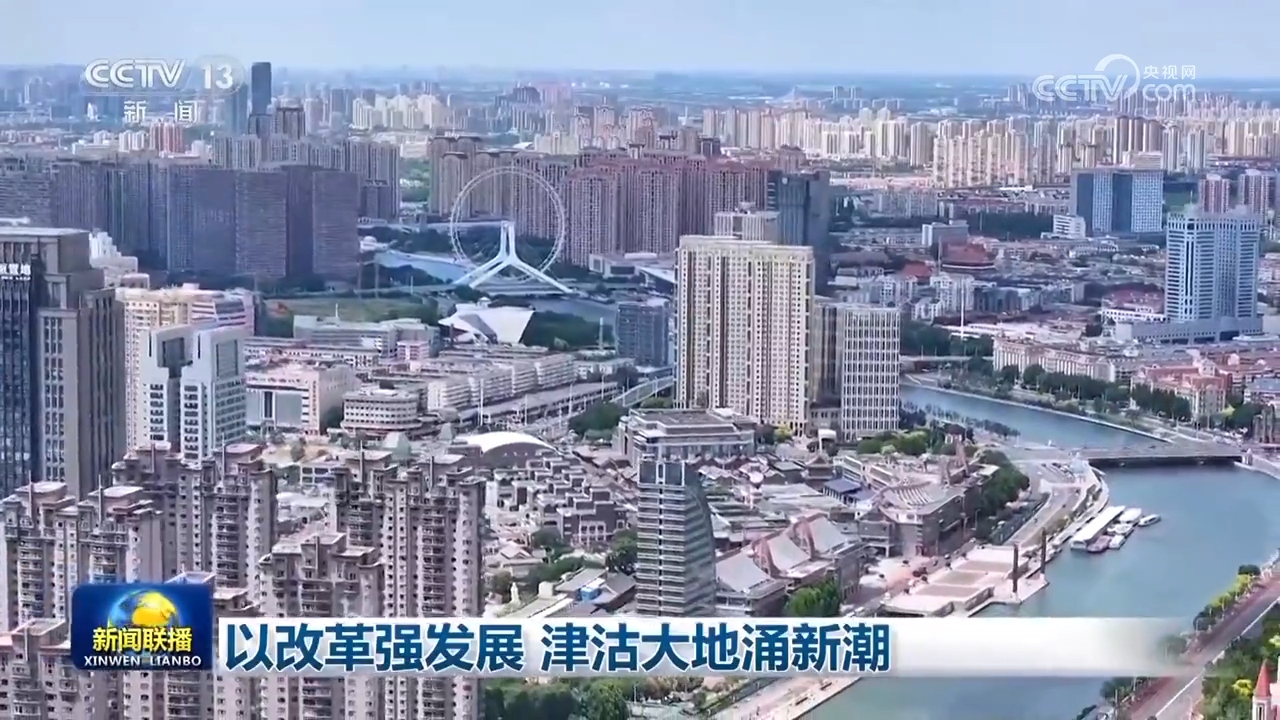
以改革强发展 津沽大地涌新潮 厚植绿色底色 燕赵大地谱新篇
Yang Shi Wang· 2025-09-13 12:37
Group 1 - During the "14th Five-Year Plan" period, Tianjin has achieved new results in technological innovation, industrial development, and green transformation through comprehensive deepening of reforms [1][3] - Tianjin has formulated 329 reform tasks focusing on ten areas, including regional integration and coordinated development of industry, port, and city [3] - The city has established a platform for achievement transformation, the Tianjin High Education Science and Technology Innovation Park, with over 12,000 national high-tech enterprises and technology-based SMEs [5] Group 2 - Tianjin has enhanced its open economy by exploring innovative policies and building a higher-level free trade zone, adding 17 new container shipping routes during the "14th Five-Year Plan" period [7] - The marine economy in Tianjin has surpassed 400 billion yuan [7] - The city has improved urban management systems, renovating 985 old urban communities and creating 270 "pocket parks," attracting over 130 million domestic tourists in the first half of the year [9] Group 3 - Hebei has completed afforestation of 30.46 million acres and desertification control of 9.597 million acres during the "14th Five-Year Plan" period, enhancing its green foundation [12] - The province is accelerating the green transformation of traditional industries through technological innovation and digital upgrades, with 147 enterprises in key sectors achieving A-level environmental performance [14] - Xiong'an New Area is focusing on building a future industrial system around new-generation information technology, modern life sciences, and new materials, attracting over 200 technology-based companies [16]