合成数据

Search documents
互联网数据“耗尽”后,高质量训练数据从哪里获得?专家热议
Nan Fang Du Shi Bao· 2025-07-29 01:53
Group 1 - The 2025 World Artificial Intelligence Conference highlighted the consensus that internet data will be "exhausted" for training large models around 2026, necessitating the creation of new high-quality datasets [1] - The data annotation industry is transitioning from labor-intensive to knowledge-intensive, with increasing involvement from academic scholars and industry experts to enhance the quality of data [3][4] - High-quality datasets are identified as a core driver for AI development, with synthetic data emerging as a potential solution to data shortages, despite inherent issues such as bias and privacy risks [5][6] Group 2 - The industry recognizes the need for high-quality data from vertical sectors, emphasizing the importance of forming data "alliances" among industries to share specialized knowledge [5][6] - Collaborative efforts with academic institutions are encouraged to build high-quality datasets, as many academic fields may advance further than industry in certain areas [6] - The establishment of specialized companies like KuPass aims to address the unique data governance challenges in the AI large model field, which differ significantly from traditional data governance [6][7]


硬核「吵」了30分钟:这场大模型圆桌,把AI行业的分歧说透了
机器之心· 2025-07-28 04:24
Core Viewpoint - The article discusses a heated debate among industry leaders at the WAIC 2025 forum regarding the evolution of large model technologies, focusing on training paradigms, model architectures, and data sources, highlighting a significant shift from pre-training to reinforcement learning as a dominant approach in AI development [2][10][68]. Group 1: Training Paradigms - The forum highlighted a paradigm shift in AI from a pre-training dominant model to one that emphasizes reinforcement learning, marking a significant evolution in AI technology [10][19]. - OpenAI's transition from pre-training to reinforcement learning is seen as a critical development, with experts suggesting that the pre-training era is nearing its end [19][20]. - The balance between pre-training and reinforcement learning is a key topic, with experts discussing the importance of pre-training in establishing a strong foundation for reinforcement learning [25][26]. Group 2: Model Architectures - The dominance of the Transformer architecture in AI has been evident since 2017, but its limitations are becoming apparent as model parameters increase and context windows expand [31][32]. - There are two main exploration paths in model architecture: optimizing existing Transformer architectures and developing entirely new paradigms, such as Mamba and RetNet, which aim to improve efficiency and performance [33][34]. - The future of model architecture may involve a return to RNN structures as the industry shifts towards agent-based applications that require models to interact autonomously with their environments [38]. Group 3: Data Sources - The article discusses the looming challenge of high-quality data scarcity, predicting that by 2028, existing data reserves may be fully utilized, potentially stalling the development of large models [41][42]. - Synthetic data is being explored as a solution to data scarcity, with companies like Anthropic and OpenAI utilizing model-generated data to supplement training [43][44]. - Concerns about the reliability of synthetic data are raised, emphasizing the need for validation mechanisms to ensure the quality of training data [45][50]. Group 4: Open Source vs. Closed Source - The ongoing debate between open-source and closed-source models is highlighted, with open-source models like DeepSeek gaining traction and challenging the dominance of closed-source models [60][61]. - Open-source initiatives are seen as a way to promote resource allocation efficiency and drive industry evolution, even if they do not always produce the highest-performing models [63][64]. - The future may see a hybrid model combining open-source and closed-source approaches, addressing challenges such as model fragmentation and misuse [66][67].


bootstrap 到十亿美元 ARR:Surge AI 这匹黑马如何颠覆 Scale 霸权 ?
海外独角兽· 2025-07-25 09:52
Core Insights - Surge AI, founded in 2020, has rapidly become a leading player in the data annotation market, achieving an ARR of over $1 billion by 2024, surpassing Scale AI's $870 million revenue [3][4] - The company focuses on providing high-quality data annotation services for AI models, emphasizing the importance of data quality over quantity [3][4] - Surge AI's client base includes top tech companies such as Google, OpenAI, and Meta, highlighting its reputation in the industry [3] Group 1: Data Annotation Market - The data annotation market is divided into two main categories: BPO "human intermediaries" and AI-native "factories" like Surge AI, which provide comprehensive services to meet complex market demands [11][12] - Clients prioritize data quality, processing speed, cost, scalability, compliance, and expertise when selecting data suppliers [12] - The market exhibits high client relationship fluidity, with customers often employing a "multi-supplier parallel" strategy to avoid over-reliance on a single vendor [12] Group 2: Founding Intent of Surge - Edwin Chen, the founder, faced challenges in obtaining quality data for model training, leading to the creation of Surge AI to address these needs [24] - Surge AI's approach diverges from typical Silicon Valley practices by focusing on product quality and customer satisfaction rather than rapid fundraising [25] - The company's commitment to data quality has established it as a recognized leader in the industry [25] Group 3: Underlying Technology for High-Quality Delivery - Surge AI employs a combination of machine learning and human feedback to enhance its annotation capabilities, creating a feedback loop that improves data quality [27] - The company emphasizes the importance of understanding language nuances and context in data annotation, particularly in specialized fields [28][30] - Surge AI's unique evaluation metrics include emotional tone and intent judgment, allowing for more accurate data classification [29] Group 4: Customer Case Studies - Surge AI developed the GSM8K dataset for OpenAI, which includes 8,500 elementary math problems, ensuring high quality through rigorous standards and expert involvement [36][40] - For Anthropic, Surge AI provided a tailored data annotation solution that addressed challenges in acquiring high-quality human feedback data for their Claude model [42][50] Group 5: Founding Team - Edwin Chen, the CEO, has a strong background in machine learning and data annotation, having worked at major tech companies like Google and Facebook [55][56] - The team includes experts from various fields, ensuring a diverse skill set that enhances Surge AI's capabilities in data annotation [59][62]

无线合成数据助力破解物理感知大模型数据瓶颈,SynCheck获顶会最佳论文奖
机器之心· 2025-07-23 08:57
Core Insights - The article discusses the importance of wireless perception technology in the context of embodied intelligence and spatial intelligence, emphasizing its ability to overcome traditional sensory limitations and enhance human-machine interaction [1] Group 1: Wireless Perception Technology - Wireless perception is becoming a key technology that allows machines to "see" beyond physical barriers and detect subtle changes in the environment, thus reshaping human-machine interaction [1] - The technology captures the reflective characteristics of wireless signals, enabling the perception of movements and actions from several meters away [1] Group 2: Challenges in Data Acquisition - A significant challenge in developing large models that understand physical principles (like electromagnetism and acoustics) is the scarcity of relevant data, as existing models primarily learn from textual and visual data [2] - The reliance on real-world data collection is insufficient to support the vast data requirements of large models [2] Group 3: SynCheck Innovation - The SynCheck framework, developed by researchers from Peking University and the University of Pittsburgh, provides synthetic data that closely resembles real data quality, addressing the data scarcity issue [3] - The framework was recognized with the best paper award at the MobiSys 2025 conference [3] Group 4: Quality Metrics for Synthetic Data - The research introduces two innovative quality metrics for synthetic data: affinity (similarity to real data) and diversity (coverage of real data distribution) [5] - A theoretical framework for evaluating synthetic data quality was established, moving beyond previous methods that relied on visual cues or specific datasets [7] Group 5: Performance Improvements with SynCheck - SynCheck demonstrated significant performance improvements, achieving a 4.3% performance increase even in the worst-case scenario where traditional methods led to a 13.4% decline [13] - In optimal conditions, performance improvements reached up to 12.9%, with filtered synthetic data showing better affinity while maintaining diversity comparable to original data [13] Group 6: Future Directions - The research team aims to innovate training paradigms for wireless large models by diversifying data sources and exploring efficient pre-training task architectures [18] - The goal is to establish a universal pre-training framework for various wireless perception tasks, enhancing the integration of synthetic and diverse data sources to support embodied intelligence systems [18]

银河通用王鹤最新演讲:要善于运用合成数据,加速推动人形机器人新质生产力的大规模应用
Bei Ke Cai Jing· 2025-07-22 02:22
Group 1 - The year 2025 is significant for entrepreneurs in humanoid robots and embodied intelligence, with continuous product iterations and increased investor interest in startups [1] - Wang He, a key figure in the field, emphasizes that the development of embodied intelligence is crucial for humanoid robots to generate new productive capabilities [9][15] - The industry is currently facing challenges, including a lack of sufficient data for training models, which is a major bottleneck for the large-scale application of humanoid robots [7][20] Group 2 - The VLA (Vision-Language-Action) model represents a new trend in the integration of embodied intelligence and large models, allowing robots to autonomously understand commands and execute tasks [6][17] - The humanoid robot industry is compared to the automotive industry, highlighting the disparity in production volumes and the challenges of data collection for training [8][18] - The current data requirements for effective training are estimated to be in the hundreds of billions, while existing datasets are significantly smaller, creating a substantial gap [20][21] Group 3 - Chinese companies have the opportunity to lead in the humanoid robot sector by utilizing synthetic data for training, rather than relying solely on real-world data [21] - The approach involves generating extensive synthetic data for reinforcement learning, which can enhance the efficiency and generalization of embodied models [22] - The company has developed the world's first humanoid robot retail solution, demonstrating the practical application of its technology in real-world scenarios [23] Group 4 - The company has successfully completed multiple rounds of financing, raising a total of 2.4 billion RMB, indicating strong investor confidence in its technology and market potential [25] - The company aims to leverage its leading technology to define industry standards and drive the sector towards a productive era for humanoid robots [26]


宇树科技:1到3年内机器人或许可以去流水线上打螺丝
第一财经· 2025-07-16 14:44
Core Viewpoint - The third China International Supply Chain Promotion Expo showcased new technologies and companies, particularly in the robotics sector, highlighting the potential for robots to evolve from industrial applications to everyday life within the next decade [1][2]. Group 1: Robotics Industry Insights - Companies like Yushu Technology and NVIDIA made their debut at the expo, showcasing humanoid robots and advanced solutions [1]. - Yushu Technology presented two key products, the G1 and Go2 robots, which require user development for advanced functionalities beyond basic demo features [1]. - The future of robotics is seen as evolving from single industrial applications to complex industrial scenarios within 1-3 years, and potentially into domestic applications such as household chores and elder care within 3-10 years [2]. Group 2: NVIDIA's Contributions - NVIDIA's participation included showcasing solutions related to robotics, autonomous driving, and cloud computing, with a focus on their Mega solution for simulating complex robotic scenarios [2][3]. - The company emphasized the importance of synthetic data for training autonomous driving systems, addressing the lack of real-world data for manufacturers [3]. - NVIDIA is exploring collaborations with Chinese partners to enhance the automotive supply chain and industry development [4].
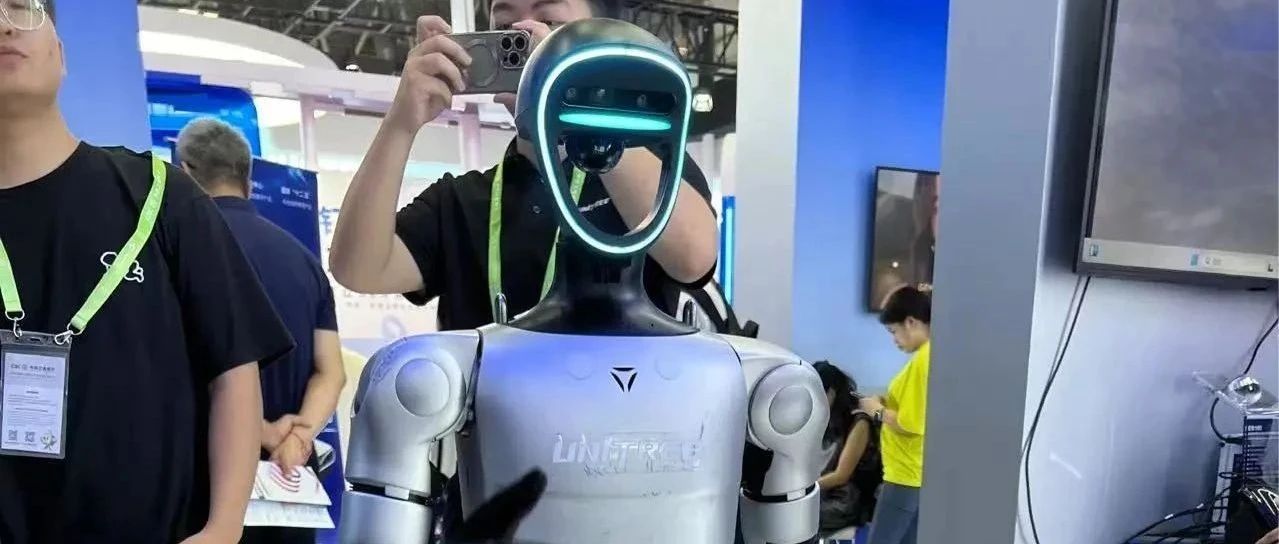
实探链博会:英伟达、宇树首次参会,机器人展台受关注
Di Yi Cai Jing· 2025-07-16 13:20
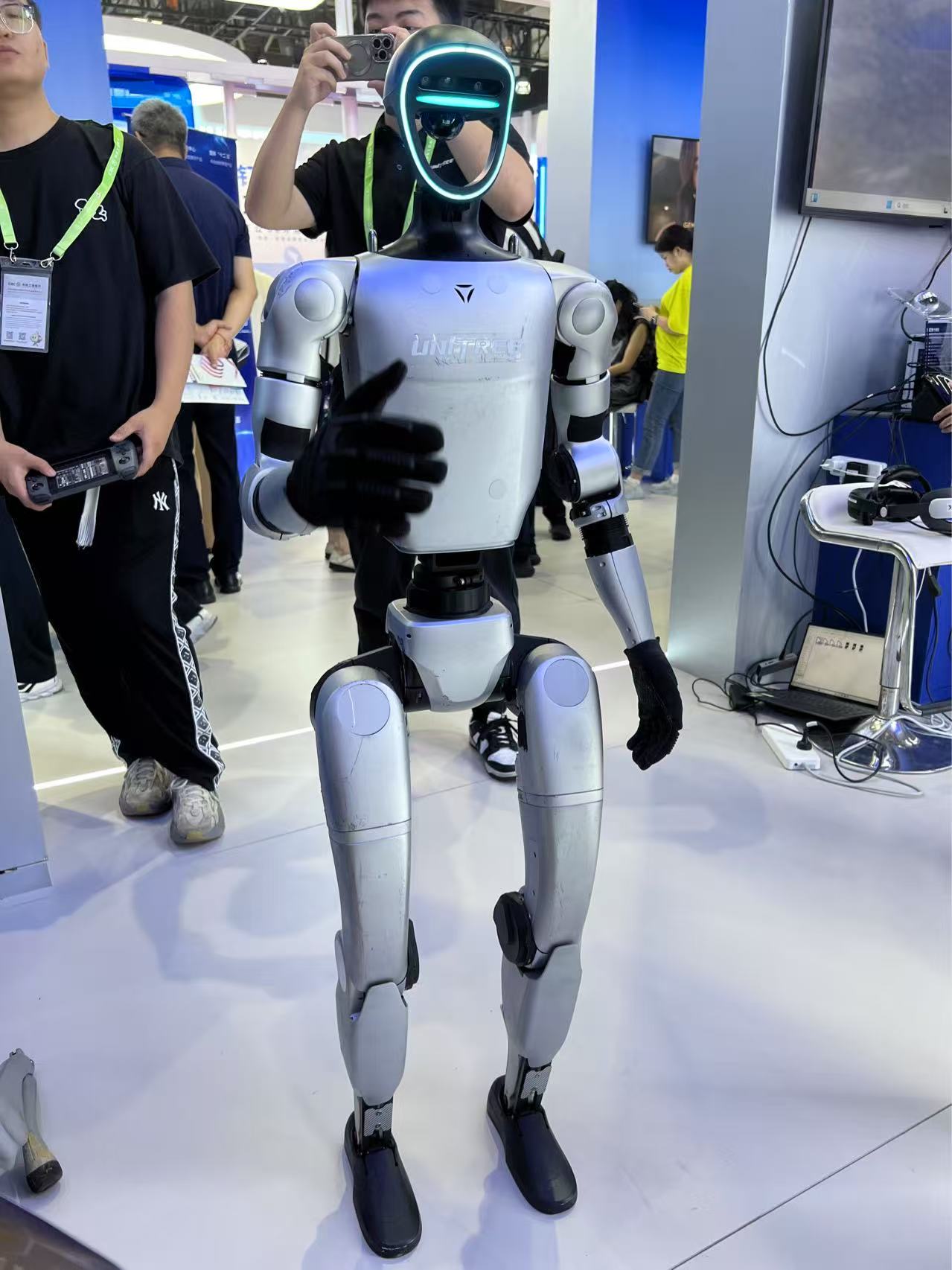
Group 1 - The third China International Supply Chain Promotion Expo (Chain Expo) opened on July 16, featuring many new companies, including Yushu Technology and NVIDIA, which are attending for the first time [1] - Yushu Technology showcased its humanoid robots G1 and Go2, which require secondary development for advanced functionalities, indicating a complexity for ordinary users [1] - The expo provided Yushu Technology an opportunity to understand supply chain relationships and gather market feedback to improve its micro-robot products [1] Group 2 - Attendees at the expo were particularly interested in the capabilities of robots and their future development directions, with expectations for robots to evolve from industrial applications to more complex scenarios within 1 to 3 years [4] - NVIDIA's founder Jensen Huang attracted significant attention at the expo, where the company presented solutions related to robotics, autonomous driving, and cloud computing, including the Mega solution for simulating complex scenarios [4] - NVIDIA highlighted the importance of synthetic data for training autonomous driving systems, addressing the lack of real-world data for manufacturers, and emphasized the alignment of its hardware solutions with the expo's theme [5]
ICML spotlight | 一种会「进化」的合成数据!无需上传隐私,也能生成高质量垂域数据
机器之心· 2025-07-11 09:22
Core Viewpoint - The article discusses the challenges of data scarcity in the context of large models and introduces the PCEvolve framework, which aims to generate synthetic datasets while preserving privacy and addressing the specific needs of vertical domains such as healthcare and industrial manufacturing [1][2][10]. Group 1: Data Scarcity and Challenges - The rapid development of large models has exacerbated the issue of data scarcity, with predictions indicating that public data generation will not keep pace with the consumption rate required for training these models by 2028 [1]. - In specialized fields like healthcare and industrial manufacturing, the availability of data is already limited, making the data scarcity problem even more severe [1]. Group 2: PCEvolve Framework - PCEvolve is a synthetic data evolution framework that requires only a small number of labeled samples to generate an entire dataset while protecting privacy [2]. - The evolution process of PCEvolve is likened to DeepMind's FunSearch and AlphaEvolve, focusing on generating high-quality training data from existing large model APIs [2]. Group 3: Limitations of Existing Large Models - Existing large model APIs cannot directly synthesize domain-specific data, as they fail to account for various characteristics unique to vertical domains, such as lighting conditions, sampling device models, and privacy information [4][7]. - The inability to upload local data due to privacy and intellectual property concerns complicates the prompt engineering process and reduces the quality of synthetic data [9][11]. Group 4: PCEvolve's Mechanism - PCEvolve employs a new privacy protection method based on the Exponential Mechanism, which is designed to adapt to the limited sample situation in vertical domains [11]. - The framework includes an iterative evolution process where a large number of candidate synthetic data are generated, followed by a selection process that eliminates lower-quality data based on privacy-protected scoring [11][19]. Group 5: Experimental Results - PCEvolve's effectiveness was evaluated through two main approaches: the impact of synthetic data on downstream model training and the quality of the synthetic data itself [21]. - In experiments involving datasets such as COVIDx and Came17, PCEvolve demonstrated significant improvements in model accuracy, with the final accuracy for COVIDx reaching 64.04% and for Came17 reaching 69.10% [22][23].

银河通用创始人王鹤勾勒人形机器人产业新图景,合成数据破局具身智能落地
Xin Lang Zheng Quan· 2025-06-28 09:03
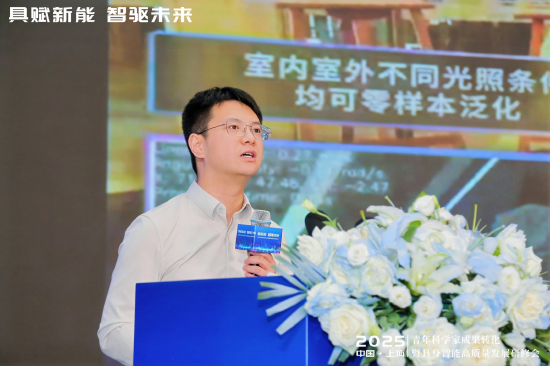
Core Insights - The event "Empowering New Energy, Driving the Future" held in Shanghai gathered over 100 global young scientists and more than 130 listed company entrepreneurs, highlighting the growing interest in embodied intelligence and its commercial applications [1][3]. Company Overview - Galaxy General Robotics, founded in May 2023, quickly secured seed funding and attracted top-tier investment institutions, positioning itself prominently in the field of embodied intelligence [3]. - The company focuses on developing embodied intelligence, which enables robots to understand and interact with the physical world, leveraging advancements in multimodal large models [3][4]. Technology and Innovation - The company emphasizes the importance of "end-to-end" technology routes in embodied intelligence, akin to the advancements seen in autonomous driving, but acknowledges the greater complexity and data requirements in this field [3][4]. - The current largest dataset for embodied intelligence is only at the level of millions of data points, significantly lower than the daily data volume in autonomous driving, which can reach up to 100 million segments [4]. - Galaxy General Robotics has developed a core technology based on synthetic large data pre-training for embodied large models, addressing the challenge of the "simulation-real" gap [5][7]. Product Development - The "GraspVLA" model, trained entirely on synthetic data (1 billion frames), demonstrates the capability to perform precise actions in real-world environments based solely on language instructions [7][9]. - The company has created a retail end-to-end model, "GroceryVLA," which can effectively navigate complex real-world shelf environments, showcasing its strong interference resistance [10][12]. Market Applications - Galaxy General Robotics has successfully implemented its humanoid robot solutions in various sectors, including retail and industrial applications, with plans for rapid deployment in major cities [14][15]. - The company has received orders from 100 pharmacies and operates in beverage and coffee shops, achieving a low failure rate in daily operations [15]. Future Outlook - The company is integrating its capabilities into a unified base model to accelerate deployment across diverse scenarios, indicating a significant transformation in retail, manufacturing, and service industries driven by embodied intelligence [15][16].
这波AI淘金热里,卖“铲子”的公司正闷声发财,“征服"了几十家国内外巨头!
AI前线· 2025-06-27 04:58
Core Viewpoint - The rapid growth of AI has created a significant demand for data, which synthetic data can fulfill. The company focuses on providing 3D synthetic data to help AI transition into the physical world [1][4]. Group 1: Company Overview - Guanglun Intelligent, co-founded by Yang Haibo, has quickly commercialized its products within two to three months of establishment, initially targeting the autonomous driving sector [5][6]. - The company has successfully completed multiple rounds of financing amounting to tens of millions, indicating strong investor confidence [3]. - Guanglun Intelligent serves numerous leading companies in the embodied intelligence sector, including Nvidia, DeepMind, and BYD [1]. Group 2: Market Dynamics - The synthetic data industry is experiencing a rapid turning point, with significant investments from major players like Meta, which plans to invest approximately $15 billion in Scale AI [4]. - The company aims to leverage the growing market demand for synthetic data, which is becoming increasingly critical for AI development [4]. Group 3: Competitive Advantages - Guanglun Intelligent's unique advantage lies in its focus on embodied synthetic data, which requires realistic physical interaction capabilities, expert demonstrations, rich scenarios, and closed-loop validation [8][9]. - The company emphasizes the importance of human expert demonstration in generating high-quality synthetic data, which is essential for training AI models effectively [9][10]. Group 4: Technical Challenges - The company faces challenges in scaling the generation of synthetic data that meets varying authenticity requirements across different fields [11]. - Ensuring the reliability of generated data through effective validation and alignment with real-world scenarios is crucial for maintaining data quality [11][12]. Group 5: Business Model and Strategy - Guanglun Intelligent's business model focuses on selling data rather than just providing simulation tools, which aligns closely with customer needs and ensures stable cash flow [15][16]. - The company aims to become an essential infrastructure provider in the AI era by offering standardized and reusable synthetic data services [16].