基金业绩比较基准

Search documents
基金的业绩比较基准是什么?
Sou Hu Cai Jing· 2025-05-14 02:28
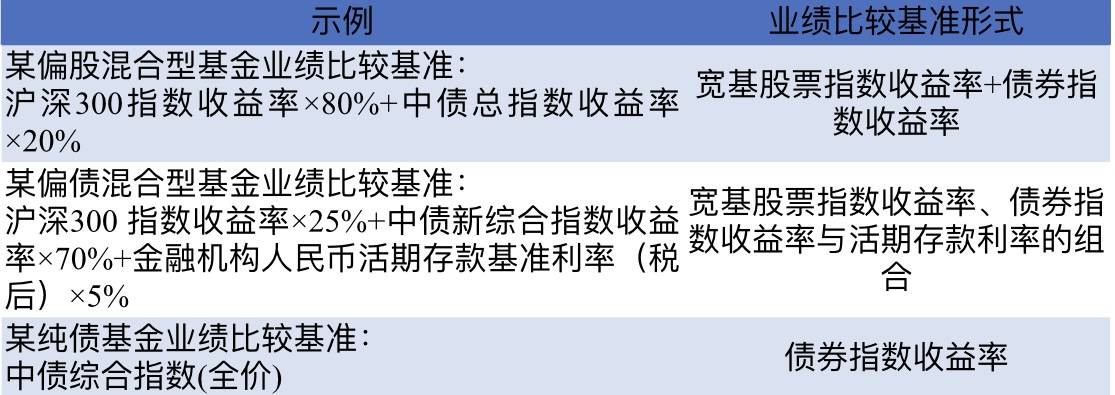
Core Viewpoint - The China Securities Regulatory Commission (CSRC) issued an "Action Plan for Promoting the High-Quality Development of Public Funds," emphasizing the implementation of a performance-based floating management fee model for newly established actively managed equity funds, and strengthening the constraints of performance benchmarks [1]. Summary by Category Performance Benchmark Definition - The performance benchmark is a critical "baseline" set by fund companies based on fund type, investment scope, philosophy, and strategy, allowing comparison of fund returns to assess whether excess returns are generated and their stability [1]. Types of Performance Benchmarks - **Index Return Type**: The most commonly used form, typically a single index or a combination of index returns, or a combination of index returns with other rates (e.g., current deposit rates) [2]. - **Market Interest Rate Type**: Based on market interest rates, often adding or subtracting a fixed rate, such as "one-year RMB time deposit rate (after tax) +2%," commonly seen in money market funds and some pure bond funds [2]. - **Absolute Value Type**: Defined by a specific value, such as "annualized return of 6%," often used by funds seeking absolute returns, though less common [3]. Implications of the Action Plan - The Action Plan proposes establishing a floating fee mechanism linked to fund performance, promoting a model where fund company income is tied to the excess returns generated by the fund, fostering a healthier industry development and aligning investor interests [3].

更加精准定位投资,强化约束作用!年内已有多只基金变更业绩比较基准
Mei Ri Jing Ji Xin Wen· 2025-05-13 12:10
今年以来,已有不少基金产品已变更业绩比较基准。统计显示,截至5月12日,年内已有70多只基金变 更业绩比较基准,具体类型包括偏股混合型基金、灵活配置混合型基金、普通股票型基金、养老目标 FOF、一级混合债基、二级混合债基、中长期纯债基金、被动指数型债基以及QDII基金。 5月13日,鹏华基金发布公告称,旗下鹏华普天债券的业绩比较基准将从5月13日起调整,原约定的业绩 比较基准"中证综合债指数收益率",现拟变更为"中债综合全价(1年以下)指数收益率"。 今年以来,已有多家公司开展有针对性的基金业绩比较基准调整,细化标准、匹配投资策略。前不久, 中国证监会发布的《推动公募基金高质量发展行动方案》也明确,强化业绩比较基准的约束作用,切实 发挥其确定产品定位、明晰投资策略、表征投资风格、衡量产品业绩、约束投资行为的作用。 又有基金变更业绩比较基准 5月13日,鹏华基金发布公告称,旗下鹏华普天债券的业绩比较基准将从5月13日起调整,原约定的业绩 比较基准"中证综合债指数收益率",现拟变更为"中债综合全价(1年以下)指数收益率"。 在公告业绩比较基准发生调整的同时,基金合同也公布了修订方案,对应调整前后的业绩比较基准差 ...
破除「基金赚钱基民亏」魔咒,公募基金走到历史关口
3 6 Ke· 2025-05-12 10:07
Core Viewpoint - The public fund industry in China is undergoing significant reforms aimed at improving performance and aligning fund manager compensation with fund performance, as outlined in the "Action Plan for Promoting High-Quality Development of Public Funds" issued by the China Securities Regulatory Commission (CSRC) [1][3]. Group 1: Reform Details - The new plan includes a performance-based compensation structure for fund managers, where those managing funds that underperform their benchmarks by more than 10% over three years will see a significant decrease in their performance pay [1][6]. - The plan mandates that, within the next year, leading fund management companies must issue at least 60% of their new funds as floating management fee products, which are linked to fund performance [1][6]. - Currently, only 138 public fund products charge floating management fees, indicating a need for increased adoption of this fee structure [1]. Group 2: Industry Context - The public fund industry has experienced volatility over the past five years, with many investors facing disappointing returns, leading to a decline in new investors [2]. - A significant portion of funds, approximately 23.2%, have underperformed their benchmarks by over 10% in the last three years, highlighting the need for reform [5]. - The reforms aim to address the issue of fund managers profiting while investors do not, a situation that has been increasingly scrutinized [3][5]. Group 3: Fee Structure Changes - The new floating management fee structure will adjust fees based on performance relative to benchmarks, with lower fees for underperformance and higher fees for exceeding benchmarks [3][6]. - The reforms are designed to create a more investor-friendly environment by aligning the interests of fund managers with those of investors, promoting long-term investment strategies [8][10]. - The shift towards floating fees is part of a broader trend to reduce costs for investors and improve the overall competitiveness of the public fund industry in China [10].

首批官宣,变更!
Zhong Guo Ji Jin Bao· 2025-05-09 09:18
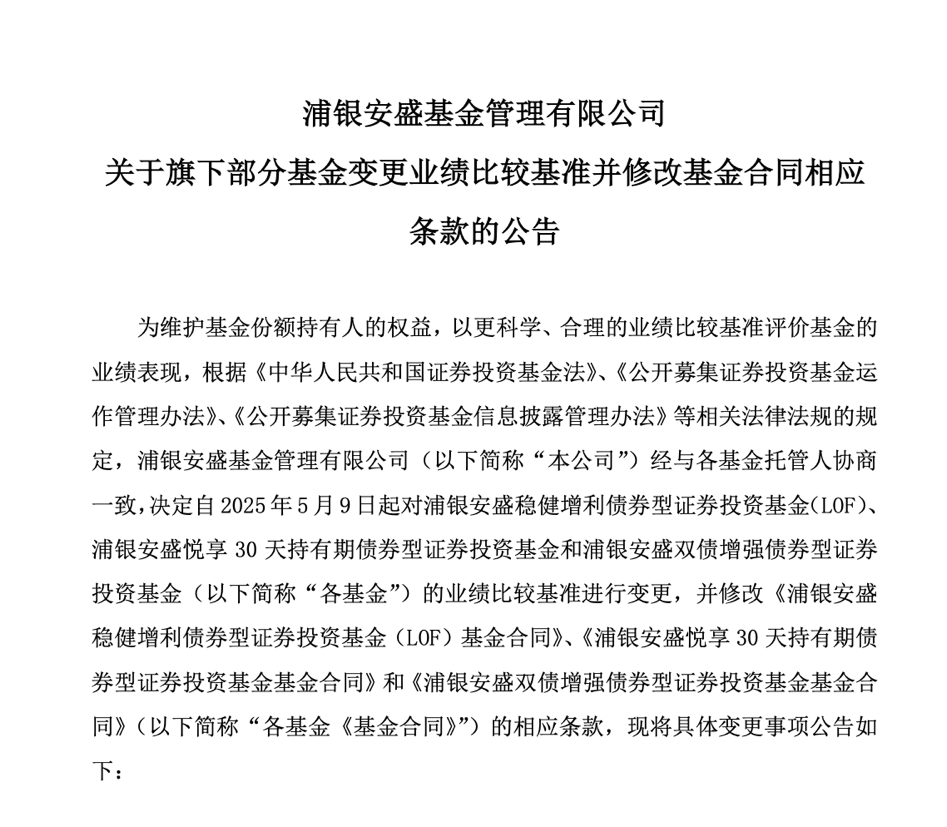
Core Viewpoint - The first batch of public funds has adjusted their performance benchmarks in response to the "Action Plan for Promoting the High-Quality Development of Public Funds" [1][9] Group 1: Fund Benchmark Changes - Three bond fund products from浦银安盛基金 have changed their performance benchmarks effective from May 9, 2025, marking them as the first public products to do so since the release of the Action Plan [2][9] - The performance benchmark for浦银安盛稳健增利 has been changed from "CSI All Bond Index" to a composite benchmark of "85% of the China Bond Composite (Full Price) Index Yield + 5% of the CSI Convertible Bond Index Yield + 10% of the after-tax bank demand deposit rate" [5][6] - The benchmark for浦银安盛悦享30天持有 has shifted from "90% of the China Bond Composite Full Price Index Yield + 10% of the after-tax one-year fixed deposit rate" to "80% of the China Bond Composite (under one year) Index Yield + 10% of the after-tax one-year fixed deposit rate + 10% of the after-tax bank demand deposit rate" [7] - The benchmark for浦银安盛双债增强 has been modified from "40% of the CSI Convertible Bond Index Yield + 50% of the CSI Comprehensive Bond Index Yield + 10% of the CSI 300 Index Yield" to "55% of the China Bond Composite (Full Price) Index Yield + 30% of the CSI Convertible Bond Index Yield + 5% of the CSI 300 Index Yield + 10% of the after-tax bank demand deposit rate" [8] Group 2: Industry Trends and Regulatory Context - As of May 8, a total of 109 funds have changed their performance benchmarks, including 43 active equity funds, 41 FOFs, 12 pure bond funds, and 11 "fixed income plus" funds [9] - The adjustments reflect a trend where 19 products have shifted from a single index to a composite index format, and some have replaced the CSI 300 Index with industry style indices [9] - The regulatory authorities have emphasized the importance of performance benchmarks to prevent investment style drift, with guidelines established since 2002 and further refined in 2019 and 2023 [10] - The recent Action Plan aims to strengthen the regulatory framework around performance benchmarks, ensuring they accurately reflect investment strategies and protect investor rights [10][11]
公募重磅!业绩差的少收管理费、降薪,多位知名基金经理在管产品大幅跑输基准
Sou Hu Cai Jing· 2025-05-08 09:31
Core Viewpoint - The China Securities Regulatory Commission (CSRC) has implemented a new action plan aimed at promoting high-quality development in the public fund industry, introducing 25 measures to address industry pain points and improve fund performance and investor confidence [1][4][9]. Group 1: Fund Performance and Management Fees - A significant portion of funds have underperformed their benchmarks, with 2,071 funds (approximately 23.2%) having a net value growth rate that lags behind their benchmarks by over 10 percentage points in the last three years [1][6]. - The new plan includes a floating management fee structure that ties fund company income to investor returns, encouraging long-term investment and improving the focus on performance rather than scale [4][5]. - Fund managers whose products underperform their benchmarks by more than 10 percentage points over three years will see a reduction in their performance compensation, while those who exceed benchmarks may receive increased compensation [6][10]. Group 2: Regulatory and Performance Evaluation Enhancements - The action plan emphasizes the importance of establishing clear performance benchmarks for funds, which will help investors better assess fund performance and enhance market stability [6][9]. - The plan proposes a comprehensive overhaul of the performance evaluation system for fund companies, prioritizing investment returns over operational metrics like scale and profit [9][10]. - Fund companies will be evaluated based on long-term performance, with a minimum of 80% weight given to investment performance metrics in assessing fund managers [9][10]. Group 3: Industry Development and Investor Confidence - The introduction of floating fee structures is seen as a positive step towards aligning the interests of fund companies and investors, fostering a healthier industry ecosystem [5][10]. - The measures aim to address the issue of funds making profits while investors do not, thereby enhancing investor confidence and attracting more long-term capital into the market [9][10]. - The plan encourages the issuance of floating fee funds by leading firms, with a target of at least 60% of new active management equity funds to adopt this model within a year [4][5].
基金业绩比较基准监管升级,60余只基金抢先校准
Di Yi Cai Jing· 2025-05-07 11:21
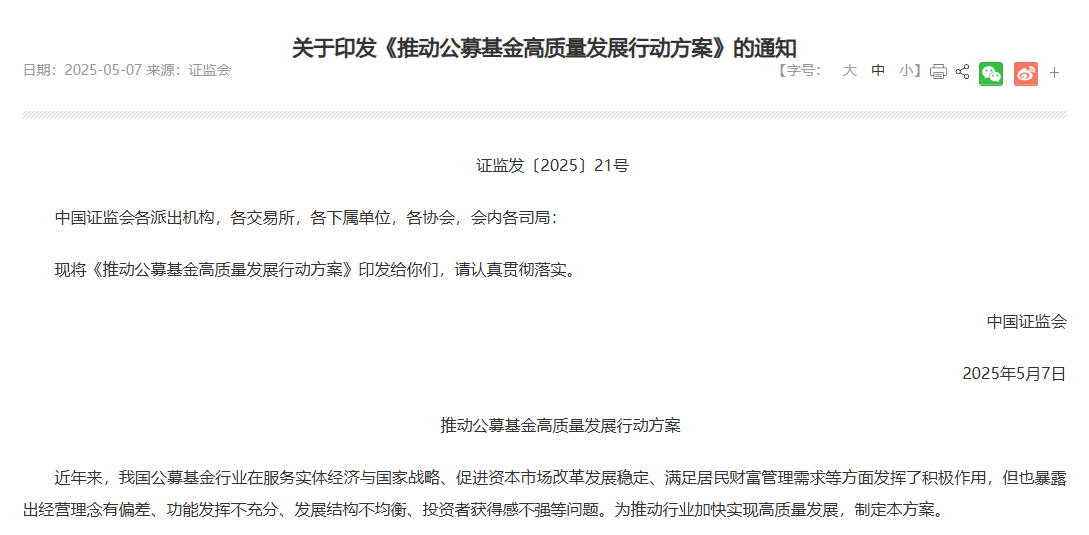
Core Viewpoint - The "Action Plan for High-Quality Development of Public Funds" released by the China Securities Regulatory Commission (CSRC) aims to reshape the fund industry ecosystem and significantly influence the behavior of fund managers and investors [1][2]. Summary by Sections Regulatory Changes - The CSRC has emphasized the importance of performance benchmarks for public funds, requiring fund companies to establish a compensation management mechanism linked to investment returns and to improve industry assessment and evaluation systems [1][2]. - A clear performance benchmark will be set for each fund to avoid issues like style drift and misalignment with product names and positioning [2]. Industry Response - As of May 7, 2023, at least 61 fund products have changed their performance benchmarks, a significant increase from 19 in the same period last year, indicating a strong signal of accelerated industry standardization [1][2]. - Some fund companies had already anticipated these regulatory changes and made adjustments in advance [2]. Benchmark Adjustments - Specific funds have updated their performance benchmarks to better reflect their investment strategies, such as changing from the CSI 300 Index to more relevant indices like the CSI TMT Industry Theme Index [3][5]. - In the bond fund category, adjustments have also been made, with some funds shifting their benchmarks to better align with their investment focus [3]. Investor Awareness - Despite the importance of performance benchmarks, many investors remain largely unaware or indifferent to them, often focusing more on absolute returns rather than relative performance against benchmarks [6]. - The CSRC's new regulations aim to correct this oversight by linking fund manager assessments directly to performance benchmarks, thereby enhancing the evaluation of fund performance [7][8]. Implications for Fund Managers - The new benchmark regulations are expected to help fund managers focus their investment strategies more effectively, reducing the likelihood of style drift and promoting a clearer investment approach [8]. - Fund managers will be evaluated based on their performance relative to these benchmarks, which could lead to more stable and predictable fund styles for investors [8].
基本功 | 基金的“业绩比较基准”有哪些作用?
中泰证券资管· 2025-03-04 10:37
基本功的基,就是基金的基。 做好投资、买对基金, 从夯实投资基金的基本功开始。 1分钟GET一个知识点, 起步更轻松。 品资料概要等法律文件。基金管理人提醒投资者基金投资的"买者自负"原则,请投资者根据自身的风险承受能力 选择适合自己的基金产品。基金有风险,投资须谨慎。 业绩比较基准 育哪些作用? 是衡量投资能力, 二是 大致了解投资方向。 基金业绩比较基准是为 未来收益定下的"小目标",是 管理人基于产品性质、投资策略,根据自身能力设定 的、力争未来可以超越的基准线,也是 衡量基金经理 扫码进入基本功专栏 本材料不构成投资建议,观点具有时效性。本公司承诺以诚实信用、勤勉尽责的原则管理和运用基金资产,但不 保证基金一定盈利,也不保证最低收益。投资有风险,基金过往业绩不代表其未来表现。基金管理人管理的基金 的业绩不构成对其他基金业绩表现的保证。投资者投资基金时应认真阅读基金的基金合同、招募说明书、基金产 ...