移民政策

Search documents
美国政坛大地震!特朗普称“不想要垃圾”,拒收“寄生虫”移民!
Sou Hu Cai Jing· 2025-12-08 10:23
Core Viewpoint - The shooting incident involving National Guard members in Washington D.C. has escalated into a nationwide immigration policy crisis, with the Trump administration leveraging the tragedy to implement stricter immigration measures [1]. Group 1: Escalation of Immigration Policies - Trump announced a permanent suspension of immigration from "third world countries" to restore the U.S. system and terminate millions of illegal entries during the Biden administration [1]. - He stated intentions to revoke citizenship from those deemed to disrupt domestic peace and deport foreign nationals considered incompatible with Western civilization [1]. Group 2: Rhetoric and Targeting of Specific Communities - White House aide Stephen Miller echoed Trump's stance, suggesting that large-scale immigration is a societal transplant that brings negative conditions from "failed states" to the U.S. [3]. - Trump specifically targeted the Somali community in Minnesota, using derogatory language and criticizing Somali-American Congresswoman Ilhan Omar, which has led to fear and hesitance among Somali residents [4][5]. Group 3: Intensification of Immigration Enforcement - The Immigration and Customs Enforcement (ICE) has ramped up nationwide arrests, with New Orleans being the latest target aiming to arrest 5,000 individuals, surpassing previous operations in Chicago [5][7]. - ICE operations have also affected lawful immigrants, with reports of green card holders having their citizenship appointments canceled without explanation, raising concerns about systemic rights limitations [7]. Group 4: Political Motivations and Public Sentiment - Former Republican Congressman Walsh noted that Trump's actions are closely tied to his declining approval ratings, suggesting that he may resort to increasingly racist rhetoric to solidify his base [8]. - The politicization of the shooting incident and the simplification of immigration issues into racial labels are putting unprecedented pressure on American national identity and social contracts [8].


热点思考 | 大逆转与再平衡——2026年美国劳动力市场展望(申万宏观·赵伟团队)
Sou Hu Cai Jing· 2025-12-07 16:23
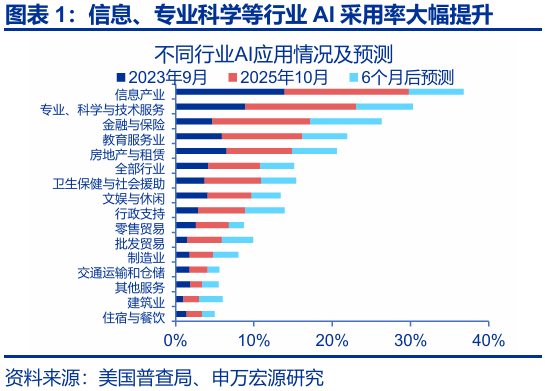
Group 1 - The core viewpoint of the article discusses the significant decline in non-farm employment in the U.S. since mid-2025, raising concerns about rising unemployment risks and the impact of AI on the job market [1][4] - AI adoption in the U.S. has increased from 3.7% to 10% over two years, with a notable rise in layoffs, particularly in the tech sector, where 21.7% of layoffs in October were reported [1][4][13] - The structural impact of AI on employment is evident in high-exposure industries, younger workers, and high-paying jobs, but overall, AI is not the primary cause of the employment downturn [1][19][29] Group 2 - The main reasons for the employment reversal in 2025 include a contraction in supply due to reduced immigration and government layoffs, alongside weakened demand [2][42] - The net inflow of illegal immigrants has decreased significantly, accounting for approximately half of the decline in new employment, with estimates suggesting a drop of 1.6 to 2 million illegal immigrants in 2025 [2][49][54] - Government layoffs and tariff impacts have contributed significantly to the employment slowdown, with government sector influences accounting for 37% of the decline in non-farm employment [2][64] Group 3 - In 2026, the labor market is expected to gradually rebalance, but short-term demand weaknesses will remain a core issue, with unemployment rates likely to rise [3][100] - The supply side may continue to contract due to stringent immigration policies, while demand may stabilize as government layoffs taper off [3][91] - The potential for AI to further impact employment remains, with studies indicating that AI could replace 11.7% of U.S. jobs, but the immediate risk of mass layoffs due to AI is considered low [3][95][100]
美将“无限期暂停第三世界国家移民”,特朗普痛批拜登移民政策
Huan Qiu Shi Bao· 2025-11-28 22:33
【环球时报驻美国特约记者 杨征 环球时报记者 杜天琦】当地时间26日,一名阿富汗公民于美国白宫附 近枪击了两名国民警卫队成员,其中一人于第二日死亡。为此,当地时间27日,美国总统特朗普宣布重 大举措,称将"无限期暂停所有来自第三世界国家的移民(申请)",以让美国体系"彻底恢复"。路透社 27日称,此事可能为其提供契机——将打击合法与非法移民作为总统任期的核心议题,此次事件或让他 得以主张,即便是庇护等合法移民途径也会给美国人带来安全风险。 特朗普痛批拜登移民政策 当地时间27日深夜,特朗普在其社交媒体"真实社交"上发文称,尽管美国在技术上取得进步,但其移民 政策却"侵蚀了这些成果及多数人的生活品质"。"我将无限期暂停来自所有第三世界国家的移民入境, 让美国体系得以全面恢复;终止数百万拜登政府批准的非法入境案例(包括那些由'睡不醒的乔·拜登'通 过自动签名机签署的案例);驱逐所有并非美国'净资产'或不愿热爱这个国家的人;停止向非本国公民 提供任何联邦福利与补贴;取消那些破坏国内安宁的移民的公民身份;驱逐所有依赖公共救济、构成安 全威胁或与西方文明不相容的外籍人士。"特朗普称。 "这些目标旨在大幅减少非法及破坏性 ...
非盟-欧盟峰会落幕 贸易、矿产与移民合作迈出新步伐
Shang Wu Bu Wang Zhan· 2025-11-28 16:18
Group 1 - The Africa-EU summit concluded with new cooperation agreements in trade, minerals, and migration, although no major breakthroughs were achieved [2] - The summit gathered 80 delegations from both continents to discuss core issues such as trade relations, strategic mineral cooperation, and migration policies [2] - A joint communiqué emphasized the commitment to strengthen business ties and enhance collaboration in strategic mineral resources while addressing irregular migration and improving legal mobility mechanisms [2] Group 2 - African representatives called for an increase in local processing capabilities, urging a shift from merely exporting cobalt raw materials to manufacturing finished products like automotive batteries [2] - The summit also focused on regional conflicts, particularly in Sudan and Eastern Congo, condemning violence by armed groups and supporting UN Security Council resolutions [3] - The EU announced new investment plans targeting African energy, digital infrastructure, and business development, demonstrating a commitment to deepen cross-continental cooperation [3]
特朗普:将无限期暂停来自“第三世界国家”的移民
证券时报· 2025-11-28 09:31
Core Points - The article discusses President Trump's announcement to indefinitely suspend immigration from all "third world countries" to restore the American system and terminate entry permits for millions of illegal entrants during Biden's administration [2][3] - Trump emphasizes the need to remove individuals who do not contribute positively to the U.S. and to end federal benefits for non-citizens [2] - The U.S. Citizenship and Immigration Services (USCIS) has been instructed to review all green cards issued to individuals from 19 specified countries, including Afghanistan, due to security concerns [3][4] Group 1 - Trump's directive aims to ensure that any foreign individual who poses a public burden or security risk is deported [2][3] - The USCIS has announced an indefinite suspension of immigration applications for Afghan citizens [4] - The list of 19 countries under review includes nations like Iran, Libya, and Venezuela, highlighting a broad scope of scrutiny [3] Group 2 - The announcement follows a shooting incident involving National Guard members, which Trump linked to an Afghan national who entered the U.S. in September 2021 [3] - The administration's focus is on re-evaluating the immigration policies established during the previous administration, particularly concerning individuals from "concerned countries" [3][4] - Trump's stance reflects a significant shift in immigration policy aimed at enhancing national security and reducing perceived risks associated with immigration from certain regions [2][3]

刚刚!特朗普,突然出手!
Zheng Quan Shi Bao Wang· 2025-11-28 06:23
特朗普对移民动手了! 这些目标的追求旨在实现非法和扰乱性人口的显著减少,包括那些通过未经授权和非法的自动签名机审 批程序被接纳的人员。只有反向迁移才能彻底解决这种情况。除此之外,向所有人致以感恩节快乐,除 了那些憎恨、偷窃、谋杀并破坏美国所代表的一切的人——你们不会在这里待太久! 导火索 据路透社最新消息,美国总统特朗普表示,他的政府将努力无限期暂停所有"第三世界国家"的移民,以 使美国系统能够全面恢复。 特朗普还在社交媒体平台Truth Social上表示,他将终止向"非公民"提供的所有联邦福利和补贴,他 将"取消破坏国内安宁的移民的国籍,并将任何构成公共负担、安全风险或与西方文明不相容的外国公 民驱逐出境"。 那么,这背后究竟发生了什么?分析人士认为,可能与最近美国华盛顿发生的枪击案有关。 特朗普出手 当地时间11月28日,特朗普还在社交媒体平台Truth Social上表示,"尽管我们在技术上取得了进步,但 移民政策却侵蚀了这些进步以及许多人的生活条件。我将无限期暂停所有第三世界国家的移民,以便让 美国系统能够完全恢复,终止数百万由拜登签署的非法入境,包括那些由乔.拜登的自动签名机签署的 入境,并将任何 ...
特朗普:将无限期暂停来自“第三世界国家”的移民
财联社· 2025-11-28 05:57
据央视新闻,当地时间11月27日, 美国总统特朗普在社交媒体上表示, 他将无限期暂停来自所有"第三世界国家"的移民 ,让美国体系得以完全 恢复。 终止前总统拜登执政期间数百万非法入境者的所有入境许可。 特朗普还称,将清除任何对美国没有净贡献或无法热爱美国的人,结束一切给予非美国公民的联邦福利和补贴;取消破坏美国安宁的移民的 公民身份;驱逐任何成为公共负担、有安全风险的外国人。 相关阅读 美国两名国民警卫队成员26日在白宫附近遭到枪击,其中一人死亡,一人伤情严重。 特朗普当天表示,嫌疑人是于2021年进入美国的阿富汗公民。特朗普称,必须重新审查拜登执政期间从阿富汗入境的每一位外国人,并采 取一切必要措施,确保将任何不属于美国或对美国无益的外国人驱逐出境。美国公民及移民服务局宣布,已无限期暂停所有涉及阿富汗公民 的移民申请处理。 27日,美国公民及移民服务局局长表示,根据特朗普的指示,他已下令重新审查所有发放给来自"关注国家"人士的绿卡。相关名单上列出 了包括阿富汗在内的19个国家。 ...
刚刚!特朗普,突然出手!
券商中国· 2025-11-28 05:51
特朗普对移民动手了! 当地时间11月28日,特朗普还在社交媒体平台Truth Social上表示,"尽管我们在技术上取得了进步,但移民政 策却侵蚀了这些进步以及许多人的生活条件。我将无限期暂停所有第三世界国家的移民,以便让美国系统能够 完全恢复,终止数百万由拜登签署的非法入境,包括那些由乔·拜登的自动签名机签署的入境,并将任何对美 国没有净贡献或无法热爱我们国家的人排除在外,停止向非美国公民提供的所有联邦福利和补贴,取消那些破 坏国内安宁的移民的公民身份,驱逐任何成为公共负担、构成安全威胁或与西方文明不相容的外国国民。" 这些目标的追求旨在实现非法和扰乱性人口的显著减少,包括那些通过未经授权和非法的自动签名机审批程序 被接纳的人员。只有反向迁移才能彻底解决这种情况。除此之外,向所有人致以感恩节快乐,除了那些憎恨、 偷窃、谋杀并破坏美国所代表的一切的人——你们不会在这里待太久! 导火索 据环球时报报道,当地时间26日,美国首都华盛顿发生恶性枪击事件,两名国民警卫队成员遭到伏击。枪击事 件导致白宫被封锁,美国总统特朗普已下令向华盛顿特区增派500名士兵。因枪手是拜登时期从阿富汗入境的 外来移民,美国政府后续举措已 ...
特朗普:将无限期暂停来自“第三世界国家”的移民
21世纪经济报道· 2025-11-28 05:33
Group 1 - The article discusses President Trump's announcement to indefinitely suspend immigration from all "third world countries" to restore the American system, terminating entry permits for millions of illegal entrants established during Biden's administration [1] - Trump emphasizes the need to remove individuals who do not contribute positively to the U.S. or cannot love the country, ending federal benefits for non-citizens and revoking citizenship for immigrants who disrupt American peace [1] - Following a shooting incident involving National Guard members, Trump calls for a review of all Afghan nationals who entered the U.S. during Biden's term, leading to a suspension of immigration applications for Afghan citizens [2] Group 2 - The U.S. Citizenship and Immigration Services has been directed to re-examine all green cards issued to individuals from "concerned countries," which includes Afghanistan among 19 nations [2]
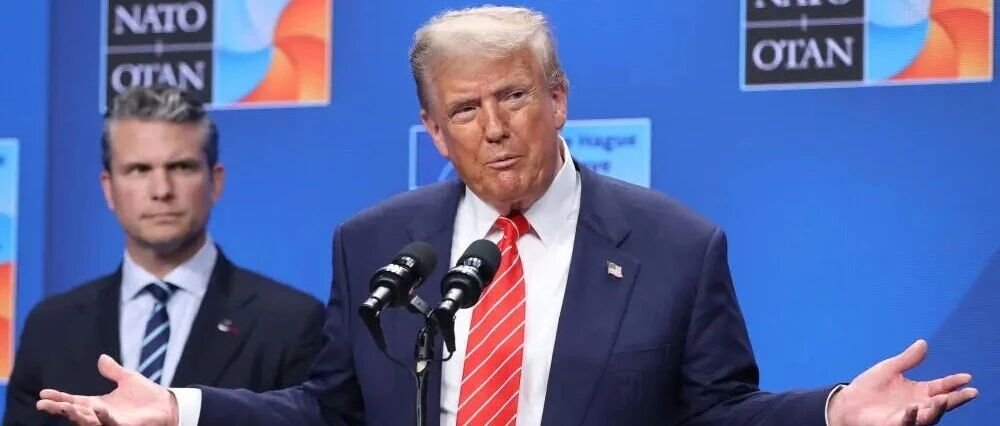
特朗普:将永久暂停所有来自“第三世界国家”的移民入境
Huan Qiu Wang· 2025-11-28 05:28
【环球网报道】美国总统特朗普28日在其社交平台发文称,将"永久暂停所有来自第三世界国家的移民"入境美国,并称此举 旨在"使美国体系得以彻底恢复"。 美国公民及移民服务局27日宣布,对来自19个"受关注国家"的绿卡(永久居留)持有者启动重新审查。美国公民及移民服务 局局长约瑟夫·埃德洛27日在社交媒体上发表声明说,特朗普已指示该局对来自美国政府所称"受关注国家"的绿卡持有者进行 全面审查。 美国有线电视新闻网(CNN)此前报道称,特朗普政府计划重新审查2021年至2025年拜登任总统期间入境美国的一批寻求庇护 者的居留资格。当地时间11月26日,白宫附近发生的两名国民警卫队成员遭枪击事件。按照国土安全部长诺姆的说法,此次 枪击事件嫌疑人2021年9月8日入境美国,正是依据拜登任内移民项目"未经筛查、大批涌入美国"的人员之一。 特朗普在文中称,尽管美国在科技上取得进步,但现行移民政策却在削弱这些成果和多数人的生活条件,"我将永久暂停所 有来自第三世界国家的移民(入境),以使美国体系彻底恢复。" 特朗普还称,将终止拜登政府批准的数百万非法入境者的身份,终止面向非美国公民的所有联邦福利与补贴,并撤销"破坏 国内安宁" ...