L4级自动驾驶

Search documents
禾赛被英伟达选定为激光雷达合作伙伴 共同推动L4级车队规模化部署
Zheng Quan Shi Bao Wang· 2026-01-06 02:50
人民财讯1月6日电,近日,禾赛科技宣布,公司已被英伟达选定为"NVIDIA DRIVE AGX Hyperion10平 台"的激光雷达合作伙伴。该平台是一套参考计算与传感器架构,旨在帮助各类车型实现L4级自动驾 驶,助力汽车制造商和开发者构建安全、可扩展且由人工智能定义的高性能车队。 ...


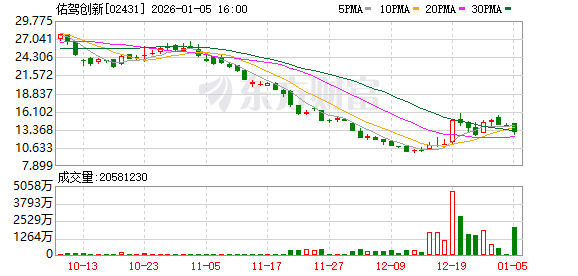
佑驾创新:多名股东自愿延长限售期 董事长刘国清个人增持5万股
Zheng Quan Shi Bao Wang· 2026-01-05 15:30
Core Viewpoint - Youjia Innovation (02431.HK) demonstrates strong confidence in its business prospects through voluntary extension of share lock-up periods by major shareholders and the chairman's share purchase, signaling positive market sentiment and shareholder protection [2] Group 1: Shareholder Actions - Major shareholders, including executive directors Liu Guoqing, Yang Guang, Zhou Xiang, Wang Qicheng, and individual shareholders Yan Shengye and Wu Jianxin, voluntarily extended their share lock-up periods, with four executive directors holding a total of 18.42% of shares extending their lock-up until December 27, 2026 [2] - Chairman Liu Guoqing purchased a total of 50,000 H-shares at an average price of approximately HKD 12.60 per share on January 5, 2026 [2] Group 2: Business Performance - Youjia Innovation has achieved a compound annual growth rate of over 50% in revenue, indicating a strong business momentum and deepening competitive moat [2] - The company has successfully delivered mass production to 42 automotive manufacturers, expanding its customer base across leading domestic and luxury brands, and is accelerating its international expansion [3] Group 3: Future Prospects - The company has entered the commercialization phase for its L4 autonomous driving business, with its unmanned buses operating in multiple cities and securing significant orders in the logistics market [3] - Youjia Innovation's comprehensive technology layout from L1 to L4, along with its strong engineering and mass production capabilities, positions it well to benefit from the accelerating industry upgrades and market opportunities [4] - The recent inclusion in the Hang Seng Stock Connect Electronic Theme Index reflects the capital market's recognition of the company's industry position and growth potential [4]

深蓝汽车董事长邓承浩揭秘L3级自动驾驶准入过程:历经多次答辩,就像是一场“资格考试”
Mei Ri Jing Ji Xin Wen· 2025-12-30 13:26
当2025年底工信部公布我国首批L3级有条件自动驾驶车型准入许可时,许多人下意识地发出疑问:这 次开车真的可以"脱手"了吗? "目前,每辆L3级自动驾驶车辆上,都必须配备一名经过专业认证的驾驶员进行驾驶,(C端用户)还不能 单独驾驶。"12月26日,深蓝汽车董事长邓承浩在接受《每日经济新闻》记者采访时表示,眼下,L3级 自动驾驶(以下或简称L3级)尚处探索期,更侧重于B端。 在邓承浩的阐述中,深蓝汽车从2023年开始申报L3级路测资格牌照,到进入我国首批L3级有条件自动 驾驶车型准入许可名单,再到拿到国内首块L3级自动驾驶专用正式号牌"渝AD0001Z",其过程就像是 一场"资格考试"。 "我到北京去'答辩'过很多次,还有很多(长安员工)都去'答辩'过。"据邓承浩透露,全国参与L3级测试准 入的企业多达几十家,进入上路通行试点的有9家,而获得产品准入许可的只有长安深蓝和北汽极狐两 家。 出事故后怎么判定? 与北汽极狐"可实现高速公路和城市快速路单车道内最高时速80公里的自动驾驶功能"不同的是,深蓝汽 车被允许"在交通拥堵环境下的高速公路和城市快速路单车道内以最高时速50公里进行自动驾驶功能"。 关于两者最高时 ...
L4级自动驾驶卡车龙头来了!蔚来参投!估值猛涨25倍!
Guo Ji Jin Rong Bao· 2025-12-26 08:36
近日,主线科技(北京)股份有限公司(下称"主线科技")在港交所递交招股书,拟在主板上市,国泰海通是独家保荐人。 IPO日报注意到,自动驾驶卡车领头羊主线科技由张天雷创立(他毕业于清华大学,曾参与联合创立百度无人车团队),投资方有蔚来等知名企业和机 构,最新估值高达38.6亿元。 主线科技的解决方案包含三大核心产品:AiTruck(智能卡车)、AiBox(智能终端)、AiCloud(智能云服务)。作为所有解决方案的通用"人工智能虚拟司 机",AiTrucker建立了统一的算法基础,利用物流枢纽的复杂数据加速公司公路物流及城市交通解决方案的鲁棒性。公司的解决方案中使用的车辆主要是自 动驾驶卡车,并辅以其他类型的商用车。主线科技将这些产品战略性地部署在三大核心商业场景:Trunk Port(物流枢纽)、Trunk Pilot(公路物流)、Trunk City(城市交通),依托公司的通用化架构,实现从物流枢纽、公路物流到城市交通的技术复用与无缝连接。 目前,主线科技已累计交付830辆AiTruck及349套AiBox,并获得821套AiTruck及920套AiBox的意向订单。 根据咨询机构弗若斯特沙利文的资料,20 ...


九识联手菜鸟对战新石器?无人配送再生变
Tai Mei Ti A P P· 2025-12-25 10:53
Core Insights - The collaboration between Jiushi Intelligent and Cainiao aims to create a more competitive joint entity in the rapidly growing urban delivery market, enhancing their technological, operational, and ecological capabilities for the global autonomous freight market [1] - This partnership is seen as a strategic synergy that combines the strengths of both companies in L4-level autonomous driving technology [2] Group 1: Strategic Collaboration - The partnership is expected to enhance Cainiao's end delivery capabilities in the instant retail sector, providing critical logistical support for its fulfillment network [3] - Jiushi Intelligent targets a delivery goal of 2,500 autonomous vehicles by 2025, while Jiushi aims for a much larger scale of 10,000 vehicles, indicating different strategic focuses [5] - The collaboration is not merely a technical enhancement but represents a comprehensive upgrade in fulfillment capabilities and user experience for Cainiao [5] Group 2: Risk and Strategic Positioning - Jiushi Intelligent's collaboration with Cainiao may serve as a strategic buffer against potential legal challenges related to intellectual property infringement from JD Logistics [6][7] - The partnership could provide Jiushi Intelligent with a supportive ecosystem amidst uncertainties, potentially mitigating risks associated with its development trajectory [7] Group 3: Industry Dynamics and Competition - The collaboration signifies a shift in the logistics industry from a "technology validation phase" to an "ecosystem competition phase," accelerating the commercialization of L4-level autonomous driving technology [17] - This partnership redefines industry roles, establishing a new cooperation model between logistics companies and technology providers, prompting others in the industry to reassess their strategic approaches [17] - If successful, the collaboration will shift competitive focus from vehicle quantity and funding to comprehensive capabilities based on real-world scenarios, enhancing the industry's competitive landscape [17]
汽车视点 | 政策开闸、车企抢跑,自动驾驶商业化“爬坡”进行时
Xin Hua Cai Jing· 2025-12-25 10:11
Group 1 - GAC Group's Haobo A800 has officially launched L3 conditional autonomous driving highway testing, with a maximum speed of 120 km/h, becoming one of the few projects in China approved for L3 highway testing [1] - The Ministry of Industry and Information Technology has announced the first batch of L3 autonomous driving models approved for testing in designated areas in Beijing and Chongqing, marking a significant policy milestone [2] - The first L3 autonomous driving license plate in China was issued in Chongqing, with vehicles already operating on the inner ring expressway [3] Group 2 - Companies like Xiaopeng Motors and Baidu Apollo are actively expanding their L3 autonomous driving capabilities, with Xiaopeng's L4 capable platform expected to achieve mass production by Q1 2026 [3] - The global Robotaxi market is characterized by a dual leadership from China and the U.S., with significant competition and collaboration among various companies [5] - The Middle East is emerging as a key growth market for autonomous driving, with high demand for cost-effective transportation solutions and supportive policies [6] Group 3 - The transition to L3 autonomous driving represents a shift in driving responsibility from human drivers to the system, indicating a new phase in the commercialization of autonomous vehicles [2] - Despite advancements, L3 autonomous driving is not yet available for general consumer purchase, and current trials are limited to specific scenarios [7] - Analysts suggest that many companies may skip L3 models and move directly to L4, as the commercial viability of L3 remains questionable [8]
i8车主分享25年12月在美国开特斯拉FSD V14.2感受
理想TOP2· 2025-12-25 08:05
Group 1 - Tesla's FSD V14.2 provides a seamless driving experience, allowing users to complete trips without any manual intervention, highlighting its advanced automation capabilities [1] - The driving experience in Tesla vehicles is reported to be superior to that of competitors, particularly in terms of smoothness and reliability across various driving scenarios [1] - The overall driving conditions in the U.S. are noted to be simpler compared to domestic roads, with higher speeds and stricter adherence to traffic rules, which may facilitate the advancement towards Level 4 autonomy [2] Group 2 - The test drives included both urban and highway environments, with participants expressing a sense of safety and comfort, even allowing for moments of rest during traffic [2] - The infrastructure in the U.S. is described as older but generally well-maintained, contributing to a stable driving experience for automated systems [2]

文远知行20251224
2025-12-25 02:43
Summary of WeRide's Conference Call Company Overview - WeRide focuses on L4 autonomous driving technology, with product lines including Robotaxi, Robobus, Robovan, and Robosweeper, and is testing and operating in multiple global locations, expecting a commercial explosion in 2026 [2][3] Core Insights and Arguments - WeRide has developed a self-research V2X autonomous driving technology platform that provides products and services from L2 to L4, collaborating with automakers and mobility platforms to accelerate commercialization, forming a "iron triangle" model [2][6] - The company has partnered with Bosch in the ADAS field, contributing advanced technology and product development experience, which has positively impacted performance [2][12] - From 2020 to 2022, WeRide's revenue grew at a compound annual growth rate (CAGR) of 439%, but is expected to decline in 2023-2024 due to macroeconomic conditions and completion of customized R&D services [2][14] - In the first three quarters of 2025, revenue increased by 60% year-on-year, with losses expected to narrow [2][15] Market Potential - The global L4 market is projected to reach trillions in the next three years, with significant potential in various segments: - The domestic Robotaxi market is estimated at 236 billion RMB, currently less than 1% market share [4][16] - Robobus market potential is between 15-35 billion RMB, with about 2% market share [4][19] - Robovan market potential is 164.5 billion RMB, also around 2% market share [4][24] - The Robosweeper market is estimated at 11.3-22.5 billion RMB, with a 4.7% market share [5][20] Financial Performance - Revenue projections for 2025 to 2027 are 550 million, 1 billion, and 1.866 billion RMB, respectively, with net losses of 1.4 billion, 1.3 billion, and 1 billion RMB [8][37] - The gross margin has decreased from 74% to 31% from 2020 to 2024, with fluctuations due to product structure changes and pricing strategies [15][14] Strategic Partnerships - WeRide collaborates closely with automotive manufacturers, bus groups, and taxi groups to explore the commercialization of L4 autonomous driving through the iron triangle model [9][33] - Key partnerships include collaborations with Nissan, GAC, and Geely for Robotaxi production, and with Yutong and King Long for Robobus [30][34] Future Development Directions - WeRide plans to accelerate global business expansion and further enhance its smart mobility business, focusing on high-level intelligent driving solutions [10][29] - The company aims to develop safe and reliable autonomous driving technologies to cover more smart mobility, smart logistics, and smart sanitation scenarios [10][30] Technological Advancements - WeRide's self-developed Waymo One platform features a full-stack autonomous driving software algorithm and modular hardware architecture, supporting a range of autonomous driving products from L2 to L4 [23][26] - The company has developed a high-performance computing platform with Lenovo, reducing costs by 50% and providing 2000 TOPS AI computing power [28][24] Global Expansion and Deployment - WeRide has initiated commercial operations in Abu Dhabi and Dubai, with plans to expand to Riyadh and other regions [29][35] - The company has received multiple autonomous driving licenses across several countries, including Switzerland, China, UAE, Saudi Arabia, Singapore, France, Belgium, and Japan [35][36] Conclusion - WeRide is positioned as a leading supplier of L4 autonomous driving products and solutions, with significant growth potential in various markets and a strong focus on technological innovation and strategic partnerships to drive commercialization [37]

L4级Robotaxi的护城河一夜崩塌
3 6 Ke· 2025-12-24 00:39
Core Viewpoint - The discussion at the Horizon Ecological Conference highlighted the potential for a unified development paradigm that could bridge the gap between L2 and L4 autonomous driving systems, suggesting that the distinction between these levels may become obsolete [1][3]. Group 1: Unified Development Paradigm - The idea presented is to use L2 architecture and sensors to achieve L4 capabilities, which could lead to the collapse of barriers for L4 Robotaxi companies [1]. - The current approach of L4 Robotaxi companies relies on limited ODD areas and redundant safety measures through hardware and software, which may be challenged by a unified approach [1][4]. Group 2: Contrasting Approaches - The core conflict lies in whether the same architecture can be used for both assisted driving and Robotaxi services, with Tesla and Waymo representing opposing views [2]. - Waymo's strategy involves high-precision maps and multiple sensors to ensure safety, but this comes with high costs and challenges in scalability [2]. - Tesla advocates for a more flexible and cost-effective deployment by unifying the underlying technology for assisted driving and Robotaxi, although it currently lacks the safety levels of Waymo [2][3]. Group 3: Future Implications - If the unified approach is validated, it could significantly undermine the competitive advantages of traditional Robotaxi players who rely on heavy sensor use [4]. - Companies like Horizon and Hello Robotaxi are already moving towards this unified paradigm, indicating a shift in the Robotaxi landscape [4][5]. - The competition will increasingly focus on data accumulation rather than sensor redundancy, positioning data owners and algorithm companies as the most competitive players [5]. Group 4: Expansion and Performance Metrics - Reports indicate that by December 2025, Waymo plans to deploy 2,500 Robotaxi vehicles across the U.S., while Tesla's Robotaxi registrations have surged from under 100 to over 1,000 in just four months [5]. - Morgan Stanley's report highlights that Waymo's average accident-free mileage is approximately 360,000 miles, compared to Tesla's 50,000 miles in Austin [5]. Group 5: Future Outlook - The fundamental differences between data-driven approaches and traditional sensor-heavy methods suggest that Tesla's growth may outpace Waymo's, potentially leading to a collapse of Waymo's system [6]. - There are rumors that Waymo may be shifting towards a data-driven model similar to Tesla's [7].
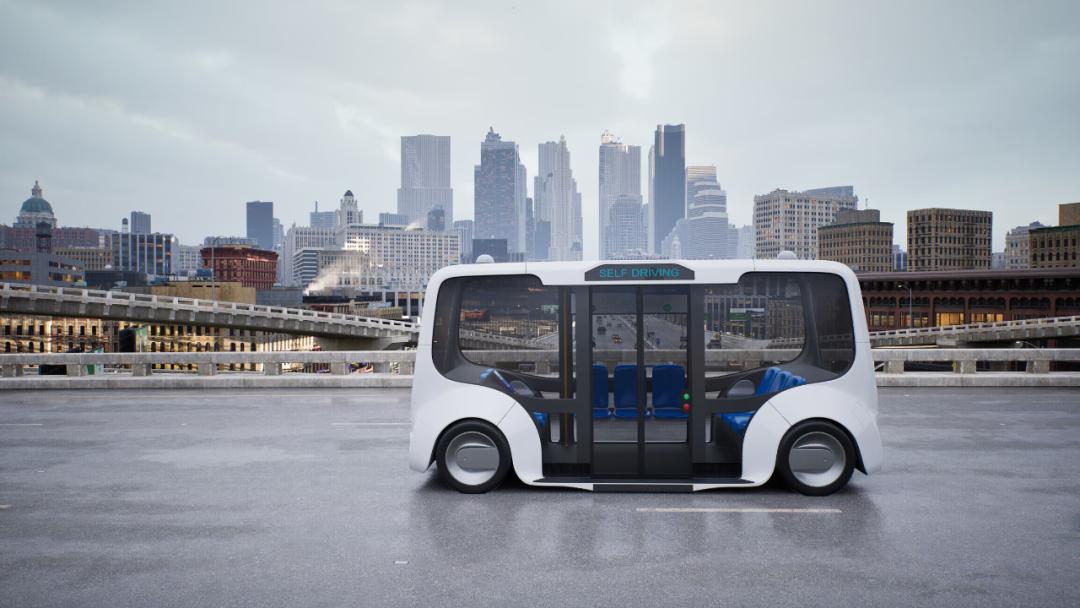
L4级自动驾驶赛道分化,Robobus将成为“第一战场”?
3 6 Ke· 2025-12-23 11:17
Core Insights - The autonomous driving industry is transitioning from a phase of singular breakthroughs to a critical point of track differentiation, with companies reassessing their strategic focus based on the varying technical adaptability and commercialization potential across different scenarios [1][3] Track Differentiation - The differentiation in the L4 autonomous driving track reflects a renewed understanding of technology implementation, moving away from the misconception that overcoming core technology guarantees universal commercialization [3] - The complexity, safety, and commercial value of specific scenarios are crucial for the successful deployment of L4 technology, with Robotaxi facing significant challenges compared to more controlled environments like Robotruck and Robobus [3][4] Financing Trends - Since 2025, financing in the autonomous driving sector has increasingly concentrated on Robobus, Robotruck, and Robovan, with notable investments such as over $600 million in New Stone Technology, setting a record in China's autonomous driving financing [4] Robovan Insights - Robovan focuses on last-mile logistics with a core emphasis on low-cost scalability, with leading companies nearing the threshold of 10,000 units delivered, and prices dropping significantly to as low as 16,800 yuan [4][5] Robotruck Insights - Robotruck aims to revolutionize efficiency in long-distance logistics, addressing cost reduction needs in traditional logistics plagued by low-price competition and safety issues, gaining attention from logistics companies [5] Robobus Insights - Robobus benefits from public transport attributes, addressing high-frequency demand in urban micro-circulation and providing a clear commercial path, supported by strong policy backing [5][8] - The operational flexibility of Robobus allows it to adapt to various semi-open and closed scenarios, significantly lowering the implementation difficulty of L4 technology [9] Commercialization Pathways - Robobus has two primary commercialization models: To G, collaborating with governments for public transport integration, and To B, providing customized services for specific venues [9][10] - The scalability of Robobus operations can further reduce costs through increased order volumes, creating a positive feedback loop of cost reduction and expanded service [10] Global Expansion - Chinese companies are positioned to lead in the Robobus sector globally, leveraging complete industrial chain advantages and rich operational experience, as evidenced by successful projects in Singapore [11][12] Competitive Landscape - The competition in the Robobus sector extends beyond technology to include business models, ecosystem integration, and global capabilities, necessitating a comprehensive approach for success [12][13] - Companies must adapt to local regulations and establish deep collaborations with local partners to navigate the complexities of international markets [13][14] Challenges Ahead - Robobus faces technical challenges in specific scenarios, such as adverse weather conditions affecting sensor accuracy and the need for effective vehicle-road collaboration [14] - Initial investment costs for L4 Robobus remain high, necessitating strong financial capabilities for companies to achieve scalability [14] - A robust operational maintenance system is essential for Robobus, which includes not only vehicle maintenance but also monitoring and upgrading autonomous driving systems [14][15]