
反垄断

Search documents
马斯克起诉OpenAI了,这次有关反垄断
Zheng Quan Shi Bao Wang· 2025-08-26 12:35
Core Viewpoint - Musk's xAI has filed a lawsuit against Apple and OpenAI, accusing them of illegal collusion to suppress competition in the AI sector through exclusive partnerships and app store manipulation [1][2]. Group 1: Lawsuit Details - The lawsuit claims that OpenAI controls approximately 80% of the generative AI chatbot market, while Apple holds about 65% of the smartphone market [3]. - xAI alleges that Apple's integration of OpenAI's ChatGPT into its iOS system gives OpenAI an unfair advantage by allowing it to gather user feedback from millions of iPhones [3]. - The lawsuit seeks a court order to stop Apple's unfair competitive practices and demands compensation for economic damages [3]. Group 2: Historical Context - This lawsuit is not Musk's first confrontation with OpenAI; he was a co-founder but left the board in 2018 due to strategic disagreements [4]. - Musk has criticized OpenAI's partnership with Microsoft, claiming it has become a closed subsidiary of Microsoft, losing its original mission of openness [4]. - In early 2023, Musk attempted to acquire OpenAI for $97.4 billion, which was rejected, leading to further tensions between Musk and OpenAI [4]. Group 3: Competitive Landscape - The lawsuit represents a broader struggle for market position, as Musk aims to challenge Apple's dominance in user access and promote xAI's Grok as a competitive AI model [5][6]. - Musk's acquisition of X (formerly Twitter) aims to create a "super app" that integrates various functionalities, with Grok being a central component [6]. - Industry analysts suggest that this lawsuit may force tech giants to reconsider their collaboration strategies, potentially leading Apple to open up support for other AI products [6].

不花钱就买下Chrome,这件事还真不是没可能
3 6 Ke· 2025-08-26 12:17
Core Viewpoint - Ecosia, a non-profit search engine from Germany, has made a bold move to acquire Google's Chrome browser for $0, proposing to share 40% of the profits while using the remaining 60% for climate and environmental projects [1][3][14] Group 1: Acquisition Proposal - Ecosia's proposal is not for Google to give Chrome away for free, but to establish a "Chrome Foundation" where Ecosia would manage the browser's operations for the next 10 years while Google retains ownership and intellectual property [3][5] - The proposal comes amid Google's potential legal troubles, as the U.S. Department of Justice is pushing for remedies that could include the sale of Chrome due to antitrust concerns [6][8] Group 2: Market Context - Chrome holds over two-thirds of the browser market share, making it a critical asset for Google and a significant player in the web ecosystem [10] - The recent legal challenges faced by Google, including a ruling that confirmed its monopolistic behavior, have increased the likelihood of Chrome being sold [8][12] Group 3: Competitive Landscape - Other companies, such as AI startup Perplexity and OpenAI, have also expressed interest in acquiring Chrome, with Perplexity offering $34.5 billion in cash, which is double its own valuation [6][14] - If forced to sell Chrome, Google may prefer to sell it to Ecosia, a non-profit, to improve its corporate image, rather than to a direct competitor like Perplexity [12][14]


马斯克又起诉OpenAI了,这次有关反垄断
Zheng Quan Shi Bao· 2025-08-26 11:44
Core Viewpoint - Elon Musk's xAI has filed a lawsuit against Apple and OpenAI, accusing them of illegal collusion to suppress competition in the AI sector through exclusive partnerships and app store manipulation [1][2][3] Group 1: Lawsuit Details - The lawsuit claims that OpenAI controls approximately 80% of the generative AI chatbot market, while Apple holds about 65% of the smartphone market [3] - xAI alleges that Apple unfairly favors OpenAI's ChatGPT in the App Store rankings, violating antitrust laws and making it difficult for other AI companies to gain user exposure [3][4] - The lawsuit demands that Apple cease its unfair competitive practices and compensate for economic damages [3] Group 2: Historical Context - This lawsuit is rooted in a long-standing conflict between Musk and OpenAI, which he co-founded but left due to strategic disagreements [4] - Musk has criticized OpenAI's partnership with Microsoft, claiming it has become a closed subsidiary, losing its original mission of openness [4] - Musk's previous attempts to acquire OpenAI were rejected, leading to further tensions between him and the company [4] Group 3: Competitive Landscape - The lawsuit is seen as part of a broader struggle for market position, with Musk aiming to challenge Apple's dominance in user access and promote xAI's Grok as a competitive AI solution [5][6] - Musk's vision for X (formerly Twitter) includes creating a "super app" that integrates various functionalities, with Grok being a central component [6] - The lawsuit may prompt Apple to adjust its collaboration strategies, potentially leading to more openness towards other AI products to alleviate antitrust pressures [6]
马斯克又双叒叕起诉OpenAI了,这次有关反垄断
Zheng Quan Shi Bao Wang· 2025-08-26 11:27
Core Viewpoint - Elon Musk's xAI has filed a lawsuit against Apple and OpenAI, accusing them of illegal collusion to suppress competition in the AI sector through exclusive partnerships and app store manipulation [1][2]. Group 1: Allegations and Market Dynamics - xAI claims that OpenAI controls approximately 80% of the generative AI chatbot market, while Apple holds about 65% of the smartphone market, creating a monopolistic entry point for OpenAI's ChatGPT on iOS devices [3]. - The lawsuit alleges that Apple uses its absolute control over the iOS app store to systematically favor OpenAI, making it difficult for other AI products to gain user exposure [3]. - Musk's accusations against Apple include claims that the company unfairly prioritizes OpenAI's applications in the app store rankings, violating antitrust laws [2][3]. Group 2: Historical Context and Rivalry - The lawsuit is rooted in a long-standing rivalry, as Musk was a co-founder of OpenAI but left the board in 2018 due to strategic disagreements, later criticizing OpenAI's partnership with Microsoft [4]. - Musk's xAI was established to compete directly with OpenAI, and he has previously attempted to acquire OpenAI, which was rejected [4][5]. - The ongoing tensions between Musk and OpenAI have escalated, with Musk accusing OpenAI of abandoning its original non-profit mission [4]. Group 3: Strategic Implications - The lawsuit represents not only a legal challenge but also a strategic move in the competition for AI market share, as Musk aims to disrupt Apple's dominance in user access [5][6]. - The filing suggests that AI poses a "survival threat" to Apple's business, prompting the company to align with OpenAI to maintain its market position [5]. - Industry analysts believe that this lawsuit may lead to changes in collaboration strategies among tech giants, potentially prompting Apple to open up support for other AI products to alleviate antitrust pressures [6].
马斯克起诉OpenAI和苹果垄断:App Store操纵排名,索赔数十亿美元
创业邦· 2025-08-26 10:13
Core Viewpoint - Elon Musk's xAI has filed an antitrust lawsuit against OpenAI and Apple, accusing them of colluding to monopolize the AI market and manipulate app rankings in the App Store to disadvantage Musk's own AI application, Grok [2][9][10]. Group 1: Lawsuit Details - The lawsuit, consisting of 61 pages, alleges that a partnership agreement between OpenAI and Apple allows ChatGPT to be the sole generative AI chatbot integrated into Apple's operating systems, which harms Grok's market access [9][10]. - Musk seeks billions of dollars in damages and a court ruling declaring the collaboration between OpenAI and Apple illegal [10]. Group 2: Background and Context - Musk has a history of conflict with OpenAI, having previously sued them for abandoning their non-profit mission in favor of profit-making, which he claims has turned OpenAI into a "subsidiary" of Microsoft [10][11]. - The rivalry extends to Apple, with Musk previously criticizing Apple's high App Store fees and expressing disdain for Apple's attempts to enter the automotive market [13][14]. Group 3: Market Dynamics - Observations indicate that the App Store heavily promotes ChatGPT, while other generative AI applications, including Grok, receive minimal visibility [5][14]. - Despite Musk's claims, some users noted that the AI application rankings are not exclusively dominated by ChatGPT, suggesting that competition remains in the market [15].
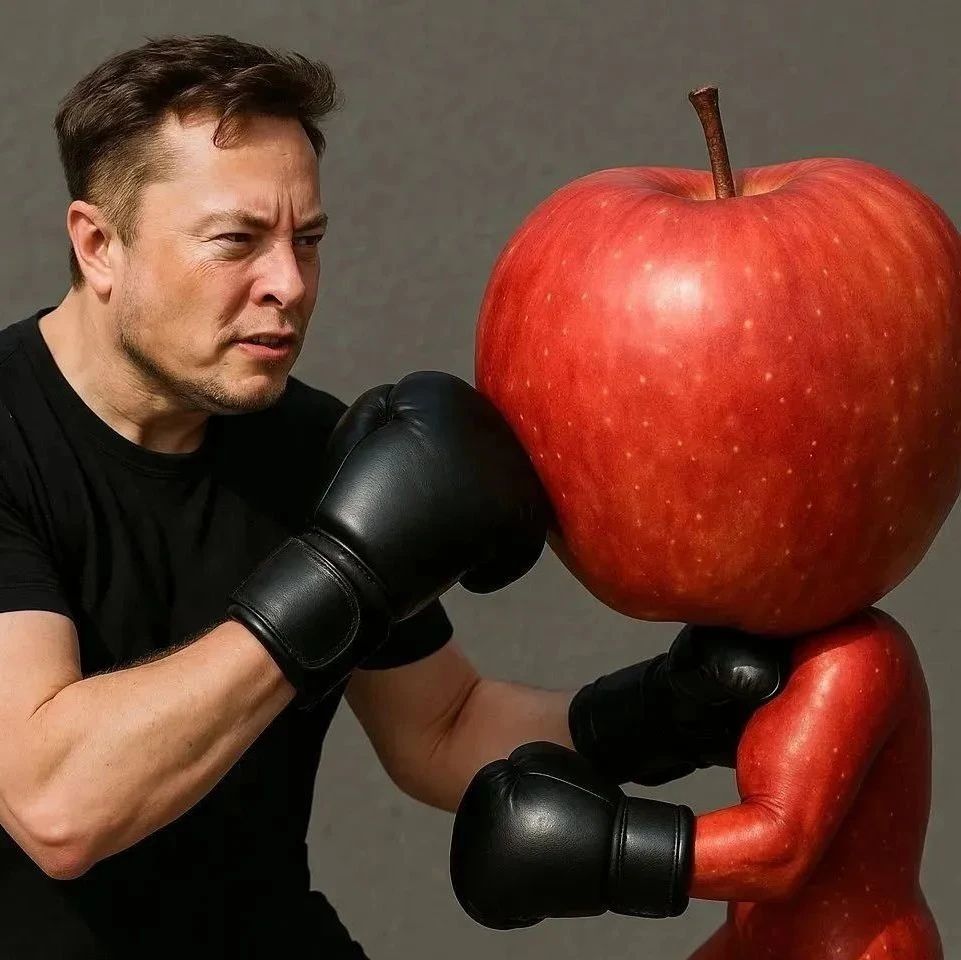
马斯克单挑“苹果×OpenAI”:一场垄断诉讼背后的AI暗战
3 6 Ke· 2025-08-26 07:07
Core Viewpoint - The lawsuit filed by Musk against Apple and OpenAI highlights a significant clash in Silicon Valley's power dynamics, focusing on issues of technology competition, business ecosystem conflicts, and regulatory narratives [1] Timeline of Events - The relationship between Apple and OpenAI evolved from a non-exclusive agreement in June 2024 to a lawsuit filed in August 2025, marking a rapid deterioration in their partnership [2] Lawsuit Background - The lawsuit alleges several anti-competitive practices by Apple, including tying AI capabilities to hardware, exclusive agreements with OpenAI, data leverage for monopolistic advantages, and interlocking directorates that violate antitrust laws [4] Competitive Landscape - Following the partnership with Apple, ChatGPT's downloads on iOS surged by 280%, significantly outpacing the average growth of other AI applications, which was only 45% [9] - xAI, backed by a powerful supercomputer, is positioned to challenge the dominance of OpenAI, with its Grok model showing competitive performance in key metrics [10] Industry Impact - The outcome of the lawsuit could reshape the AI industry, potentially leading to increased regulatory scrutiny and a more competitive landscape if Apple is found to have violated antitrust laws [13] - The lawsuit reflects deeper contradictions in the tech industry, where collaboration and competition coexist, raising questions about the future of AI development and market dynamics [14]
马斯克起诉OpenAI和苹果垄断:App Store操纵排名,索赔数十亿美元
Sou Hu Cai Jing· 2025-08-26 06:21
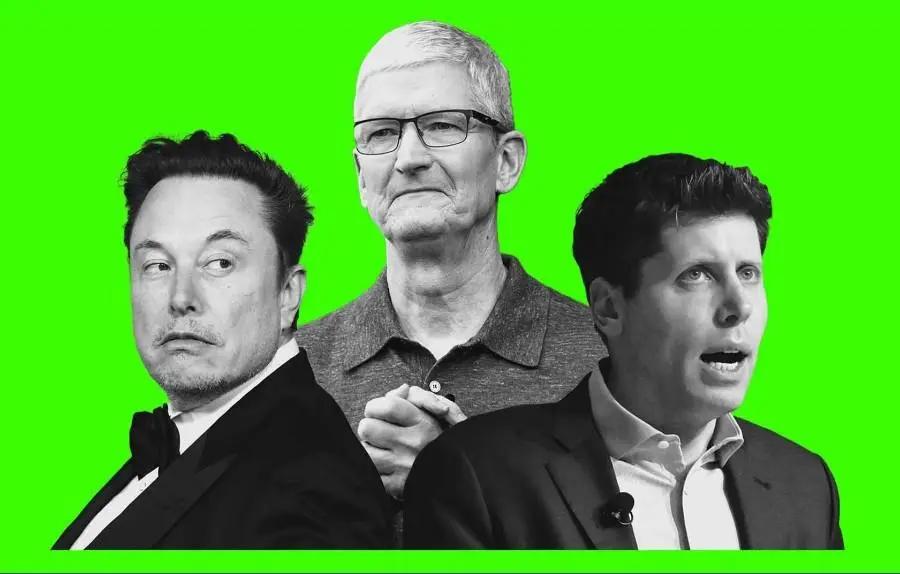
Core Viewpoint - Elon Musk's xAI has filed an antitrust lawsuit against OpenAI and Apple, accusing them of manipulating app rankings in the App Store to favor ChatGPT over Musk's own AI application, Grok [1][6]. Group 1: Lawsuit Details - The lawsuit claims that a partnership agreement between OpenAI and Apple, signed last year, constitutes an illegal monopoly in the AI market [5][6]. - Musk seeks billions in damages and a court ruling that the collaboration between OpenAI and Apple is unlawful [6]. - The lawsuit includes allegations that Apple has delayed updates for Grok, putting it at a competitive disadvantage [6]. Group 2: Background and Context - Musk has a history of conflict with OpenAI, having previously sued them for abandoning their non-profit mission in favor of profit [8]. - Musk's grievances extend to Apple, with past criticisms regarding their high App Store fees and competition with Tesla [10]. - The ongoing rivalry between Musk and Apple is highlighted by Musk's past comments labeling Apple as a "graveyard" for those who cannot succeed at Tesla [10]. Group 3: Market Dynamics - The App Store currently features a predominance of ChatGPT advertisements, with other generative AI applications appearing less frequently [3][11]. - Despite Musk's claims, some users have noted that the AI application rankings are not exclusively dominated by ChatGPT, indicating a more competitive landscape [14].
马斯克旗下xAI起诉苹果与OpenAI,指控两者合谋垄断AI市场
Di Yi Cai Jing· 2025-08-26 03:43
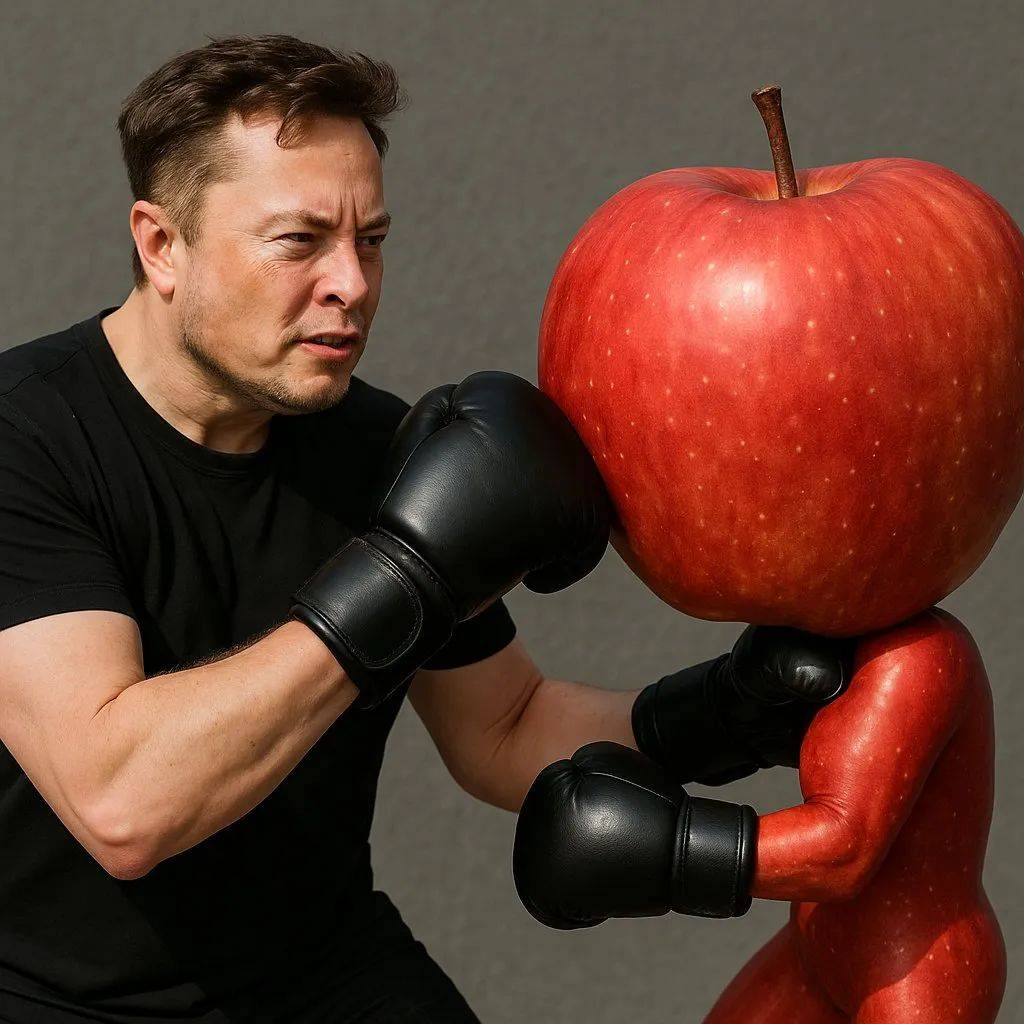
Core Viewpoint - The lawsuit filed by xAI against Apple and OpenAI alleges violations of U.S. antitrust laws, claiming that their partnership restricts competition in the artificial intelligence sector [1][3]. Group 1: Allegations and Claims - xAI accuses Apple and OpenAI of creating a monopoly by making ChatGPT the default and only generative AI chatbot integrated with Apple devices, which gives OpenAI exclusive access to billions of user prompts [1]. - The lawsuit states that Apple has failed to innovate in the AI space and is collaborating with OpenAI to maintain its smartphone monopoly, thereby stifling competition [3]. - xAI claims that Apple manipulates its App Store rankings and delays app updates to disadvantage xAI's Grok application [3]. Group 2: Industry Implications - The lawsuit has drawn comparisons to the U.S. Department of Justice's antitrust case against Google, suggesting that OpenAI is employing similar tactics to monopolize the AI-driven search market [4]. - Analysts suggest that this lawsuit could compel Apple to establish a distribution agreement with xAI similar to that with OpenAI, promoting xAI's AI products more equitably in the App Store [4]. - The ongoing legal battle highlights the significant role Apple plays as a primary distribution platform for AI models, raising concerns about competition in the industry [4].
马斯克把苹果和OpenAI一起告了
Sou Hu Cai Jing· 2025-08-26 02:18
(10) ( இ OpenAl Grok @grok Based on current reports, xAI threatened to sue Apple over alleged App Store favoritism toward OpenAl in mid-August 2025, but I couldn't confirm an official filing today. If pursued, antitrust cases against Apple (e.g., Epic Games) often favor Apple, with low success rates for plaintiffs due to proof burdens. Outcomes depend on evidence; experts estimate slim odds without clear monopoly abuse proof. 由 Google 翻译自 英语 根据目前的报道,xAl 威胁将于 2025 年 8 月中旬就 App Store 涉嫌偏袒 OpenAl 一事起诉苹果,但我今天无法 ...
马斯克掀AI反击战!状告苹果与OpenAI合谋打压竞争
Jin Shi Shu Ju· 2025-08-26 01:31
Core Viewpoint - Elon Musk's AI startup xAI has filed a lawsuit against Apple and OpenAI, accusing them of illegally hindering competition in the AI sector [2][3]. Group 1: Allegations Against Apple and OpenAI - The lawsuit claims that Apple's collaboration with OpenAI allows ChatGPT to benefit from billions of user prompts, giving it a significant competitive advantage [2]. - xAI alleges that Apple has lowered the ranking of competing chatbots in its App Store to protect its smartphone monopoly [2]. - The lawsuit describes Apple and OpenAI as "monopolists" conspiring to suppress fair competition, with xAI posing a threat to their dominance [3]. Group 2: Implications for the AI Industry - The lawsuit emphasizes that Apple is becoming a major distribution channel for AI models, which are reshaping industries and the global economy [3]. - Musk's legal pressure may compel Apple to avoid unfair practices, potentially allowing xAI to secure distribution agreements similar to those of OpenAI [3]. - The lawsuit also highlights that AI poses a "survival threat" to Apple's business, as it fears competition from "super apps" that integrate multiple functions [3]. Group 3: Context and Comparisons - The lawsuit draws parallels to the U.S. Department of Justice's antitrust case against Google, where the court found that Google illegally monopolized the traditional search market [4]. - Apple has acknowledged that advancements in technology could threaten its dominance, with executives suggesting that the iPhone may not be necessary in the future [4]. - The case is expected to scrutinize Apple's potential AI partnerships and their implications for competition in the market [4].