超级应用

Search documents
马化腾凌晨发声:腾讯还有一批“龙虾系”产品陆续赶来;英伟达宣布投入 260 亿美元打造开源模型;小伙手搓悬停火箭火爆全网|极客早知道
Sou Hu Cai Jing· 2026-03-12 01:25
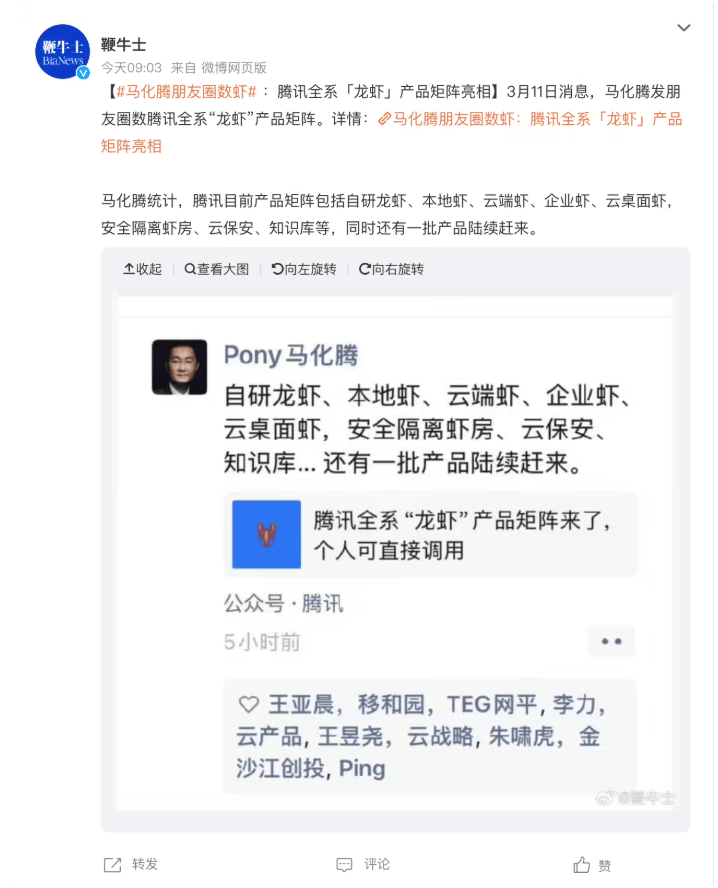
Group 1 - The core topic revolves around the rapid rise of OpenClaw, an open-source AI project, which has sparked significant interest and policy support across various regions in China [1][2] - Multiple cities, including Hefei and Shenzhen, have introduced measures to support the development of OpenClaw and one-person companies (OPC), with Hefei offering up to 10 million yuan in funding [1][2] - Concerns regarding the security of OpenClaw have been raised, highlighting its high-level permissions and the lack of strict security audits in the skill package market [2] Group 2 - Tencent has announced a series of products under the "lobster" brand, including WorkBuddy, which is fully compatible with OpenClaw and aims to enhance usability and security [3][4] - Nvidia plans to invest $26 billion over the next five years to develop open-source AI models, marking a strategic shift from being solely a chip manufacturer to becoming a leading AI laboratory [4][5][6] - The investment will cover model development, computational infrastructure, talent acquisition, and ecosystem building, with the first models expected to be released by late 2026 or early 2027 [6][8] Group 3 - Google has completed a $32 billion acquisition of Wiz, marking its largest acquisition to date, aimed at enhancing its cloud security capabilities [11][12] - The acquisition is part of Google's strategy to strengthen its position in the cloud computing and AI sectors, responding to the growing demand for secure AI infrastructure [11][12] - Wiz will continue to operate with a multi-cloud service strategy, providing its products through competitors' platforms like AWS and Azure [12] Group 4 - Xiaomi has launched its official car insurance, FaBa Tianxing, which offers competitive pricing and additional services compared to other insurance providers [18] - The insurance is currently available for renewal in Beijing, with a focus on providing enhanced services to customers [18][19] Group 5 - NIO's CEO Li Bin emphasized that the company's first quarterly profit is just a starting point, indicating a long-term competitive strategy in the automotive industry [20][21] - NIO plans to maintain a quarterly R&D investment of 2 to 2.5 billion yuan in 2026, focusing on improving efficiency and ensuring strong investment in key products and technologies [20][21]






当马斯克试图重塑金融系统:特斯拉投资者该兴奋还是警惕
美股研究社· 2026-03-11 11:59
Core Viewpoint - The article discusses Elon Musk's ambition to transform the social media platform X (formerly Twitter) into a comprehensive financial system, akin to a "super app" that integrates social networking with financial services [2][4][6]. Group 1: Transformation of X - Since acquiring Twitter for $44 billion in 2022, Musk has aimed to evolve the platform into an "everything app," allowing users to chat, watch videos, shop, and conduct financial transactions [6][7]. - X Money is a crucial step in this vision, enabling users to perform payments, transfers, and other financial activities directly on the platform, supported by a partnership with Visa for compliance and infrastructure [7][8]. Group 2: Financial Model Shift - The introduction of financial services could fundamentally change X's business model, shifting from an advertising-based revenue model to one that includes transaction fees and financial products, which typically have higher profit margins and greater user retention [7][8]. - The success of this model has been demonstrated in China with WeChat and Alipay, where payment systems have created a closed-loop ecosystem integrating social, consumption, and financial activities [8]. Group 3: Challenges in Western Markets - Despite the success of super apps in Asia, the article highlights the challenges in the U.S. due to a fragmented payment market and entrenched financial institutions, making it difficult for new entrants to disrupt the existing ecosystem [10][11]. - Musk's attempt to create X Money faces significant regulatory hurdles, as handling user funds requires compliance with complex financial regulations, including obtaining state-level money transmitter licenses and adhering to anti-money laundering laws [10][11]. Group 4: Implications for Tesla Investors - The launch of X Money prompts a reevaluation of Musk's broader business landscape, with potential benefits for Tesla if X becomes a successful platform, providing additional cash flow and possibly integrating services [12][13]. - However, there are concerns that Musk's focus on X could detract from his attention on Tesla, especially as the company navigates competitive pressures and technological advancements [12][13]. Group 5: Future Outlook - If X Money succeeds, it could blur the lines between social media and financial services, leading to a new valuation paradigm where social platforms are seen as financial infrastructures [14]. - This evolution may result in Tesla's valuation reflecting not just vehicle sales but also the synergistic effects of Musk's entire business ecosystem, indicating a shift in how capital markets assess value [14].
马斯克离不开华人骨干
3 6 Ke· 2026-02-13 12:06
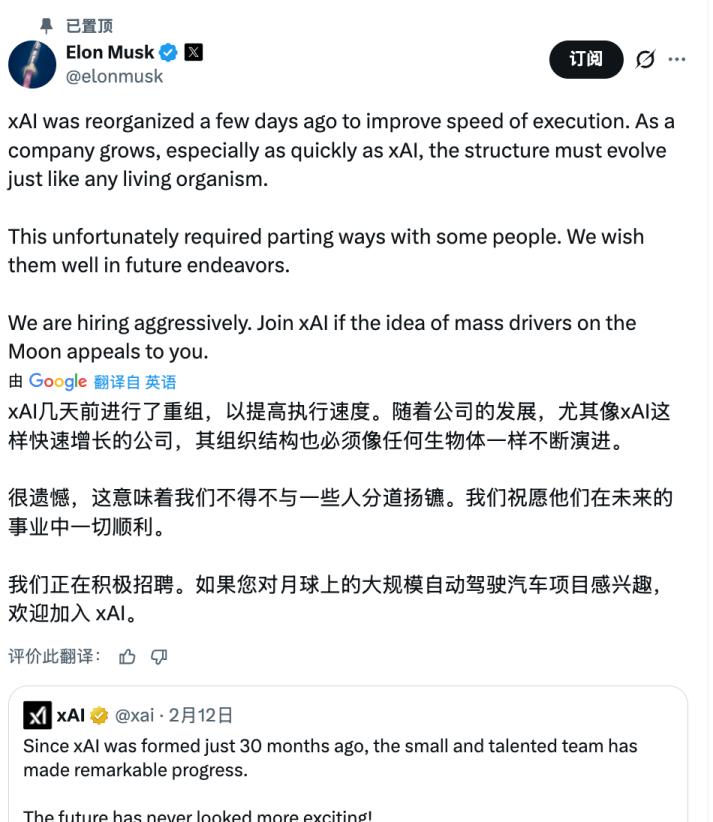
Core Insights - The article discusses the recent developments at xAI, including the departure of two co-founders and the company's restructuring efforts under Elon Musk's leadership, emphasizing a shift towards ambitious goals in AI and space exploration [1][2][3]. Group 1: Company Developments - xAI has achieved significant milestones in just two and a half years, including the establishment of a training cluster with 100,000 H100 GPUs and plans to expand to a million-card scale [8]. - The company has reported impressive growth metrics, such as a $1 billion annual recurring revenue (ARR), over 1 billion installations, and a 55% increase in daily user engagement compared to six months ago [8]. - A major organizational restructuring has been announced, with a focus on enhancing execution speed and adapting to the rapid growth of the company [3][8]. Group 2: New Organizational Structure - The new structure consists of four main application areas: Grok Main & Voice, Coding, Imagine, and Macrohard, each led by key personnel [10][11][12][14]. - Grok Main & Voice integrates voice capabilities into the core Grok model, anticipating that multimodal interaction will become the default entry point [11]. - The Coding team aims to enhance programming efficiency significantly, potentially eliminating the need for traditional programming languages [12]. - The Imagine team focuses on generating images and videos, with users generating nearly 60 billion images in the past 30 days, and aims to create an interactive visual world [13]. - Macrohard is tasked with developing a company-wide AI simulation system, which could revolutionize how businesses operate digitally [14][15]. Group 3: Future Ambitions - xAI aims to leverage its partnership with SpaceX to establish extraterrestrial computing infrastructure, including ground supercomputers and orbital data centers [20]. - Future plans include building a factory on the Moon and developing AI satellite manufacturing systems to reduce launch costs and expand computational power beyond Earth [22]. - The overarching vision is to utilize solar energy on a massive scale, significantly beyond current human energy consumption levels, by integrating AI capabilities with space industrialization [22]. Group 4: Talent Retention and Challenges - The recent departure of co-founders has raised concerns about talent retention, with six out of twelve co-founders having left the company [2][23]. - Despite the departures, key members, including several Chinese talents, remain committed to the company, indicating ongoing strength in the workforce [23][25]. - Zhang Guodong, a founding member, has taken on significant responsibilities within the organization, highlighting the importance of retaining skilled personnel during this transitional phase [26][29].
AI时代“新BAT”正在崛起
3 6 Ke· 2026-01-27 11:07
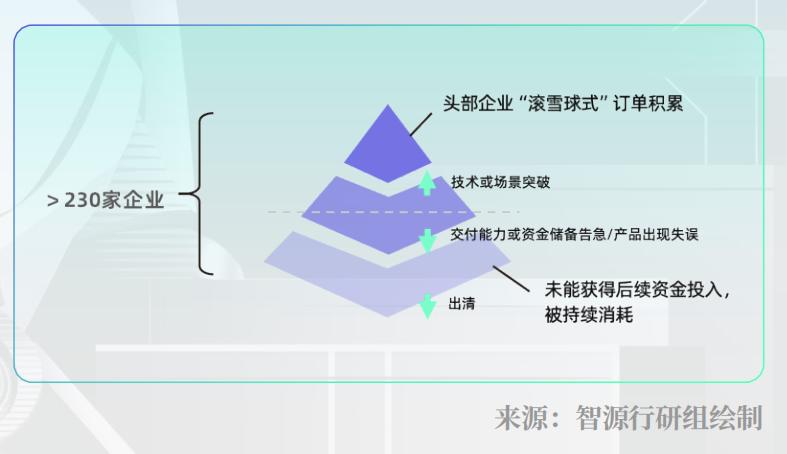
Group 1 - The core focus of the article is on the future of artificial intelligence (AI) and the potential reshaping of the Chinese internet landscape, particularly in the context of embodied intelligence and the emergence of new super apps [1][19][20] - The embodied intelligence sector is expected to undergo a significant reshuffle by 2026, with over 230 companies currently in the market, including more than 100 humanoid robot firms [2][4] - The industry is transitioning from experimental phases to mass production, with humanoid robot sales surpassing 10,000 units, indicating a move towards initial commercialization [4][9] Group 2 - Major players in the global humanoid robot market include Zhiyuan, Yushun, and Ubtech, with Zhiyuan leading with an annual shipment of over 5,100 units, capturing 39% of the global market share [6] - The competition for AI super apps is intensifying, with companies like OpenAI and Alibaba striving to create comprehensive platforms that integrate various services into a single interface [10][11] - The article highlights the emergence of vertical players in specific domains, such as Ant Group's "Antifor Health" and MiniMax's AI companionship applications, which have successfully established business models and attracted significant user bases [14] Group 3 - The AI industry is predicted to enter a "trough of disillusionment" in 2026, with many AI projects failing to deliver measurable impacts, leading to a potential delay in AI investments [15][19] - The market for synthetic data is experiencing rapid growth, with projections indicating that by 2030, the scale of synthetic data will surpass that of real data, becoming the primary fuel for model training [17] - The advancements in data quality and the evolution of AI technologies are expected to drive significant changes in the operational dynamics of the real economy [19]


马斯克说在中国你可以只用微信生活,X真能复刻微信?
Sou Hu Cai Jing· 2025-12-18 00:38
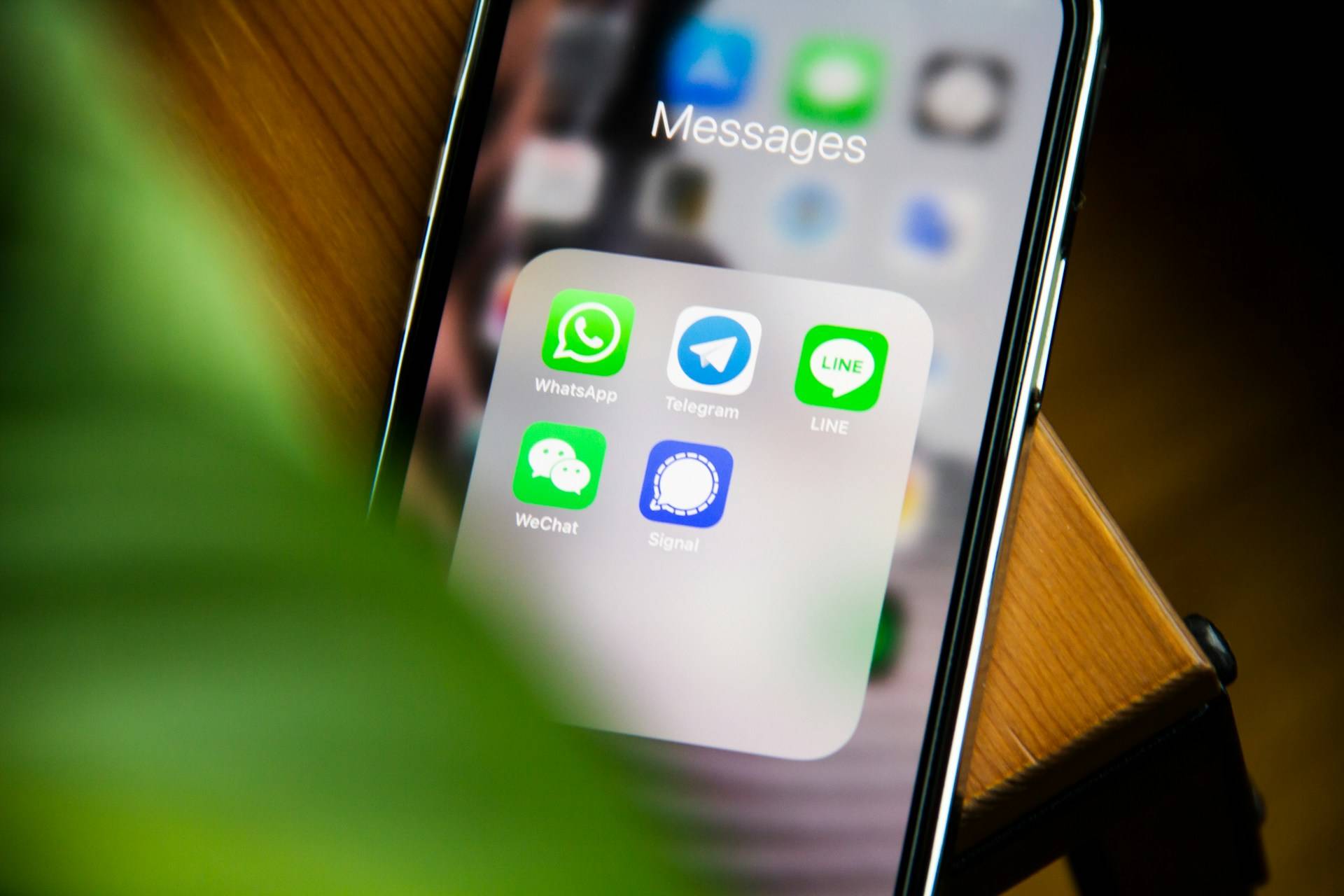
Core Viewpoint - Elon Musk aims to transform the social platform X into a "WeChat++" outside of China, integrating various functionalities such as information dissemination and financial payments into a single application [3][6]. Group 1: Musk's Vision for X - Musk expressed admiration for WeChat, stating that in China, one can live entirely through WeChat, which combines messaging and payment functionalities [3][4]. - He envisions X as a highly integrated "super app" that allows users to perform a wide range of activities without switching applications [3][6]. Group 2: Challenges in Replicating WeChat's Model - The success of WeChat as a "digital life operating system" stems from its ability to integrate communication, payment, e-commerce, and more into one platform, which Musk recognizes as a valuable model [6][8]. - WeChat's success is attributed to its role as a "super connector," allowing businesses and creators to embed lightweight applications within its ecosystem, thus enhancing user experience and lowering service provision barriers [8][9]. Group 3: Cross-Platform Capabilities - WeChat's ability to operate seamlessly across various platforms (iOS, Android, HarmonyOS, Windows) enhances user loyalty and engagement, a feature that Musk finds appealing for X [9]. - If X can replicate WeChat's cross-platform logic, it may gain broader user acceptance globally, increasing its market competitiveness [9]. Group 4: Structural Barriers to Success - Musk's strategy to transition X towards a WeChat-like model faces significant structural challenges in the U.S. and global markets, where traditional internet services are well-established [11]. - The unique success of WeChat is linked to China's rapid mobile internet development, which differs from the established desktop internet landscape in the West, where users may not have a pressing need for an all-in-one app [11]. - Regulatory hurdles and a fragmented digital payment system in the U.S. complicate the creation of a unified service platform, and X's origins as a social media platform may dilute its core value if it attempts to integrate diverse functionalities [11].

法庭文件披露马斯克起诉苹果和OpenAI深层原因
Sou Hu Cai Jing· 2025-12-13 00:23
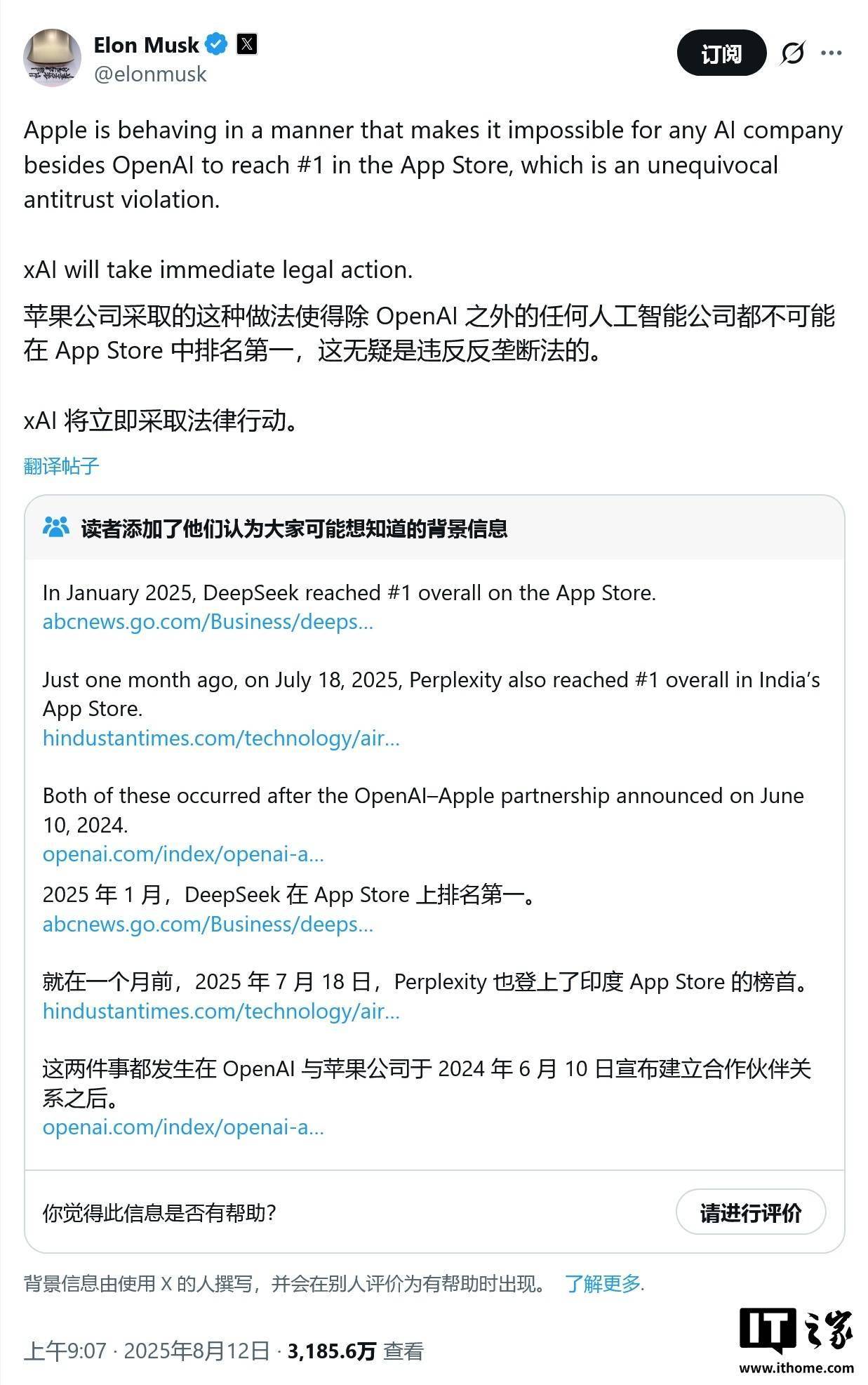
Core Viewpoint - The lawsuit filed by Elon Musk's xAI against Apple and OpenAI has significant implications beyond the ranking of the Grok app in the App Store, as it aims to address the transformation of the X platform into a "super app" [1][3]. Group 1: Legal Proceedings - The case dates back to August 2025, when Musk initiated the lawsuit due to Grok's failure to reach the top of the App Store rankings after an update, alleging collusion between Apple and OpenAI [1]. - xAI is seeking critical evidence from a South Korean entity through international judicial assistance, with the court approving xAI's request under the Hague Evidence Convention [3]. Group 2: Strategic Objectives - Musk's ultimate goal after acquiring Twitter (now X) is to create the first "super app" in the West, which faces challenges attributed to Apple's ecosystem restrictions [3]. - xAI has requested financial and strategic documents from Kakao and Ant Group regarding the distribution of "super apps" in the App Store, aiming to demonstrate how Apple's policies limit their functionality [3]. Group 3: Antitrust Claims - xAI accuses Apple and OpenAI of forming an exclusive agreement not only to promote ChatGPT but also to suppress the survival of potential super apps like X, thereby maintaining Apple's smartphone monopoly and pricing power [4]. - The lawsuit presents a unique antitrust argument that super apps could enable users to switch seamlessly between different smartphone brands, potentially undermining the hardware barriers of the iPhone [3].
马斯克采访时再提微信,感叹中国用户靠一个App搞定生活,西方十年都学不来
Sou Hu Cai Jing· 2025-12-06 04:26
Core Viewpoint - Elon Musk is striving to transform his X platform into a comprehensive application akin to China's WeChat, highlighting the cultural and regulatory challenges he faces in the Western market [1][4]. Group 1: Cultural and Psychological Barriers - The Western perception of social and financial services as separate domains creates a psychological barrier for users, making them resistant to integrating these functions on a single platform [4]. - A significant majority of Americans express distrust towards how tech companies handle personal data, with over 80% concerned about potential misuse of their information [4]. Group 2: Existing Financial Infrastructure - The entrenched credit card system in the West, which has developed over more than fifty years, provides a robust financial ecosystem that includes consumer protections and rewards, making it difficult for new payment methods to gain traction [5]. - The convenience of credit cards, combined with their extensive benefits, poses a challenge for mobile payment solutions to prove their superiority [7]. Group 3: Regulatory Challenges - Increasing regulatory scrutiny in the West, particularly through measures like the EU's Digital Markets Act (DMA), poses a significant risk for Musk's plans to bundle services on the X platform, as it could lead to antitrust issues [9]. - The regulatory environment emphasizes preventing market dominance and ecosystem bundling, contrasting sharply with the integrated model of WeChat [9]. Group 4: Comparative Ecosystem Analysis - WeChat's success stems from its ability to evolve in a less developed service environment, rapidly integrating social and financial services into a single platform [11]. - The fragmented nature of the Western digital ecosystem, where various industries operate independently, offers users more choices but results in a less cohesive experience [11]. - The complex network of over 6 million developers and 50 million creators within WeChat's ecosystem forms a strong competitive advantage that is difficult to replicate [13].
马斯克要做 “ 升级版微信 ”,网友炸了...
3 6 Ke· 2025-12-03 03:33
Core Viewpoint - Elon Musk aims to transform the platform X (formerly Twitter) into a "WeChat++" that integrates information sharing and financial payments, inspired by the success of WeChat in China [2][4][11]. Group 1: User Engagement and Market Potential - WeChat has over 1.3 billion global monthly active users as of 2025, showcasing its immense success and user engagement [1]. - The platform X currently has over 500 million global monthly active users, indicating a significant user base that could be leveraged for growth [11]. Group 2: Strategic Moves and Financial Aspects - Musk's acquisition of Twitter for $44 billion in 2022 and the subsequent merger with his AI startup xAI, which valued the combined entity at $80 billion, highlights a strategic financial maneuver [8][10]. - The platform has faced challenges with a single revenue model and stagnant growth, prompting Musk to explore various functionalities to enhance monetization [8][10]. Group 3: Competitive Landscape and User Sentiment - There is skepticism among users regarding Musk's ambitions, with comments reflecting doubts about whether the model will resonate with international users as it does in China [14][16]. - Users express a preference for multifunctional applications that combine messaging and payment capabilities, similar to WeChat's offerings [14].

马斯克要做 “ 升级版微信 ” !网友炸了...
Sou Hu Cai Jing· 2025-12-03 02:51
Core Viewpoint - Elon Musk plans to transform the platform X (formerly Twitter) into a "WeChat++" that integrates information dissemination and financial payments, aiming to replicate the success of WeChat outside of China [5][9][20]. Group 1: User Engagement and Market Potential - WeChat has over 1.3 billion global monthly active users projected for 2025, showcasing its significant market presence [1]. - The platform's usage during festive occasions, such as family group chats for red envelope exchanges, highlights its deep integration into daily life [3]. - X platform currently has over 500 million global monthly active users, indicating a substantial user base that could be leveraged for growth [16]. Group 2: Business Strategy and Financial Moves - Musk's acquisition of Twitter for $44 billion in 2022 and the subsequent merger with his AI startup xAI, valued at $330 billion, reflects a strategic move to enhance the platform's valuation to $80 billion [11][15]. - The focus on diversifying revenue streams through features like long-form content, payment capabilities, and AI integration demonstrates a proactive approach to addressing stagnation in growth [15]. Group 3: User Reception and Competitive Landscape - There are mixed sentiments among users regarding Musk's ambitions, with some expressing skepticism about the feasibility of replicating WeChat's success in the U.S. market [19][20]. - The competitive landscape suggests that while Musk's vision is ambitious, the acceptance and adaptability of local users will be critical for success [20].

马斯克又夸微信:“中国之外不存在这种国民级软件”。网友神吐槽:“几乎每个 APP 都有你说的功能,就问吊不吊吧”
程序员的那些事· 2025-12-03 02:48
Core Viewpoint - Elon Musk praised WeChat in a recent podcast, expressing his ambition to transform his platform X into a "WeChat upgrade" for markets outside China, aiming to create a global super app that integrates social, payment, and AI functionalities [2][3]. Group 1: Musk's Vision for X - Musk highlighted the practicality of WeChat, noting its all-in-one capabilities for messaging, information sharing, and transactions, which he believes are absent in overseas markets [2]. - The transformation of X is seen as a continuation of Musk's long-standing vision for a comprehensive platform, dating back to his early work with PayPal and the acquisition of Twitter [2]. - X has already partnered with Visa to develop a digital wallet and is reportedly planning to launch a physical debit card, mirroring WeChat's social and payment integration [2]. Group 2: Challenges in Replicating WeChat Overseas - The success of WeChat in China is attributed to the timing of the mobile internet boom and the establishment of user habits, which differ significantly from those in overseas markets [5]. - Users in Europe and the U.S. are accustomed to using separate apps for different functions, making the forced integration of services potentially unpopular [5]. - The payment landscape is already competitive with established players like credit cards and PayPal, posing significant challenges for X to enter this market [5]. - Regulatory hurdles regarding data privacy and antitrust laws in overseas markets could impede the consolidation of social and payment data on a single platform [5]. Group 3: Public Reaction - Following Musk's comments, public reactions varied, with some humorously noting that WeChat's perceived shortcomings are now seen as a model for international platforms [6]. - Others pointed out that the technological capabilities are not the issue, but rather the differing market conditions and user preferences [6]. - Some critiques highlighted that while tech giants admire the monetization model of WeChat, foreign users may not embrace such a platform [6].