
智能驾驶

Search documents
突破前期高点 上证综指创10年新高
Qi Huo Ri Bao Wang· 2026-01-06 17:45
国联期货股指分析师项麒睿认为,本轮上涨的核心驱动正从2025年下半年单一的流动性驱动,转向盈利 预期修复与流动性环境改善共同驱动。 "2025年12月我国制造业PMI超预期回升至扩张区间,表明经济回暖早于预期,这增强了盈利修复主线 的可信度。"项麒睿表示,随着宏观政策显效,工业品价格回暖有望推动PPI进入上行通道,为企业利润 改善奠定基础。同时,美元走弱、人民币汇率走强也提供了流动性支撑。这种双重驱动反映在市场风格 上,表现为大类资产普涨,而非去年小盘成长股单边领涨。 "当前指数的行业权重构成与一年前已明显不同,科技含量更高,板块结构性上涨正精准映射经济中的 结构性亮点。"银河期货金融衍生品分析师孙锋从市场主线的角度补充称,上个月中旬以来的行情主要 围绕"十五五"规划建议进行深度挖掘:从商业航天到人脑工程、无人驾驶,再到半导体设备、有色、金 融等板块,这轮上涨需要想象力,相关板块个股市值总体较小,因此涨速迅猛,带来了显著的赚钱效 应,并在年后吸引更多资金加速入市。 上证综指突破关键点位后,继续上行还是震荡调整? 2026年第二个交易日,A股延续强势。当日盘中,上证综指一举突破2025年11月14日的阶段高点4 ...
沪指13连阳,再创十年新高,春季行情值得期待
Sou Hu Cai Jing· 2026-01-06 17:37
Market Overview - The A-share market continues its "opening red" trend, with the Shanghai Composite Index reaching a ten-year high. All three major indices closed higher, with the Shanghai Composite Index gaining 1.5%, the Shenzhen Component Index up 1.4%, and the ChiNext Index increasing by 0.75% [1] - The trading volume in the Shanghai and Shenzhen markets reached 2.81 trillion yuan, an increase of 260.2 billion yuan compared to the previous trading day. The market saw over a hundred stocks hitting the daily limit for two consecutive days, with high interest in sectors such as intelligent driving, commercial aerospace, and brain-computer interfaces [1] Intelligent Driving Sector - The intelligent driving concept was active today, with the Intelligent Automobile ETF rising by 4.16%. The industry is expected to see breakthroughs due to technological advancements and the implementation of policies and regulations. The Ministry of Industry and Information Technology has conditionally approved L3 product applications from two car manufacturers, marking a new phase of commercialization for intelligent driving in China [2] - At the CES 2026 conference, NVIDIA's CEO announced new AI inference technology for intelligent driving and a partnership with Mercedes to produce autonomous vehicles. Companies like Qianli Zhijia and Geely also launched new assisted driving brands at CES, indicating significant advancements in the sector [2] Chemical Industry - The chemical industry is expected to see improvements in supply-demand dynamics as supply-side reforms deepen and carbon peak initiatives progress. The Shaanxi Development and Reform Commission has proposed increasing electricity prices for high-energy-consuming products, which could raise costs for industries like chlor-alkali and calcium carbide, potentially leading to the exit of high-cost facilities [3] - The current "14th Five-Year Plan" is crucial for advancing carbon peak goals, with measures being implemented to control energy consumption, including the elimination of preferential electricity prices for high-energy-consuming products and the phasing out of chemical facilities over 20 years old. Investors are advised to pay attention to opportunities in leading chemical ETFs [3] Gold Market - The rising tensions in South America are increasing global uncertainty, which may enhance the safe-haven appeal of gold in the short term. In the medium to long term, loose liquidity and de-dollarization are expected to support gold prices. The long-term investment value of gold is viewed positively, with recommendations for investors to consider gold fund ETFs during market pullbacks to lower costs [3] - Central banks remain significant buyers of gold, and despite substantial increases in holdings over the past three years, the amount held is still relatively low compared to historical geopolitical turning points. Surveys indicate a continued moderate increase in gold purchases by central banks [3]
资产配置日报:上证新高,TL新低-20260106
HUAXI Securities· 2026-01-06 15:37
Market Performance - The Shanghai Composite Index achieved a 1.5% increase, reaching 4084 points, marking a nearly ten-year high with a consecutive thirteen-day rise[1] - The Wande All A Index rose by 1.59%, with a total trading volume of 2.83 trillion yuan, an increase of 265 billion yuan compared to the previous day[1] - The Hang Seng Index increased by 1.38%, while the Hang Seng Technology Index rose by 1.46%[1] Capital Flows - Southbound capital inflow was 2.879 billion HKD, lower than the previous day's inflow of 18.72 billion HKD[1] - Major inflows were seen in China Ping An and Alibaba, with net inflows of 1.84 billion HKD and 1.62 billion HKD respectively, while China Mobile and Tencent saw outflows of 875 million HKD and 804 million HKD[1] Bond Market Trends - The bond market continued to show weakness, with the 30-year government bond futures falling by 0.31% to 110.93 yuan, a new low since 2025[1] - The yields on 7-year, 10-year, and 30-year government bonds rose by 2.4 basis points, 2.2 basis points, and 2.6 basis points to 1.76%, 1.88%, and 2.31% respectively[4] Investment Sentiment - The implied volatility increased, indicating a rising FOMO (Fear of Missing Out) sentiment in the market, although the CSI 300 ETF IV index remains at a relatively low level[2] - The market is characterized by a bullish atmosphere, with traditional sectors like finance, consumption, and real estate performing well, alongside strong performances in technology and battery storage sectors[2] Commodity Market Insights - Precious metals led the commodity market, with silver rising by 7.06% and gold increasing by 1.27%[6] - The copper market showed strong performance due to supply constraints and inventory optimization, with significant price increases expected[8]
“保费贵、承保亏”行业难题有解?广东探索智驾车险新政
Nan Fang Du Shi Bao· 2026-01-06 14:37
Core Insights - The Guangdong Financial Regulatory Bureau and nine other departments issued guidelines to support the high-quality development of the insurance industry, emphasizing insurance services for the manufacturing sector, particularly in the context of new energy vehicles (NEVs) and intelligent driving insurance products [1][8] Group 1: New Energy Vehicle Market Dynamics - Guangdong is a leader in the NEV industry, with an expected production accounting for 25% of the national total in 2024, equating to one in every four NEVs being produced in Guangdong [1] - NEV sales reached 14.78 million units in the first eleven months of 2025, marking a year-on-year increase of 31.2% [1][2] - Despite the growth in NEV sales, the insurance market faces a dilemma where vehicle owners find premiums high while insurers report losses, highlighting a mismatch between rapid industry growth and insurance coverage [1][2] Group 2: Insurance Challenges - The NEV insurance market is characterized by high premiums, high claim rates, and high payout rates, creating a "three highs" dilemma that remains unresolved [2][4] - A survey indicated that over 80% of respondents pay more than 3,000 yuan for NEV insurance, with 93% paying over 2,000 yuan [2] - The average premium for NEVs is approximately 20% higher than that of comparable gasoline vehicles, yet the industry faces an overall underwriting loss, with a comprehensive cost ratio exceeding 100% and losses reaching 5.7 billion yuan in 2024 [4][5] Group 3: Consumer Experience and Perception - Consumers report a lack of alignment between the insurance experience and the technological advancements of NEVs, with repair costs for minor damages being excessively high [3] - Many consumers express concerns about the potential liabilities and claims processes associated with intelligent driving features, leading to a decrease in confidence in purchasing and using NEVs [3] Group 4: Regulatory and Industry Response - The guidelines aim to address the issues of high premiums and insurance accessibility, promoting collaboration between insurers and automotive manufacturers to lower costs and improve service [6][8] - The exploration of intelligent driving liability insurance products is highlighted as a necessary innovation to address the emerging risks associated with "human-machine co-driving" scenarios [7] - The guidelines are seen as a catalyst for transforming the insurance industry from a reactive compensation model to a proactive risk management and ecosystem partnership throughout the vehicle lifecycle [7][8]


德赛西威:公司主要为销售汽车电子产品
Zheng Quan Ri Bao Wang· 2026-01-06 14:16
证券日报网讯1月6日,德赛西威(002920)在互动平台回答投资者提问时表示,目前公司主要为销售汽 车电子产品,另外,公司在稳固核心主业根基的同时,积极把握市场机遇,前瞻性布局具有战略意义的 新产品与新业务领域。依托在汽车电子领域沉淀的核心技术与体系化能力,以及智能驾驶域控产品、传 感器、算法等方向的发展积累,公司持续开展机器人领域探索与研究,并已正式发布机器人智能基座 AICube,相关战略合作处于保密阶段,后续如有可公布的进展可留意公司官方发布的信息。 ...
佑驾创新启动2亿港元回购计划:董事长刘国清连续两日增持,传递长期信心
IPO早知道· 2026-01-06 14:04
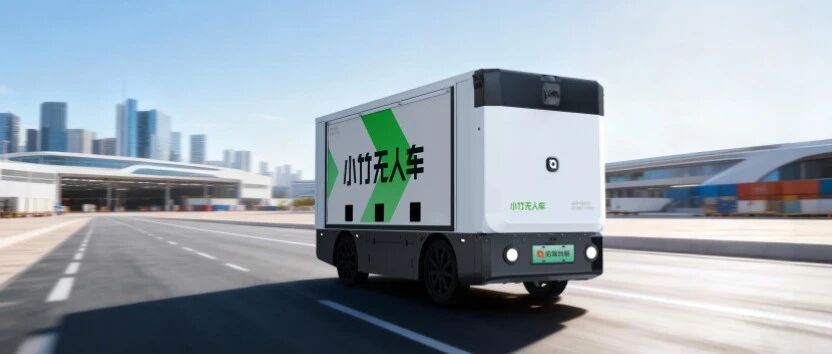
Core Viewpoint - The article highlights the recent actions of Youjia Innovation, including share buybacks and insider purchases, as signals of confidence in the company's future growth and valuation recovery [2][3][4]. Group 1: Company Actions - Youjia Innovation announced a share buyback plan not exceeding HKD 200 million, indicating confidence in its business outlook and financial health [3]. - The chairman, Liu Guoqing, purchased an additional 50,000 shares at an average price of HKD 13.94 per share, totaling 100,000 shares over two days, demonstrating commitment to the company's growth [3][4]. - Major shareholders voluntarily extended the lock-up period for their shares, reinforcing their confidence in the company's long-term value [4]. Group 2: Financial Performance - In the first half of 2025, Youjia Innovation reported revenue of CNY 346 million, a year-on-year increase of 46%, with gross profit rising 54.8% to CNY 52 million and a gross margin of 15% [6]. - The company has established a strong competitive position in the intelligent driving sector, successfully commercializing both L2 and L4 technologies [6][7]. Group 3: Market Position and Growth - Youjia Innovation has partnered with 42 vehicle manufacturers, including major brands like SAIC and Chery, and is expanding its international presence [7]. - The L4 business is entering a phase of scale, with expected revenues in the tens of millions for 2025, driven by various applications such as autonomous minibuses and logistics vehicles [7]. - The company is well-positioned to benefit from industry policy shifts towards L3 autonomous driving, enhancing its growth prospects in smart vehicle systems [8].
希荻微:公司主要聚焦智能座舱、车身控制、域控、智能驾驶等应用场景
Zheng Quan Ri Bao· 2026-01-06 12:13
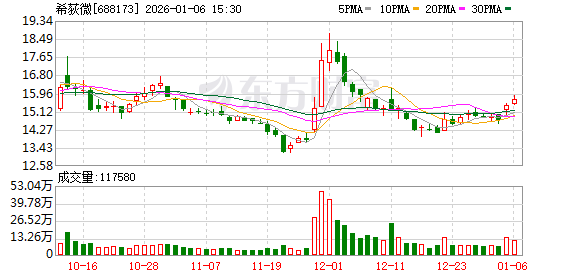
Core Viewpoint - The company is focusing on applications in smart cockpits, body control, domain control, and intelligent driving, aiming to provide automotive-grade products such as DC/DC converters, linear power supplies (LDO), smart high/low side switches, and camera PMICs [2] Group 1 - The company has been continuously expanding its customer base in the new energy vehicle sector since its listing [2]

和讯投顾孔晓云:盘面新高,能否继续延续?
Sou Hu Cai Jing· 2026-01-06 11:56
13连阳的市场我们该如何操作呢?和讯投顾孔晓云分析称,今天大盘量能再一次出现了大幅放大,收盘 更是站在最高点两个字,追高当然是不要的,因为我们早已做好埋伏。 今天的盘面已经超越昨天的趋势了,板块之间轮动上涨,资金方面雨露均沾,盘面良好发展,但一直这 样下去也不可能的,所以从指数层面会有阴线出现,但阴线实体不会很大,因为资金还在进行下一步的 抢筹,主线方向出现回落,考虑做加法即可。板块方面,人脑工程、商业航天、智能驾驶、机器人等今 天继续走强,市场最近一直在围绕着老马的言论进行炒作,从市场情绪面看,短期没有结束的迹象可以 继续格局,记住只低吸不追高,但短期冲高后期还是会回调,回落也是下一个阶段的机会。 有色金属板块今天强势崛起,消息面上有地缘冲突,再起引发了晚间黄金白银等有色期货大涨。总的原 则就是证券扛下棋情绪回归,盘面健康,继续躺平不动。 ...
十年新高!积极加仓?
第一财经· 2026-01-06 11:34
2026.01. 06 ▲ 1.50% ▲1.40% ▲0.75% A股三大指数延续开年强势,市场呈现"普涨、放量、风格均衡"特征。受益于保险、证券等 大金融板块大涨,上证指数再刷新逾十年新高,录得13连阳,深证成指受益于科技与消费板 块联动,涨幅紧随其后,创业板指因成长股稳定贡献,保持温和上涨态势。 4101 家上涨 1 21 8家下跌 涨跌停比 44:2 市场呈现"科技领涨、多点开花"鲜明格局。脑 机接口概念爆发,掀起涨停潮,半导体、智能驾 驶、商业航天等同样表现活跃,券商、保险、有 色金属、化工涨幅靠前。美容护理、元件、家居 用品有所调整。 两市成交额 万亿元 ▲9.3% 两市成交额持续放量,创阶段性新高。是政策 利好、资金面宽松、板块轮动及市场情绪共振 的综合结果。科技、金融、周期、消费等板块均 能获得资金关注,显示市场风格从"单一赛道" 向"均衡配置"转变。 资金情绪 主力资金净流出 . 5 0亿元 55.22% 上 证 指 数 4083.67 a see a see a money and the see a many of the season and the many of 天你冲了还是撤了 ...

指数狂欢下的题材暗战!
Jin Rong Jie· 2026-01-06 11:33
个人观点仅供参考,文章中任何内容均不对您构成任何投资建议,据此操作,风险自担。 股市有风险,投资需谨慎。 资讯所属栏目还有更多独家策划、专家专栏,免费查阅>> 大盘这边,正如昨晚所说,你先不用去管什么时候调整,因为每次调整都是倒车接人的机会,这就是你 持股的底气,而且这里表现的越强,等调整时踏空资金介入的才更加坚决,当然类似于这两天这种放量 拉升也不可能每天上演,所以明后天可能会逐步显露出一些分歧特征,不过还是那句话,分歧就是倒车 接人的机会,即便有调整幅度也不会太大,等大盘真要调整的时候,我们也会及时提醒大家的。 来自深圳市新兰德证券投资咨询有限公司【马爱华】【执业编号:A0780623080001】 大盘13连阳,做不对题材都白搭,明天又有哪些题材值得关注?咱们先看图中所示,首当其冲仍是咱们 一直提示的商业航天,别看昨天强度不如脑机,我们的建议很简单,分歧就是低吸的良机,不过商业航 天运行至今内部分化开始加大,此时关注的方向有两块, 一块是高位核心辨识度的高抛低吸,另一块 是低位新出的补涨,中位股的风险可能会逐步加大。 至于脑机接口,别看今天强度仍排第一,但是很明显涨停的全是二板,首板居然是0,正如昨晚所 ...