
L3级自动驾驶车型

Search documents
买车用车能否更轻松?
Xin Lang Cai Jing· 2026-02-24 18:20
Core Viewpoint - The article discusses the ongoing policy changes in China's automotive sector aimed at stimulating consumer demand and facilitating the growth of the industry through the removal of unreasonable restrictions on vehicle purchases and transactions [4][10]. Group 1: Policy Changes - The Chinese government is implementing a series of measures to eliminate "invisible barriers" that hinder consumer spending in the automotive sector, focusing on the entire lifecycle of vehicles, including purchase, use, and exchange [6]. - The "Special Action Plan to Boost Consumption" aims to shift from purchase management to usage management, with specific measures such as issuing additional new energy vehicle purchase quotas for carless families in major cities like Beijing and Guangdong [6][10]. - The second-hand car market is undergoing significant reforms, with the removal of migration restrictions for small non-operational vehicles meeting the National V standard, promoting easier transactions and cross-regional operations [6][7]. Group 2: Market Dynamics - The second-hand car market is projected to exceed 20 million transactions in 2025, marking a historical high, driven by the easing of restrictions and improved transaction processes [11]. - The automotive industry in China achieved production and sales of 34.53 million and 34.40 million vehicles in 2025, respectively, reflecting year-on-year growth of 10.4% and 9.4%, maintaining its position as the world's largest automotive market for 17 consecutive years [11]. - The simplification of second-hand car transaction processes has significantly reduced transaction costs and improved efficiency, benefiting both consumers and businesses, particularly small and medium-sized enterprises [11]. Group 3: Consumer Experience and Market Expansion - The automotive sector is evolving from merely a transportation tool to a lifestyle choice, with opportunities in the automotive modification market and new consumption scenarios such as car events and self-driving tourism [8][10]. - The government is promoting the development of smart connected vehicles, with policies facilitating testing and demonstration on various road types, indicating a shift towards mass production and application of autonomous driving technologies [9][12]. - The article highlights the need for improved data sharing and transparency in the second-hand car market to address information asymmetry, which is crucial for enhancing consumer trust and transaction efficiency [13]. Group 4: Future Challenges and Opportunities - Despite the positive developments, the automotive consumption chain still faces deep-rooted challenges, including fragmented information on vehicle history and a lack of standardized inspection systems [13]. - The article suggests that expanding automotive services, such as rentals and modifications, can create a comprehensive consumption ecosystem that enhances consumer experiences and drives industry growth [14].

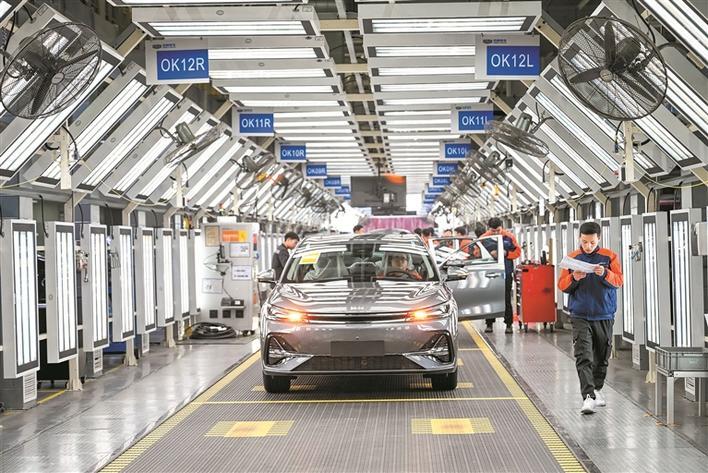
新华视点丨汽车消费“隐形门槛”逐步破除,老百姓买车用车能否更轻松?
Xin Hua Wang· 2026-02-04 08:40
Core Viewpoint - The article discusses the ongoing policy relaxation in the automotive sector aimed at enhancing consumer demand and facilitating industry growth by removing unreasonable restrictions on vehicle purchase, use, and exchange [1][4][5]. Group 1: Policy Changes - The "14th Five-Year Plan" suggests improving consumption promotion mechanisms and eliminating unreasonable restrictions in sectors like automotive and housing [1]. - Policies are being implemented to shift from purchase management to usage management for vehicles, with cities like Beijing and Guangdong taking steps to increase vehicle purchase quotas for families without cars [5]. - The second-hand car market is undergoing significant reforms, with the removal of migration restrictions for certain vehicles, enhancing the ease of transactions across regions [5][11]. Group 2: Market Dynamics - In 2025, China's automotive production and sales reached 34.53 million and 34.40 million units, respectively, marking a year-on-year increase of 10.4% and 9.4%, maintaining its position as the world's largest automotive market [10]. - The second-hand car market transaction volume surpassed 20 million units in 2025, achieving a historical high [10]. - The relaxation of restrictions is expected to broaden consumer choices and reduce costs, thereby enhancing market efficiency and stimulating growth, particularly for small and medium enterprises [10][11]. Group 3: Future Opportunities - The automotive sector is evolving into a platform for various lifestyle services, with significant potential in the aftermarket, including modifications and rentals [6][14]. - The government is promoting the development of new consumption scenarios related to automotive experiences, such as events and camping, to stimulate further growth [6][14]. - The industry is also focusing on the integration of smart and connected vehicles, with policies being relaxed to accelerate their testing and commercialization [7][8][11]. Group 4: Challenges Ahead - Despite progress, the automotive consumption chain still faces deep-rooted challenges, particularly in the second-hand market, where information asymmetry remains a significant barrier [13]. - Recommendations include enhancing data sharing for vehicle assessments and establishing clearer regulations to ensure transparency in transactions [13][14]. - The automotive finance sector is currently limited, particularly for second-hand vehicles, which complicates transactions; expanding financing options could alleviate these issues [13][14].

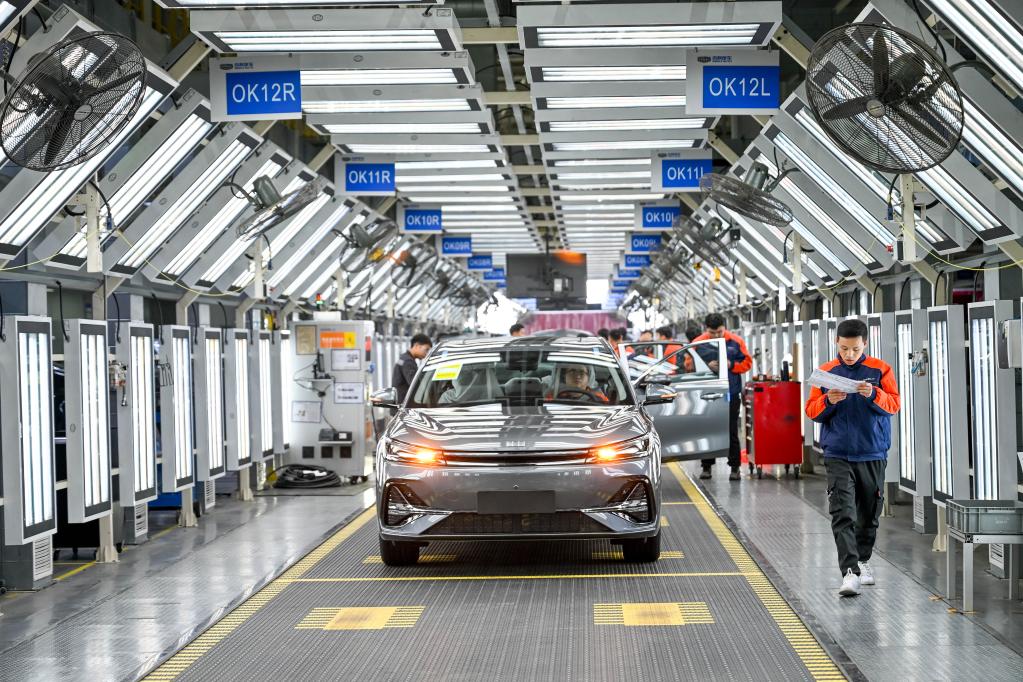
汽车智能化月报系列三十一:工信部许可两款L3级自动驾驶车型产品,希迪智驾、图达通港交所上市【国信汽车】
车中旭霞· 2026-01-18 13:43
Core Insights - The article discusses the latest developments in the automotive intelligence sector, highlighting advancements in L3 autonomous driving technology and the increasing penetration rates of various intelligent features in vehicles. Group 1: L3 Autonomous Driving Developments - The Ministry of Industry and Information Technology has approved two L3 autonomous driving vehicle models, marking a significant step towards commercial application in China [10]. - Tesla's Full Self-Driving (FSD) technology is expected to receive full approval in China by early 2026, indicating progress in regulatory acceptance [11]. - Xiaopeng Motors has obtained a road testing license for L3 autonomous driving in Guangzhou, furthering its testing capabilities [12]. Group 2: Market Penetration Rates - As of October 2025, the penetration rate of passenger vehicles with L2 and above features reached 33%, a year-on-year increase of 19 percentage points [8]. - The penetration rates for advanced driver-assistance systems (ADAS) such as highway NOA and urban NOA are 33.8% and 16.2%, respectively, with year-on-year increases of 21 and 8 percentage points [8]. - The penetration of 800 million pixel cameras in passenger vehicles has reached 49.7%, up 31% year-on-year [6]. Group 3: Industry Collaborations and Innovations - WeRide's Robotaxi service has successfully launched in over 10 cities globally, demonstrating the commercial viability of autonomous driving technology [13]. - Hiydi Zhijia has become the first company focused on commercial vehicle intelligent driving to be listed on the Hong Kong Stock Exchange, raising approximately 1.422 billion HKD [15]. - RoboSense has secured a contract with Dongfeng Nissan for nearly one million units of digital lidar products, set to begin mass production in 2026 [17]. Group 4: Sensor and Technology Advancements - The penetration rate of laser radar in passenger vehicles has reached 14.3%, with a year-on-year increase of 7.9 percentage points [6]. - The market share of NVIDIA chips in passenger vehicle driving domain controllers has increased to 58%, reflecting a 22.2% year-on-year growth [6]. - The cumulative shipment of Huayang Group's HUD products has surpassed 3.5 million units, solidifying its position as a leading supplier in the global market [16].



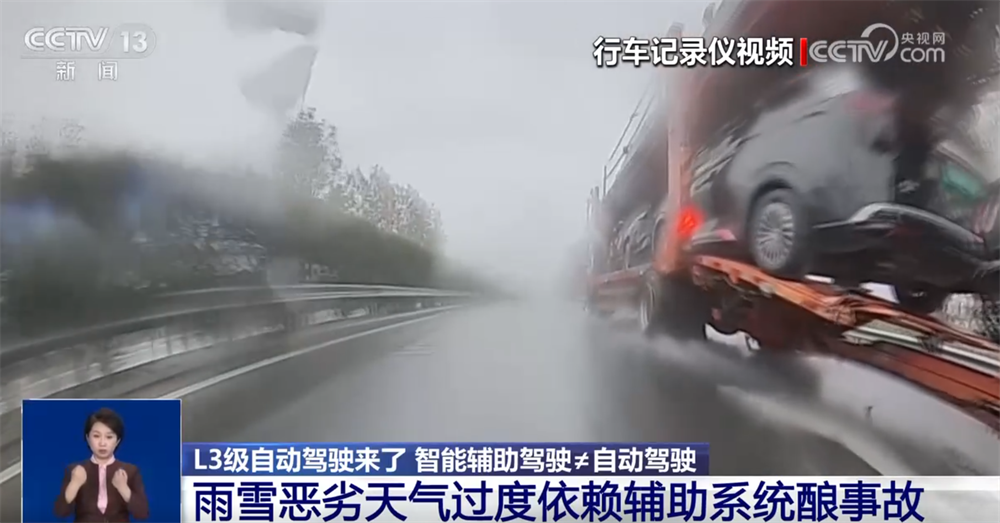
智能辅助驾驶≠自动驾驶!L3级自动驾驶试点运营 有何“升级”?
Yang Shi Wang· 2026-01-12 11:43
Group 1 - The increasing reliance on driver assistance systems can lead to dangerous situations, as evidenced by recent accidents where drivers fell asleep while using these systems [1][3] - Current vehicles on the market primarily feature Level 2 automation, which requires drivers to remain engaged and ready to take control at any moment [7][9] - The introduction of Level 3 automated driving vehicles is underway, with pilot programs allowing for limited autonomous operation in specific areas, but these vehicles still require a safety operator present [11][17] Group 2 - The responsibility for safe driving ultimately lies with the driver, who must continuously monitor the road and be prepared to intervene when using driver assistance features [9][11] - The complexity of accident liability increases with Level 3 automation, as multiple parties, including drivers and manufacturers, may share responsibility in the event of a collision [18] - Pilot programs for Level 3 vehicles are currently limited to specific use cases and do not yet allow for general consumer access, although future ride-hailing services may provide opportunities for consumers to experience this technology [15][17]
沐光前行 次第绽放
Zhong Guo Qi Che Bao Wang· 2026-01-07 02:28
Group 1 - The core viewpoint emphasizes that China's automotive industry is transitioning into a new phase characterized by innovation and resilience, maintaining its global leadership in the new energy and intelligent connected vehicle sectors [2][3] - The industry is experiencing a transformation that involves a return to fundamentals and a redefinition of its approach, focusing on wisdom and adaptability in the face of changing circumstances [3] - The introduction of L3-level autonomous driving vehicles and the implementation of stringent regulations on battery standards signify a shift towards a more regulated and responsible innovation environment in the automotive sector [4] Group 2 - The combination of rapid development and strong regulation is seen as a necessary approach for the evolution of China's automotive industry, ensuring that innovation does not compromise safety and standards [4] - A new consensus is emerging within the industry, promoting a balanced and orderly new order amidst global uncertainties, highlighting the importance of collaboration and shared growth [4] - The automotive sector is poised for significant breakthroughs, driven by a commitment to continuous improvement and a collective effort to navigate challenges and seize opportunities [2][4]

汽车智能化月报系列(三十一):工信部许可两款L3级自动驾驶车型产品,希迪智驾、图达通港交所上市-20251231
Guoxin Securities· 2025-12-31 14:05
Investment Rating - The report maintains an "Outperform" rating for the automotive intelligence industry [5][6]. Core Insights - The Ministry of Industry and Information Technology has approved two L3 autonomous driving vehicle models, marking a significant step towards commercial application in China [15]. - Tesla's Full Self-Driving (FSD) technology is expected to receive full approval in China by early 2026 [16]. - XPeng Motors has obtained a road testing license for L3 autonomous driving in Guangzhou, indicating progress in the sector [18]. - WeRide's Robotaxi service has successfully launched in over 10 cities globally, showcasing the commercial viability of autonomous driving technology [20]. - Xidi Intelligent Driving has officially listed on the Hong Kong Stock Exchange, becoming the first public company focused on commercial vehicle intelligent driving [22]. Summary by Sections Industry News - The report highlights significant developments in the L3 autonomous driving sector, including approvals and testing licenses for various companies [15][18][19]. - The report notes the increasing penetration of high-resolution cameras and advanced chips in passenger vehicles, with 800 million pixel cameras reaching a penetration rate of 49.7% by October 2025, up 31% year-on-year [2]. - The market for lidar technology is also expanding, with a penetration rate of 14.3% for passenger vehicles by October 2025, reflecting a 7.9% increase year-on-year [2]. Intelligent Driving - The penetration rate of passenger vehicles equipped with L2 and above functions reached 33% by October 2025, a 19% increase year-on-year [3]. - The report emphasizes the growth in sensor technology, with front-view cameras and radar systems seeing significant adoption [3]. Investment Recommendations - The report recommends investing in companies such as XPeng Motors, Leap Motor, and Geely for complete vehicles, while suggesting L4 companies like Pony.ai and WeRide for autonomous driving technology [3]. - For components, it recommends companies like SUTENG, Hesai Technology, and Horizon Robotics for data acquisition, transmission, processing, and application [3].
汽车智能化月报系列(三十一):信部许可两款L3级自动驾驶车型产品,希迪智驾、图达通港交所上市-20251231
Guoxin Securities· 2025-12-31 13:09
Investment Rating - The report maintains an "Outperform" rating for the automotive intelligence industry [5][6]. Core Insights - The automotive intelligence sector is witnessing significant advancements, particularly in L3 autonomous driving technology, with multiple companies receiving regulatory approvals for their products [15][19]. - The penetration rates for advanced driver-assistance systems (ADAS) and various sensor technologies are on the rise, indicating a growing market for intelligent vehicles [3][2]. - Key companies in the sector, such as Xpeng Motors, Horizon Robotics, and WeRide, are highlighted for their potential growth and investment opportunities [5][3]. Summary by Sections Industry News - The Ministry of Industry and Information Technology has approved two L3 autonomous driving vehicle models, marking a significant step towards commercialization [15]. - Xpeng Motors has obtained a road testing license for L3 autonomous driving in Guangzhou, while BYD has completed extensive road validation for L3 technology [18][17]. - WeRide's Robotaxi service has expanded to over 10 cities globally, showcasing the commercial viability of autonomous driving technology [20]. High-Frequency Core Data Updates - By October 2025, the penetration rate of 800 million pixel cameras in passenger vehicles is expected to reach 49.7%, a year-on-year increase of 31% [2]. - The market share of lidar technology in passenger vehicles is projected to rise to 14.3%, with significant contributions from companies like Huawei and Hesai Technology [2]. - The penetration rate of L2 and above intelligent driving functions in passenger vehicles has increased to 33%, reflecting a 19% year-on-year growth [3]. Investment Recommendations - Recommended companies for investment include Xpeng Motors, Leap Motor, and Geely for complete vehicles, while WeRide and Horizon Robotics are suggested for L4 technology [3]. - For components, companies like SUTENG and Hesai Technology are recommended for data acquisition, while Horizon Robotics and Black Sesame Intelligence are highlighted for data processing [3].


2025中国汽车行业十大年度热点 | 精进2025——汽车行业10个十大年度盘点
Jing Ji Guan Cha Wang· 2025-12-31 07:20
Core Insights - The automotive industry in China has made significant progress in 2025, with a focus on stability and quality improvement, driven by a series of proactive policies and a shift towards value and innovation in competition [2][3] Group 1: Industry Performance - New energy vehicle (NEV) production and sales are expected to exceed 15 million units in 2025, with domestic sales accounting for over 50% of total automotive sales [3][4] - The total automotive production and sales reached approximately 31.2 million units in 2025, with NEVs making up 50.3% of domestic sales [3] - Automotive exports are projected to reach a record 7 million units in 2025, with NEV exports doubling year-on-year [5][7] Group 2: Regulatory Environment - The Chinese government has implemented unprecedented measures to address "involution" in the automotive industry, including new regulations and guidelines to maintain fair competition [8][9] - A comprehensive "Stability Growth Work Plan" was introduced to support the automotive industry, aiming for a 3% increase in total automotive sales and a 20% increase in NEV sales in 2025 [10][11] Group 3: Corporate Developments - The establishment of China Changan Automobile Group marks the formation of a new structure in the state-owned automotive sector, alongside other major state-owned enterprises [12][13] - Numerous automotive companies have listed or applied for listing on the Hong Kong Stock Exchange, reflecting the industry's robust growth and the need for strategic investment [20][21] Group 4: Technological Advancements - The release of two major technical roadmaps for intelligent connected vehicles and energy-saving NEVs outlines the development goals and timelines for the next 5 to 15 years [14][15][16] - The first L3-level autonomous driving vehicles have received approval for road use, marking a significant milestone in the commercialization of autonomous driving technology [17][18] Group 5: Market Expansion - The implementation of export licensing for pure electric passenger vehicles is expected to promote healthy development in NEV trade and enhance regulatory oversight [19] - The automotive industry is positioned as a key driver of the new technological revolution and industrial transformation, contributing significantly to the national economy [22][23]





稳中求进每月看|决胜收官奋力冲刺——12月全国各地经济社会发展观察
Xin Hua She· 2025-12-31 03:00
Core Viewpoint - China's economy is showing steady progress with high-quality development, driven by increased openness, vibrant winter consumption, and accelerated industrial upgrades [9][16][22]. Group 1: External Opening - China's external opening is advancing to a new level, with significant achievements in container throughput and international freight transport, including a record-breaking 40 million standard containers and over 5,000 trips of the China-Europe Railway Express [11][12]. - The recent policies allow upstream and downstream enterprises to share benefits, enhancing cooperation and boosting economic dynamism [14]. Group 2: Winter Consumption - The winter tourism sector is thriving, with various activities in regions like Harbin and Yunnan attracting significant visitor numbers, showcasing a shift towards a composite tourism model that integrates sports, events, and cultural experiences [20][21]. - The demand for winter tourism is increasing, with rising occupancy rates in accommodations and a surge in orders for scenic spots and travel services [21]. Group 3: Industrial Development - Technological innovations are driving industrial upgrades, with significant investments in projects like a 1.519 billion yuan independent energy storage station in Gansu, which utilizes advanced lithium iron phosphate battery systems [25]. - Various regions are accelerating their technological advancements, including the testing of drone delivery systems and the establishment of quantum computing labs, aiming to enhance productivity and competitiveness [25]. Group 4: Ensuring Warmth - In response to severe winter conditions, the government and energy companies are implementing measures to ensure heating and energy supply, including a 4.44 billion yuan fund for winter assistance in affected areas [34]. - Local authorities are proactively preparing for winter challenges, ensuring that energy supply and infrastructure are adequately maintained to support residents during cold weather [34].
招商银行旗下AIC出资5亿元参与深蓝汽车增资扩股
Zheng Quan Ri Bao Wang· 2025-12-29 13:29
Core Viewpoint - The direct equity investment by the financial asset investment companies (AIC) of joint-stock banks has made substantial progress, exemplified by the investment of China Merchants Bank's subsidiary in Deep Blue Automotive, indicating a trend of deep integration between financial capital and the real economy [1][2]. Group 1: Investment Details - China Merchants Bank's AIC, established in July 2023, has made its first direct investment in a new energy project by investing 500 million yuan in Deep Blue Automotive, marking a significant operational efficiency in equity investment [2][3]. - The total fundraising for Deep Blue Automotive's capital increase amounts to 6.122 billion yuan, with China Merchants Bank contributing 500 million yuan and Chongqing Yufu Holding Group contributing 2.5 billion yuan, maintaining the shareholding structure post-investment [2]. Group 2: Strategic Implications - The investment aligns with national policies supporting the new energy vehicle industry, aiming to enhance R&D capabilities and innovate core technologies in smart and electric vehicles [4]. - The focus on the new energy vehicle sector is strategic, as the market is experiencing high growth, and Deep Blue Automotive holds a leading position in autonomous driving technology [4]. Group 3: Market Dynamics - The entry of three new AICs from joint-stock banks is expected to inject more "patient capital" into the technology innovation sector, altering the competitive landscape of the AIC market [5]. - Future competitive capabilities for AICs will hinge on industry expertise, risk management, collaborative integration, and long-term value cultivation through post-investment management [6].
