
大数据

Search documents
中凌(江西)电力有限公司成立,注册资本500万人民币
Sou Hu Cai Jing· 2025-12-31 16:51
Group 1 - The establishment of Zhongling (Jiangxi) Electric Power Co., Ltd. has been officially registered with a capital of 5 million RMB, fully owned by Zhongling Rongxin (Hainan) Holding Group Co., Ltd. [1] - The legal representative of the new company is Zhang Haitao, and it is located in Yiyang County, Shangrao City, Jiangxi Province [1][2]. - The company's business scope includes heating services, hydropower generation, electricity generation and transmission, energy storage technology services, and various sales related to photovoltaic equipment and electric vehicle charging infrastructure [2]. Group 2 - Zhongling (Jiangxi) Electric Power Co., Ltd. is classified under the national standard industry of electricity, heat, gas, and water production and supply [2]. - The company is structured as a limited liability company with no fixed term of operation, registered until December 31, 2025, with the possibility of extension [2]. - The registration authority for the company is the Yiyang County Market Supervision Administration [2].
数据与智能共舞:中国能源变革的全球探索之路
Sou Hu Cai Jing· 2025-12-31 16:10
Group 1 - The core viewpoint of the articles emphasizes the transformation of the energy industry in China through the integration of big data and artificial intelligence (AI), showcasing how these technologies enhance operational efficiency and decision-making processes [1][2][3][4]. Group 2 - The energy transition is driven by dual challenges: reliance on fossil fuels leading to environmental issues and the inherent instability of renewable energy sources, which necessitates efficient energy system management [2]. - AI technologies provide critical support in addressing these challenges by enabling the analysis of vast amounts of data generated across the energy production, transmission, and consumption chain [2][3]. Group 3 - AI algorithms enhance the ability to predict energy output from renewable sources, allowing for proactive management of energy systems, especially during extreme weather events [3][5]. - The integration of AI in smart grids has led to significant improvements in operational efficiency, such as a 96.5% accuracy rate in solar power forecasting during typhoon conditions, which is a 2% increase over traditional methods [5]. Group 4 - The application of AI in energy management spans various sectors, including smart grid operations, renewable energy maintenance, and traditional energy production, demonstrating a broad adoption of AI technologies [4][11]. - In the renewable energy sector, AI has been utilized throughout the entire lifecycle of energy projects, improving efficiency and economic viability [8][9]. Group 5 - Traditional energy sectors, such as oil and gas, are also experiencing digital transformation through AI, which enhances exploration efficiency and reduces costs significantly [11][12]. - The development of "digital employees" in the energy sector is emerging as a new productivity force, automating repetitive tasks and improving operational efficiency [13]. Group 6 - Despite advancements, the energy sector faces challenges such as the need for reliable AI technology, data sharing issues, and a shortage of skilled professionals [14][16]. - The government and industry must collaborate to create a supportive ecosystem for AI integration in energy, focusing on data standards, technology development, and talent cultivation [18][21]. Group 7 - China's efforts in integrating AI with energy management not only support its domestic energy transition but also offer valuable insights and models for global energy transformation [22][23].


明确“主动风控”转型方向,夯实行业高质量发展基石
CDBS· 2025-12-31 11:22
Investment Rating - The report indicates a strong investment rating for the securities industry, suggesting a relative increase of over 10% compared to the CSI 300 index [18]. Core Insights - The meeting held by the China Securities Association on December 30, 2025, focused on "risk prevention, strong regulation, and promoting high-quality development," aiming to clarify the direction of risk management for the securities industry during the 14th Five-Year Plan [7][11]. - A proactive risk management model is being established, transitioning from traditional compliance-based controls to a forward-looking, embedded approach throughout business processes [8]. - The report emphasizes the importance of a comprehensive risk management framework that includes "full coverage and penetrating" self-regulatory rules, particularly for complex businesses like cross-border and derivative transactions [8][9]. - The integration of technology, such as artificial intelligence and big data, is highlighted as a means to enhance risk warning and response capabilities [9][10]. - The establishment of a collaborative risk management ecosystem is proposed, which includes regular communication platforms and industry training to promote information sharing and mutual learning [10]. Summary by Sections 1. Meeting Main Content - The meeting outlined a clear action framework for the next phase of risk management in the securities industry, focusing on proactive risk control and the development of a comprehensive self-regulatory rule system [8]. - The emphasis is on refining existing regulations to enhance their forward-looking and preventive nature, particularly in monitoring complex business areas [8]. 2. Impact on Capital Markets - The proactive risk management approach is expected to significantly enhance market stability and predictability, preventing individual risks from escalating into systemic risks [11]. - A robust risk management system is essential for securities firms to effectively perform their financing intermediary functions, aligning with recent reforms in evaluating investment banking quality [11][12]. - The initiative aims to improve the international reputation and attractiveness of China's capital markets by establishing a comprehensive risk management system that aligns with international standards [12]. 3. Impact on the Securities Industry - Comprehensive risk management capabilities are transitioning from being a cost center to becoming a core competitive advantage, directly influencing business qualifications and capital efficiency [13]. - The focus on technology in risk management is expected to drive increased investment in financial technology, creating differentiated competitive advantages for firms that effectively integrate technology into their risk management processes [14]. - The industry is anticipated to shift from a growth model based on scale expansion to one driven by quality and functionality, emphasizing capital-saving and service-oriented business models [14].
托普云农(301556) - 301556托普云农投资者关系管理信息20251231
2025-12-31 09:50
Group 1: Company Overview - Zhejiang Topcloud Agricultural Technology Co., Ltd. was established in 2008 and focuses on smart agriculture, recognized as a national-level "specialized and innovative" small giant enterprise [2]. - The company utilizes IoT, AI, big data, and algorithms to provide comprehensive solutions for data collection, analysis, decision-making, and management in agriculture [2]. Group 2: Product and Service Offerings - The company's offerings are divided into two main categories: smart agriculture projects and smart hardware devices [2]. - Smart agriculture projects include IoT and information software platforms, while smart hardware encompasses various intelligent equipment and sensors for monitoring and control [2][3]. Group 3: Market Position and Competition - China's smart agriculture market is still in its early growth stage, with significant potential for expansion due to supportive policies and increasing financial investments [3]. - The competitive landscape is fragmented, but the company stands out by providing integrated hardware and software solutions, which are relatively rare in the industry [3]. Group 4: Future Development Strategy - The company plans to integrate AI capabilities into its products and solutions, focusing on three core systems: a perception monitoring system, a decision-making system based on algorithms, and an execution system centered on smart agricultural machinery [4]. - The strategy aims to enhance agricultural digitization and intelligence, contributing to rural modernization [4]. Group 5: AI and Robotics Integration - The company has developed intelligent instruments for plant phenotyping and breeding management, improving efficiency and quality in seed production [5]. - Products like the "Crop Guardian" AR glasses and the "Field Scout" robotic dog utilize AI and IoT technologies for various agricultural applications, enhancing precision and efficiency [5][6]. Group 6: Notable AI Applications - The company has successfully implemented AI in pest control, achieving over 90% accuracy in pest identification through a comprehensive monitoring system [6]. - The intelligent pest monitoring lamp has won first place in national competitions for three consecutive years, showcasing the company's leadership in agricultural data innovation [6].
大名城涨2.20%,成交额9241.53万元,主力资金净流入131.10万元
Xin Lang Cai Jing· 2025-12-31 06:49
Group 1 - The core viewpoint of the news is that Daming City has shown fluctuations in stock performance, with a recent increase of 2.20% and a year-to-date increase of 15.11% despite a recent decline in the last five trading days [1] - As of December 31, Daming City reported a stock price of 4.19 yuan per share, with a total market capitalization of 9.742 billion yuan and a trading volume of 92.4153 million yuan [1] - The company has experienced significant net inflows of capital, with a net inflow of 1.311 million yuan from main funds and notable buying activity from large orders [1] Group 2 - Daming City operates primarily in real estate development and management, with 99.38% of its revenue coming from property development and sales [1] - As of September 30, the company reported a total revenue of 1.938 billion yuan for the first nine months of 2025, a year-on-year decrease of 49.15%, while the net profit attributable to shareholders increased by 10.66% to 258 million yuan [2] - The company has distributed a total of 763 million yuan in dividends since its A-share listing, with 69.7485 million yuan distributed in the last three years [3]

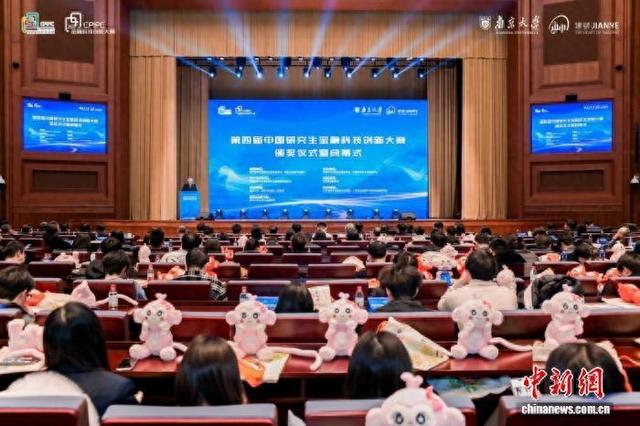
第四届中国研究生金融科技创新大赛在南京收官
Xin Lang Cai Jing· 2025-12-31 06:33
Group 1 - The fourth China Graduate Financial Technology Innovation Competition recently concluded in Nanjing, with 112 teams competing in the national finals, leading to the selection of champions and other awards [1][4] - The competition attracted 1,377 teams and 8,089 participants from 226 universities and research institutions, showcasing its strong brand influence and social recognition [2] - The competition introduced an innovative "problem-solving" main track, where 10 financial institutions presented 15 real business scenario challenges, significantly enhancing student engagement and collaboration across disciplines [3] Group 2 - The event aligns with regional development strategies, with Nanjing's Jianye District serving as a key financial center, providing a broad practical scene for the competition [3] - The competition has evolved into a distinctive brand event in China's graduate innovation practice competitions, serving as a benchmark for financial technology in universities [4] - Tsinghua University's Wudaokou School of Finance will continue to enhance the talent cultivation function of the competition, exploring integrated development paths in education, technology, and talent in the financial sector [5]
最高补贴1500元,品类、范围和标准明确!2026年这些家电享受补贴
Xin Lang Cai Jing· 2025-12-31 05:19
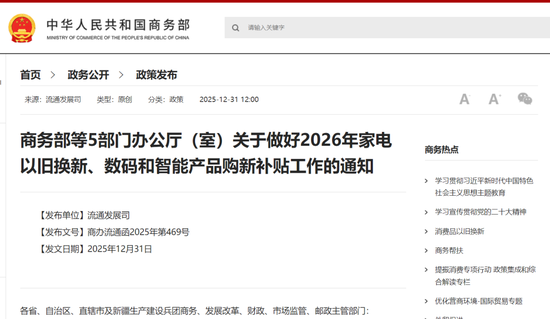
Core Viewpoint - The Ministry of Commerce and other departments have issued a notice regarding the implementation of a subsidy program for the replacement of old home appliances and the purchase of new digital and smart products starting January 1, 2026, aimed at boosting consumer spending and supporting retail development. Group 1: Subsidy Categories and Standards - The subsidy will apply to six categories of home appliances (refrigerators, washing machines, televisions, air conditioners, water heaters, and computers) that meet energy efficiency or water efficiency standards, as well as four categories of digital and smart products (mobile phones, tablets, smartwatches, and smart glasses) with a single sales price not exceeding 6,000 yuan. The subsidy will be 15% of the final sales price after discounts, with a maximum of 1,500 yuan for home appliances and 500 yuan for digital products per item [2][15]. Group 2: Support for Retail Development - Local authorities are encouraged to implement the subsidy program effectively by leveraging both online and offline sales channels, enhancing the potential of physical retail stores, and creating diverse consumer experiences to stimulate local consumption [16]. Group 3: Rural Consumer Access - Measures will be taken to ensure that rural residents, especially those in remote areas, can access the subsidy program. This includes increasing offline retail presence in rural areas and encouraging online platforms to cater to rural consumers [3][17]. Group 4: Policy Implementation Optimization - Local governments must regularly update and adjust the list of participating businesses, ensuring compliance with regulations. Businesses found violating rules will be disqualified from the subsidy program. The program will support various payment methods to enhance consumer choice [4][18]. Group 5: Sales Regulation of Subsidized Products - Participating businesses must adhere to fair pricing practices, maintain transparency in pricing, and provide proper invoices. They are prohibited from raising prices before offering subsidies or bundling non-subsidized products with subsidized ones [5][20]. Group 6: Accelerating Fund Disbursement - Local authorities are tasked with creating a balanced plan for the use and disbursement of subsidy funds, ensuring timely payments to eligible businesses and reducing their financial burden [6][21]. Group 7: Digital Monitoring and Warning Systems - There will be an emphasis on collecting necessary information about subsidized products and utilizing technology for monitoring transactions to prevent fraud and ensure the authenticity of consumer identities [8][22]. Group 8: Compliance of Participating Businesses - Businesses must operate legally and ethically, ensuring the protection of consumer rights and timely reporting of product data to relevant platforms [9][23]. Group 9: Logistics and Delivery Management - Delivery companies will be required to manage the distribution of subsidized products carefully, monitoring for unusual patterns that may indicate fraud [10][24]. Group 10: Waste Appliance Recycling System - The program will promote the establishment of a recycling system for old appliances, encouraging businesses to offer one-stop services for exchanging old products for new ones [11][25]. Group 11: Strengthening Supervision and Management - There will be a coordinated effort among departments to monitor the use of subsidy funds and enforce compliance with regulations, with strict penalties for violations [12][27]. Group 12: Creating a Positive Environment - Efforts will be made to raise awareness of the subsidy program and encourage financial institutions to support participating businesses, while also providing channels for public feedback and reporting of violations [13][28].
最高补贴1500元,品类、范围和标准明确!2026年这些家电享受补贴
21世纪经济报道· 2025-12-31 05:04
Group 1 - The article outlines a subsidy policy effective from January 1, 2026, for consumers purchasing energy-efficient home appliances and certain digital products, providing a 15% subsidy on the final sales price, with specific caps on the amount per item [1] - The policy aims to support the development of physical retail by promoting trade-in programs for old appliances and encouraging diverse sales channels, both online and offline [2] - It emphasizes ensuring that rural residents can access the subsidy by increasing offline retail presence and guiding online channels to serve rural areas effectively [3] Group 2 - The implementation of the subsidy policy will be optimized by regularly updating the list of participating businesses and ensuring compliance with legal standards, with strict penalties for violations [4] - There are guidelines for the sale of subsidized products, requiring transparency in pricing and prohibiting practices like price inflation before subsidies [5] - The article stresses the importance of timely fund allocation and auditing processes to alleviate financial pressure on participating businesses [6] Group 3 - Digital monitoring systems will be established to track subsidy product information and prevent fraudulent activities, utilizing big data and AI for anomaly detection [7] - Participating businesses must adhere to ethical practices and protect consumer information, ensuring data integrity and compliance with subsidy regulations [8] - Logistics and delivery management will be enhanced to prevent fraud, with a focus on monitoring unusual delivery patterns [9] Group 4 - The article discusses the need for a robust recycling system for old appliances, encouraging businesses to offer one-stop services for new purchases and old appliance recycling [10] - It highlights the importance of supervisory measures to ensure compliance with subsidy regulations, including penalties for non-compliance and illegal activities [11] - A positive public atmosphere will be fostered through widespread promotion of the subsidy policy and the establishment of complaint channels for consumers [13]
2026年家电数码以旧换新补贴最新安排来了
第一财经· 2025-12-31 04:36
Core Viewpoint - The article discusses the implementation of a subsidy program for the replacement of old home appliances and the purchase of new digital and smart products, effective from January 1, 2026, aimed at promoting consumer spending and supporting the retail sector. Group 1: Subsidy Details - The subsidy applies to six categories of home appliances and four categories of digital and smart products, with a subsidy rate of 15% of the final sale price after discounts, capped at 1500 yuan for home appliances and 500 yuan for digital products per item [1][2] - Each individual can receive a subsidy for one item per category, with specific price limits for eligible products [1] Group 2: Support for Retail Development - Local authorities are encouraged to leverage both online and offline sales channels to implement the subsidy policy effectively, enhancing the potential of physical retail stores [1] - The initiative aims to stimulate local consumption and support the development of various retail formats, including brand specialty stores and professional shops [1] Group 3: Rural Consumer Access - Measures will be taken to ensure that rural residents, especially in remote areas, can access the subsidy program through increased offline retail presence and online channel guidance [1] - The program encourages large supermarkets and specialty stores to penetrate rural markets using mobile sales units and local markets [1] Group 4: Policy Implementation Optimization - Local governments are required to maintain updated lists of participating businesses and ensure compliance with legal standards, with penalties for violations [2] - The subsidy application process will support various payment methods and allow for flexibility in unbinding and reassigning subsidy qualifications [2] Group 5: Product Sales Regulation - Participating businesses must adhere to fair pricing practices, publicly disclose pricing information, and avoid practices like price inflation before subsidies [2] - Strict invoicing requirements are established to ensure transparency in transactions related to subsidized products [2] Group 6: Funding and Monitoring - A structured plan for subsidy fund usage and disbursement is mandated, with an emphasis on timely payments to reduce financial pressure on participating businesses [4] - Digital monitoring systems will be implemented to track transactions and prevent fraudulent activities, ensuring the integrity of the subsidy program [4] Group 7: Logistics and Recycling Management - Enhanced management of logistics and delivery services is necessary to prevent fraud in the distribution of subsidized products [5] - The establishment of a robust recycling system for old appliances is encouraged, promoting a one-stop service for consumers [5] Group 8: Supervision and Compliance - A collaborative approach among departments is essential for effective supervision of subsidy fund usage, with strict penalties for non-compliance [6] - Continuous monitoring and enforcement of regulations are crucial to maintain the integrity of the subsidy program and protect consumer rights [6] Group 9: Public Awareness and Support - Broad promotion of the subsidy policy is necessary to increase public awareness and participation, with financial institutions encouraged to support participating businesses [7] - Establishing channels for public feedback and reporting violations is vital for maintaining transparency and accountability in the subsidy program [7]

2026年家电以旧换新、数码和智能产品购新补贴最新安排来了
Di Yi Cai Jing· 2025-12-31 04:22
Core Viewpoint - The Ministry of Commerce and four other departments have announced a subsidy program for the replacement of old home appliances and the purchase of new digital and smart products starting January 1, 2026, aimed at boosting consumer spending and supporting the economy [1][2]. Group 1: Subsidy Details - The subsidy will apply to six categories of home appliances (refrigerators, washing machines, televisions, air conditioners, water heaters, and computers) that meet the first-level energy or water efficiency standards, as well as four categories of digital and smart products (mobile phones, tablets, smartwatches, and smart glasses) with a single sales price not exceeding 6,000 yuan [2]. - The subsidy standard will be 15% of the final sales price after discounts, with a maximum subsidy of 1,500 yuan for home appliances and 500 yuan for digital and smart products per person per category [1][2]. Group 2: Support for Retail Development - Local authorities are encouraged to implement the subsidy program effectively, leveraging both online and offline sales channels to enhance consumer experience and support physical retail development [3]. Group 3: Rural Consumer Access - Measures will be taken to ensure that rural residents, especially those in remote areas, can access the subsidy program, including increasing offline retail presence and guiding online channels to serve rural areas [4]. Group 4: Policy Implementation Optimization - Local governments are required to publish and adjust the list of participating businesses dynamically, ensuring compliance with legal standards and maintaining consumer rights [5]. - The program will support various payment methods and allow consumers to change their subsidy usage channels if necessary [5]. Group 5: Sales Regulation of Subsidized Products - Participating businesses must adhere to fair pricing practices, maintain transparency in pricing, and avoid practices such as price inflation before applying subsidies [7]. Group 6: Fund Management and Disbursement - Local authorities should develop a balanced plan for subsidy fund usage and ensure timely disbursement to alleviate financial pressure on participating businesses [8]. Group 7: Digital Monitoring and Risk Prevention - Enhanced digital monitoring systems will be established to track subsidy product information and prevent fraudulent activities, ensuring transaction integrity [9]. Group 8: Logistics and Delivery Management - Delivery companies are tasked with managing the distribution of subsidized products to prevent fraud and ensure accurate delivery information [11]. Group 9: Waste Appliance Recycling System - The program encourages the establishment of a recycling system for old appliances, promoting a one-stop service for consumers who purchase new products while returning old ones [12]. Group 10: Supervision and Compliance - A robust supervisory framework will be established to monitor compliance with subsidy regulations, with penalties for violations including disqualification from the program [13][14].