
两岸交流

Search documents
把握风口 共创未来
Ren Min Ri Bao Hai Wai Ban· 2025-07-18 01:33
Group 1 - The article highlights the entrepreneurial spirit of Taiwanese youth in mainland China, showcasing success stories like Liu Ren, who opened a coffee shop and achieved significant customer engagement [1][2] - The vast market potential and complete industrial chain in mainland China are opening doors for countless young people from both sides of the Taiwan Strait [2] - Legal services are evolving in response to economic and social development, with professionals like Lin Minrui expanding their practices to include digital cooperation between Taiwan and mainland China [3] Group 2 - Recent data analysis indicates a positive feedback loop in exchanges between Taiwanese and mainland youth, suggesting strong resilience and potential for cross-strait relations [5] - The article emphasizes the importance of sharing positive experiences and opportunities in mainland China, as exemplified by Chen Junhao, who documents the lives of delivery workers and promotes the idea that success can be found in various fields [5] - Various initiatives and programs have been established to support Taiwanese youth in entrepreneurship and employment, creating a rich environment for pursuing dreams [3]


台湾大学生广州实习体验活动启幕
Xin Hua She· 2025-07-18 00:46
Group 1 - The event "Building Dreams on the Pearl River: Guangzhou-Taiwan Exchange Season" and the "2025 Taiwan University Student Internship Experience Program" was launched to enhance exchanges and cooperation between Taiwan and Guangzhou, coinciding with the upcoming 15th National Games and the Special Olympics [1] - The program consists of four main components: "Civil Exchange," "Economic and Trade Cooperation," "Internship Visits," and "Media Interaction," aimed at providing Taiwanese youth with more opportunities in learning, employment, entrepreneurship, and cultural exchange in Guangzhou over the next six months [1] - E.Sun Bank has participated in the internship program for seven consecutive years, emphasizing its commitment to promoting cross-strait economic exchanges and cooperation by offering systematic training and rich learning opportunities for Taiwanese university students [1] Group 2 - The event is jointly organized by various local government departments and associations, including the Guangzhou Taiwan Affairs Office, Guangzhou Education Bureau, and the Guangzhou Human Resources and Social Security Bureau, with over 300 participants including local entrepreneurs and Taiwanese youth [2] - The Vice President of the Association for Relations Across the Taiwan Straits expressed hope that the younger generation from both sides can engage in deeper exchanges to bridge geographical and historical gaps, promoting the idea of "Two sides are one family" [2]
台胞青年与甘肃“一见如故”
Zhong Guo Xin Wen Wang· 2025-07-10 02:13
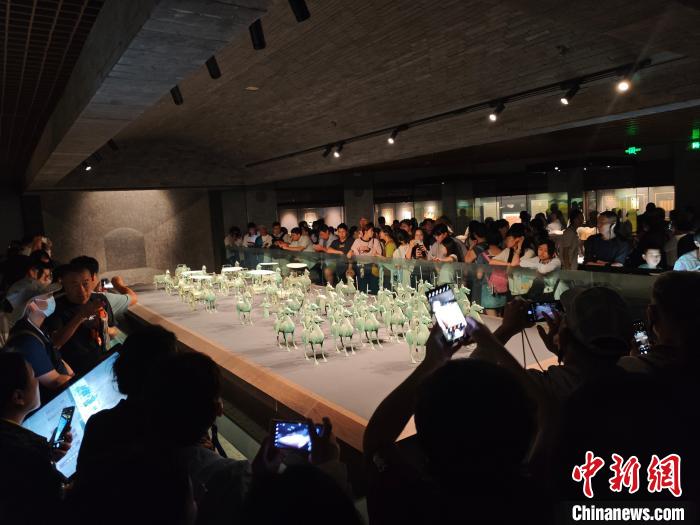
Core Viewpoint - The article highlights the positive experiences of Taiwanese youth visiting Gansu, emphasizing cultural connections and the significance of historical sites like the Silk Road and Dunhuang [2][4]. Group 1: Cultural Exchange - The visit to Gansu has left a deep impression on Taiwanese youth, showcasing the region's unique geography, rich history, and cultural heritage [2][4]. - The youth expressed a strong emotional connection to the historical artifacts at the Gansu Provincial Museum, recognizing the shared roots between Taiwan and the mainland [2][4]. Group 2: Tourism and Historical Significance - The Taiwanese youth are particularly interested in visiting iconic sites such as the Mogao Caves and Crescent Moon Spring, which are renowned for their historical and natural beauty [4]. - The article notes that Gansu is considered a "golden passage" on the ancient Silk Road, filled with diverse cultural influences [2][4]. Group 3: Development Insights - The youth are eager to learn about Gansu's achievements in infrastructure, renewable energy, and desertification control, viewing these experiences as valuable lessons for Taiwan [4]. - The growth of greenery in arid regions of Gansu symbolizes potential collaborative discussions on future development between the two sides [4]. Group 4: Social Interaction - The article describes how shared meals foster conversations between Taiwanese and mainland youth, breaking down barriers and enhancing mutual understanding [5]. - The theme of the summer camp, "Cross-Strait Chinese Affection, Youth Journey in Longyuan," reflects the goal of strengthening ties through cultural and educational exchanges [5].
台青大陆行:结新朋 探新知 启新程
Xin Hua She· 2025-07-08 06:30
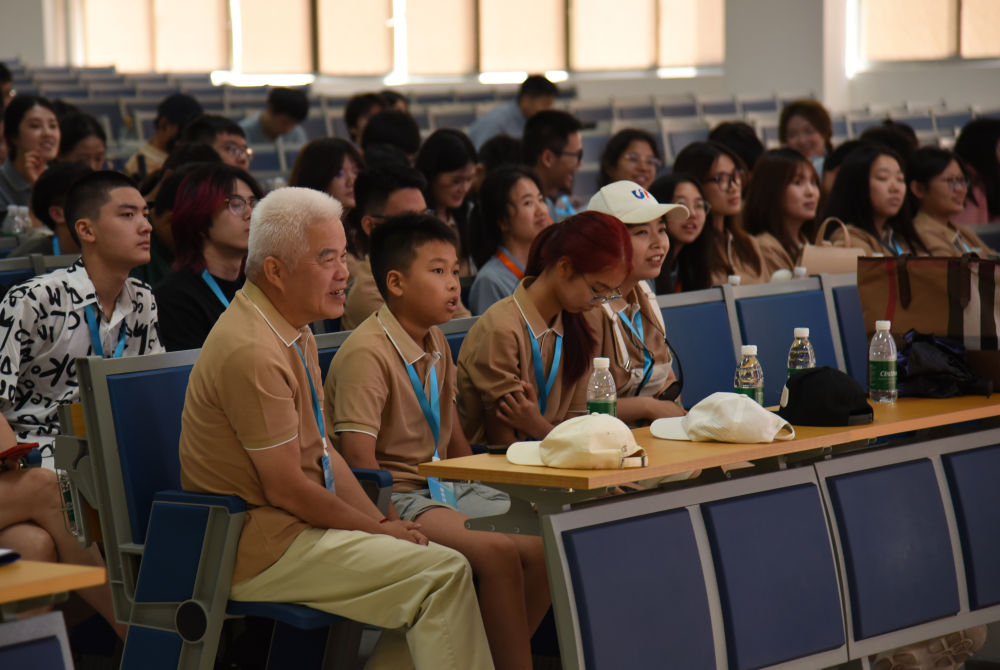
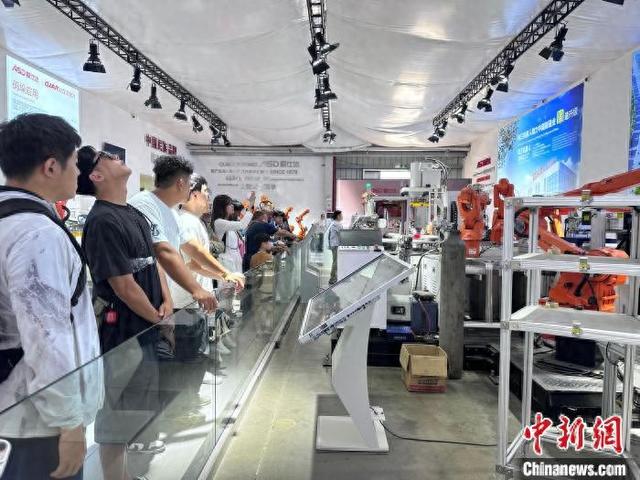
Core Viewpoint - The 22nd Taiwan Youth Summer Camp was held in Guangdong Province from July 4 to 6, providing Taiwanese youth with opportunities to make friends, learn about Chinese culture, and experience technological advancements on the mainland [2][11]. Group 1: Cultural Exchange - Participants attended a lecture on "Chinese Characters and Chinese Culture," fostering connections between mainland volunteers and Taiwanese youth [4]. - The camp facilitated discussions about the similarities in cultural heritage, enhancing friendships among the youth from both sides [5]. Group 2: Technological Experience - Taiwanese youth visited the Guangdong-Macao Traditional Chinese Medicine Cultural Experience Center, expressing admiration for the innovative designs and sculptures [7]. - At the Guangdong-Macao Deep Cooperation Zone Planning Exhibition Center, students engaged with exhibits related to circuit boards, reflecting on historical ties between Taiwanese entrepreneurs and mainland manufacturing [9]. Group 3: Future Aspirations - Many Taiwanese participants expressed a desire for more exchanges and opportunities to study or work on the mainland in the future [11][12]. - The camp concluded with a collective singing event, symbolizing the friendships formed and the hope for future reunions [13].
京台青年龙舟竞渡共话友谊
Ren Min Ri Bao Hai Wai Ban· 2025-07-05 04:31
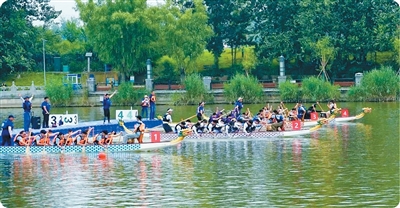
Core Viewpoint - The 2025 Cross-Strait University Student Dragon Boat Cultural Exchange event was held in Tongzhou District, Beijing, showcasing cultural heritage and fostering connections between students from mainland China and Taiwan [4][5]. Group 1: Event Overview - The event gathered over 120 students from 12 universities across both sides of the Taiwan Strait, including prestigious institutions like Peking University and Tsinghua University [4]. - The competition featured 10 teams racing on the Grand Canal, emphasizing teamwork and cultural exchange through the traditional sport of dragon boat racing [4][5]. Group 2: Participant Experiences - Participants expressed excitement and joy in engaging directly in dragon boat racing, with students from Taiwan sharing their first hands-on experience of the sport [4]. - The event facilitated personal connections, with students forming friendships and exchanging gifts, highlighting the importance of interpersonal relationships beyond competition [5]. Group 3: Cultural Significance - The event served as a testament to the shared cultural heritage between the two sides, with volunteers from the Taiwan Compatriots Home providing warm support to visiting students [6]. - Organizers emphasized the role of the event in promoting traditional Chinese culture and enhancing mutual understanding and friendship among youth from both sides [6].
昆明遇见台北:一条街 两岸情
Ren Min Ri Bao Hai Wai Ban· 2025-07-04 01:29
Core Viewpoint - The establishment of a Taiwanese-style street market in Kunming, named "Taipei Street," reflects the cultural exchange and integration between Taiwan and mainland China, showcasing Taiwanese cuisine and fostering community connections [1][2][3] Group 1: Market Development - The Taipei Street, a 138-meter long Taiwanese-style street, has attracted significant foot traffic, averaging 10,000 visitors daily, with per capita spending between 30 to 40 yuan, indicating a strong local interest in Taiwanese snacks [2] - The market features over 60 Taiwanese vendors, including traditional food stalls, which have quickly gained popularity, often selling out of their offerings, such as the 250 daily portions of "large intestine wrapped small intestine" [2] Group 2: Cultural Exchange - The street market serves as a cultural bridge, with elements like traditional Taiwanese lanterns and local performances, enhancing the experience for visitors and promoting cultural understanding [3] - The integration of Taiwanese culinary practices with local ingredients has led to cost-effective operations and increased sales for vendors, demonstrating a successful blend of different culinary traditions [2][3] Group 3: Visitor Engagement - The atmosphere of the market is described as vibrant and welcoming, with vendors engaging with customers, fostering a sense of community and connection among visitors [2][3] - Statistics indicate a significant increase in cross-strait interactions, with 4.405 million people expected to travel between Taiwan and mainland China in 2024, marking a 53.8% year-on-year growth, reflecting a growing interest in cultural exchange [3]
八旬台胞“回乡记”:为两岸青年交流架起“连心桥”
Zhong Guo Xin Wen Wang· 2025-07-01 14:41
Group 1 - The article highlights the rapid development and changes in Taizhou, China, as experienced by Taiwanese compatriots visiting their hometown [1] - A group of 32 Taiwanese individuals, led by 88-year-old Zhou Xiangchun, returned to Wenling City to reconnect with their roots and witness local economic and social progress [1][2] - Zhou Xiangchun, known as the "Old Captain," has played a significant role in connecting Taiwanese people with their relatives in mainland China over the years [1][2] Group 2 - Taiwanese visitors engaged in various activities, including visiting local enterprises like Aishida Future Factory and enjoying popular spots such as the "Cliff Cave" café [2][4] - The exchange of entrepreneurial stories between young people from Wenling and Taiwan was emphasized, showcasing the innovative spirit of mainland youth [4][5] - The Wenling Taiwan Affairs Office expressed the hope that such exchanges would promote a diverse and vibrant image of mainland China, encouraging more Taiwanese youth to explore their roots [5]
“不带滤镜”的大陆终究让谁破防了?(日月谈)
Ren Min Ri Bao Hai Wai Ban· 2025-06-22 22:46
Core Viewpoint - The visit of Taiwanese influencer Chen Zhihan to mainland China aims to promote cross-strait understanding and challenge misconceptions about mainland life, contrasting sharply with the narrative pushed by the Democratic Progressive Party (DPP) [1][2][3] Group 1: Visit and Activities - Chen Zhihan, a popular figure with nearly 2 million followers on social media, undertook a 6-day trip to mainland China, where he engaged in activities such as obtaining a mainland phone number and using commonly used apps [1] - His live broadcasts during the trip attracted peak viewership of tens of thousands, setting a record for social media live streaming in Taiwan [1] Group 2: Response from DPP and Public Reaction - The DPP reacted strongly to Chen's visit, with accusations that he might be used by mainland interests and claims that his trip was pre-planned [2] - Chen refuted these claims during his live broadcasts, asserting that he received no financial support and was not coerced [2] Group 3: Impact on Public Perception - Chen's audience primarily consists of young voters aged 20 to 40, a demographic that the DPP is particularly concerned about, as many expressed feelings of being misled by the party [2][3] - The contrast between Chen's portrayal of mainland China and the DPP's narrative has led to a shift in perception among Taiwanese youth, with many acknowledging the discrepancies between their education and reality [2][3] Group 4: Broader Implications - The increasing number of influencers visiting mainland China and sharing their experiences is seen as a challenge to the DPP's long-standing narrative, potentially reshaping public opinion and breaking down political barriers [3] - The DPP's aggressive response to Chen's activities indicates their growing concern over the influence of such narratives on the younger generation in Taiwan [3]
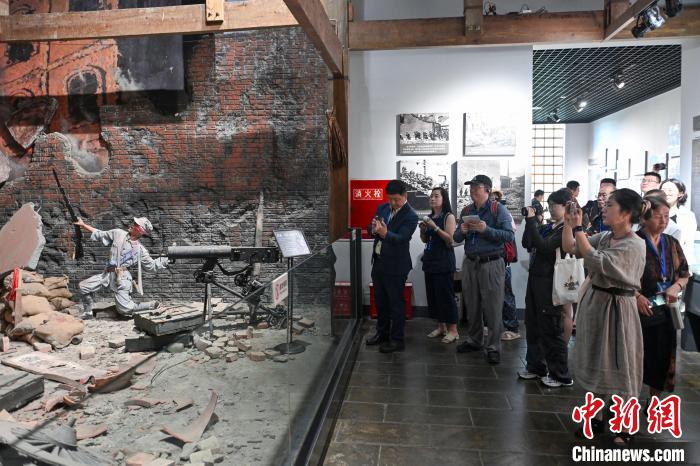
台青走进建川博物馆聚落:抗战是两岸同胞共同的记忆
Zhong Guo Xin Wen Wang· 2025-06-22 12:31
Core Points - The article emphasizes the importance of remembering history to avoid repeating past wars, particularly focusing on the shared memory of the Anti-Japanese War between the two sides of the Taiwan Strait [1] - The event marks the 80th anniversary of the victory in the Anti-Japanese War and the liberation of Taiwan, with a media interview activity involving nearly 40 participants from both sides [1] - The visit to the Jianchuan Museum Cluster highlights the extensive collection of over 10 million items related to various historical themes, including the Anti-Japanese War [1] Group 1 - The visit to the museum deeply impacted Taiwanese student Liao Yuxuan, who expressed a desire for more Taiwanese youth to understand this shared history [2] - The "Death" flag story from the Sichuan Army resonated with the Taiwanese youth, illustrating the commitment to national defense during the war [2] - Liao Yuxuan aims to become a storyteller to share the authentic and comprehensive history of China with others [2] Group 2 - Taiwanese youth Liao Jiaxing, a descendant of Huangpu Military Academy graduates, reflects on the shared memory of resisting Japanese invasion, emphasizing the importance of this history for all Chinese [5] - The media interview group plans to visit various locations in Sichuan and Chongqing to explore and document the cultural history of the Anti-Japanese War [5] - The initiative aims to promote the spirit of unity and resistance during the war, showcasing the enduring power of Chinese culture [5]
王英津:“拆桥断流”只会损害台湾民众福祉
Huan Qiu Wang· 2025-06-17 23:15
Group 1: Cross-Strait Relations - The 17th Straits Forum held in Xiamen, Fujian, focused on "expanding civil exchanges and deepening integrated development," with over 7,000 attendees from Taiwan, including former Kuomintang Chairman Ma Ying-jeou [1] - The Taiwanese "Tourism Bureau" rejected an application for mainland personnel to hold the "2025 Cross-Strait Taipei Summer Travel Exhibition," marking the first interruption due to non-pandemic factors, which disrupts long-established cooperation mechanisms in the tourism industry [1] - The absence of mainland exhibitors at the travel exhibition will hinder the presentation of cross-strait tourism resources and reduce opportunities for collaboration, impacting tourism project negotiations and promotions [1] Group 2: Economic Impact - The Taiwanese "International Trade Bureau" has blacklisted Huawei, SMIC, and their subsidiaries, severing cooperation in technology research, technical exchanges, and supply chains, which negatively affects Taiwan's economy and livelihoods [2] - The blacklisting of Huawei and SMIC will disrupt existing partnerships and reduce orders for Taiwanese companies, potentially leading to layoffs and increased unemployment rates in Taiwan [2] - The DPP's actions to block cross-strait exchanges are part of a broader strategy to achieve "Taiwan independence," which includes restrictions on tourism and educational exchanges, increasing costs and risks for Taiwanese citizens [3] Group 3: Policy Comparison - The DPP's policies are characterized by a closed and obstructive approach, contrasting with the mainland's open and proactive stance, leading to a struggle between "anti-independence and pro-unification" versus "independence and rejection of unification" [4] - The DPP's narrative distorts the essence of cross-strait exchanges, labeling them as political maneuvers and claiming that the mainland uses economic ties to bind Taiwan [4] - The DPP's obstruction of cross-strait exchanges not only undermines peace and stability in cross-strait relations but also directly impacts Taiwan's economy, society, and livelihoods [4]
