
中华优秀传统文化

Search documents
倒计时30天!央视春晚,完成首次彩排
Zhong Guo Ji Jin Bao· 2026-01-17 11:49
总台马年春晚是"科技+艺术"的再升级,将"科技智造"融入舞美呈现、内容创作等,丰富人们对年味的 缤纷想象。继蛇年春晚扭秧歌的智能机器人跻身"顶流"后,机器人将再度登上春晚舞台,用科技范和新 鲜感的创意火花彰显我国科技进步的新气象。 距离马年春晚还有30天。导演组将精心打磨每一个节目、完善每一处细节,在除夕夜为全球观众呈现一 台喜庆热烈、情真意切的春晚,陪伴家家户户过个热气腾腾的新春佳节。 1月17日,中央广播电视总台《2026年春节联欢晚会》顺利完成首次彩排。各类型节目与创新技术应 用、舞美视觉设计等要素完成融合,各环节流程衔接顺畅,晚会整体效果初显。总台马年春晚坚持"欢 乐吉祥、喜气洋洋"的主基调,以"骐骥驰骋势不可挡"为主题,在文化滋养与科技赋能下,呈现活力满 满、蒸蒸日上的新时代奋进气象。 总台马年春晚从中华优秀传统文化中汲取智慧和力量,将寓意自强不息、锐意进取的生肖马元素巧妙融 入创作,坚持"思想+艺术+技术"融合传播,不断拓宽艺术表达边界。舞美设计中,灵活运用AI、AR、 XR等科技手段,在虚实之间营造出"人在景中、景随人动"的沉浸立体式视觉效果。以"马"的纹样造型 演绎的艺术装置,构成万马奔腾、起 ...
到博物馆,看年画里的岁时欢歌
Xin Hua Wang· 2026-01-16 17:23
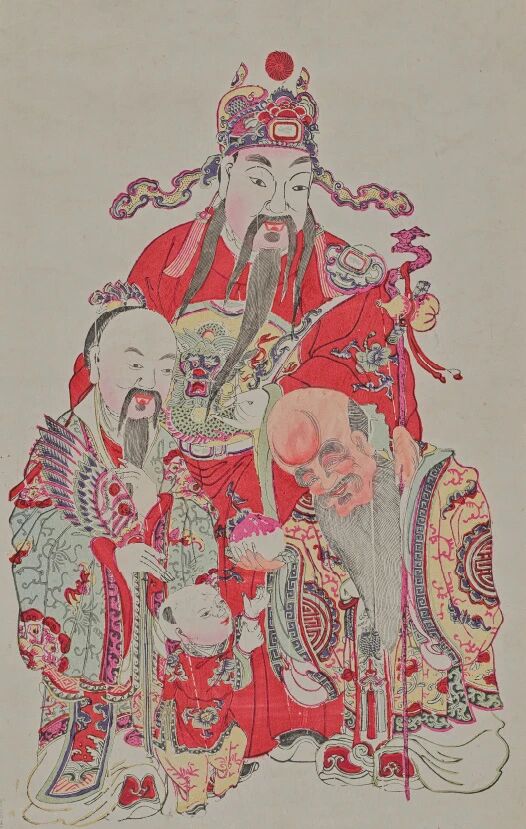
新华社沈阳1月16日电(记者赵洪南)红春联缀满门楣,年画挂上墙了——这抹从老辈手里传下来的"红",藏着中国人最浓的岁时欢歌。为迎接马 年春节,辽宁省博物馆于16日新推"年画里的岁时欢歌"展览,邀观众在新春时节共赴一场与年画的约会,品味那些藏在色彩里的岁时欢歌。 此次展览以辽宁省博物馆20世纪50年代征集的桃花坞年画、杨柳青年画为主,也有来自辽东山区的辽宁省级非遗桓仁木版年画。这些带着"天官赐 福""和气致祥"苏州桃花坞年画的雅致祝福;"莲年有余""五子夺莲"天津杨柳青年画的喜庆热闹;"攥汤子""串亲戚"桓仁木版年画的烟火气息。每 一幅作品都是一扇窗,推开它,便能看见不同地域的文化基因,听见代代相传的生活絮语。这些来自江南水乡与辽东山区的年画,虽风格迥异, 却都以最质朴的艺术语言,将吉祥寓意、生活百态与民族情感熔铸于尺幅之间,成为中华优秀传统文化中不可或缺的璀璨篇章。 展出的桃花坞年画福禄寿三星。 新华社发 展厅内,一张张带着墨香的年画,是春节最生动的注脚:门神执剑护佑阖家平安,仕女拈花点缀满室春光,童子抱鲤送来岁岁吉祥。辽宁省博物 馆副馆长董宝厚说,年画不仅是年节的装饰,更是中华民族精神的缩影——它承载着对幸 ...

学习丨国学新韵:诚信者,天下之结也
Xin Lang Cai Jing· 2026-01-15 05:02
Core Viewpoint - The report emphasizes the role of the Communist Party of China as a faithful inheritor and promoter of excellent traditional Chinese culture, continuously endowing it with new contemporary values through the "two combinations" [2] Group 1 - The report highlights Xi Jinping's frequent references to classical quotes in important speeches and writings, showcasing the profound wisdom of traditional Chinese culture [2] - The discussion focuses on the theme of "trust deficit" and presents a Chinese solution to address this issue, starting from the concept of "诚信者,天下之结也" (Those who are trustworthy are the bond of the world) [2] - The presentation is led by Professor Liu Hong from the School of International Trade and Economics at Capital University of Economics and Business, indicating an academic perspective on the topic [2] Group 2 - The report is edited by Zhang Juan, suggesting a collaborative effort in presenting the insights [2]
学习丨国学新韵:志合者,不以山海为远
Xin Lang Cai Jing· 2026-01-13 04:19
Core Viewpoint - The article emphasizes the role of the Communist Party of China as a faithful inheritor and promoter of excellent traditional Chinese culture, highlighting its commitment to expanding high-level opening-up through the integration of traditional wisdom with contemporary values [2]. Group 1 - The speaker, He Ping, is the Vice Dean and Professor at Tsinghua University's School of Economics and Management [2]. - The discussion centers around a classical quote referenced by President Xi Jinping, "志合者,不以山海为远," which translates to "Those with shared aspirations are not deterred by mountains and seas," illustrating the deep wisdom of traditional Chinese culture [2]. - The article showcases China's determination to expand high-level foreign openness, reflecting its contemporary significance and relevance [2].
秀我中国|铸牢中华民族共同体意识 多民族青年演员携手共绽龟兹乐舞之华
Xin Hua She· 2026-01-11 09:04
Group 1 - The core viewpoint of the article highlights the premiere of the dance drama "Her Kizil" at the National Grand Theatre, which innovatively revitalizes traditional culture through a dynamic artistic expression [2] - The production is part of a broader initiative in Xinjiang to strengthen the awareness of the Chinese national community by creating numerous artistic works that promote and explore excellent traditional Chinese culture, which have been well-received by audiences [2]
学习丨国学新韵:潮平两岸阔,风正一帆悬
Xin Lang Cai Jing· 2026-01-10 12:18
Core Viewpoint - The article emphasizes the role of the Communist Party of China as a faithful inheritor and promoter of excellent traditional Chinese culture, continuously endowing it with new contemporary significance through the "two combinations" [2] Group 1 - The speaker, Hong Xianghua, highlights the profound wisdom and contemporary relevance of traditional Chinese culture as reflected in President Xi Jinping's speeches and writings, which often quote classical phrases [2] - The specific quote "潮平两岸阔,风正一帆悬" is used as a starting point to discuss its creative background, core meaning, and contemporary implications [2] - The article illustrates China's commitment to sincere friendships and practical cooperation with developing countries, contributing to the construction of a community with a shared future for mankind [2]
传统文化就在身边,上海各界青年诠释“顶级东方审美”
Xin Lang Cai Jing· 2026-01-09 13:36
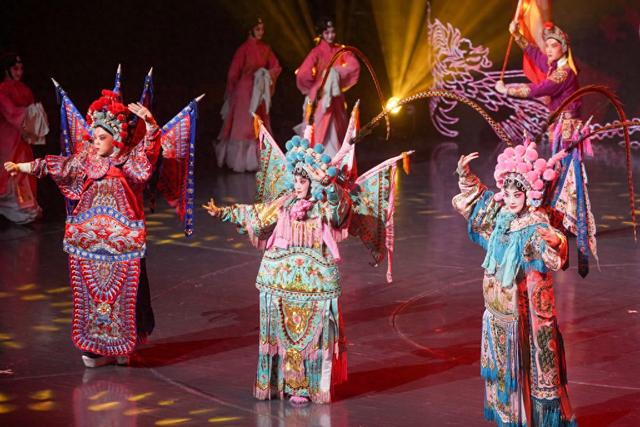
Group 1 - The event "Qing Sheng Chuan Yun, Shen Sheng Bu Xi" was held in Shanghai to promote traditional Chinese culture among youth, organized by the Shanghai Youth League Committee [1] - The performance included various traditional art forms such as folk drumming, Peking opera, Kunqu opera, and a fashion show featuring traditional Chinese clothing, showcasing the integration of modern elements with traditional culture [3][5] - A traditional culture experience market was set up outside the theater, featuring 24 themed booths that engaged youth with activities like archery and riddles, bringing traditional culture closer to them [7]
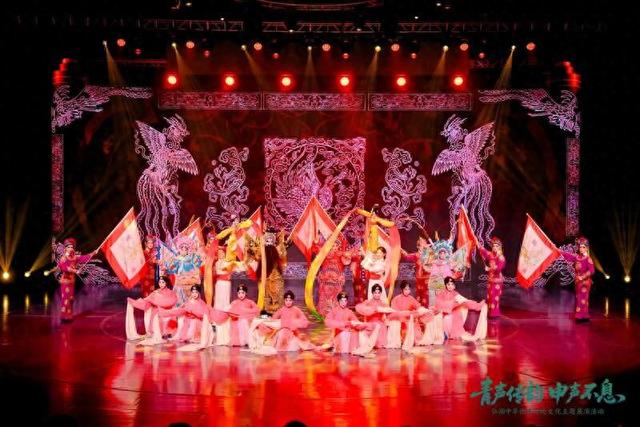
魔都眼|青声传韵:年轻人感受传统文化魅力
Xin Lang Cai Jing· 2026-01-09 12:32
Group 1 - The event "Qing Sheng Chuan Yun, Shen Sheng Bu Xi" aimed to promote excellent traditional Chinese culture was held at the Shanghai Children's Art Theatre on January 9, 2026 [1] - The performance was divided into four chapters: "Millennium Elegance," "Jiangnan Tide," "Radiant New Era," and "Stars Shining Bright," showcasing the richness and charm of traditional Chinese culture while emphasizing youth's role in modernizing China [2] - The opening performance featured the Haijangzhou Drum and Music Troupe and the Shanghai Sanlin Lion Dance Team, setting a vibrant tone for the event [4] Group 2 - A traditional cultural market was set up outside the theatre, featuring 24 themed booths divided into interactive experiences and static displays, attracting many young participants [6] - Various games such as pot throwing, archery, and riddle guessing were available, creating a lively atmosphere, while the intangible cultural heritage display showcased intricate crafts like Gu embroidery and tea art [6] - The market served as a dynamic classroom for youth to engage with history and tradition, allowing them to experience activities like dragon and lion dancing, calligraphy, and traditional crafts [6]
金针刺绣绘山河
Xin Lang Cai Jing· 2026-01-08 20:05
Core Viewpoint - The art of embroidery in China has evolved from practical origins to a sophisticated cultural expression, showcasing regional styles and historical significance. Group 1: Historical Development - Embroidery in China dates back to the Neolithic era, evolving alongside civilization and becoming a blend of utility and aesthetics, reflecting cultural and emotional narratives [1] - The earliest known embroidery artifacts were discovered in Hunan's Changsha Chu tombs, showcasing exquisite techniques and inscriptions [2] - During the Zhou Dynasty, embroidery became a means to signify social status, with the imperial court establishing specialized positions for embroiderers, a practice that continued into the Ming and Qing dynasties [2] Group 2: Regional Styles - The four major embroidery styles—Su, Xiang, Yue, and Shu—each possess unique characteristics, with Su embroidery known for its delicate patterns and Xiang for its intricate details [4][5] - Yue embroidery is distinguished by its vibrant colors and the use of materials like peacock feathers, while Shu embroidery is recognized for its bold designs and fine craftsmanship [5][6] - Other regional styles, such as Long embroidery and Gu embroidery, also flourished during this period, contributing to the diversity of Chinese embroidery [7] Group 3: Cultural Significance - Embroidery has played a significant role in military and religious contexts, with notable examples including maps and texts embroidered for ceremonial purposes [3] - The craftsmanship of palace embroiderers during the Qing Dynasty led to the production of luxurious and elegant pieces, ensuring the preservation of traditional techniques [3] - The emotional and cultural narratives embedded in embroidery reflect the lives and aspirations of the embroiderers, often intertwining personal stories with broader historical themes [8][9] Group 4: Modern Innovations - The art of embroidery continues to thrive, adapting to modern technologies while maintaining its cultural roots, with a shift towards digital and intelligent embroidery techniques [12] - Despite the rise of machine embroidery, the traditional skills and cultural significance of hand-stitched embroidery remain vital, nurturing the next generation of artisans [12]
“儒学工匠”激扬职工文化自信
Xin Lang Cai Jing· 2026-01-08 19:02
Core Viewpoint - The Jining Municipal Federation of Trade Unions has innovatively developed the "Chinese Workers' Great Ideological and Political Course" to enhance the ideological and political education of workers by integrating traditional Chinese cultural wisdom into practical training and education [1][2]. Group 1: Educational Initiatives - The "Chinese Workers' Great Ideological and Political Course" addresses the mismatch in supply and demand for ideological education among workers, increasing participation rates from 65% to 85% [1]. - Over 300 customized courses are conducted annually, with a satisfaction rate of over 95%, utilizing a diverse teaching team from universities, enterprises, and labor models [2]. - Online platforms like "Cloud Academy" and "Zoulu Hui Gong Home Cloud Classroom" have reached over 700,000 participants, with micro-lecture views exceeding 100,000, facilitating a shift from scheduled learning to on-demand understanding [2]. Group 2: Practical Applications and Outcomes - The establishment of ideological practice bases and craftsman innovation studios has led to significant advancements, with one studio solving 125 technical problems and generating over 32 million yuan in economic benefits [3]. - The integration of ideological education into daily work and life has created a three-dimensional educational model focusing on value guidance, skill enhancement, and life care [2][3]. - The emphasis on creative and practical approaches in ideological education aims to enhance workers' sense of identity, participation, and benefit [3].