庞氏骗局

Search documents
拍案|骗子盯上“新能源汽车”,“风口”上的投资需擦亮双眼
Xin Hua She· 2025-08-25 11:17
Core Insights - The article highlights the rise of investment scams targeting the booming "new energy vehicle" sector, particularly through fraudulent schemes involving charging stations and other related investments [1][2][4] Group 1: Scam Overview - A recent case in Haikou revealed a fraudulent scheme that illegally raised 300 million yuan (approximately 43 million USD) from over 2,000 investors under the guise of investing in "new energy vehicle charging stations" [1][2] - The perpetrators, Zhang and Gao, initially operated under the pretense of a legitimate company, "Quanjiaotong (Hainan) Energy Technology Co., Ltd," and utilized a multi-level marketing model to sell charging stations [1][2] Group 2: Modus Operandi - The scam involved creating a façade of legitimacy by associating with well-known companies and universities, as well as leveraging government policies to attract investors [1][3] - The company claimed high returns on investments, promising a weekly return of 1,115 yuan (approximately 160 USD) for an initial investment of 58,000 yuan (approximately 8,400 USD) in a charging station, leading to an annualized return rate of 200% [2][3] Group 3: Investor Manipulation - The fraudulent company employed various tactics to gain investor trust, including hosting lavish promotional events and using social media to project an image of credibility and success [3][4] - The scheme was characterized by a classic "Ponzi" structure, where returns to earlier investors were paid using the capital from new investors, creating an illusion of profitability [4][5] Group 4: Legal and Regulatory Response - The Haikou police launched a coordinated crackdown in December 2022, successfully dismantling the criminal organization behind the scam [2] - Authorities have warned the public to be cautious of high-yield investment opportunities, especially those that lack proper financial qualifications and rely on multi-level marketing strategies [5]
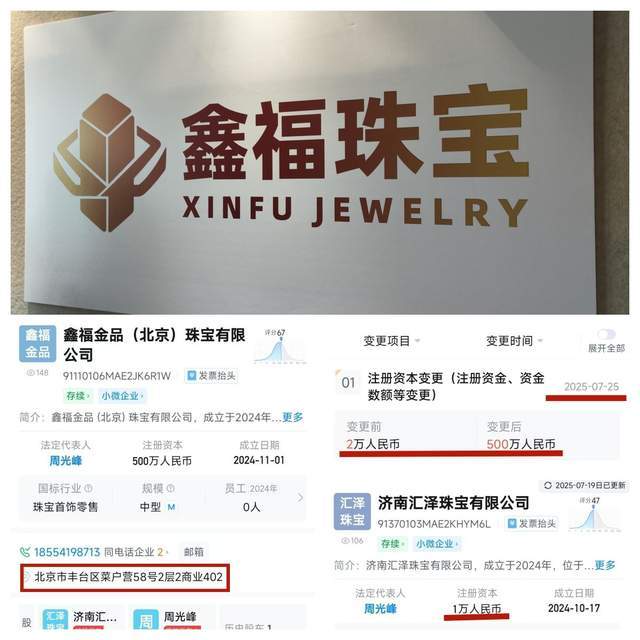
起底鑫福金品:黄金噱头背后的传销与非法集资疑云
Sou Hu Cai Jing· 2025-08-19 06:04
Core Viewpoint - The operation model of Xinfujinpin (Beijing) Jewelry Co., Ltd. is suspected of being a pyramid scheme and illegal fundraising, attracting public attention through promises of high returns and tiered rewards [1][15]. Group 1: Company Overview - Xinfujinpin (Beijing) Jewelry Co., Ltd. was established in November 2024, with a registered capital that increased from 20,000 RMB to 5 million RMB [2]. - The company is registered in Fengtai District, Beijing, but primarily operates in Tai'an, Shandong, without financial qualifications to raise funds from the public [2][15]. Group 2: Operation Model - The investment model requires a minimum investment of 10 grams of gold for 10,000 RMB, promising daily returns at a rate of 0.3% and multiple rounds of dividends based on new performance [3][6]. - The model includes direct push rewards, acceleration rewards, and team rewards, which are characteristic of pyramid schemes, as they rely on recruiting new members for compensation [6][12]. Group 3: Marketing and Promotion - The company promotes its model as a way to turn consumption into wealth, claiming that gold can serve as a form of currency and investment [9][11]. - Promotional events offer additional benefits for purchasing gold, such as extra welfare points, which further incentivize participation [14]. Group 4: Legal and Regulatory Concerns - The company's practices of soliciting funds from the public without approval and promising returns are indicative of illegal fundraising activities [15]. - The structure of the rewards and the emphasis on recruiting new members align with the characteristics of a pyramid scheme, raising significant legal concerns [15][16].

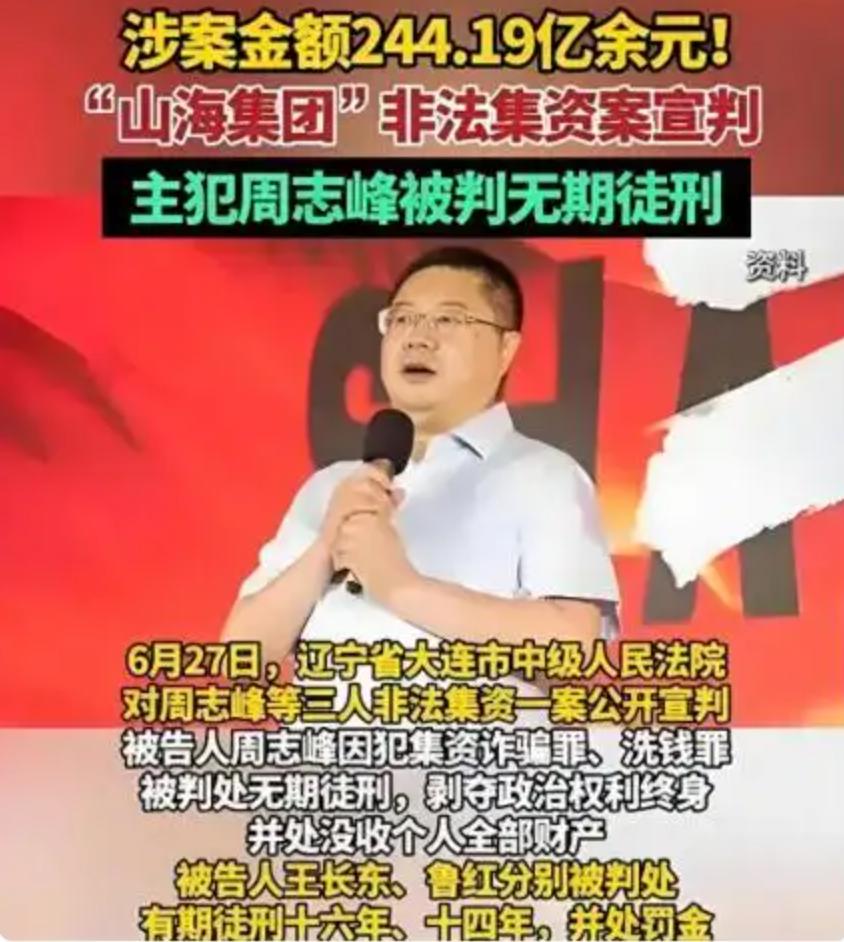
史上最大“养老骗局”终于倒下,为何老年人成为诈骗“重灾区”?
3 6 Ke· 2025-08-17 23:35
Core Viewpoint - The article discusses one of the largest pension fraud cases in China, where over 600,000 elderly individuals were deceived out of more than 24.4 billion yuan over eight years, led by Zhou Zhifeng, the actual controller of Shanhai Group, who was sentenced to life imprisonment for his crimes [1][10]. Group 1: Nature of the Fraud - The fraud was not only a financial scam but also an emotional trap, starting with seemingly harmless gifts like free eggs to gain the trust of elderly individuals [4][6]. - Zhou's team of young salespeople built a "trust fortress" by providing emotional support and companionship to the elderly, making them more susceptible to manipulation [6][19]. - The fraudulent schemes included high-return investment promises, such as a 20% annual return, which lured many elderly individuals into a Ponzi scheme [8][10]. Group 2: Elderly Vulnerability - The elderly are particularly vulnerable to scams due to their isolation and loneliness, which scammers exploit by filling emotional voids [9][19]. - Many elderly individuals lack the ability to access or interpret information effectively, making them easy targets for misleading investment opportunities [17][19]. - The emotional manipulation involved in these scams often leads to a denial of the fraud even when evidence is presented, as seen in the reactions of many victims [3][9]. Group 3: Characteristics of Modern Scams - Modern scams are increasingly sophisticated, presenting themselves as legitimate businesses with professional appearances and operations [12][15]. - Scammers often create a façade of credibility by associating with official entities and providing seemingly genuine services, which further deceives the elderly [15][16]. - The article highlights the need for better awareness and education among the elderly regarding the nature of these scams and the importance of critical thinking [17][31]. Group 4: Prevention Strategies - Effective prevention against such scams requires emotional support and regular communication with elderly family members, emphasizing the importance of family involvement [22][23]. - The article suggests implementing technical measures, such as installing fraud prevention apps and setting financial limits, to protect the elderly [23]. - It also emphasizes the need for awareness of common scams targeting the elderly, including fake social security services and low-cost travel schemes [24][28].
这些诱惑,你警惕了没?!!
Sou Hu Cai Jing· 2025-08-13 02:44
Group 1 - The article highlights the prevalence of economic crimes disguised as investment opportunities, particularly those promising high returns with low risk [1] - It discusses illegal fundraising schemes under the guise of "virtual currency" and "blockchain," citing a case where a platform attracted investments totaling over 15 million RMB, ultimately leading to the loss of funds for investors [2] - The article emphasizes the need for individuals to be cautious and recognize the traps behind seemingly lucrative offers, urging them to protect their financial assets [9] Group 2 - Another type of fraud mentioned involves training programs that require upfront fees, often leading to graduates incurring significant debt without guaranteed employment [4] - The article warns that these fraudulent schemes exploit people's desires for quick wealth and their willingness to take risks, urging the public to remain vigilant [9] - It encourages individuals to report any suspicious activities related to illegal fundraising or investment schemes to the authorities [7]
从艾兴合看互联网投资理财风险
Sou Hu Cai Jing· 2025-08-06 11:17
Core Viewpoint - The rise of illegal financial models like Aixinghe and the associated risks in internet investment and wealth management require significant attention [1][5]. Group 1: Aixinghe Fund Model - Aixinghe initially attracts users with small rewards for transactions, then encourages app downloads, gradually introducing tasks that require upfront capital [1]. - The operations of Aixinghe resemble a Ponzi scheme, where initial small returns build trust, followed by significant capital extraction [1]. Group 2: Internet Investment Risks - Internet investment and wealth management risks are multifaceted, including market risk from volatility, technical risk from network vulnerabilities, and credit risk from platforms lacking credibility [3]. - Investors are advised to carefully select investment platforms, understand their backgrounds and reputations, and enhance their financial knowledge to avoid being misled by high return promises [3]. Group 3: Importance of Awareness - Recognizing the operational models of schemes like Aixinghe and emphasizing the risks in internet investment and wealth management is crucial [5]. - Investors must remain rational and vigilant to protect their financial assets from illegal activities [5].

永坤黄金骗局:那些被认定妥善保管的黄金,多数从未存在过
Sou Hu Cai Jing· 2025-08-05 16:20
Core Viewpoint - The collapse of Yongkun Gold, a jewelry company, has revealed a fraudulent scheme disguised as a gold investment platform, leading to significant financial losses for investors [1][3][25]. Company Overview - Yongkun Gold was established in March 2014, with a major shareholder holding 66.66% of the company [1]. - The company operates over 50 gold jewelry sales outlets across various regions, including Zhejiang, Guangdong, and Hong Kong [1]. - As of November 7, 2024, Yongkun Holdings reduced its registered capital from 112 million to 102.3 million yuan [1]. Investment Scheme - Yongkun Gold promoted its services with slogans like "store gold to earn interest" and "capital preservation through gold trading" [3]. - Investors were unable to withdraw their funds on May 20, 2025, as all redemption channels were closed [3]. - The company had previously faced withdrawal issues in 2021 but continued to operate under the same brand [5]. Contractual Agreements - Investors signed three contracts: a gold sales purchase contract, a gold custody contract, and a gold repurchase contract, promising annual returns of 6.5% to 9% depending on the investment amount [9][12]. - The investment model claimed that regardless of gold price fluctuations, investors would either profit from selling or receive a refund, creating an illusion of a risk-free investment [13][14]. Fraudulent Practices - Investigations revealed that most of the gold supposedly held for investors never existed, with funds being transferred directly to the personal account of the chairman [6][24]. - The company misled investors into believing their gold was securely stored in bank vaults and insured, but insurance only covered specific risks like fire and explosion [21][22]. Marketing and Promotion - Yongkun Gold utilized a multi-level marketing strategy, incentivizing existing customers to recruit new investors with promises of high commissions [30][32]. - The company falsely claimed to be listed, which was misleading as it was only registered on a local equity transfer platform [20]. Financial Implications - As of April 28, 2025, Yongkun Gold had at least 4.1 billion yuan in insured gold assets, but the reality of these assets was questionable [22]. - The company's operational model resembled a Ponzi scheme, with funds being pooled and used to pay returns to earlier investors rather than being invested in actual gold [26][27]. Conclusion - The case of Yongkun Gold serves as a cautionary tale about the risks associated with seemingly guaranteed investment returns, particularly in the gold sector, which is often perceived as a safe haven [33].
从中国数贸 CDTT 看互联网投资理财风险
Sou Hu Cai Jing· 2025-08-05 08:59
Core Viewpoint - The emergence of CDTT funding schemes in the internet investment and financial management sector has raised significant concerns due to their Ponzi-like characteristics and potential risks to investors [1][3]. Group 1: CDTT Funding Scheme Overview - CDTT funding schemes operate by promising high returns to attract investors, creating a complex fund circulation system that relies on new investor funds for profit distribution [1]. - The model exhibits characteristics of a Ponzi scheme, as it violates normal economic principles and is vulnerable to collapse if new investor participation declines [1]. Group 2: Risks in Internet Investment and Financial Management - The internet investment sector is fraught with risks, including market volatility affecting investment value, information security issues leading to potential data breaches and financial losses, and inadequate regulation allowing fraudulent activities [3]. - CDTT funding schemes exemplify these risks, introducing unique dangers such as false advertising and lack of actual profit support [3]. Group 3: Investor Awareness and Caution - Investors are urged to enhance their education and cultivate risk awareness, maintaining a rational perspective on the relationship between returns and risks [5]. - The operational model of CDTT funding schemes poses significant dangers, and the complexities of internet investment risks necessitate cautious engagement with various projects to safeguard personal financial security [5].

千亿国资巨头长虹控股打假!“李鬼”疑假冒名义诈骗,其正在贵州多地活跃
Zheng Quan Shi Bao Wang· 2025-08-01 03:34
Core Viewpoint - The Sichuan Changhong Electronic Holding Group Co., Ltd. (Changhong Holding) has issued a statement to combat fraudulent activities involving a company that closely resembles its name, which has been misleading the public into financial investments [1][2]. Group 1: Company Background - Changhong Holding was established in 1995 with a registered capital of 3 billion yuan and is located in the High-tech Industrial Development Zone of Mianyang City [1]. - As of the end of 2023, Changhong Holding reported total assets of 112.183 billion yuan and revenue of 105.817 billion yuan [1]. Group 2: Fraudulent Activities - A fraudulent entity named Changhong Group Investment Co., Ltd., registered in Hong Kong, has been conducting investment activities under the guise of Changhong Holding, which has no affiliation with it [1][2]. - The fraudulent platform, Ox Cap, launched in October of the previous year, promotes a virtual currency investment scheme with promises of daily returns and various incentives for recruiting new members, but it operates as a Ponzi scheme [2][3]. Group 3: Legal Actions and Public Awareness - Changhong Holding has announced that it will take all necessary legal actions to protect its rights and has urged the public to report any suspected illegal financial activities to the authorities [3]. - The fraudulent company has been active in various charitable donation activities in Guizhou, which has further confused the public regarding its legitimacy [4].

千亿国资巨头打假,“李鬼”疑假冒名义诈骗
Zheng Quan Shi Bao· 2025-08-01 03:31
Core Viewpoint - Sichuan Changhong Electronic Holding Group Co., Ltd. (referred to as "Changhong Holdings") issued a statement to clarify that it is not associated with any financial investment activities conducted by entities using similar names, such as "Changhong Group Investment Co., Ltd." and "Ox Cap Exchange" [1][2] Group 1: Company Background - Changhong Holdings was established in 1995 with a registered capital of 3 billion yuan and is located in Mianyang High-tech Industrial Development Zone [1] - As of the end of 2023, Changhong Holdings reported total assets of 112.183 billion yuan and a revenue of 105.817 billion yuan [1] Group 2: Fraudulent Activities - The fraudulent platform, which launched in October last year, uses the name "Changhong Group" to promote a virtual currency investment project, requiring a minimum investment of 1,500 USD with promised daily returns of at least 1% [2] - Reports indicate that the platform's trading activities are not legitimate and are characterized as a Ponzi scheme, where new user investments are used to pay returns to older users [2] Group 3: Legal Actions and Public Awareness - Changhong Holdings announced that it will take all necessary legal actions to protect its rights and urged the public to report any suspected illegal financial activities to the authorities [3] - The company emphasized that any charitable activities conducted by "Changhong Group Investment Co., Ltd." are not affiliated with Changhong Holdings [4]
HTXUnion火币联盟:震哥扒光这个TRX收割机的套路
Sou Hu Cai Jing· 2025-07-22 12:08
Group 1 - The project Htxunion is misleadingly promoting itself as affiliated with major brands like Huobi and TRON, but there is no official recognition from these entities [2][4] - Htxunion claims to provide a "green channel" for listing on HTX exchange, but the actual requirements are much stricter, making their claims deceptive [4] - The transaction fees for users are exorbitantly high at 30%, with an additional 5% withdrawal fee, which is significantly higher than the standard rates [4][5] Group 2 - The promised static returns of 0.4%-1.2% daily translate to an unrealistic annualized return of 438%, far exceeding legitimate financial products [5][6] - Htxunion employs a pyramid scheme structure, offering commissions for recruiting new members, which has been classified as illegal by authorities [5][6] - The project is at high risk of collapse, as the model requires constant influx of new participants to sustain payouts, similar to other failed schemes [5][6] Group 3 - The project operates in violation of existing regulations that classify virtual currency-related activities as illegal financial operations, exposing participants to legal risks [6][7] - Claims of guaranteed returns or "bottom line" for coin listings are unfounded, as many meme coins fail upon listing, and no exchange can assure such outcomes [7][8] - The digital figures displayed in the Htxunion app are compared to gambling machines, indicating a lack of real value and potential for total loss [8]