非法集资

Search documents
【防骗】非法集资套路深 擦亮双眼别入坑
中国建设银行· 2026-03-26 06:15
Core Viewpoint - The article highlights the emergence of new types of scams disguised as legitimate investment opportunities, particularly leveraging technology and modern financial concepts to deceive investors [3][4]. Group 1: Types of Scams - AI Concept Investment: Promises of guaranteed returns up to 30% annually are often based on false algorithms and are part of a Ponzi scheme [4][5]. - Virtual Real Estate Trap: Selling virtual land in the metaverse with promises of double returns is a form of a Ponzi scheme [5]. - Green Points Game: Claims of monetizing carbon credits are misleading, as they rely on recruiting new participants for rebates [5]. - Digital Collectibles Financialization: Promises of value appreciation through "pledging collectibles" are often just a way to recycle funds [5]. Group 2: Faces of Illegal Fundraising - Technology Disguise: Scams use buzzwords like AI, blockchain, and carbon neutrality to create a facade of high-profit models, while the actual fund flow remains unclear [6]. - Emotional Bonding: Scams operate under the guise of "family wealth inheritance plans" or "elite clubs," building trust through community engagement to encourage incremental investments [7]. - Policy Misinterpretation: Some scams fabricate government endorsements and documents, claiming benefits from digital currency pilot programs or rural revitalization subsidies [10]. - Consumption to Investment: The model promotes a closed-loop ecosystem of "consumption-investment-equity," misleadingly suggesting that consumer spending can be transformed into investment, while actually relying on funds from new participants to cover gaps [13]. Group 3: Defensive Measures - The article suggests that consumers need actionable defense strategies against digital risks, emphasizing the importance of skepticism and caution [14]. - Key recommendations include not trusting unknown calls or messages, safeguarding financial information, and verifying any requests for transfers or payments from strangers [15][17][19].


知名经济学家巴曙松遭调查?港交所回应!
券商中国· 2026-03-25 13:41
Group 1 - The core viewpoint of the article revolves around the recent disappearance of Ba Shusong, a prominent economist and former Chief China Economist at the Hong Kong Stock Exchange, who is reportedly involved in an illegal fundraising case [1][2] - Ba Shusong has a significant public presence, with over 11.39 million followers on Weibo, and has held various prestigious academic and professional positions, including being a professor at Peking University and a senior visiting scholar at Columbia University [1][2] - His research areas include financial institution risk management, financial market regulation, and the Basel Capital Accord, where he has contributed to the development of localized implementation paths for China's banking industry [2] Group 2 - Ba Shusong's career includes roles such as Deputy Director of the Financial Research Institute of the State Council Development Research Center and various positions in the banking sector, including Vice President of Bank of China Hangzhou Branch [2] - His name was absent from the management list in the Hong Kong Stock Exchange's 2025 annual report, indicating a significant change in his professional status [2] - Despite his recent disappearance, Ba Shusong's contributions to financial mechanisms like Stock Connect and Bond Connect are noteworthy, showcasing his influence in the financial regulatory landscape [2]

中植系终判之后——万亿金融废墟下,未清资产与家族信托的隐秘角落丨【思维深潜】
水皮More· 2026-03-10 08:53
Core Viewpoint - The article discusses the collapse of the Zhongzhi Group, highlighting the judicial proceedings and the implications for investors, particularly focusing on the recovery of assets for the 150,000 high-net-worth investors affected by the scandal [4][11][21]. Group 1: Rise and Structure of Zhongzhi Group - Zhongzhi Group originated from timber trade in Heilongjiang, founded in 1995 with a registered capital of 500 million yuan, and expanded into finance after acquiring a trust license in 2002 [6]. - At its peak, Zhongzhi managed over 800 billion yuan through its financial network, which included controlling Zhongrong Trust and incubating several wealth management companies [7]. - The group utilized a complex pyramid structure with over 300 affiliated companies, making it difficult for outsiders to penetrate its financial operations [9]. Group 2: Financial Risks and Collapse - The group faced systemic risks due to its reliance on high-yield financing products, with 80% of funds used for debt repayment rather than investment in real assets, leading to liabilities of 420 to 460 billion yuan against only 200 billion yuan in liquid assets [10]. - The sudden death of the controlling shareholder in December 2021 marked a turning point, leading to widespread panic and overdue products in 2023, culminating in a public apology and acknowledgment of insolvency [12][13]. Group 3: Judicial Outcomes and Investor Concerns - The Beijing First Intermediate Court sentenced 49 individuals for illegal fundraising, with prison terms ranging from 4 years and 6 months to 14 years, but investors remain focused on asset recovery rather than criminal penalties [11][14]. - Investigations revealed no legally protected family trusts that could evade asset recovery, and ongoing asset seizures include listed company shares and real estate, with overseas assets also being pursued [16][18]. Group 4: Industry Implications and Lessons - The collapse of Zhongzhi serves as a cautionary tale for the wealth management industry, emphasizing that no financial structure is immune to failure and that high-net-worth status does not guarantee safety [21]. - The judicial process is accelerating asset recovery efforts, aiming to minimize losses for affected investors, indicating a shift towards greater accountability in the financial sector [21][22].
记者实测AI“魔改”明星:1分钟报价数百元,平台审核存盲区,多明星同陷骗局
Xin Jing Bao· 2026-02-27 13:24
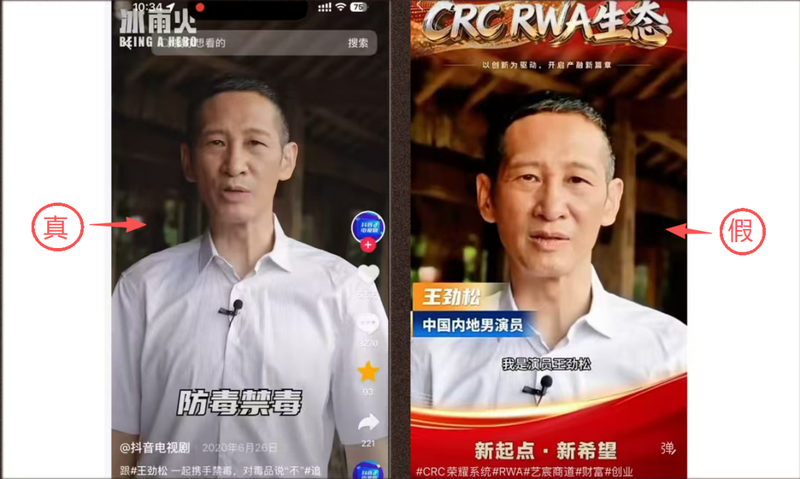
Core Viewpoint - The incident involving actor Wang Jinsong highlights the risks associated with AI-generated videos, particularly in the context of unauthorized use of celebrity likenesses for fraudulent advertising purposes [1][11]. Group 1: Incident Overview - On February 26, actor Wang Jinsong reported on social media that his likeness was used in an AI-modified video for advertising without his consent [1]. - The AI-modified video closely resembled a previous video from 2020, originally promoting anti-drug awareness, but was altered to promote a so-called "wealth platform" [1][3]. - The video was taken down by WeChat Video shortly after the incident was reported, raising questions about the ease of creating AI-modified celebrity videos and the preventive measures in place on major video platforms [3][8]. Group 2: Technical Aspects of AI Video Generation - Generating a convincing AI-modified video of Wang Jinsong is technically challenging, requiring advanced skills beyond what typical AI video tools can offer [4][5]. - Various AI video generation tools were tested, revealing limitations in their ability to create seamless lip-syncing and realistic modifications [4][5]. - Despite the challenges, there is a growing market for AI video modification services, with prices ranging from 130 to 400 yuan for a one-minute modified video [7]. Group 3: Legal and Ethical Implications - Legal experts suggest that the responsibility for unauthorized use of celebrity likenesses falls on the video creators, platforms, and AI tool providers, especially if they fail to implement adequate identification measures [8][9]. - The rapid advancement of AI technology complicates the detection of such modified videos, making it difficult for platforms to enforce regulations effectively [9][10]. - The incident has raised concerns about the potential for AI-generated content to mislead the public, particularly in relation to fraudulent investment schemes associated with terms like "CRC" and "RWA" [11][14]. Group 4: Fraudulent Activities and Public Response - The AI-modified video was linked to a broader scheme involving illegal fundraising activities under the guise of investment opportunities, which have been ongoing for several years [14][15]. - Authorities have issued warnings about the fraudulent nature of these schemes, emphasizing the need for public vigilance against such deceptive practices [14][15]. - The use of celebrity images in these scams not only infringes on their rights but also risks damaging their reputations, leading to potential legal consequences for the perpetrators [15].
华宸讲“防非”之非法金融活动最高检典型案例
Xin Lang Cai Jing· 2026-02-25 07:37
Core Viewpoint - The article highlights the prevalence and dangers of illegal financial activities, emphasizing the need for awareness and prevention measures to protect individuals and the economy from financial fraud [3][17]. Group 1: Definition of Illegal Financial Activities - Illegal financial activities refer to actions that violate national laws and regulations, engaging in financial business or providing financial products or services without approval or beyond permitted scope [3][17]. Group 2: Common Methods of Illegal Financial Activities - Illegal fundraising often masquerades as "pension services," "virtual currencies," or "high-yield investments," luring investors with promises of "zero risk and high returns," ultimately using new investors' funds to pay old investors, leading to abrupt exits when the funding chain breaks [4][18]. - Online lending scams involve fake P2P platforms posing as legitimate lending institutions, attracting borrowers with "low thresholds and no collateral," and defrauding them through fees or inflated interest rates [4][18]. - Financial pyramid schemes promote "consumer rebates" or "virtual currency appreciation," requiring participants to pay entry fees and recruit others, creating a hierarchical structure that relies on new recruits for profit, essentially functioning as Ponzi schemes [4][19]. Group 3: Notable Cases of Illegal Financial Crimes - Case 1: From November 2009 to December 2021, a group led by Shen illegally raised over 5.03 billion RMB, with 1.54 billion RMB remaining unpaid. The group promised fixed returns on pension-related investments but continued to solicit funds even after their financial chain collapsed in March 2020 [5][20]. - Case 2: Between January 2014 and July 2020, Wang and associates established fake forex trading platforms, illegally raising over 1.92 billion RMB, with 390 million RMB unpaid at the time of the incident [7][23]. Group 4: Legal Consequences - In December 2023, a Shanghai court sentenced members of the first case to prison terms ranging from nine to sixteen years and imposed fines totaling 5.6 million RMB, with some appealing the decision [6][22]. - In August 2023, a Beijing court sentenced Wang to life imprisonment for fraud, alongside significant sentences for his accomplices, with the ruling becoming final after an appeal was withdrawn [8][24].

突然爆雷!金恪集团涉案超500亿,掌门人卷款跑路,“烂摊子”甩给投资者
Xin Lang Cai Jing· 2026-02-25 06:12
Core Viewpoint - The Jin Ke Group, initially appearing as a legitimate enterprise, has been revealed as a large-scale fraud, with significant financial implications for thousands of investors, particularly the elderly, and an estimated involved fund size exceeding 50 billion [1][20]. Group Development and Operations - Jin Ke Group was established in 1999, initially focusing on cultural tourism, with Wang Jianfeng as the actual controller, holding significant shares through various companies [4][21]. - The company expanded its operations into agriculture, elderly care, and hotels, claiming assets over 30 billion and annual revenues nearing 20 billion by 2014 [4][21]. - Despite a facade of legitimacy, the company was actually facing severe financial issues, relying on new investments to pay off old debts, and targeting elderly investors with promises of high returns ranging from 7% to 25% [4][5][25]. Financial Mismanagement and Fraud - The group’s business network was extensive, but many projects were unprofitable, leading to a reliance on continuous fundraising to maintain operations [5][22]. - Wang Jianfeng transferred control of the company to a vice president before the financial issues became public, indicating premeditated actions to evade accountability [5][22]. - The company operated under a Ponzi scheme model, where new funds were used to pay interest on older investments, leading to a collapse when fundraising could no longer sustain operations [7][27]. Regulatory Failures and Investor Impact - The group circumvented regulatory scrutiny, presenting false financial data and misleading credit ratings that gave investors a false sense of security [29][31]. - Following the exposure of the fraud, the company ceased operations, leaving many investors, particularly the elderly, in dire financial situations, with significant debts and losses [11][15][33]. - The case has highlighted severe regulatory gaps in the investment market, allowing such fraudulent schemes to operate undetected for years [31][37]. Legal Proceedings and Ongoing Issues - As of December 2024, law enforcement initiated investigations into the group, leading to the arrest of 37 mid-level executives and the freezing of assets exceeding 75 million [33][35]. - Victims have faced prolonged difficulties in recovering their investments, with many still awaiting compensation as legal proceedings continue [15][37]. - The incident serves as a cautionary tale for investors, emphasizing the need for due diligence and skepticism towards high-return promises [31][37].

核心价值观“五融入”|金融普法:一图读懂《防范和处置非法集资条例》
Xin Lang Cai Jing· 2026-02-24 11:07
Core Viewpoint - The article emphasizes the prohibition of illegal fundraising activities in China, outlining the principles and mechanisms for prevention, monitoring, and handling of such activities [5][28]. Group 1: Definition and Characteristics - Illegal fundraising is defined as the act of raising funds from unspecified individuals without legal permission or in violation of financial regulations, characterized by inducement and promises of returns [3][26]. - It involves attracting funds through promises of capital return or other investment returns [3][26]. Group 2: Prevention Principles - The state enforces a strict ban on all forms of illegal fundraising, adhering to principles of prevention, early intervention, comprehensive governance, and careful handling [5][28]. Group 3: Monitoring and Early Warning - Local governments are required to establish monitoring and early warning mechanisms for illegal fundraising, integrating them into the social security governance system and utilizing modern technologies like big data [7][29]. - Administrative and regulatory departments must enhance daily supervision and management of fundraising activities [7][29]. Group 4: Advertising Regulations - Except as specified by law, no entity or individual is allowed to publish advertisements related to fundraising or promote fundraising activities to the public [9][32]. - Relevant departments must strengthen monitoring of advertisements suspected of illegal fundraising and take timely legal action against identified illegal fundraising advertisements [11][32]. Group 5: Reporting Mechanisms - The state encourages reporting of suspected illegal fundraising activities, with designated departments required to provide accessible reporting methods and ensure confidentiality for whistleblowers [13][36]. Group 6: Investigation and Handling - Departments responsible for handling illegal fundraising must promptly organize investigations into suspected activities, employing various measures such as site inspections and document reviews [16][38]. - Investigators must consist of at least two individuals and present identification, while entities involved must cooperate with the investigation [39]. Group 7: Fund Recovery and Penalties - Illegal fundraisers and their accomplices are required to return collected funds to participants, with the process supervised by the relevant authorities [40]. - Penalties for illegal fundraising can include fines ranging from 20% to 100% of the raised amount, and for organizations, potential suspension of operations or revocation of licenses may apply [43].

投教进社区 | 年末防非不松懈,金融知识进万家
Xin Lang Cai Jing· 2026-02-24 09:02
Core Viewpoint - The article emphasizes the importance of financial education and awareness in preventing financial fraud and illegal fundraising, particularly during the year-end period when such activities are more prevalent [2][10]. Group 1: Event Overview - On February 3, the ICBC Credit Suisse Investment Education Base conducted a financial education seminar in the Jianxin Garden community, focusing on the theme "Do Not Relax in Fraud Prevention at Year-End, Financial Knowledge Goes to Every Household" [2][10]. - The seminar utilized visually engaging presentations to explain common fraudulent tactics, particularly those that are prevalent at the end of the year [2][10]. Group 2: Fraud Awareness - Residents were warned to be cautious of scams involving "unidentified packages, gift cards," "ticket rescheduling notifications," "points redemption," "high-yield guaranteed investments," and "cashback offers" [2][10]. - The seminar highlighted the risks of scams disguised as "metaverse investments," "cryptocurrency trading," and "AI project opportunities," urging participants to remain vigilant and not be lured by small profits [2][10]. Group 3: Investment Guidance - The instructors stressed the importance of investing through official and legitimate channels, advising residents to consult with family members when in doubt and to protect personal information and financial security [2][10]. - Educational materials on fraud prevention and rational investment were distributed to guide residents in making informed financial decisions and to resist illegal fundraising activities [4][12]. Group 4: Future Initiatives - The ICBC Credit Suisse Investment Education Base plans to continue its efforts in promoting financial safety and knowledge within communities, focusing on rational, long-term, and value-based investment principles [6][14].

揭秘金银币副业赚差价?官方平台上线,但这门生意水很深
Sou Hu Cai Jing· 2026-02-23 02:03
Core Viewpoint - The recent surge in the precious metal commemorative coin market has attracted many young investors seeking high returns through small investments, but there are significant risks and traps hidden behind this seemingly lucrative opportunity [1][3]. Group 1: Official Developments - The China Gold Coin Group has launched an official secondary trading platform called "Gold Coin Cloud" to facilitate transactions for genuine collectors, aiming to provide a transparent and fair trading environment [3][5]. - Since its trial run in October 2024, the platform has registered over 100,000 users and offers more than 19,000 commemorative coin products, featuring various functionalities such as fixed pricing, auctions, and real-time market data [5]. Group 2: Investment Risks - A recent case in Henan Province highlighted a fraudulent scheme involving "Panda Silver Coins," where perpetrators misled investors with promises of high returns, resulting in losses exceeding 2.35 million yuan [7][9]. - The court ruled that any entity using "Panda Silver Coins" to promote high returns and solicit funds illegally is committing fraud, emphasizing the need for caution against such schemes [9]. Group 3: Market Dynamics - The rise of social media has led to more sophisticated scams, such as the collapse of a jewelry company named "Jie Wo Rui," which lured users into high-risk trading practices under the guise of a trustworthy brand [11][12]. - Users were encouraged to engage in complex transactions involving leveraged trading, which ultimately resulted in significant financial losses when the market turned volatile [14]. Group 4: Investment Value and Strategy - Commemorative coins, particularly the classic Panda Gold Coin, hold long-term investment value due to their unique advantages, including state backing and tax exemptions, with a notable increase in consumption volume in early 2025 [16]. - Investors are advised to distinguish between investment and collection, utilize official channels for transactions, and adopt a systematic investment strategy to mitigate risks associated with market fluctuations [18]. Group 5: Avoiding Pitfalls - Investors should recognize official channels for purchasing commemorative coins and be wary of promises of high returns, as these often indicate illegal fundraising or scams [20][22]. - It is crucial to avoid complex trading schemes that detach from physical delivery and to base investment decisions on fundamental market knowledge rather than emotional trust in marketing narratives [22][24].

暴雷4年,广州前首富判了无期徒刑
创业家· 2026-02-20 09:32
Core Viewpoint - The article discusses the dramatic fall of Zhang Jin, once a prominent figure in the Chinese business landscape, who was sentenced to life imprisonment for multiple financial crimes, highlighting the risks of relying on fraudulent practices in business operations [4][22]. Group 1: Rise of Zhang Jin - Zhang Jin, born in 1971, began his career in the 1990s during China's capital market emergence, eventually founding Junhua Group, which later became Xuesong Holdings [12][13]. - By 2018, Xuesong Holdings achieved a revenue of 327 billion USD, making it to the Fortune Global 500 list, and Zhang Jin became the richest man in Guangzhou with a net worth of 420 billion CNY [15][21]. - The company expanded aggressively into various sectors, including real estate, commodities, finance, and cultural tourism, claiming a revenue of 2851 billion CNY in 2020 [15][16]. Group 2: Collapse of the Empire - The business model of Xuesong Holdings was revealed to be based on fraudulent practices, including false business operations and illegal fundraising, leading to its eventual downfall [17][20]. - The company engaged in "financing trade," creating a closed-loop system of fake contracts and transactions that inflated revenue figures without actual goods being exchanged [18][19]. - By early 2022, the company faced a liquidity crisis, unable to repay investors, which exposed its illegal fundraising activities and led to Zhang Jin's arrest [22][21]. Group 3: Broader Implications - The downfall of Zhang Jin reflects a larger trend among wealthy Chinese entrepreneurs who have faced legal troubles due to high-leverage expansions and non-compliance with regulations [24][25]. - The article emphasizes the importance of compliance and sustainable business practices in the current economic environment, contrasting the past era of rapid, unchecked growth [28].