资金盘

Search documents
虚拟货币+资金盘:披着“去中心化”外衣的击鼓传花骗局
第一财经· 2026-03-15 15:38
Core Viewpoint - The article highlights the ongoing issues with Ponzi schemes disguised as cryptocurrency investments, emphasizing the need for public awareness and regulatory action to combat these fraudulent activities [3][10]. Group 1: Overview of Ponzi Schemes - In 2025, various Ponzi schemes leveraging blockchain and cryptocurrency emerged, targeting individuals seeking quick wealth [3]. - Despite government bans on illegal cryptocurrency activities, these schemes continue to thrive by exploiting public ignorance of new technologies [3][11]. - The schemes promise unrealistic returns, such as "100 days to break even, 300 days to triple your investment," which attract many unsuspecting investors [3][8]. Group 2: Specific Cases of Fraud - The article discusses specific Ponzi schemes like "Oladin," which promised high returns through staking its tokens, but relied on new investments for payouts [5][6]. - Another example is "Pi Network," which claimed users could mine cryptocurrency without investment, promoting a referral system that resembled a pyramid scheme [6][7]. - The "Plus Token" case is noted as a significant example of a cryptocurrency Ponzi scheme, involving over 200 million participants and a total value exceeding 400 billion yuan [7][11]. Group 3: Regulatory Response - Regulatory bodies have issued multiple warnings and guidelines to combat cryptocurrency-related fraud, categorizing such activities as illegal financial operations [10][11]. - In recent years, there has been a concerted effort to enhance inter-departmental collaboration and international cooperation to tackle these issues effectively [12]. - The article emphasizes the importance of public vigilance, advising individuals to avoid high-yield promises and report suspicious activities [3][12]. Group 4: Challenges in Enforcement - The article outlines challenges in combating these schemes, such as the use of offshore servers and anonymous transactions that complicate tracking and enforcement [12]. - Criminal organizations employ sophisticated methods to obscure financial flows, making it difficult for authorities to intervene [12]. - Recommendations include strengthening regulatory cooperation, enhancing technological capabilities for monitoring, and improving public education on financial literacy [12].


碰瓷华为、捏造香港稳定币交易所,监管严打炒币后一资金盘爆雷
Di Yi Cai Jing· 2025-12-15 10:09
Core Viewpoint - The convergence of Ponzi schemes and virtual currencies has led to significant financial fraud, exemplified by the collapse of the "Yuzhi Financial" platform, which claimed to operate in the virtual currency options market but has left users unable to withdraw funds [1][15]. Group 1: Company Overview - "Yuzhi Financial" was established on September 3, 2024, and falsely claimed to be based in Hong Kong, listing itself on the Hong Kong Equity Trading Display Center with stock code HK31919 [2]. - The platform utilized the Hong Kong Stablecoin Exchange (HSEX) app for trading, charging a 10% withdrawal fee, which was raised to 30% just before its collapse [4]. - The platform's operations were flagged as suspicious by the Hong Kong Stock Exchange, which listed it as a dubious website and clarified that it had no affiliation with HSEX [8]. Group 2: Financial Operations and Fraud Mechanisms - "Yuzhi Financial" employed a strategy of creating a false narrative of wealth generation through fabricated profit records, enticing users to invest more and leverage their positions [10]. - The platform offered both static and dynamic returns, with claims of a 370.6% monthly return on dynamic investments, which were part of a multi-tiered referral system designed to incentivize user recruitment [13][10]. - Users reported that initial small investments yielded quick returns, which were then used to encourage larger investments, ultimately leading to significant losses when the platform collapsed [10][15]. Group 3: Regulatory Context and Industry Risks - The People's Bank of China and other regulatory bodies have been actively working to combat illegal financial activities associated with virtual currencies, emphasizing that such activities are considered illegal financial operations [16][17]. - Recent regulatory measures have included the classification of stablecoins as a form of virtual currency, subjecting them to the same scrutiny and legal boundaries as other cryptocurrencies [17][18]. - The rise of Ponzi schemes utilizing virtual currencies has prompted warnings from various local governments, highlighting the risks associated with unregulated financial activities in this sector [15][16].
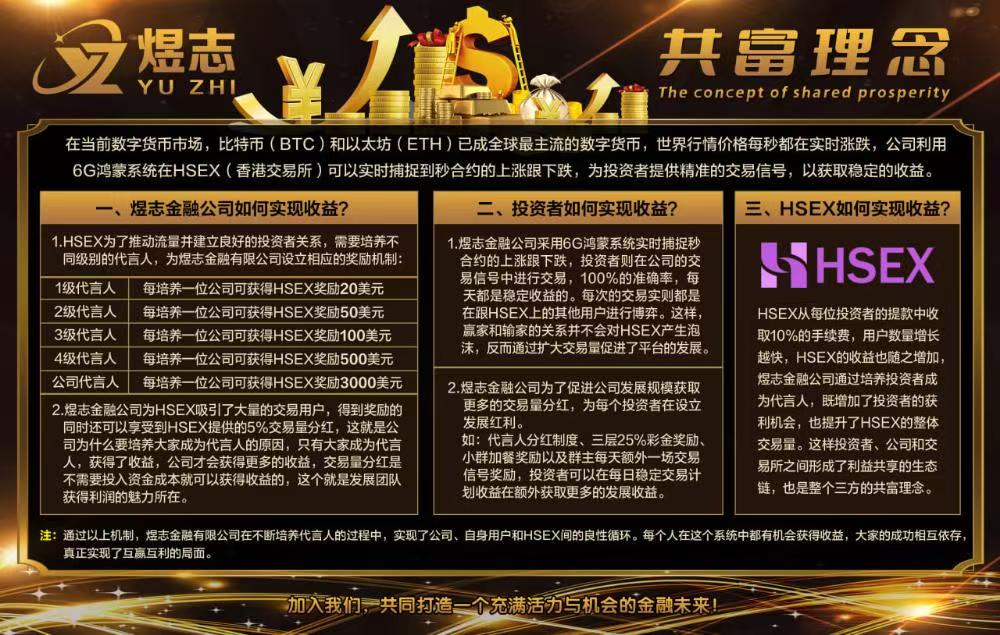
揭秘日利率1%资金盘陷阱:办完翻倍活动就跑
Jing Ji Guan Cha Wang· 2025-12-13 01:49
Core Viewpoint - The article discusses the fraudulent operations of Yuzhi Financial Co., which has been running a pyramid scheme disguised as a virtual currency trading platform, promising high returns to attract investors and requiring them to recruit others for additional rewards [1][19]. Group 1: Company Operations - Yuzhi Financial claims to have a membership of 3 million, suggesting a potential fund size exceeding 20 billion yuan based on a minimum investment threshold of 7,400 yuan [1]. - The company operates multiple apps, including HSEX, which has been flagged for illegal financial activities and lacks regulatory approval [2][10]. - Investors are required to pay a "self-certification deposit" of 20% of their total account balance to withdraw earnings, with withdrawal fees increasing from 10% to 30% [1][10]. Group 2: Investor Experiences - Investors, like Wang Qin, initially saw returns but later realized they were part of a scam when they could not withdraw their funds after a promotional event [5][12]. - The scheme involves a "static" and "dynamic" return model, where static returns are based on following trading signals, and dynamic returns are earned through recruiting new investors [7][8]. - Many investors are left searching for new projects to recover their losses, indicating a cycle of continuous recruitment and investment [3][4]. Group 3: Regulatory Response - The Guangdong provincial government issued warnings about Yuzhi Financial's illegal activities, confirming that it operates without the necessary licenses [2]. - The Hong Kong Stock Exchange has listed Yuzhi Financial and its associated apps as suspicious, indicating a lack of legitimate operations [12][13]. - Legal experts emphasize the need for stricter regulations and awareness among investors to combat such fraudulent schemes [28].
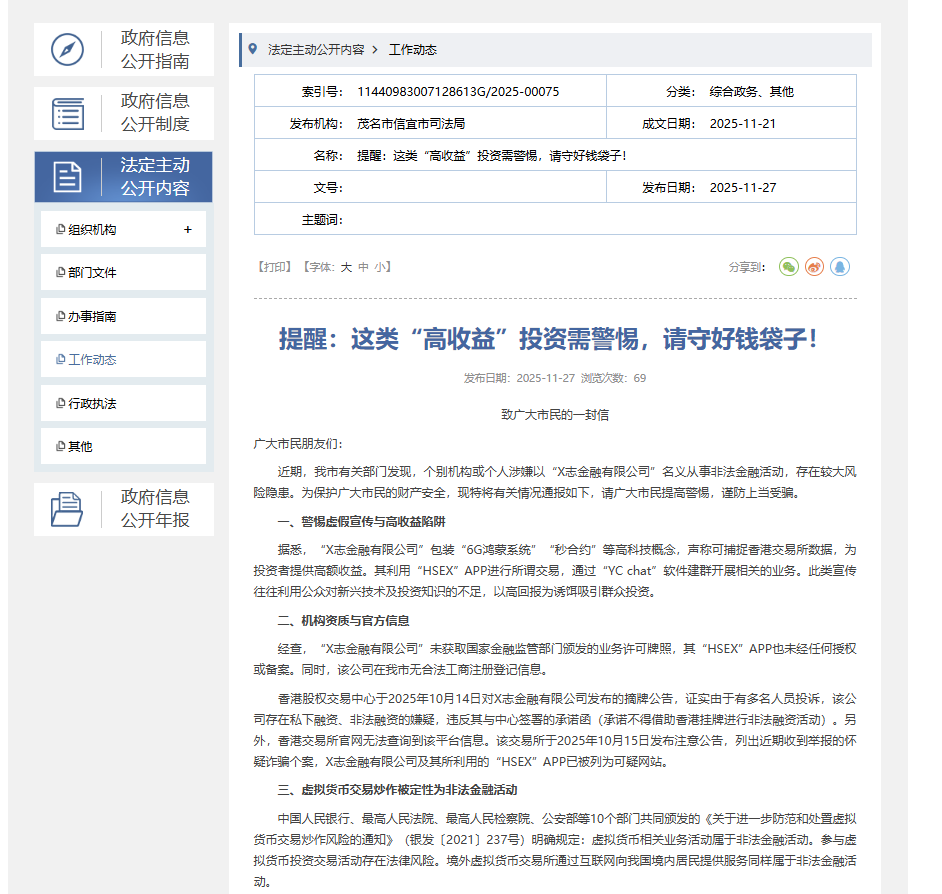
白银暴涨,银/铜比创历史,资金盘狂欢倒计时...
雪球· 2025-12-12 04:41
Core Viewpoint - The article discusses the current state of silver investments, highlighting the risks associated with the recent surge in silver prices and the implications of high volatility in the market [3][4]. Group 1: Silver Market Analysis - The silver-gold ratio has decreased from a high of 88 to 68, indicating that the potential for profit has diminished as the market has already absorbed much of the gains [5][6]. - The article argues that investing in silver at this stage is characterized by low returns and high volatility, making it a risky endeavor [7]. - The narrative that industrial demand is driving the silver market is challenged, as other industrial metals like copper and aluminum have not shown similar price increases, suggesting that the current silver price surge is driven by speculative capital rather than fundamental demand [8][11]. Group 2: Historical Context and Risks - Historical examples of silver market manipulation, such as the Hunt brothers' actions in 1980, illustrate the potential for rapid price increases followed by steep declines, emphasizing the risks of current market dynamics [12][13]. - The article warns that the current silver price does not align with either safe-haven investment logic or industrial demand, indicating a potential bubble driven by speculative trading [11][13]. Group 3: Investment Recommendations - The article advises against being the "last one holding the bag" in the silver market, suggesting that investors should consider more stable assets like gold or cheaper industrial metals like copper and aluminum [14][15]. - It highlights an arbitrage opportunity in silver LOF (Listed Open-Ended Fund), where the premium has surged above 15%, suggesting that selling now could yield better returns than holding onto silver [16]. - The article emphasizes the importance of patience in investment, noting that the current market conditions are not conducive to finding good opportunities compared to earlier periods when the silver-gold ratio was higher [18].

独家|杠杆超百倍、交易转入地下,水贝黄金赌局“变脸”重来
Di Yi Cai Jing· 2025-12-11 04:47
Core Viewpoint - The article highlights the increasing complexity and risks associated with the "pre-priced trading" platforms in the Shui Bei gold market, which have shifted from simple registration to requiring extensive personal documentation and manual verification processes [1][2]. Group 1: Changes in Trading Platforms - The entry barriers for participating in pre-priced trading have significantly increased, now requiring users to submit identification and undergo manual review, which can take up to a day [1][2]. - Some platforms have transitioned from the "pre-priced" concept to a "pricing settlement" model, allowing users to settle profits and losses based on real-time gold prices without physical delivery [1][4]. - New players with little to no experience in gold trading are entering the market, primarily engaging in online electronic trading rather than physical delivery, which accumulates risks [1][10]. Group 2: Operational Changes and Risks - The funding flow has become more opaque, with some platforms requiring users to contact customer service for specific bank account details to transfer funds, rather than providing direct online deposit options [2]. - The platforms are increasingly adopting a model that avoids physical delivery to circumvent tax costs, with users able to settle based on price differences without incurring VAT [4][5]. - There is a notable shift towards leveraging high-risk trading strategies, with some platforms offering leverage ratios as high as 100 times, attracting inexperienced investors [5][10]. Group 3: Regulatory and Compliance Issues - The article discusses the challenges in regulating these trading platforms, which often operate in a gray area, making it difficult for authorities to intervene proactively [12]. - There are concerns regarding the legitimacy of the offshore API hedging mechanisms used by some platforms, which may not comply with domestic regulations and could pose significant risks to investors [8][9]. - The lack of transparency in the operations of these platforms raises questions about the safety of investor funds, especially if the platforms do not fully hedge their positions [9][10].
聚帆联盟银河国际已经崩盘,震哥早已预警,警惕二次收割
Sou Hu Cai Jing· 2025-12-03 23:11
Group 1 - The lottery platform "Jufan Alliance Galaxy International" has completely collapsed, with operator Fang Zhijie having embezzled over 100 million in funds, raising concerns about potential secondary scams [1] - All online lottery activities in the country are illegal, with the only legitimate channel being physical retail stores, and any platform promising guaranteed winnings is a scam [3] - The nature of Ponzi schemes is highlighted, where early participants profit while later ones become victims, emphasizing the psychological tendency to ignore warnings until it is too late [3]

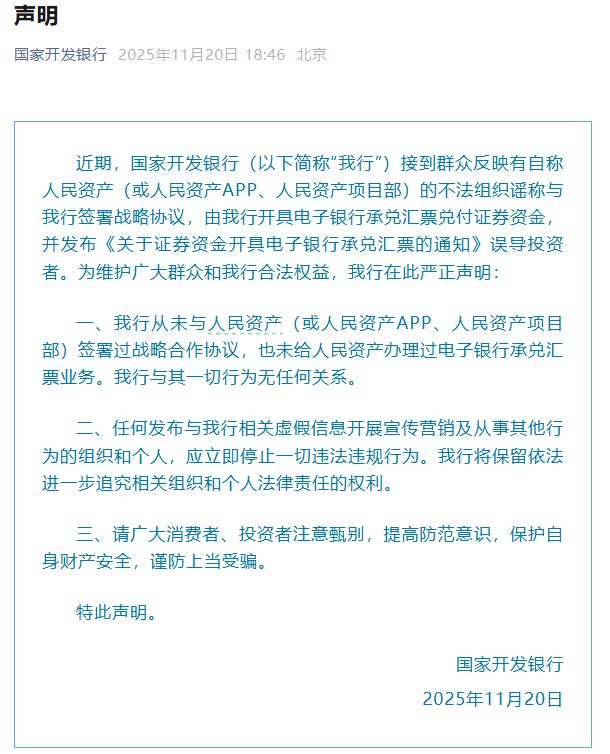
国开行提醒大家防范的“人民资产”是什么?
Mei Ri Jing Ji Xin Wen· 2025-12-01 15:04
Core Viewpoint - The "People's Assets" platform is suspected of being a fraudulent scheme that misuses the names of legitimate institutions like the National Development Bank and the National Data Bureau to attract investors [1][2][9]. Group 1: Allegations and Responses - The National Development Bank issued a statement denying any association with the "People's Assets" platform, urging consumers and investors to be cautious [1][2]. - The National Data Bureau also clarified that it has never issued any certificates related to personal data asset ownership, labeling the claims made by the platform as fraudulent [2][3]. - Reports indicate that the "People's Assets" app is registered in Cambodia and is likely operated by an overseas team [1][4]. Group 2: Investor Experiences - Many investors, particularly older individuals, have been drawn into the "People's Assets" scheme, with one investor reportedly investing around 200,000 yuan without seeing returns [3][10]. - The app claims to offer high returns on minimal investments, such as promising over 80,000 yuan in returns for an initial investment of 600 yuan [6][7]. Group 3: App Functionality and Operations - The "People's Assets" app promotes itself as a "data asset confirmation service platform" and requires users to pay fees for converting their data assets into "original shares" [5][6]. - Users are incentivized to recruit others into the scheme through a multi-level referral system, which is characteristic of pyramid schemes [5][12]. Group 4: Legal and Ethical Concerns - Legal experts have identified the "People's Assets" platform as fitting the profile of a "funding plate," a type of illegal financial scam similar to a Ponzi scheme, due to its lack of real asset backing and reliance on misleading claims [9][12]. - The platform has been linked to various fraudulent activities, including the issuance of counterfeit electronic bank acceptance bills that falsely claim to be backed by the National Development Bank [8][9]. Group 5: The Role of "Luo Pan" Participants - Some investors, referred to as "Luo Pan" participants, are aware of the fraudulent nature of the platform but continue to engage with it, hoping to profit before it collapses [10][11]. - This group often operates in secrecy, using social media to promote the scheme while disguising their true intentions [11][12].
国开行辟谣的“人民资产”是什么?记者实探:号称投资600元80天赚8万元,一位投资人的女儿:劝不住她,警察都拦不住
3 6 Ke· 2025-11-26 03:39
Core Viewpoint - The "People's Asset" platform is suspected of being a fraudulent scheme that misuses the names of legitimate institutions like the National Data Bureau and the China Development Bank to lure investors with promises of high returns, while actually providing fake financial instruments [1][3][6]. Summary by Sections Fraudulent Activities - The "People's Asset" app is allegedly operated by an overseas team, registered in Cambodia, and has been reported to mislead investors by claiming to have strategic agreements with legitimate financial institutions [5][10]. - The platform has been accused of issuing fake electronic bank acceptance bills to investors, which are not backed by any real financial assets [15][16]. Investor Behavior - Many investors, particularly older individuals, have been drawn into the scheme despite warnings, often due to a belief in the promised returns and a lack of understanding of the risks involved [7][17]. - Some investors, referred to as "lu pan xia" (literally "shear sheep"), knowingly participate in these schemes with the hope of profiting before the scheme collapses [17][20]. Characteristics of the Scheme - The platform operates on a multi-level referral system, rewarding users for bringing in new investors, which is a common characteristic of Ponzi schemes [16][20]. - The app promotes unrealistic returns, such as an investment of 600 yuan yielding over 80,000 yuan in 80 days, which raises red flags about its legitimacy [11][15]. Regulatory Response - The China Development Bank and the National Data Bureau have both issued statements disassociating themselves from the "People's Asset" platform, emphasizing that no such agreements or certificates exist [3][6][16]. - Legal experts have classified the "People's Asset" platform as a typical "funding plate" scheme, highlighting its fraudulent nature and lack of real underlying assets [16][20].
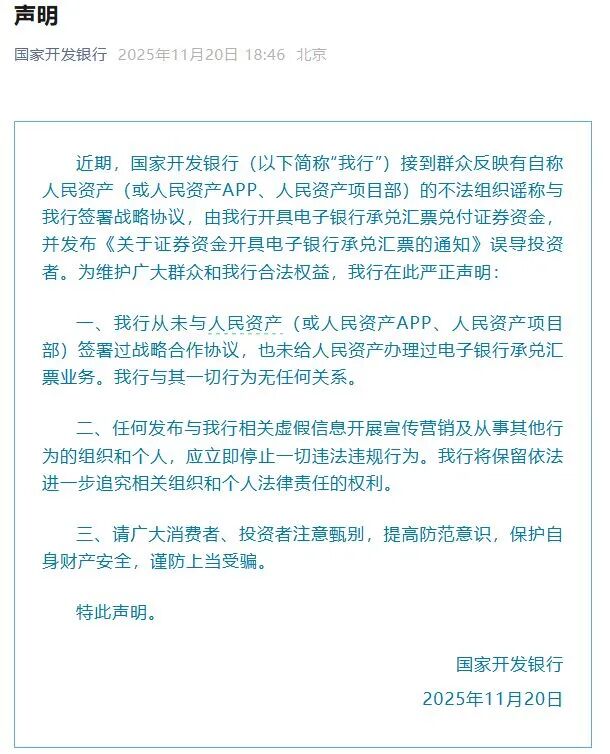
国开行提醒大家防范的“人民资产”是什么?记者被宣传“投600元赚8万元” 投资者提现时给的却是假汇票
Mei Ri Jing Ji Xin Wen· 2025-11-25 17:53
Core Viewpoint - The "People's Asset" platform is suspected of being a fraudulent scheme that misuses the names of the National Development Bank and the National Data Bureau to attract investors, leading to significant concerns and warnings from these institutions [1][5][14]. Group 1: Platform Operations - The "People's Asset" app is registered in Cambodia and appears to be operated by an overseas team, with its active promotion supported by a group of individuals known as "lu pan xia" [4][8]. - The app claims to offer services related to personal data asset rights, misleading users into believing they can convert their data into financial assets [9][15]. - Users are required to pay high fees for services, such as a 608 yuan fee for converting data assets, which raises red flags about its legitimacy [15][21]. Group 2: Investor Experiences - Many investors, particularly older individuals, have been drawn into the scheme, with reports of significant financial losses and reliance on false promises of high returns [7][16]. - One investor reported investing 20,000 yuan over a year, hoping to withdraw substantial amounts based on the app's claims, but faced difficulties in recouping their investment [7][14]. - The app's promotional materials suggest unrealistic returns, such as an investment of 600 yuan yielding over 80,000 yuan in 80 days, which is indicative of a Ponzi scheme structure [9][14]. Group 3: Legal and Regulatory Response - The National Development Bank and the National Data Bureau have issued statements disassociating themselves from the "People's Asset" platform, emphasizing that no legitimate agreements or documents exist between them and the platform [1][5]. - The platform has been linked to fraudulent activities, including the issuance of fake bank acceptance bills that mislead investors into believing they can cash out their investments [14][15]. - Legal experts have classified the "People's Asset" platform as a typical "funding scheme," highlighting its use of fake documents and lack of real asset backing [15][21].
炒股亏了保险兜底,月收益率高达100%?
Mei Ri Jing Ji Xin Wen· 2025-11-19 13:09
Core Viewpoint - The article discusses a suspicious investment product called "An Wo Gu Bao," which claims to provide insurance coverage for stock investments, promising high returns while minimizing risks. However, investigations reveal significant doubts about its legitimacy and potential links to fraudulent activities [1][3][6]. Summary by Sections Product Description - "An Wo Gu Bao" is marketed as the first insurance product for stock investments, claiming to offer monthly returns of 60% to 100% and full compensation for losses by the insurance company [3][4]. - The investment process is simplified, requiring minimal effort from investors, who only need to authorize the insurance company to select stocks on their behalf [4][5]. Company and Partnerships - The product is purportedly backed by a legitimate Hong Kong insurance company and has a strategic partnership with CITIC Securities, which is claimed to provide brokerage services [1][5]. - However, both the insurance company and CITIC Securities have denied any association with "An Wo Gu Bao," indicating that it is not an official product [6][7]. Regulatory Concerns - Experts highlight that stock investments are inherently speculative and typically not insurable, as they do not fit the criteria for traditional insurance products [6][9]. - The article emphasizes that any insurance product covering stock investments would require regulatory approval, which "An Wo Gu Bao" lacks [6][9]. Marketing and Promotion - The product employs a multi-level marketing strategy, offering incentives for users to recruit new investors, which raises red flags about its legitimacy and potential classification as a pyramid scheme [8][10]. - The promotional structure includes rewards for both first-time investors and those who refer new clients, suggesting a focus on expanding the investor base rather than genuine investment returns [8][10]. Expert Opinions - Industry experts warn that the promised returns are unrealistic and indicative of a Ponzi scheme, where returns to earlier investors are paid from the contributions of newer investors rather than from legitimate profits [9][10][11]. - Investors are advised to maintain skepticism towards high-return promises and to scrutinize the transparency and legitimacy of such investment opportunities [11][12].