
新能源汽车充电桩

Search documents
筑牢春运“防火墙”!包茂高速举行应急演练,提升充电安全保障能力
Xin Lang Cai Jing· 2026-01-30 09:19
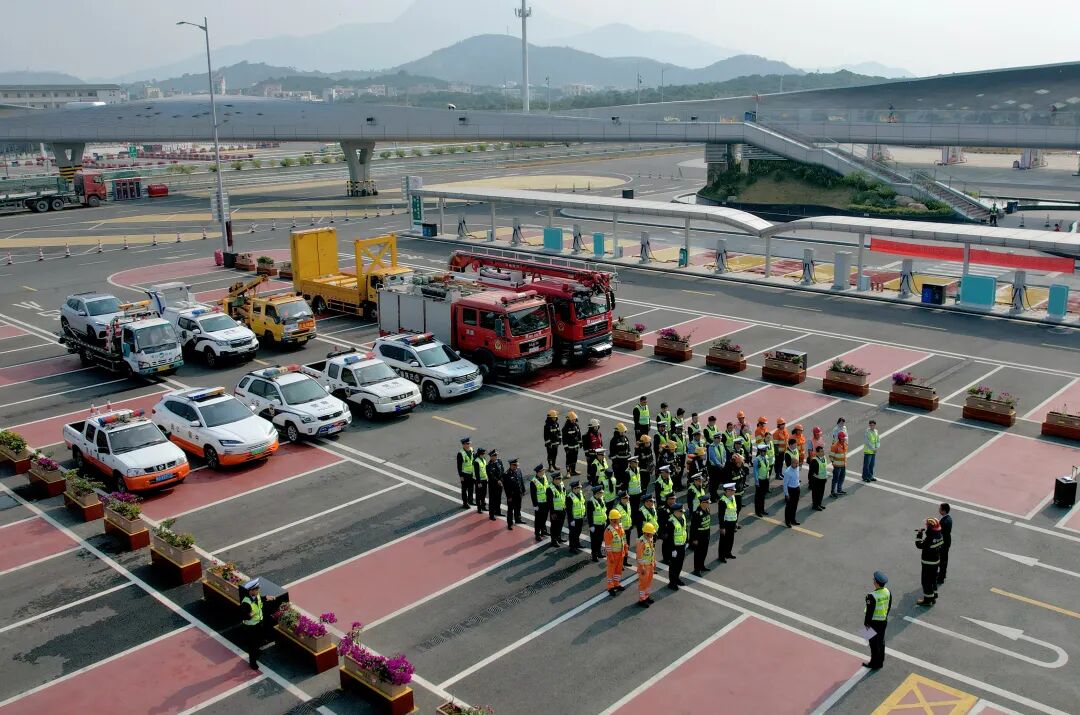
Core Viewpoint - The emergency drill conducted at the Baomao Expressway's Baiqiao Service Area aimed to enhance the multi-agency emergency response mechanism for electric vehicle incidents during the Spring Festival travel season [1][12]. Group 1: Emergency Drill Overview - The drill simulated a scenario where a small electric vehicle caught fire while charging, leading to a rapid response from various agencies [2][4]. - The emergency response plan was activated immediately, with the power supply to the charging area being cut off [2][5]. - Various agencies, including highway administration, police, and fire departments, collaborated effectively to manage the situation and ensure public safety [10][12]. Group 2: Response Actions - Highway administration and service area staff quickly established a safety perimeter and guided surrounding vehicles to evacuate [2][4]. - Firefighters arrived promptly, deployed hoses, and utilized high-pressure water to extinguish the flames, followed by cooling the vehicle's battery to prevent re-ignition [5][8]. - After the fire was extinguished, the scene was inspected for evidence, and the charging equipment was thoroughly checked for safety [5][10]. Group 3: Importance of Preparedness - The increasing prevalence of electric vehicle charging stations necessitates constant vigilance against potential emergencies [12]. - The drill effectively tested the response speed, coordination efficiency, and practical capabilities of the multi-agency emergency response mechanism [12].

枣庄城乡居民自用充电桩年增2.3万户
Qi Lu Wan Bao· 2026-01-30 05:17
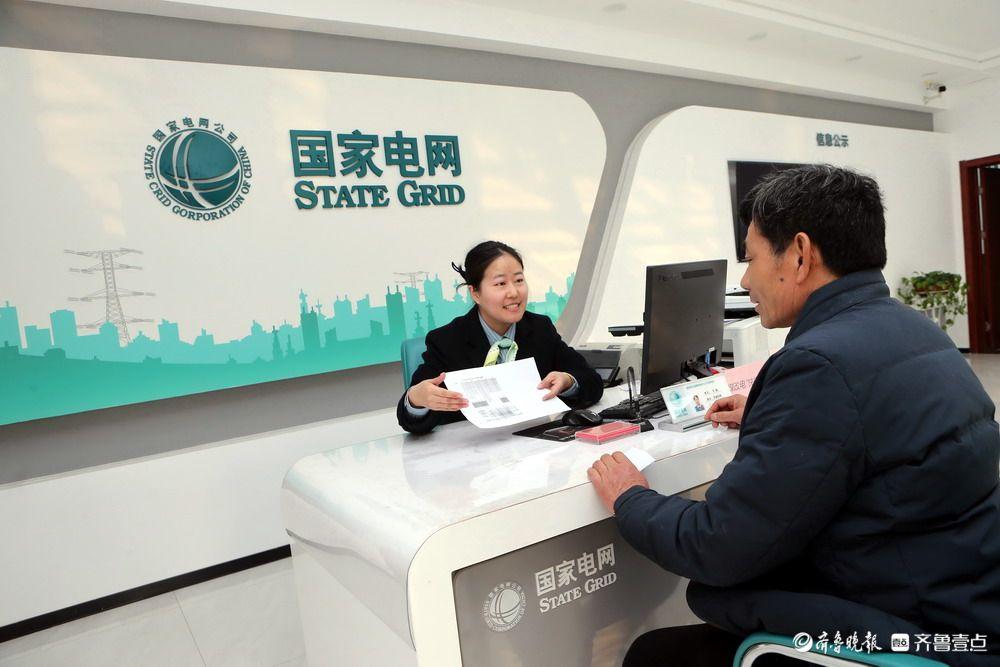
Core Insights - The number of residential charging piles in Zaozhuang City has reached 63,890, with 23,000 new installations in the past year, marking a year-on-year growth of 120.1% [1] - The total connected capacity for these charging piles is 161,000 kW, equivalent to the electricity consumption of a medium-sized enterprise [1] - The local power company is actively promoting the installation of charging piles as part of its commitment to the "dual carbon" strategy, streamlining the application process for residents [1] Group 1 - The top three districts for residential charging pile installations are Tengzhou, Shizhong, and Gaoxin, with 22,349, 10,504, and 10,211 installations respectively [3] - The demand for residential charging piles is expected to remain high through 2025, driven by the increasing popularity of electric vehicles and government subsidies [3] - The Gaoxin district has seen a monthly increase in applications, starting from 186 in January to 396 in December, indicating a strong upward trend [3] Group 2 - The local power company has implemented a streamlined process for charging pile installation, ensuring that applications are handled efficiently, even during adverse weather conditions [3] - Residents are benefiting from lower electricity costs due to peak and valley pricing, making electric vehicle charging more attractive [3] - The ease of applying for charging piles has contributed to the growing preference for green transportation among residents [3]
省政协常委吴学明:激活海外侨团资源,以绿色引擎破外贸壁垒
Nan Fang Du Shi Bao· 2026-01-27 10:48
Core Viewpoint - Guangdong needs to leverage its overseas resources, complete industrial chain, and geographical advantages to overcome development bottlenecks and contribute to building a high-level foreign trade power through differentiated innovation measures [1] Group 1: Suggestions for Enhancing Foreign Trade - Establish a "Global Overseas Chinese Chain" collaborative mechanism to activate cross-border resource dynamics, integrating over 200 overseas key overseas Chinese groups with state-owned enterprises and specialized industry clusters [2] - Innovate a "Digital + Industry" model to create high value-added products, building a "RCEP Digital Trade Industrial Corridor" and providing integrated services for Guangdong enterprises [2] - Strengthen a "Green + Standards" dual-drive approach to address international trade barriers, including the establishment of a provincial "Foreign Trade Green Transformation Special Fund" and a "Green Foreign Trade Service Alliance" [3] - Optimize the cultivation system for foreign trade entities to stimulate market vitality, implementing a "New Foreign Trade Forces Cultivation Plan" for startup cross-border e-commerce companies [3]
公牛集团起诉家的电器:一场行业内卷之下的“困斗”
经济观察报· 2026-01-23 15:54
Core Viewpoint - The ongoing legal dispute between Gongniu Group and Jia's Electric reflects intense competition within the industry, with Jia's Electric challenging Gongniu's claims of market dominance and misleading advertising practices [2][8]. Group 1: Legal Dispute - Jia's Electric has filed a counterclaim against Gongniu Group in response to a lawsuit seeking 4.2 million yuan in damages, asserting that Gongniu's advertising is misleading [2][4]. - The legal conflict escalated from a public dispute over advertising claims, with Jia's Electric arguing that Gongniu's assertion that "7 out of 10 Chinese households use Gongniu" is inaccurate [5][8]. - Gongniu Group claims that Jia's Electric's social media posts have harmed its commercial reputation, leading to the legal action [4][5]. Group 2: Market Position and Competition - Gongniu Group holds a significant market share of 60% to 70% in the power strip sector, while Jia's Electric claims Gongniu's share in the wall switch socket market is around 30% [5][6]. - The competition has intensified as Gongniu has expanded into the wall switch socket market, impacting Jia's Electric's sales and market position [8][9]. - Jia's Electric's sales have reportedly declined significantly in 2024 and 2025, prompting the company to enhance its online marketing efforts to strengthen its brand presence [8][9]. Group 3: Financial Performance - Gongniu Group reported a revenue of approximately 12.2 billion yuan for the first three quarters of 2025, a decrease of 3.22% compared to the same period in 2024, with net profit down by 8.72% [9]. - The company is facing challenges in its traditional business while simultaneously developing new markets and products [9]. - Despite the financial pressures, Gongniu Group is adjusting its strategies to invest in new business opportunities, indicating a focus on long-term growth [9].


公牛集团起诉家的电器:一场行业内卷之下的“困斗”
Jing Ji Guan Cha Wang· 2026-01-23 14:57
Core Viewpoint - The ongoing legal dispute between Gongniu Group and Jia's Electric reflects intense competition and industry challenges within the electrical appliance sector, particularly in the wall switch and socket market [2][6]. Group 1: Legal Dispute - Jia's Electric has filed a jurisdictional objection in response to Gongniu Group's lawsuit, while also counter-suing Gongniu Group [2]. - Gongniu Group claims that Jia's Electric's advertising misleads consumers, asserting that their slogan "7 out of 10 Chinese families use Gongniu" is misleading [2][4]. - Jia's Electric's founder, Kuang Jian, describes Gongniu's compensation demand of 4.2 million yuan as excessive and views the legal action as a challenge to be met head-on [2][3]. Group 2: Market Position and Competition - Gongniu Group holds a dominant market share of 60% to 70% in the power strip sector, while Jia's Electric focuses on wall switches and sockets [4]. - Kuang Jian argues that Gongniu's claim of widespread usage in the wall switch market is exaggerated, estimating Gongniu's actual market share in that segment to be around 30% [4][6]. - The competition has intensified since 2023, with Jia's Electric experiencing a significant sales decline due to Gongniu's aggressive market entry into the wall switch sector [6][7]. Group 3: Financial Performance - Gongniu Group reported a revenue of approximately 12.2 billion yuan for the first three quarters of 2025, a decrease of 3.22% compared to the same period in 2024, with a net profit of about 2.98 billion yuan, down 8.72% year-on-year [9]. - Despite facing challenges in traditional business areas, Gongniu Group is focusing on new business development and market expansion [9]. - Jia's Electric plans to expand its product line into the power strip market to counteract the competitive pressures and ensure survival in the industry [7][8].

北京市新能源汽车充电桩增至47.9万个
Xin Lang Cai Jing· 2026-01-04 20:04
Group 1: Electric Vehicle Infrastructure Development - The city aims to optimize the layout of charging infrastructure during the "14th Five-Year Plan" period to meet the growing demand for electric vehicle charging and support the development of the electric vehicle industry [1] - The number of charging piles in the city increased from 230,000 to 479,000, and the number of battery swap stations rose from 158 to 360 [1] - The total charging volume for electric vehicles increased from 1.5 billion kWh to 3.5 billion kWh [1] Group 2: Coal Consumption and Energy Transition - By 2025, the city plans to reduce coal consumption by approximately 12.33 million tons, bringing the total coal consumption down to around 250,000 tons [2] - The "coal-to-electricity" program aims to upgrade the distribution network, with 1.37 million households participating [2] - The city has completed a transaction of 1.526 billion kWh for green electricity to replace reduced electricity from gas-fired power plants [2] Group 3: Green Transportation Initiatives - By 2025, the proportion of green travel in the central urban area is expected to reach 76.5%, an increase of 2.5 percentage points from 2020 [3] - The electrification rate of operational vehicles in the transportation sector is projected to exceed 46% by the end of 2025, with 100% of taxi vehicles being electric [3] - The city is focusing on building a green freight transport system, with a goal of achieving a 12% green transport ratio for goods by 2025 [3]
人民网:武汉2025年全社会用电量公布 新能源与数字经济成增长双引擎
Ren Min Wang· 2026-01-04 03:02
Core Insights - The total electricity consumption in Wuhan for 2025 reached 85.712 billion kilowatt-hours, reflecting a year-on-year growth of 4.76% compared to 2024, indicating robust resilience in the economy [1] - The electricity consumption data highlights a shift in Wuhan's economic direction, with significant growth in sectors such as new energy vehicle manufacturing and internet data services, which saw year-on-year increases of 71.9% and 240.6%, respectively [1] Industry Electricity Consumption - The secondary industry experienced a year-on-year electricity consumption growth of 5.53%, with manufacturing seeing a notable increase of 7.57%, surpassing the average growth rate [1] - The automotive manufacturing sector's electricity consumption grew by 13.05%, with new energy vehicle manufacturing leading with a 71.9% increase, underscoring Wuhan's position as a leader in the electrification transition [1] - The computer, communication, and other electronic device manufacturing sectors also reported a 14.29% increase in electricity consumption [1] Service Sector Growth - The third industry, particularly internet data services, exhibited a remarkable surge in electricity consumption, soaring by 240.6%, highlighting the explosive growth of Wuhan's digital economy industry cluster [1] Infrastructure Development - In 2025, the State Grid Wuhan Electric Power Company focused on creating a modern electricity business environment, implementing a "dual long system" for major project connections, facilitating immediate project commencement and electricity access [3] - The construction of the large power grid continued, with the commissioning of two 500 kV substations, injecting strong momentum into regional economic development [3] - The company also executed 20 key projects for grid optimization and reinforcement, ensuring timely completion of 165 summer peak power supply projects [3] Changes in Electricity Structure - The growth rate of electricity consumption for urban and rural residents reached 3.84%, which is lower than the overall societal growth rate, while the electricity consumption for charging and swapping services increased by 17.4%, reflecting a rise in citizens' willingness for green travel [3]

山东临朐:聚力充电设施建设,赋能绿色低碳转型
Zhong Guo Fa Zhan Wang· 2025-12-30 03:36
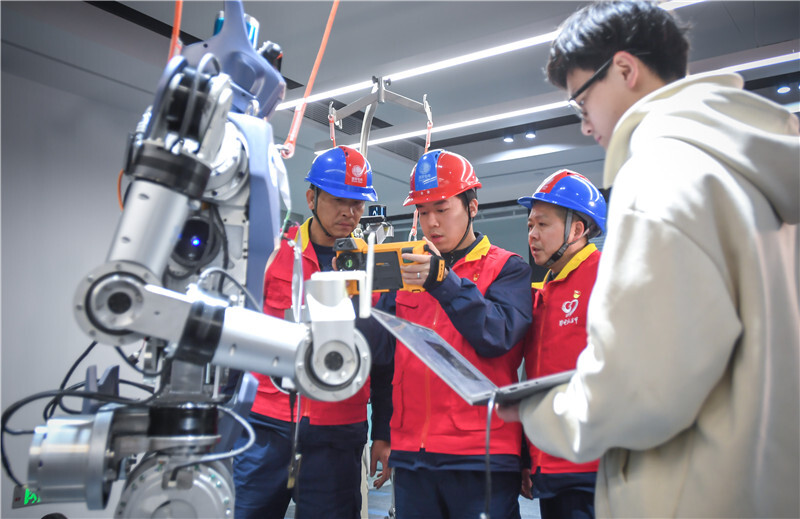
Group 1 - The core viewpoint emphasizes the acceleration of new energy infrastructure construction in Linqu County, Shandong Province, to support the green low-carbon development strategy [1] - The county has implemented a collaborative mechanism to enhance the efficiency of charging station construction, achieving the addition of 37 charging stations and 265 charging piles (365 charging guns) this year, exceeding the annual target set by the city [1] - A smart charging station has been established, capable of serving 81 vehicles simultaneously, with a maximum daily service capacity of 500 vehicle trips, marking a significant advancement in the county's smart charging infrastructure [1] Group 2 - The county has optimized the electricity business environment by implementing a streamlined process for the installation of electric vehicle charging piles, resulting in the addition of 2,500 personal charging piles this year [2] - Future plans include continuing to focus on green low-carbon high-quality development goals, enhancing the operational efficiency of charging infrastructure, and improving the network to support sustainable economic and social development in the county [2]
车位被占 新能源汽车有桩难充
Xin Lang Cai Jing· 2025-12-24 22:53
Core Viewpoint - The article highlights the challenges faced in the implementation of public charging stations for electric vehicles in residential areas, particularly the issue of non-electric vehicles occupying charging spots, which significantly reduces the efficiency of these resources [1][2][3]. Group 1: Current Situation - Over 50,000 public charging stations have been established in residential areas, with a goal to ensure that all old residential communities in the central urban area have charging stations by the end of 2026 [1]. - There is a widespread issue of non-electric vehicles occupying charging spots, leading to frustration among electric vehicle owners who struggle to find available charging stations [2][3]. Group 2: Community Responses - Some communities are exploring solutions to the problem of non-electric vehicles occupying charging spots, such as increasing patrols and adding more charging stations [2][4]. - The Minxing Jiayuan community has implemented a combination of measures including public awareness campaigns, a 24-hour reporting hotline, and the use of a community app to encourage residents to report violations [4]. Group 3: Expert Recommendations - Experts suggest that a multi-faceted approach is necessary to address the issue, including improving community management regulations, encouraging residents to report violations, and upgrading to smart control systems that can identify vehicle types and manage parking accordingly [5][6].
明年财政政策“工具箱”有望进一步扩容
Zhong Guo Zheng Quan Bao· 2025-12-15 20:19
Core Viewpoint - The article emphasizes the effectiveness of proactive fiscal policies in 2025, which have supported major national strategies, expanded domestic demand, stabilized growth, and improved people's livelihoods. It anticipates continued expansionary fiscal policies in 2026, focusing on both material and human investments [1][2]. Group 1: Fiscal Policy Effectiveness - In 2025, proactive fiscal policies significantly supported major national strategies, with 800 billion yuan allocated for "two重" construction and 1,880 billion yuan for equipment upgrades, leading to a 10.7% year-on-year increase in machinery and equipment purchases from January to November [1]. - Increased spending in the livelihood sector was noted, with sales in supported retail sectors growing by 26.5% and 20.3% year-on-year, respectively, from January to November [1]. - Over 70% of national fiscal spending since the start of the "14th Five-Year Plan" has been directed towards improving people's livelihoods, according to the Minister of Finance [1]. Group 2: Investment in People and Material - Fiscal policies in 2025 met expectations in material investments, while policies aimed at human investments, such as childcare subsidies and free preschool education, contributed to high-quality population development [2]. - The combination of material and human investments is seen as essential for high-quality development and improving residents' living standards, creating a virtuous cycle of new demand and supply [2]. Group 3: Future Policy Directions - The Ministry of Finance plans to optimize spending structures and enhance financial support for major national strategies, focusing on increasing funding for human investments and expanding domestic demand [3][4]. - Policies supporting "two重" and "two新" will continue, with an emphasis on utilizing government bond funds and increasing central budget investments to stabilize and boost investment [5]. - Experts suggest that optimizing project reserves and expanding the fiscal "toolbox" will enhance the effectiveness of material investment policies [5][6].