廉洁文化建设

Search documents
“五维联动”模式下国有企业廉洁文化建设路径研究
Qi Lu Wan Bao· 2025-08-28 23:16
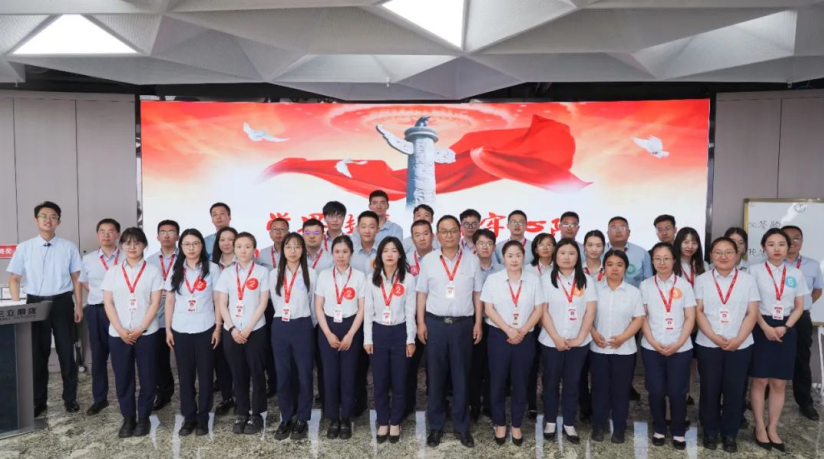
Core Viewpoint - The company emphasizes the importance of integrity construction in state-owned enterprises for national economic security and social image, actively responding to the strategy of strict governance of the Party by innovating the "Integrity as One" cultural brand and implementing a five-dimensional mechanism for promoting integrity culture [1] Group 1: Five-Dimensional Model Framework and Practical Implications - The "Five-Dimensional" model includes five dimensions: ideological education, cultural carriers, institutional guarantees, supervision systems, and responsibility implementation, forming a systematic closed loop and collaborative governance framework [2] - "Strengthening Roots and Cultivating Souls": The company enhances ideological education and value guidance through various learning mechanisms, establishing a multi-level education system to increase integrity awareness among all employees [2] - "Building a Solid Foundation": The company innovates and integrates cultural carriers, creating a clean culture park and hosting exhibitions to promote integrity through artistic expressions [2] - "Integrity as a Safeguard": The company establishes a robust system and smart supervision, implementing management methods to clarify typical violations and utilizing digital tools for transparent management [3] - "Disciplinary Sword": The company constructs a comprehensive supervision system, ensuring the implementation of Party decisions and addressing issues like interest transfer through special rectification [3] - "Joint Responsibility": The company forms a responsibility system involving multiple stakeholders and promotes integrity culture through various online and offline platforms [3] Group 2: Practical Outcomes Analysis - The implementation of the "Five-Dimensional" model has led to significant improvements in integrity culture and operational efficiency, with a notable enhancement in the cultural atmosphere and the establishment of a collaborative integrity culture matrix [4] - Production efficiency has increased significantly, with automation rates reaching 73% and a 36% improvement in loading and unloading efficiency, alongside a threefold increase in throughput over three years [4] - The company has gained social recognition, being awarded the title of "Asia-Pacific Green Port" and becoming a benchmark for smart green port construction [4] Group 3: Conclusion and Insights - The company's "Five-Dimensional" integrity culture construction model integrates various elements to promote both integrity governance and high-quality development, with plans to further enhance digital technology for comprehensive power supervision [5]
书记谈丨有力监督护航学校高质量发展
Zhong Yang Ji Wei Guo Jia Jian Wei Wang Zhan· 2025-08-28 00:31
Group 1 - The article emphasizes the importance of strengthening political supervision in higher education institutions to ensure alignment with the central party's directives and maintain educational integrity [5][6][10] - It highlights the need for a comprehensive approach to prevent corruption, focusing on the "three no's" strategy: not daring to corrupt, not being able to corrupt, and not wanting to corrupt [7][8][11] - The article discusses the establishment of a robust disciplinary inspection and supervision team to enhance the effectiveness of oversight in universities [12][13] Group 2 - The article outlines the necessity of addressing corruption and misconduct in areas directly affecting students and faculty, such as admissions and resource management [11][10] - It stresses the importance of integrating moral education into the political supervision process to cultivate a responsible and ethical academic environment [6][9] - The article calls for the use of technology and data analytics to enhance transparency and accountability in monitoring corruption within educational institutions [11][12]

河南纪检监察机关强化日常教育管理监督 以好家风涵养好作风
Zhong Yang Ji Wei Guo Jia Jian Wei Wang Zhan· 2025-08-26 00:19
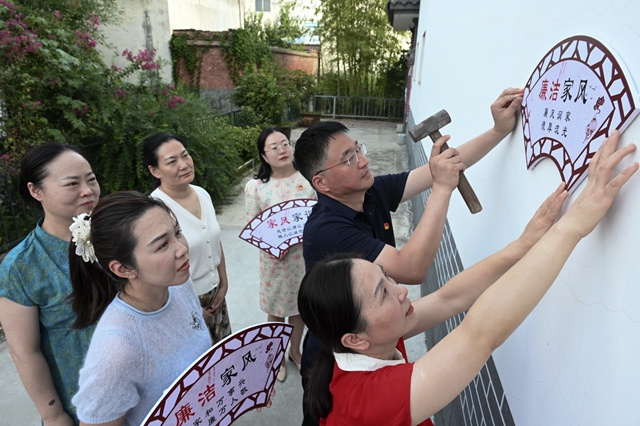
Core Viewpoint - The article emphasizes the importance of family values and integrity in the construction of a clean political environment, highlighting initiatives taken by various local governments in Henan Province to promote family integrity among party members and leaders [4][15]. Group 1: Family Integrity Initiatives - The Nanyang Municipal Commission for Discipline Inspection and Supervision has established a family values training center to guide party members in becoming role models for family integrity [4]. - The Luyi County has implemented a "clean family visit" initiative, covering over 5,000 families of party members and collecting more than 700 suggestions on integrity [6][8]. - The Huixian Municipal Commission has added family integrity visits in the promotion assessment of cadres, extending supervision to family environments [7]. Group 2: Supervision and Management - The Henan Provincial Commission has revised the management methods for integrity files of provincial cadres, including details about family members' business activities to enhance supervision [5]. - The Anyang Municipal Commission has established integrity files for over 110,000 cadres, using information comparison to identify potential issues [6]. - The article discusses the importance of strict daily management and supervision to prevent corruption stemming from poor family values [5][6]. Group 3: Educational Campaigns - The article mentions the use of typical cases of family integrity failures to educate party members through warning education films and materials [9][10]. - Various local commissions have organized activities to promote family integrity culture, including exhibitions and themed events [12][13]. - The Henan Provincial Commission has launched a series of activities over the past decade to promote clean family values, collecting over 64,000 family culture works [13][14]. Group 4: Cultural Integration - The article highlights the integration of family values into the broader context of clean culture construction, encouraging local governments to utilize cultural resources to promote integrity [11][15]. - The establishment of family value museums and cultural activities aims to enhance public awareness of integrity and family values [12][14]. - The article notes that family integrity is a crucial aspect of the overall integrity culture construction in the province [15].
李希在山东调研
Yang Guang Wang· 2025-08-24 03:21
Core Viewpoint - The article emphasizes the importance of the disciplinary inspection and supervision agencies in promoting the self-revolution of the Party, as highlighted by Li Xi during his recent research trip in Shandong [1][2]. Group 1: Key Points on Disciplinary Inspection and Supervision - Li Xi stressed the need for the disciplinary inspection agencies to deeply understand and implement Xi Jinping's thoughts on socialism with Chinese characteristics for a new era, particularly regarding the Party's self-revolution [1]. - The agencies are tasked with extending the anti-corruption efforts to grassroots levels and addressing urgent issues faced by the public [1][2]. - Li Xi highlighted the importance of enhancing the construction of a clean culture by exploring traditional Chinese values related to integrity [1]. Group 2: Key Points on Party's Self-Revolution - The article outlines that the disciplinary inspection agencies are crucial in the Party's self-revolution, with a focus on maintaining a clear and determined approach to the anti-corruption struggle [2]. - Li Xi called for a comprehensive implementation of the "three no-corruption" strategy and emphasized the need for effective supervision to ensure accountability in Party governance [2]. - The need for continuous improvement in the capabilities of the inspection teams was also highlighted, with a focus on practical measures to address prominent issues [2].
年中看进展丨辽宁持续加强新时代廉洁文化建设 让清风正气不断充盈
Zhong Yang Ji Wei Guo Jia Jian Wei Wang Zhan· 2025-08-24 00:23
Group 1 - The core theme of the news is the promotion of clean governance and integrity culture in Liaoning Province, emphasizing the integration of traditional, revolutionary, and advanced socialist cultures into the education of party members and officials [1][4][5]. - The "Family Style Power" event showcased a drama that highlights issues related to corruption during wedding celebrations, reflecting the local government's commitment to enhancing integrity culture [1]. - Various cultural exhibitions and activities, such as the "Integrity Stories Exhibition," are being organized to educate the public on historical figures and stories that embody integrity, drawing from classical literature and local history [2][3][6]. Group 2 - The "Clear Wind Family Stories" volunteer lecture series has been successfully held, focusing on revolutionary culture and the importance of integrity, with stories from historical figures being shared to inspire current party members [4][5]. - The integration of non-material cultural heritage, such as local paper-cutting art, into the promotion of integrity culture is being actively pursued, demonstrating a creative approach to cultural education [3]. - The "Integrity Culture" art exhibition has attracted significant public interest, with over 83 organizations participating, showcasing the province's efforts to make integrity education engaging and accessible [6][7]. Group 3 - The ongoing efforts to promote integrity culture are seen as vital for purifying the political environment and supporting the broader revitalization goals of Liaoning Province [8]. - The provincial government is committed to deepening the education on party discipline and integrity, utilizing cultural resources to strengthen the moral foundation of party members [8].
李希在山东调研时强调 深入落实新时代党的自我革命要求 进一步推动纪检监察工作高质量发展
Xin Hua She· 2025-08-23 11:16
Group 1 - The core viewpoint emphasizes the importance of the discipline inspection and supervision agencies in promoting the Party's self-revolution and implementing Xi Jinping's thoughts on governance [1][2] - The need for continuous promotion of party conduct and anti-corruption efforts at the grassroots level to address urgent issues faced by the public is highlighted [1][2] - The focus on enhancing the quality and efficiency of state-owned enterprises to better serve national strategies and promote high-quality development is stressed [1] Group 2 - The importance of deepening the understanding of the responsibilities assigned to discipline inspection and supervision agencies by the Party and the necessity of a persistent anti-corruption campaign is underscored [2] - The call for strengthening the supervision responsibilities to ensure the implementation of Party governance and discipline is made [2] - The initiative to build a robust and self-revolutionary team within the discipline inspection and supervision agencies is outlined, emphasizing practical measures for capability enhancement [2]
年中看进展丨天津深化派驻机构改革 增强派驻监督穿透力和有效性
Zhong Yang Ji Wei Guo Jia Jian Wei Wang Zhan· 2025-08-23 02:02
Group 1 - The article discusses the challenges faced by enterprises in their operations and the issues related to the service provided by relevant departments, including potential corruption and inefficiency [1] - The Tianjin Municipal Commission for Discipline Inspection and Supervision has been actively conducting supervision and research to understand the actual demands of enterprises and the implementation of policies aimed at benefiting them [1][2] - The Commission has established a mechanism for regular supervision and checks to ensure that the responsibilities of the stationed departments are effectively fulfilled [1][3] Group 2 - A recent meeting emphasized the importance of enhancing internal control systems to prevent corruption and improve risk management within financial institutions [2] - The Tianjin Municipal Commission for Discipline Inspection and Supervision has identified 12 specific issues related to party governance and has proposed corrective measures [2][3] - The collaboration between the Commission and various financial institutions aims to strengthen the integration of responsibilities and oversight mechanisms [2][3] Group 3 - The article highlights the establishment of a collaborative supervision mechanism among different supervisory bodies to enhance the effectiveness of oversight [5][6] - Joint supervision teams have been formed to monitor key public projects, ensuring compliance and addressing potential issues in real-time [5][6] - The integration of internal supervisory resources and coordination with audit and financial departments is emphasized to improve overall governance [6][7] Group 4 - The article discusses the importance of building a strong cadre team and enhancing self-discipline among officials to improve their performance [8][9] - Educational activities aimed at warning against corruption have been organized, featuring testimonies from individuals who have faced consequences for their actions [8][9] - The promotion of a culture of integrity and the recognition of exemplary figures in the field are part of the efforts to instill ethical values within organizations [9][10] Group 5 - Training programs for discipline inspection and supervision personnel are being conducted to enhance their skills and capabilities [10] - The training focuses on various aspects of the inspection process, including case handling and legal compliance, to ensure a high standard of work [10]
中远海运:开展廉洁教育 讲好廉洁故事
Zhong Yang Ji Wei Guo Jia Jian Wei Wang Zhan· 2025-08-22 03:50
Group 1 - The central theme emphasizes the importance of promoting integrity culture within the China Ocean Shipping Group as part of the broader initiative to enforce strict party governance responsibilities [1][2] - The company has developed an AI assistant named "Lian Xiao Te" to facilitate self-service inquiries regarding integrity-related regulations and to enhance the education of employees on integrity culture [1] - Various educational activities are being organized, including writing integrity letters, discussions, and creative cultural activities to embed integrity culture into the daily lives of employees [3] Group 2 - The disciplinary inspection team is implementing a comprehensive approach to combat corruption by combining both positive and negative educational methods to foster a culture of integrity [2] - Regular visits and discussions with employees and their families are conducted to understand their living conditions and promote family values that support integrity [2] - The establishment of integrity culture walls and thematic exhibitions in various enterprises aims to make integrity culture a visible and integral part of the workplace environment [3]


安徽:第九届“包公杯”反腐倡廉曲艺作品征集活动启动
Zhong Yang Ji Wei Guo Jia Jian Wei Wang Zhan· 2025-08-21 04:18
Group 1 - The ninth "Bao Gong Cup" anti-corruption and integrity art work collection activity has officially launched, inviting submissions nationwide [1] - The theme of this year's "Bao Gong Cup" is "Praising Integrity in the Hometown of Bao Gong, Promoting a New Chapter of Clean Culture," aiming to collect outstanding art works with themes of integrity that resonate with contemporary society [1] - The collection focuses on six aspects, including the implementation of the Central Eight Regulations, strengthening integrity culture, addressing corruption issues, and promoting the healthy growth of young officials [1] Group 2 - The collection activity is divided into two categories: original works and stage performances, with original works being unpublished pieces in various forms such as storytelling and comedy [2] - Original works must be within 5,000 words and reflect contemporary themes, while stage performances should be new creations performed publicly in 2023, lasting no more than 15 minutes [2] - The submission deadline for the collection is November 30, 2025, with specific submission guidelines provided for both original works and stage performances [3]
三立期货党支部领航廉洁教育新实践 举办“学思践廉、筑牢心防”知识竞答活动
Qi Huo Ri Bao Wang· 2025-08-21 03:28
Core Viewpoint - The company is promoting the integration of clean culture and corporate governance through a knowledge competition focused on integrity in the futures industry, aiming to enhance the ethical standards and compliance within the organization [2][4]. Group 1: Event Overview - The event was held at the headquarters of the company, with participation from all employees and party members, emphasizing that integrity is essential for long-term development and professional dignity [4]. - The theme of the event combined elements of Jinshang culture with modern integrity requirements, creating an educational environment that reflects both historical significance and contemporary innovation [4]. Group 2: Competition Structure - The competition included three modules: mandatory questions, rapid response questions, and risk questions, covering laws and guidelines relevant to the futures industry [6]. - Teams competed based on theoretical knowledge, response speed, and strategic decision-making, with a scoring system that penalized incorrect answers to enhance risk management thinking [6]. Group 3: Innovative Elements - The competition featured innovative "red integrity" scenario questions that connected historical wisdom with modern financial practices, demonstrating a deep integration of cultural values [9]. - The results highlighted that the event was not just a knowledge contest but also an exploration of the company's unique path towards integrity [9]. Group 4: Future Initiatives - The company plans to transform the competition's question bank into online learning resources, establishing a "micro-classroom" for ongoing integrity education, shifting from a concentrated approach to a more regularized one [9]. - As part of the innovative practices in the financial sector of Shanxi, the company aims to embed the integrity genes of Jinshang spirit into modern corporate governance, promoting a culture of integrity among all employees [11].