
开放型世界经济

Search documents
第一观察丨四中全会后首次出访,习主席阐释中国机遇
Xin Hua She· 2025-11-03 04:43
中国继续以高水平对外开放促进深层次改革、推动高质量发展,这将为亚太和世界经济带来更多稳 定性和确定性,给全球工商界创造更加广阔的机遇。 此次韩国之行,是党的二十届四中全会后习近平主席首次出访。 四中全会审议通过"十五五"规划建议,擘画未来五年中国发展蓝图。这不仅关乎中国式现代化的推 进,更与世界各国携手前行、共同发展紧密相连。 无论是APEC领导人非正式会议第一阶段会议上的"坚持在开放发展中分享机遇、实现共赢",还是 第二阶段会议上的"加强互利合作,把握新机遇,应对新挑战","发展"与"机遇"始终是习近平主席讲话 的核心关键词。 回望即将过去的"十四五"时期,中国始终坚持对外开放的基本国策,以实际行动推动建设开放型世 界经济。 "与中国同行就是与机遇同行,相信中国就是相信明天,投资中国就是投资未来。" 10月31日,在韩国庆州出席亚太经合组织(APEC)第三十二次领导人非正式会议期间,习近平主 席向APEC工商领导人峰会发表书面演讲,发出共享机遇、共同发展的真诚邀约。 今年3月习近平主席在北京会见国际工商界代表时,也曾深刻阐释中国机遇,引发广泛共鸣。此次 书面演讲中,习近平主席再次强调,中国将以"更多发展机遇 ...


国际锐评|APEC“中国年”将开启 引领亚太共同体开新局
Yang Shi Xin Wen Ke Hu Duan· 2025-11-02 03:22
Core Points - The core message emphasizes China's commitment to fostering an open and inclusive APEC economy, highlighting the importance of cooperation among Asia-Pacific economies to counter rising protectionism and unilateralism [3][4][7]. Group 1: APEC Leadership Transition - China will host the 33rd APEC Leaders' Informal Meeting in Shenzhen, Guangdong, in November next year, marking its third time as APEC host since 2001 and 2014 [1]. - The transition of APEC leadership to China is seen as an opportunity to strengthen regional cooperation and address global economic challenges [8]. Group 2: Key Suggestions from Xi Jinping - Xi Jinping proposed five key suggestions for building an open APEC economy, focusing on digital empowerment, green low-carbon initiatives, and inclusive development [3][4]. - The suggestions aim to enhance cooperation and resilience among Asia-Pacific economies, countering the adverse effects of unilateralism and protectionism [4][7]. Group 3: Economic Interdependence - China's trade with APEC economies grew by 2% year-on-year in the first three quarters of this year, reaching 19.41 trillion yuan, which constitutes 57.8% of China's total trade [5]. - The ongoing collaboration between China and APEC partners is exemplified by initiatives such as new shipping routes and the establishment of electric vehicle manufacturing plants in Southeast Asia [5][7]. Group 4: Commitment to Free Trade - China is actively promoting regional economic integration through various trade agreements and initiatives, including the Regional Comprehensive Economic Partnership (RCEP) and the Belt and Road Initiative [7]. - Xi Jinping's statements during the APEC meeting reflect China's determination to maintain an open global economy and provide new opportunities for regional and global economic growth [7][8].

以中国式现代化新成就为亚太和世界提供新机遇——习近平主席重要讲话为共建开放型亚太经济指引方向汇聚力量
Xin Hua She· 2025-10-31 17:09
Core Viewpoint - The speech by President Xi Jinping at the APEC meeting emphasizes the importance of building an inclusive and open Asia-Pacific economy, advocating for regional cooperation and mutual benefits amidst increasing uncertainties in the region [1][2]. Group 1: Regional Cooperation and Economic Development - Xi Jinping's speech highlights the need to uphold the original intention of APEC to promote economic growth and enhance people's well-being, advocating for shared opportunities and win-win outcomes through open development [2][3]. - The speech is seen as a significant contribution to regional cooperation, providing a roadmap for overcoming current challenges and achieving the ultimate goal of an Asia-Pacific community [3][4]. - The emphasis on maintaining stable supply chains and promoting digital and green trade aligns with the need for a resilient economic environment in the Asia-Pacific region [4][5]. Group 2: Specific Recommendations - Xi Jinping proposed five key recommendations: maintaining a multilateral trade system, creating an open regional economic environment, ensuring stable supply chains, advancing trade digitalization and greening, and promoting inclusive development [3][4]. - The call for collective action against unilateralism and hegemony resonates with the need for unity among economies to safeguard common interests and stabilize supply chains [4][6]. Group 3: China's Role and Commitment - China's commitment to high-level opening-up and reform during the 14th Five-Year Plan period is highlighted as a response to rising global protectionism, signaling a continued path towards openness [6][7]. - The establishment of the Asia-Pacific Demonstration Electronic Port Network and Green Supply Chain Network is noted as a significant step towards enhancing regional trade cooperation [4][7]. - The Belt and Road Initiative is presented as a means to support developing countries in achieving modernization and sustainable development, thereby contributing to global growth [5][8].

记者观察丨在APEC会议举办地触摸亚太合作发展新脉动
Xin Hua She· 2025-10-31 13:08
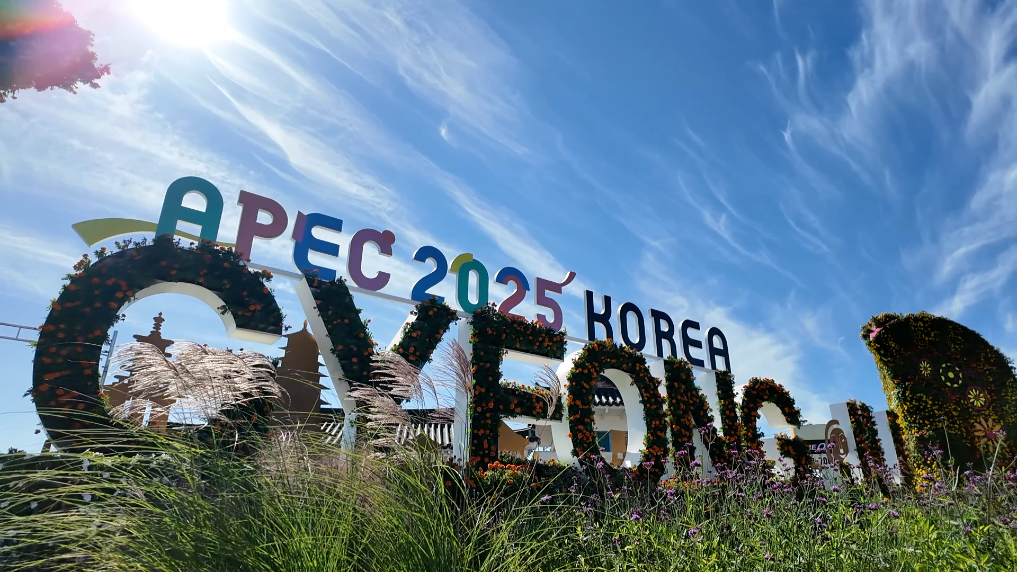
Core Points - The APEC (Asia-Pacific Economic Cooperation) informal leaders' meeting is taking place in Gyeongju, South Korea, highlighting the intersection of history and modernity in the region [1][3] - The APEC logo, inspired by ancient artifacts from Gyeongju, symbolizes connection, innovation, and prosperity, reflecting the aesthetic and practical significance of historical and contemporary interactions [3] - APEC is recognized as the highest-level and most influential economic cooperation mechanism in the Asia-Pacific region, embodying the international community's aspirations for an open world economy [5] Group 1 - The meeting serves as a platform for nations to enhance cooperation and collective efforts towards global prosperity and a better future for humanity [7] - China has been actively deepening cooperation with APEC members, focusing on regional connectivity and fostering friendly exchanges that contribute to the historical dialogue of APEC civilization [7]
习近平:破除各种绿色壁垒,拓展绿色产业、清洁能源和绿色矿产合作
Xin Hua She· 2025-10-31 03:15
Core Points - Xi Jinping emphasized the importance of promoting digital and green trade within the Asia-Pacific Economic Cooperation (APEC) framework, advocating for practical cooperation in areas such as paperless trade and smart customs [4][5][6] - The speech highlighted the need to eliminate various green barriers and expand cooperation in green industries, clean energy, and green minerals [5][6] - China has initiated the establishment of the APEC Demonstration Electronic Port Network and the Green Supply Chain Network, which have become significant platforms for regional trade digitalization and greening [5][6] Summary by Sections APEC's Role and Current Challenges - APEC has played a crucial role in shaping the Asia-Pacific free trade area and promoting regional economic integration over the past 30 years [4] - The current global landscape is marked by instability and uncertainty, necessitating collective efforts to maintain economic growth and enhance people's well-being [4] Recommendations for APEC Cooperation - Maintain a multilateral trade system and uphold the authority of the World Trade Organization (WTO) [4][5] - Foster an open regional economic environment by promoting trade and investment liberalization and deepening financial cooperation [5] - Ensure the stability and smooth operation of supply chains by focusing on collaboration rather than fragmentation [5] Digital and Green Trade Initiatives - Leverage digital technology to enhance cross-border trade, promoting initiatives like paperless trade and smart customs [5] - Address green barriers and expand cooperation in green industries and clean energy [5][6] Inclusive Development - Emphasize a people-centered development approach to address imbalances and promote sustainable globalization [6] - China has committed to providing zero-tariff treatment on 100% of products for least developed countries that have diplomatic relations with it [6] China's Commitment to Openness - Over the past five years, China has maintained a leading position in global trade and attracted over $700 billion in foreign investment [7] - The country continues to reduce its foreign investment negative list and expand its unilateral openness, with 22 free trade pilot zones aligning with international high-standard trade rules [7]
习近平在APEC第三十二次领导人非正式会议第一阶段会议上的讲话(全文)
清华金融评论· 2025-10-31 02:47
Core Viewpoint - The article emphasizes the importance of building an inclusive and open Asia-Pacific economy through cooperation and shared development among member countries of the Asia-Pacific Economic Cooperation (APEC) [3][4][5][6]. Group 1: Multilateral Trade and Economic Cooperation - The need to jointly maintain a multilateral trade system and uphold the authority and effectiveness of the World Trade Organization (WTO) is highlighted, advocating for reforms that protect the rights of developing countries [4]. - There is a call for creating an open regional economic environment by promoting trade and investment liberalization, deepening financial cooperation, and advancing regional economic integration [4][5]. - The stability and smooth operation of industrial and supply chains are crucial, with an emphasis on collaboration rather than fragmentation, and the implementation of the APEC Connectivity Blueprint is encouraged [5][6]. Group 2: Digital and Green Trade - The article advocates for the digitalization and greening of trade, leveraging digital technologies to enhance cross-border trade and promoting cooperation in green industries and clean energy [5][6]. - Initiatives such as the establishment of the APEC Demonstration Electronic Port Network and the Green Supply Chain Network are presented as important platforms for regional trade cooperation [5]. Group 3: Inclusive Development - A focus on inclusive development is stressed, with a commitment to addressing imbalances in development and ensuring that economic globalization benefits all people in the region [5]. - China's initiatives, such as offering zero-tariff treatment on 100% of products to the least developed countries that have diplomatic relations with China, are mentioned as efforts to support sustainable development [5][6]. Group 4: China's Commitment to Openness - China's commitment to an open economy is reiterated, with significant achievements in trade and foreign investment over the past five years, including attracting over $700 billion in foreign investment [6]. - The ongoing reduction of the negative list for foreign investment and the expansion of visa-free access are highlighted as steps towards greater openness [6].

习近平在亚太经合组织第三十二次领导人非正式会议第一阶段会议上的讲话(全文)
21世纪经济报道· 2025-10-31 02:24
Core Viewpoint - The article emphasizes the importance of building an inclusive and open Asia-Pacific economy through cooperation and multilateralism, particularly in the context of current global uncertainties and challenges [2][3]. Group 1: Multilateral Trade and Economic Cooperation - The need to jointly maintain a multilateral trade system, enhancing the authority and effectiveness of the World Trade Organization (WTO) while upholding fundamental principles such as most-favored-nation treatment and non-discrimination [3][4]. - The promotion of an open regional economic environment by advancing trade and investment liberalization, deepening financial cooperation, and steadily progressing regional economic integration [4][5]. Group 2: Supply Chain Stability and Digital Trade - The importance of maintaining stable and smooth industrial and supply chains, advocating for collaboration rather than fragmentation, and actively seeking points of mutual interest [4][5]. - The push for digital and green trade, leveraging digital technologies to facilitate cross-border trade, and promoting cooperation in green industries and clean energy [5][6]. Group 3: Inclusive Development and China's Role - The commitment to promoting inclusive development by addressing imbalances and ensuring that economic globalization benefits all people in the region [5][6]. - China's significant role in global trade, being the largest in goods and second in services trade over the past five years, with over $700 billion in foreign investment attracted and an annual foreign investment growth rate exceeding 5% [6].

专家说中国为亚太发展注入新动力
Xin Lang Cai Jing· 2025-10-30 07:25
Core Viewpoint - The upcoming APEC informal leaders' meeting in Gyeongju, South Korea, is set against a backdrop of sluggish global economic growth and rising protectionism, highlighting the region's desire for an open world economy and shared prosperity [1] Group 1 - The meeting reflects the international community's expectations for building an open world economy and achieving common prosperity [1] - Experts indicate that China continues to promote regional integration and connectivity with an open spirit [1] - The Asia-Pacific region is recognized as the most dynamic segment of the global economy and a major growth engine [1]

引领全球增长 亚太携手育新机
Sou Hu Cai Jing· 2025-10-29 12:51
中新社北京10月29日电 (记者 尹倩芸)亚太经合组织第三十二次领导人非正式会议即将在韩国举行,外 界期待通过此次会议凝聚共识,为区域乃至全球经济注入新动能。 会议前夕,国际货币基金组织(IMF)最新发布的《亚太地区经济展望》显示,尽管面临多重冲击,今年 上半年亚太地区经济增速仍超出预期。亚洲仍将是全球增长的最重要引擎,今明两年对全球经济增长的 贡献约为60%。这表明在地缘政治冲突、贸易保护主义等现实挑战增多之际,亚太地区仍具备发展韧 性。 不仅如此,在《区域全面经济伙伴关系协定》(RCEP)等机制的支持下,亚太成员间的经贸合作网络日 益扩大,形成了稳定和可持续的产业链供应链关系。有分析指出,这些成果正为亚太地区经济增长注入 活力,助推区域经济一体化向更高水平发展。 在专家看来,不断深化的区域一体化合作,不仅有利于区域内成员整合资源优势,实现互利共赢,还能 通过推动贸易和投资自由化、便利化,促进产业链与价值链深度融合,创造更为稳定、高效的发展环 境。 商务部国际贸易经济合作研究院原院长霍建国指出,亚太地区新兴经济体的发展势头仍在上升,增长潜 力持续释放。未来,这些经济体借助区域力量深化合作,在实现自身发展的同 ...
和音:中国—东盟自贸区3.0版为区域开放合作注入更强劲动能
Ren Min Ri Bao· 2025-10-29 06:01
Core Points - The signing of the China-ASEAN Free Trade Area 3.0 upgrade protocol on October 28 in Kuala Lumpur marks a significant milestone in open cooperation between China and ASEAN, injecting strong momentum into the construction of an open world economy [1] - The upgrade is a key outcome of the consensus reached during the 30th anniversary summit of China-ASEAN dialogue relations and aligns with the goals of expanding high-level opening-up as outlined in the 20th National Congress of the Communist Party of China [1] - The China-ASEAN Free Trade Area has evolved since its establishment in 2010, continuously adapting to regional integration and enhancing trade cooperation across various sectors [1] Economic Cooperation - The construction of the China-ASEAN Free Trade Area 3.0 is an effective way to build a super-large market and a community with a shared future, with trade value expected to approach $1 trillion in 2024 and cumulative bilateral investment exceeding $450 billion as of July this year [2] - The upgrade will promote the development of emerging industries such as digital and green sectors, enhance standards and regulatory alignment, and facilitate infrastructure and supply chain connectivity [2] - The agreement reflects a strong commitment to multilateralism and free trade, providing certainty in the face of rising protectionism and geopolitical tensions [2] Future Outlook - By early 2025, China is expected to have signed 23 free trade agreements with 30 countries and regions, expanding its space for mutual benefit and cooperation [3] - The ongoing commitment to open cooperation and mutual benefit positions China as a stabilizing force and a source of momentum in the global economy [3] - The trend of economic globalization is seen as unstoppable, with China aiming to share opportunities and achieve win-win outcomes through inclusive economic globalization [3]