技术分析
Search documents
小米超賣觸底?搶反彈關鍵位全解析
Ge Long Hui· 2025-10-22 11:55
Core Viewpoint - Xiaomi's stock price is showing signs of a potential technical rebound after experiencing a period of adjustment, with current trading between 47.1 and 48.4 HKD, and an RSI indicator at 36 indicating oversold conditions [1][2]. Technical Analysis - The stock has fallen below the 10-day moving average (MA10) of 49.5 HKD and the 30-day moving average (MA30) of 53.65 HKD, creating a favorable entry point for investors [1]. - Multiple technical indicators are showing divergence, with momentum oscillators and VR ratio indicators signaling a buy, suggesting that a bottom is forming [1][2]. - Current short-term technical signals indicate a "strong buy" with 13 buy signals and 3 sell signals, reinforcing the notion that it may be a good time for short-term investors to consider buying [2]. Key Price Levels - The critical support level for Xiaomi is at 45.7 HKD; maintaining this level could provide a solid foundation for a rebound. A secondary support level is at 41 HKD [3]. - On the upside, the first resistance level is at 51.6 HKD, and if this is surpassed, the next target would be 55.7 HKD [3]. Derivative Products Performance - Recent performance of derivative products shows significant gains, with Societe Generale's bull certificate achieving a 95% increase over two days amid a 3.83% rise in the underlying stock [6]. - UBS's bull certificate also recorded a 75% increase, indicating strong market expectations for Xiaomi's rebound [6]. Investment Opportunities - For aggressive investors, Societe Generale's bull certificate with a recovery price of 45.5 HKD and a leverage of 14.9 times is recommended [9]. - More conservative strategies can consider UBS's bull certificate with a recovery price of 45 HKD and a leverage of 12.6 times [9]. - Investors anticipating a downturn may look at UBS's bear certificate and Morgan Stanley's bear certificate, both offering leverage of 6.1 times with a recovery price set at 57 HKD [9].
黄金今日行情走势要点分析(2025.10.22)
Sou Hu Cai Jing· 2025-10-22 00:59
Core Viewpoint - The significant drop in gold prices is attributed to multiple factors, including profit-taking, a retreat in safe-haven demand, a strong US dollar, and adverse impacts on the precious metals market [2][3]. Fundamental Analysis - The recent plunge in gold prices is a result of profit-taking and a decline in safe-haven demand, driven by optimistic signals in international trade, ceasefire expectations in the Russia-Ukraine conflict, and potential resolution of the US government shutdown [2]. - The US dollar index rose by 0.34% to 98.98, influenced by the election of Japan's new Prime Minister, which further supported the dollar and increased the cost for non-US currency investors to purchase gold [2]. - Silver prices fell by 7% to $48.62 per ounce, while platinum and palladium also saw declines exceeding 5%, indicating a broader weakness in the precious metals sector [2]. Technical Analysis - On the daily chart, gold formed a "bearish engulfing" pattern, indicating strong bearish signals and effective suppression of bullish momentum [4]. - The break below the 5-day and 10-day moving averages marks the beginning of an adjustment phase, with the next key support level at the weekly MA5, currently around 3990 [4]. - The four-hour chart indicated a potential "double top" pattern, with actual price movement exceeding expectations, highlighting market uncertainty [6]. Future Outlook - In the short term, gold prices may enter a consolidation phase lasting two to three weeks, while medium to long-term factors such as geopolitical uncertainty and central bank buying demand may continue to support gold [3]. - Upcoming inflation data and Federal Reserve meetings could pose potential impacts on gold prices, but the core value of gold as a hedging tool remains unchanged [3].
金融系教授罕见发声:A股目前阶段,还会回到2400点吗,应该加仓还是落袋为安?
Sou Hu Cai Jing· 2025-10-19 04:26
Group 1 - The breakthrough of the 3000-point mark in the A-share market is seen as a significant psychological barrier, indicating a shift in market sentiment rather than just a numerical value [1][2] - The long-term critical level to watch is 3587 points, which, if sustained, would suggest that major players have accumulated enough shares for a potential market rally [2][4] - Historical patterns indicate that after significant bear markets, substantial bull markets typically follow, emphasizing the importance of understanding market cycles rather than timing [4][6] Group 2 - The end of a bear market is characterized by a significant price drop (40%-75%), sufficient duration (often 3-4 years), and a "crazy bear" phase, which has not yet been fully realized in the current market [6] - Current market conditions suggest that A-shares are unlikely to return to the low levels seen at the end of last year (around 2400 points) due to ongoing foreign investment and MSCI index inclusion [6][11] - The MSCI inclusion process is gradual, with a 5% increase in A-share inclusion each quarter, translating to approximately 150 billion yuan in market value being purchased [7][9][11] Group 3 - The total scale of domestic index funds is around 700 billion yuan, and the quarterly MSCI inclusion represents about 20% of this total, indicating a significant impact on the market [11] - Short-term fluctuations in A-shares may occur, but they are expected to remain within a range of about 10% [11]
FPG财盛国际:外汇风险管理的实践与案例分享
Sou Hu Cai Jing· 2025-10-19 04:09
Core Insights - The article emphasizes the importance of foreign exchange risk management in today's volatile market, highlighting practical strategies and successful case studies from FPG Financial International [1][22]. Foreign Exchange Risk Concepts - Understanding the basic concepts of foreign exchange risk is crucial, which includes transaction risk, translation risk, and economic risk, as exchange rate fluctuations significantly impact corporate profitability and cash flow [1][8]. Risk Identification and Assessment - Companies should utilize various data analysis tools to identify potential risks and assess their impact on financial decisions [1][8]. Common Types of Foreign Exchange Risks - Common types of foreign exchange risks include exchange rate risk, interest rate risk, and credit risk, which can affect business decisions and financing costs [1][8]. Hedging Tools and Strategy Analysis - Effective use of hedging tools such as options and futures can help mitigate risks, with a focus on market volatility to select appropriate hedging strategies [1][8]. Case Studies: Successful Mitigation of Exchange Rate Fluctuations - Successful case studies illustrate how companies have effectively mitigated exchange rate fluctuations, such as a multinational corporation using forward contracts to lock in costs and another company employing options strategies to maintain profitability while reducing risk [1][8]. Application of Technical Analysis in Risk Management - Technical analysis aids in predicting market trends, allowing for more informed decision-making through indicators like moving averages and relative strength indices [1][9]. Developing an Effective Risk Management Plan - An effective risk management plan should identify potential risks, set reasonable risk tolerance limits, and include diversification and dynamic adjustment strategies [1][13]. Impact of Foreign Exchange Market Volatility on Businesses - Volatility in the foreign exchange market can directly affect a company's financial stability, particularly in low-margin situations, necessitating effective hedging strategies to protect financial health [1][14]. Real-time Monitoring and Risk Control Mechanisms - Real-time monitoring systems enable companies to stay informed about market fluctuations and take swift action to control risks, with automated tools providing updates on market movements [1][15]. Latest Trends and Outlook in the Global Foreign Exchange Market - Companies must closely monitor the latest trends in the global foreign exchange market, as increasing uncertainty requires flexible responses to rapid exchange rate changes [1][16].
10月16日【港股Podcast】恆指、比亞迪電子、小米、神華、舜宇科技、嗶哩嗶哩
Ge Long Hui· 2025-10-17 11:52
Group 1: Hang Seng Index (HSI) - The Hang Seng Index (HSI) experienced a slight decline of approximately 22 points, closing at 25,888 points, indicating a lack of clear market direction among investors [1] - Investors are divided, with some bullish investors waiting for the index to reach 26,250 points to fill the gap, while bearish investors anticipate a drop to the 25,200-25,400 range [1] - Current technical signals show a "neutral" market, with an equal number of buy and sell indicators, suggesting no clear trend [2] Group 2: BYD Electronics (00285) - BYD Electronics has seen an increase in trading volume over the past two days, indicating potential buying interest, with a resistance level around 43 HKD [8] - The stock is currently in a "neutral" technical state, similar to the HSI, with no clear direction indicated by the technical signals [8] - If the stock continues to rise, it may challenge the 43 HKD level, while a pullback could see it drop to the 38-39 HKD range [8] Group 3: Xiaomi Group (01810) - Xiaomi's stock has been on a downward trend, reaching a low of 47.32 HKD, but technical signals currently show a "buy" bias with 10 buy signals against 5 sell signals [14] - The short-term resistance level is around 52.7 HKD, while the support level is at 45.8 HKD, with a potential drop to 39.9 HKD if the support is breached [14] - The market sentiment is mixed, with both bullish and bearish perspectives present [14] Group 4: China Shenhua (01088) - China Shenhua's stock has performed well recently, closing at 40.98 HKD, but is considered to be at a relatively high level, with an RSI of 86 indicating overbought conditions [20] - Technical signals suggest a "sell" bias with 8 sell signals and 5 buy signals, indicating a potentially weaker trend [20] - The current resistance level is around 42.2 HKD, with a support level at 39.5 HKD [20] Group 5: Sunny Optical Technology (02382) - Sunny Optical has shown a rebound over the past two days but remains at low levels, with no clear reversal signals yet [26] - Technical analysis indicates a "buy" bias with 8 buy signals and 5 sell signals, suggesting a slightly stronger outlook [26] - The resistance level to watch for a potential rise to 88 HKD is around 85.4 HKD, with a possibility of reaching 89.7 HKD if this level is surpassed [26] Group 6: Bilibili (09626.HK) - Bilibili's stock has recently rebounded, closing at 212 HKD, approaching the middle line of the Bollinger Bands at around 215 HKD [30] - Current technical signals are "neutral," indicating no clear direction, and investors are advised to wait for further analysis [30] - The first support level is around 199 HKD, with a potential drop to 188 HKD if this level is breached [30]
從Put倉到技術指標,小米市場情緒分歧加劇
Ge Long Hui· 2025-10-17 11:52
Group 1 - The core viewpoint of the articles indicates that Xiaomi Group's stock is currently experiencing a critical turning point, with short-term trading opportunities emerging despite a recent decline in stock price [1][2] - Technical analysis shows that Xiaomi's stock is above significant support levels at 44.5 HKD and 38.5 HKD, while resistance levels are at 51.3 HKD and 56.3 HKD [1] - The Relative Strength Index (RSI) has dropped to 29, indicating an oversold condition, which suggests a potential for a technical rebound in the short term [1][2] Group 2 - Recent market sentiment around Xiaomi has been disappointing, with the stock price primarily trending downward, reaching a low of 47.32 HKD [2] - Despite the negative sentiment, technical signals indicate a bullish outlook in the short term, with 10 buy signals and 5 sell signals identified [2] - The short-term resistance level is approximately 52.7 HKD, while the support level is around 45.8 HKD; a drop below this support could lead to a further decline to 39.9 HKD [2] Group 3 - In the derivatives market, several Xiaomi-related products have performed well despite the decline in the stock price, with notable increases in various warrants and certificates [4] - For investors looking to capture short-term volatility, options such as Morgan Stanley's call warrants and UBS's put warrants are available, offering leverage and reasonable implied volatility [7][8] - The market offers a variety of choices for both bullish and bearish strategies, with specific products providing high leverage and low premiums [7][8]
就业数据低于预期 澳元失守0.6500关口
Jin Tou Wang· 2025-10-16 04:39
Group 1 - The Australian dollar (AUD) has fallen below the 0.6500 mark against the US dollar, currently at 0.6489, reflecting a decline of 0.30% [1] - Australia's unemployment rate rose to 4.5% in September, igniting expectations for a potential interest rate cut by the Reserve Bank of Australia (RBA) [1] - Employment data showed an increase of 14,900 jobs in September, which was below the market expectation of 20,000, while the previous month's job loss was revised to a decrease of 11,800 from 54,000 [1] Group 2 - RBA Assistant Governor Sarah Hunter's cautious remarks provided some support for the AUD, noting that recent data was slightly better than expected and that third-quarter inflation might exceed forecasts [1] - The RBA's September monetary policy meeting minutes indicated that board members believe the current policy is still somewhat restrictive, but the extent is difficult to determine [1] - Economic risks remain, with weak employment and wage growth contributing to subdued consumer spending [1] Group 3 - Technical analysis indicates that the AUD/USD remains in a downward channel, with bearish sentiment persisting [2] - The potential downside target for the AUD/USD is around 0.6440, and a break below this support could lead to testing the four-month low of 0.6414 and the five-month low of 0.6372 [2] - On the upside, initial resistance is at the 9-day exponential moving average of 0.6527, followed by the 50-day moving average at 0.6551, with a breakthrough potentially improving short- and medium-term price momentum [2]
郑氏点银:黄金冲高回落,日线走循环,又要试探短期5日再企稳
Sou Hu Cai Jing· 2025-10-14 15:06
Group 1 - The core viewpoint of the article indicates that gold prices experienced a strong upward movement, reaching a peak of 4080 before facing a pullback, with expectations of testing the short-term 5-day moving average for stability [1] - Gold's daily performance showed significant volatility, with a notable pattern of alternating strong upward movements followed by consolidation phases, suggesting a potential continuation of this cycle [1][3] - The analysis highlights that the current support level for gold is around 4090, with resistance at 4124 and 4150, indicating a range for potential price movements [3] Group 2 - Silver prices initially showed strength, reaching a high of 52.4 but faced downward pressure, testing the support level of 50.5, which is close to the daily 5-day moving average of 50.3 [5] - The outlook for silver remains bullish as long as it stays above the 5-day moving average, with potential for a rebound if it can break back above 51 [5]
新价量相关性因子绩效月报20250930-20251014
Soochow Securities· 2025-10-14 10:49
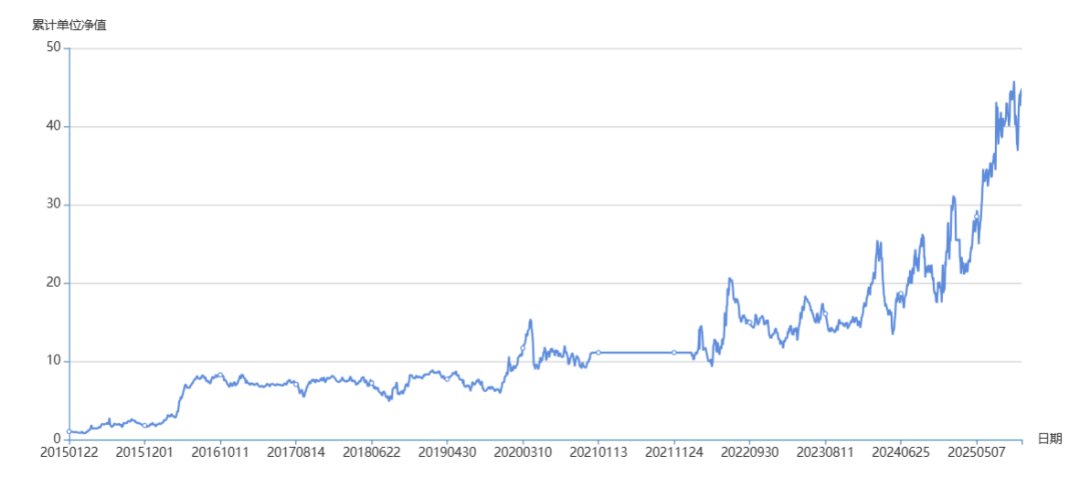
- The report introduces the **RPV factor (Renewed Correlation of Price and Volume)**, which is constructed by combining intraday and overnight price-volume correlation information. The factor leverages the reversal effect of closing price sequences and the momentum effect of overnight returns, enhanced by turnover rate sequences. The construction process involves identifying the best representatives for intraday and overnight price-volume correlations (CCOIV and COV), and integrating their information into a unified factor. This factor is designed to capture both reversal and momentum effects effectively[6][7][10] - The report also introduces the **SRV factor (Smart Correlation of Price and Volume)**, which is a refined version of the RPV factor. The SRV factor splits intraday price movements into morning and afternoon sessions, calculates a "smart" indicator for the afternoon session, and identifies the 20% of time intervals with the highest informed trading activity. It then uses the turnover rate during these intervals to calculate the correlation with afternoon price movements. For overnight price-volume correlation, the turnover rate is replaced with the turnover rate of the last half-hour of the previous trading day, which is considered to have a higher proportion of informed trading. The SRV factor combines the improved intraday and overnight price-volume correlation factors into a single composite factor[6][10][11] - The **RPV factor** is evaluated as a novel and effective factor that incorporates both reversal and momentum effects, making it a robust tool for stock selection[6][7] - The **SRV factor** is evaluated as an improvement over the RPV factor, with better performance metrics, including higher annualized returns, information ratio, and lower maximum drawdown. It is considered a more effective factor for stock selection[6][10] - The **RPV factor** achieved an annualized return of 14.26%, annualized volatility of 7.70%, IR of 1.85, monthly win rate of 72.14%, and maximum drawdown of 10.63% during the backtesting period from January 2014 to September 2025[7][10] - The **SRV factor** achieved an annualized return of 17.07%, annualized volatility of 6.51%, IR of 2.62, monthly win rate of 74.29%, and maximum drawdown of 3.93% during the same backtesting period[7][10] - In September 2025, the **RPV factor** achieved a 10-group long portfolio return of 1.24%, short portfolio return of -0.89%, and long-short portfolio return of 2.12%[10] - In September 2025, the **SRV factor** achieved a 10-group long portfolio return of 1.70%, short portfolio return of -1.51%, and long-short portfolio return of 3.21%[10]
10月9日【港股Podcast】恆指、港交所、小米、紫金、比亞迪、匯豐
Ge Long Hui· 2025-10-10 19:36
Group 1: Hang Seng Index (HSI) - The Hang Seng Index closed at 26,752 points, near the middle line of the Bollinger Bands at 26,500 points, indicating a "sell" signal with a short-term bearish bias [1] - Current resistance levels are at 27,284 points and 27,600 points, while support levels are at 26,200 points and 25,700 points [1] Group 2: Hong Kong Exchanges and Clearing (00388.HK) - The stock has reached a yearly high, with investors deploying call options at an exercise price of 530.5 HKD, and the stock peaked at 460 HKD during the day [6] - The technical trading signal is a "buy," with the first resistance level identified at 471 HKD, and a potential upward movement to 477 HKD if the upper Bollinger Band is successfully breached [6] Group 3: Xiaomi Group (01810.HK) - The stock price closed at 53.35 HKD, with a neutral trading signal, and investors are speculating a drop to 48 HKD [10] - Support levels are identified at 52 HKD and 49.2 HKD [10] Group 4: Zijin Mining (02899.HK) - Investors are hopeful for the stock to reach 40 HKD by the end of the month, holding call options with an exercise price of 38.99 HKD [15] - The stock reached a high of 39.62 HKD during the day, with a "sell" signal and resistance levels at 38.8 HKD and 42 HKD [16] Group 5: BYD Company (01211.HK) - The stock closed at 110.2 HKD, with a "buy" signal, and investors are looking for entry points around 120 HKD [22] - The first support level is at 106 HKD, followed by a second support level at 102 HKD [22] Group 6: HSBC Holdings (00005.HK) - The stock experienced significant volatility, reaching a low of 102.5 HKD, with a potential entry point at 103 HKD [27] - The average volatility over recent days is noted at 9%, with a "buy" signal and support levels at 99.9 HKD and 95.7 HKD [27]