
消费新业态新模式新场景

Search documents
21社论丨推动消费向多元融合生态转型
21世纪经济报道· 2025-12-04 00:33
Core Viewpoint - The article discusses the recent announcement by the Ministry of Finance and the Ministry of Commerce regarding the support for around 50 cities to pilot new consumption models, aiming to enhance domestic demand and respond to the upgrading of consumption structures [1][2]. Group 1: Policy Framework - The new policy framework focuses on three dimensions: new business formats, new models, and new scenarios, emphasizing the need for fiscal support to guide local exploration in digitalization, intelligence, and integration [1][2]. - The policy aims to break through the limitations of traditional consumption promotion measures by providing support in three key areas: pioneering economy, diversified service consumption scenarios, and cross-industry collaborations with well-known IPs [1][2]. Group 2: Funding Allocation - The central government will implement a tiered subsidy system based on city size, with funds distributed in two batches linked to performance evaluation results, ensuring efficient use of fiscal resources [2]. - This design considers the differences in city capabilities and establishes a dynamic adjustment mechanism to avoid issues related to superficial compliance [2]. Group 3: Pilot City Selection - The selection of 50 pilot cities balances leadership and equity, including four direct-controlled municipalities, five separately planned cities, and 41 other cities, leveraging the advantages of large cities while incorporating key regional cities [2][3]. - The diverse layout of pilot cities is expected to create replicable and scalable experiences, promoting a multi-layered consumption upgrade across the country [2][3]. Group 4: Differentiated Strategies - Different levels of cities are encouraged to adopt differentiated strategies based on their comparative advantages, avoiding homogeneous competition and fostering a diverse new consumption landscape [3]. - Direct-controlled and separately planned cities should focus on attracting high-quality consumption resources and enhancing global influence, while provincial capitals and regional centers should act as consumption hubs integrating local advantages [3][4]. Group 5: Sustainable Development - The pilot program aims to construct a policy system that fosters innovation, industry, and regional collaboration, with success hinging on cities choosing differentiated paths and leveraging technology and innovative mechanisms for sustainable development [4]. - This initiative is expected to not only boost consumption in the short term but also explore replicable experiences for a long-term mechanism to expand domestic demand, facilitating a transition to a multi-faceted consumption ecosystem [4].


中央财政出资优化消费供给 “发钱”之外提振消费政策还能做什么?
Zheng Quan Shi Bao· 2025-12-02 00:55
Core Viewpoint - The selection of 50 cities for the new consumption pilot program aims to address the insufficient supply of high-quality consumption and stimulate innovation in the consumption sector through targeted fiscal support policies, shifting from direct subsidies to optimizing the consumption supply structure [1][3][6] Group 1: Pilot Program Overview - The pilot program includes 50 cities, comprising 4 municipalities, 5 sub-provincial cities, and 41 other cities, focusing on creating new consumption scenarios [4] - The program emphasizes three main support directions: launching new products, diverse service consumption scenarios, and cross-industry collaborations [3][4] Group 2: Fiscal Support and Strategy - The central government will provide substantial financial support, with super-large cities receiving a total subsidy of 400 million yuan, large cities 300 million yuan, and other cities 200 million yuan over two years, totaling approximately 17 billion yuan [6][4] - This initiative represents a strategic shift in fiscal policy, focusing on enhancing the "soft environment" for consumption rather than merely providing direct financial incentives to consumers [7][10] Group 3: Consumption Upgrade and Economic Impact - The pilot program is designed to enrich high-quality service supply and leverage consumption's ripple effect, promoting related industries such as culture, tourism, and transportation [3][4] - The initiative aims to create a sustainable consumption ecosystem that enhances urban competitiveness and fosters high-growth sectors like experience economy and cultural creativity [10][11] Group 4: Challenges and Recommendations - The implementation of the pilot program may face challenges such as avoiding homogenization, attracting social capital, and transitioning from reliance on fiscal subsidies to self-sustaining models [12][13] - Recommendations include investing in consumption infrastructure, optimizing public services, and creating a favorable institutional environment to support new consumption forms [13][14]
中央财政出资优化消费供给 “发钱”之外提振消费政策还能做什么?
证券时报· 2025-12-02 00:48
Core Viewpoint - The article discusses the announcement of 50 cities selected for the pilot program of new consumption formats, models, and scenarios, highlighting a shift in central fiscal policy towards enhancing consumption supply rather than merely providing subsidies to boost immediate consumer spending [1][3]. Group 1: Pilot Program Overview - The pilot program aims to address the insufficient supply of high-quality consumption and stimulate innovation in the consumption sector, with a focus on optimizing the consumption supply structure [1]. - The selected cities include 4 municipalities, 5 sub-provincial cities, and 41 other cities, each with tailored strategies based on their unique characteristics and resources [4]. Group 2: Fiscal Support and Strategy - The central government will provide substantial financial support, with a total of approximately 17 billion yuan allocated for the pilot program, which is about 5.6% of this year's 300 billion yuan subsidy for replacing old consumer goods [7]. - The fiscal support is designed to enhance the "soft environment" for consumption, focusing on innovative and diversified service consumption scenarios rather than traditional physical goods [6][8]. Group 3: Consumption Trends and Upgrades - There is a clear trend of increasing service consumption in China, with the proportion of per capita service consumption expected to rise by 5 percentage points from 2015 to 2024, reaching 46.1% [3]. - The pilot program emphasizes the creation of high-quality consumption ecosystems, including the establishment of flagship stores and first-release centers to enhance the quality of consumption [3][12]. Group 4: Challenges and Recommendations - The implementation of the pilot program faces challenges such as avoiding homogenization among cities, attracting social capital, and transitioning from fiscal dependency to self-sustaining consumption models [15]. - Recommendations include investing in consumption infrastructure and public services, optimizing regulatory frameworks, and creating a favorable institutional environment for new consumption formats [16][17].

中央财政出资优化消费供给 突出“软环境”建设强化“造血式”发展
Zheng Quan Shi Bao· 2025-12-01 18:11
Core Insights - The announcement of 50 cities selected for the "New Consumption Formats, New Models, and New Scenarios" pilot program reflects a strategic shift in central fiscal policy aimed at enhancing consumption quality and stimulating innovation in the consumption sector [1][2][3] Group 1: Pilot Program Overview - The pilot program aims to address the bottlenecks in consumption upgrades by focusing on three main support directions: the sharing economy, diverse service consumption scenarios, and cross-industry collaborations [2] - The selected cities include 4 municipalities, 5 sub-provincial cities, and 41 other cities, with recommendations for different city tiers to focus on high-quality consumption resources and regional consumption hubs [2] Group 2: Fiscal Support Mechanism - Central fiscal support for the pilot program is seen as an innovative approach, with direct funding allocated to enhance quality consumption supply rather than traditional subsidies [3][4] - Each super-large city will receive a total subsidy of 400 million yuan, large cities 300 million yuan, and other cities 200 million yuan over the two-year implementation period, totaling approximately 17 billion yuan [3] Group 3: Strategic Implications - The initiative is viewed as essential for expanding quality supply and stimulating consumption vitality, requiring significant initial investment due to the public good nature of new consumption formats [4] - The shift from direct consumer subsidies to fostering innovative consumption supply is expected to create replicable business models that can drive growth in high-potential sectors like the service industry and cultural economy [6]
AI 洞见・品牌焕新,第十二届中国品牌连锁发展大会成功举办
Zhong Guo Zhi Liang Xin Wen Wang· 2025-11-28 14:16
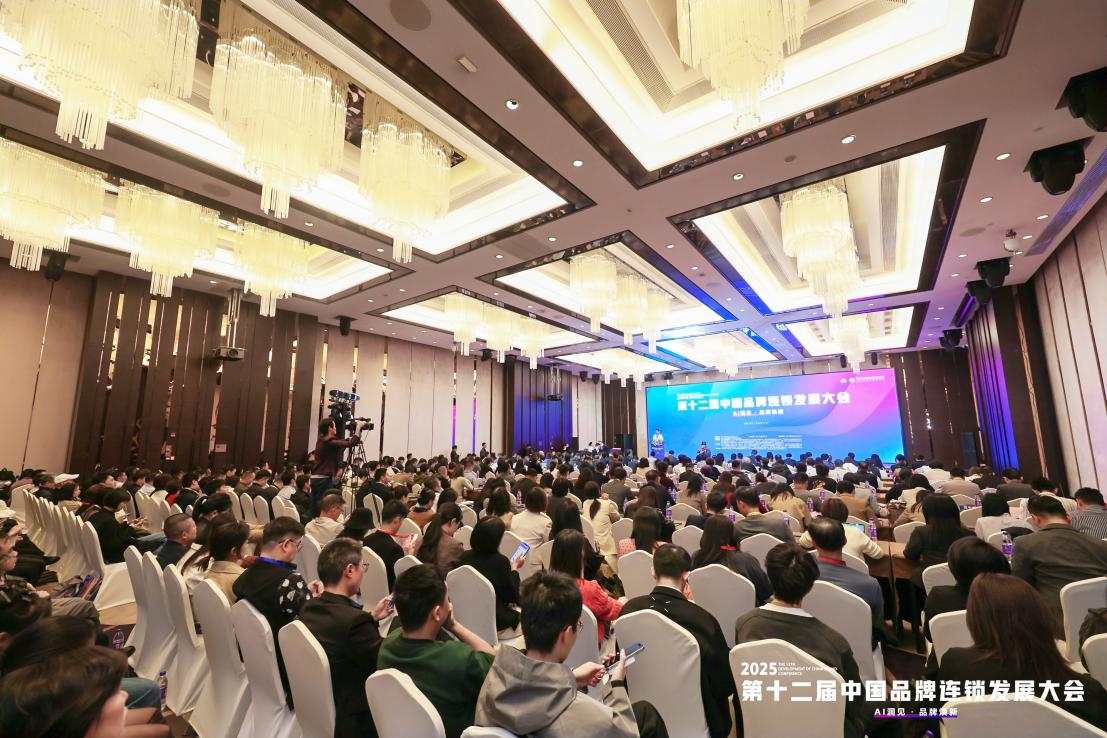
Core Insights - The 12th China Brand Chain Development Conference was successfully held in Shenzhen, gathering over 500 enterprises, highlighting the importance of brand development in the current economic landscape [1][3] Group 1: Industry Trends - The consumer industry in China is undergoing a profound transformation driven by policy, technology, and demand, with AI technology evolving from an efficiency tool to a core engine for demand insight and operational optimization [3] - Brands are urged to leverage policy and technological opportunities to deepen AI digital transformation, promote omnichannel integration, and build a collaborative supply chain network [3] - The "dual circulation" new pattern is expected to further expand international markets for Chinese consumer brands, leading to high-quality growth [3] Group 2: Brand Development Initiatives - The China Brand Asset Price Index was introduced to provide a new reference for quantifying brand value, reflecting the global market's valuation of Chinese brand assets [4] - The "China Consumer Brand Empowerment Plan" was launched, focusing on ten key empowerment areas to support brands from strategy to execution, financing to international expansion [4][6] - The establishment of the "First Economy Service Center" aims to create a complete service ecosystem to boost consumption in Shenzhen [6] Group 3: Notable Presentations - Unique Erin's co-founder shared insights on the emotional value behind the brand, emphasizing its role as a lifestyle brand for contemporary women [7] - The general manager of Zhixingli presented AI business empowerment solutions aimed at enhancing employee efficiency and performance [7] - JD MALL's innovative retail model was discussed, focusing on creating an ultimate experience and meeting all home needs through a dual-driven approach [7][9]
中国品牌资产价格指数在深发布!第十二届中国品牌连锁发展大会举办,AI时代品牌如何焕新升级?
Sou Hu Cai Jing· 2025-11-28 10:14
Group 1 - The 12th China Brand Chain Development Conference was held in Shenzhen, focusing on "AI Insights and Brand Renewal," with over 500 companies participating to explore brand elevation paths in the AI era [1][5] - The conference featured the launch of the "China Brand Asset Price Index," which reflects the global market's valuation of Chinese brand assets based on the average price of brand information units across 32 representative industries [3][4] - The "China Consumer Brand Empowerment Plan" was officially launched, aiming to promote pilot work for new consumption formats, scenarios, and models, facilitating brands' comprehensive upgrade from domestic to international markets [3][4] Group 2 - The conference emphasized the importance of AI in reshaping business and marketing ecosystems, with experts discussing the need for brands to leverage AI for insights, demand prediction, and operational optimization [7] - Notable case studies of innovative consumption models were shared, highlighting unique brand philosophies and approaches, such as the emotional value of unique fragrance brands and innovative retail models by JD MALL [7] - A "First Release Economic Service Center" was established to create a complete service ecosystem, aiming to boost consumption and release new vitality in Shenzhen's market [4][8]
为什么是海口?离岛免税购物更香了!
Sou Hu Cai Jing· 2025-11-26 15:12
Core Viewpoint - The Ministry of Commerce has announced the results of competitive evaluations for pilot cities in new consumption formats, with Haikou successfully selected among 50 cities nationwide, aiming to enhance service consumption and stimulate economic growth [1][4]. Group 1: Policy and Implementation - The pilot program supports around 50 cities, focusing on large population centers with strong development potential, with a two-year implementation period [4]. - The initiative aims to improve the service consumption system, innovate diverse consumption scenarios, and enhance consumption quality, thereby fostering new growth points in consumption [4]. Group 2: Economic Impact and Consumer Behavior - Haikou's selection is attributed to its rising consumption potential and the strong momentum from the new duty-free policy [5]. - The new duty-free policy, effective from November 1, has led to a surge in shopping, with duty-free shopping amounts reaching 506 million yuan and 72,900 shoppers in the first week [12]. Group 3: Innovations in Duty-Free Shopping - The new policy allows departing travelers to enjoy duty-free benefits, making it easier to purchase both international and domestic products [11]. - Various promotional activities, such as the "Good Goods Market," have been launched to attract consumers, enhancing the shopping experience [6][10]. Group 4: Logistics and Supply Chain Enhancements - Haikou has established a direct shipping channel for imported cosmetics, significantly reducing logistics costs and time [15]. - The new logistics model has cut the time from port arrival to entry into the comprehensive bonded zone to just six hours, a reduction of over 70% compared to traditional methods [15]. Group 5: Consumer Experience Transformation - The focus is shifting from quick shopping to immersive experiences, with major duty-free stores enhancing their service offerings and creating interactive spaces [19][22]. - Events and promotions are being organized to engage consumers, such as themed celebrations and exclusive discounts during major events [26][28]. Group 6: Future Outlook - Haikou plans to leverage its status as a pilot city to further integrate duty-free shopping with cultural tourism, expanding service offerings and optimizing consumer experiences [29].

商务部、财政部公示,青岛入选国家试点!
Sou Hu Cai Jing· 2025-11-23 16:42
Core Points - The Ministry of Commerce has announced the results of the competitive evaluation for pilot cities in new consumption formats, with three cities from Shandong province selected: Qingdao, Jinan, and Yantai [1] Group 1 - The evaluation involved 75 cities recommended by various provinces, autonomous regions, municipalities, and separately planned cities [1] - The public notice period for the selected cities is from November 20 to 28, allowing for feedback on the list [1] - Contact information for the Ministry of Commerce and the Ministry of Finance is provided for any objections during the public notice period [1]

喜报!厦门福州泉州,正在公示!
Sou Hu Cai Jing· 2025-11-23 06:29
Core Points - The Ministry of Finance and the Ministry of Commerce have publicly announced the results of the competitive review for pilot cities in new consumption formats, with three cities from Fujian selected: Fuzhou, Quanzhou, and Xiamen [1] Group 1: Pilot Cities Selection - Three cities in Fujian, namely Fuzhou, Quanzhou, and Xiamen, have been selected as pilot cities for new consumption formats [1] - The initiative aims to support around 50 cities, focusing on large and super-large cities with significant population bases and development potential [5] Group 2: Policy Implementation - The policy implementation period is set for two years, as outlined in the notification from the Ministry of Finance and the Ministry of Commerce [5] Group 3: Support Directions - The support directions include establishing a comprehensive first-release economic service system, promoting innovative service consumption scenarios, and facilitating cross-industry collaborations with well-known IPs [6][7][8] - The initiative encourages the creation of first-release centers and economic clusters in key commercial areas, cultural venues, and creative parks [6] - It also aims to enhance service consumption by integrating digital technologies like AI and the metaverse into various sectors such as entertainment, tourism, and health [7] - The program supports the development of unique consumption spaces that leverage local cultural resources and promote new consumer brands [8]
合肥拟入选消费新业态新模式新场景试点城市
Sou Hu Cai Jing· 2025-11-22 04:13
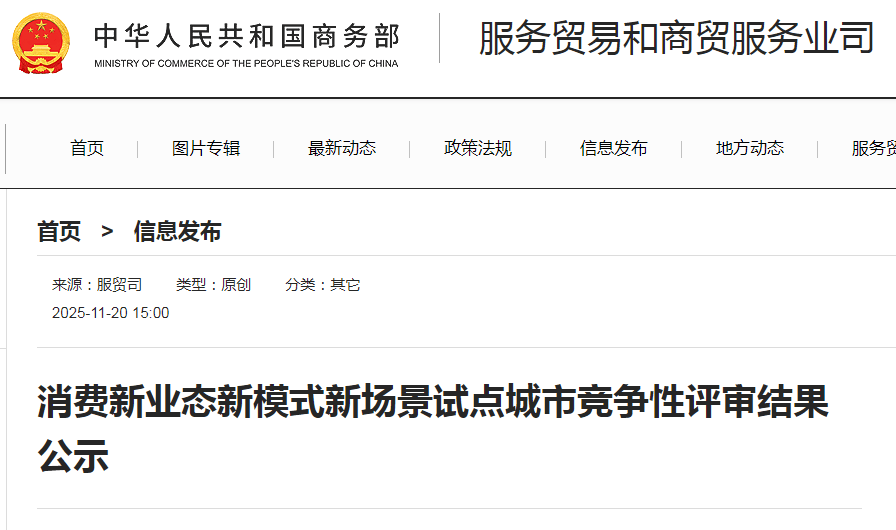
11月20日,财政部、商务部对消费新业态新模式新场景试点城市竞争性评审结果进行公示,全国共50个 城市入选,合肥也榜上有名。公示时间为11月20日至28日。 9月底,财政部、商务部发布通知,为增加优质消费供给,进一步释放多样化、差异化消费潜力,全方 位扩大国内需求,将遴选50个左右城市开展消费新业态新模式新场景试点工作,主要向人口基数大、带 动作用强、发展潜力好的超大特大城市倾斜。 此次,全国共有75个城市参与申报,经过竞争性评审,合肥、北京、上海、杭州等50个城市入选。这意 味着,合肥将获得中央财政资金支持,围绕健全首发经济服务体系、创新多元化服务消费场景、促进优 质消费资源与知名IP跨界联名等重点方向开展探索。政策实施期为两年。(王靓) ...
