社会信用体系建设

Search documents
发挥社会信用体系建设的作用 推动人工智能健康有序发展
Ren Min Ri Bao· 2025-05-27 22:24
今年3月,中办、国办印发《关于健全社会信用体系的意见》,为经济社会高质量发展提供了基础性支 撑。要抓住机遇,推动社会信用体系建设融入人工智能发展进程,为人工智能技术的创新突破与广泛应 用营造良好的信用环境。具体来看,可突出应用导向,打造"人工智能+信用数据治理""人工智能+信用 评级""人工智能+信用监管"等应用场景,推动人工智能在社会信用体系建设中的深度融合与创新应用。 强化全国信用信息共享平台信用信息归集共享"总枢纽"功能,推动全国共享平台与行业信用信息系统深 度联通、数据共享,在保障信用主体合法权益和信息安全的前提下,提升商业合同信息、产业链信息、 交易信息等共享水平。同时,在人工智能产业健全以信用为基础的监管和治理机制,坚持以人为本、诚 信为基、智能向善,将算法透明度、数据合规性等纳入诚信行为考量,健全人工智能诚信自律规范,加 强人工智能行业诚信自律建设,以健全的信用制度保障人工智能产业行稳致远。 (作者单位:国家公共信用和地理空间信息中心) (文章来源:人民日报) 加强社会信用体系建设,有利于为人工智能发展营造稳定、公平、可信的环境,推动人工智能技术安 全、可靠、可持续发展。比如,通过建立覆盖人工智 ...
我市印发2025年社会信用体系建设工作要点
Nan Jing Ri Bao· 2025-05-23 02:36
Core Points - The Nanjing Municipal Development and Reform Commission has issued the "2025 Nanjing Social Credit System Construction Work Points," outlining five major projects to enhance the social credit system and promote "Credit Nanjing" [1][3] Group 1: Foundation Enhancement - The plan includes conducting forward-looking research on credit development during the 14th Five-Year Plan period and revising the city's credit "one directory and four lists" [1] - It aims to upgrade and optimize platform websites, exploring innovative applications of artificial intelligence and big data [1] - The initiative will strengthen the credit construction of business entities and deepen innovative pilot projects for the credit system [1] Group 2: Government Integrity - The government will take the lead in enhancing integrity in key areas, establishing a mechanism for government integrity performance [2] - There will be monitoring of the credit status of government agencies, public institutions, and state-owned enterprises, with measures for timely credit restoration [2] Group 3: Credit Regulation - The city will expand regulatory fields and enhance information sharing among departments, supporting credit-based graded and classified regulation [2] - A national public credit comprehensive evaluation will be promoted to establish an industry credit evaluation mechanism [2] - The initiative includes improving the "credit restoration one-stop service" and facilitating non-face-to-face credit restoration processes [2] Group 4: Business Environment Optimization - The plan aims to enhance the research integrity system and deepen intellectual property services to empower innovation and entrepreneurship [2] - It promotes credit commitments, deepens "credit easy loans," and supports platform economies to enhance the effectiveness of benefits for enterprises [2] - The initiative will also focus on building integrity business circles and promoting "credit + consumption" to ensure consumer confidence [2] Group 5: Credit Brand Development - The plan includes implementing a "leaderboard" system to stimulate credit innovation and create regional characteristics [2] - It aims to enhance regional cooperation and expand collaborative development space through promotional activities that advocate social integrity culture [2] Group 6: Overall Goals - The Nanjing Municipal Development and Reform Commission emphasizes that 2025 marks the conclusion of the 14th Five-Year Plan, aiming to further improve the credit system and enhance the service efficiency of credit platforms [3] - The overall goal is to elevate urban governance levels and create a favorable market environment for sustainable urban development [3]
清欠企业账款应建立台账制度
Jing Ji Ri Bao· 2025-05-21 22:44
Core Viewpoint - The article highlights the increasing issue of accounts receivable and delayed payments faced by small and medium-sized enterprises (SMEs) in China, prompting government initiatives to address these challenges and support the private economy [1][2]. Group 1: Current Situation of SMEs - SMEs are experiencing a significant increase in accounts receivable, with the total amount reaching 26.06 trillion yuan by the end of 2024, reflecting an 8.6% year-on-year growth [1]. - The phenomenon of "chain debts" is prevalent, where SMEs struggle to recover payments, leading to operational difficulties [1]. Group 2: Government Initiatives - The State Council approved the "Action Plan for Accelerating the Clearance of Corporate Accounts Payable" in March, demonstrating a strong policy commitment to resolving payment issues [2]. - New regulations, including the revised "Regulations on the Payment of Funds to Small and Medium-sized Enterprises," will take effect on June 1, establishing specific requirements for payment, supervision, and legal responsibilities [2]. Group 3: Long-term Mechanisms and Social Credit - There is a need for a long-term mechanism to prevent the recurrence of payment delays, with a focus on high-quality implementation of clearance actions [2]. - The establishment of a social credit system is essential, where entities with severe payment delays may be listed as untrustworthy, thereby creating a pressure mechanism to combat malicious debt evasion [3].
坚定信心推动高质量发展高效能治理
Ren Min Ri Bao· 2025-05-21 21:59
Group 1: High-Quality Development and Innovation - The emphasis on high-quality development as a response to external uncertainties is highlighted, with a focus on expanding high-level openness [2] - Companies like Luoyang Bearing Group are accelerating efforts in new sectors such as electric vehicle bearings, driven by the call for technological innovation [2] - The importance of applying new materials and technologies for the protection of cultural heritage, such as the Longmen Grottoes, is underscored [2] Group 2: Agricultural and Economic Growth - The total output value of the grain and oil industry chain in Linquan County, Anhui, is projected to reach 5.78 billion yuan in 2024, reflecting a commitment to agricultural efficiency and rural vitality [2] - The implementation of water diversion projects has alleviated drought conditions in Anhui, with 1.164 billion cubic meters of water transferred as of May 15 [5] Group 3: Social Governance and Community Engagement - New economic organizations and employment groups are identified as key players in social governance, with a focus on enhancing grassroots party building [4] - The social governance center in Tongxin County has effectively resolved 97.4% of the 1,191 disputes handled this year, showcasing successful community engagement [4] - The establishment of a social credit system in Fujian aims to foster a culture of honesty and integrity across various sectors [4]
黑龙江省伊春市乌翠区“信用建设”绘就营商环境新画卷
Cai Jing Wang· 2025-05-16 06:25
Core Insights - Wucui District is leveraging the construction of a social credit system as a key strategy to optimize the business environment and drive high-quality regional economic development by 2025 [1][2] Group 1: Credit System Initiatives - The district has implemented a "Credit+" model, creating a credit service system that spans government, finance, and consumer sectors [1] - In the government service sector, the "Code of Integrity + Government Services" initiative allows businesses to enjoy expedited services, benefiting 3,207 enterprises and individual businesses [1] - The "Xinyi Loan" program has registered over 3,000 enterprises, with a total credit amount of 53.606 million yuan, addressing financing challenges for small and micro enterprises [1] Group 2: Consumer Engagement - Wucui District has established a "Credit Street" where 3A-level credit merchants receive incentives such as rent reductions and credit benefits [1] - Applications like "Xinyi Purchase" and "Xinyi Rental" enable consumers to check merchant credit records via QR codes, fostering a market environment where trustworthy entities benefit while untrustworthy ones face restrictions [1] - The merchant visibility rate in the credit street has reached 90% [1] Group 3: Personalized Services - A dedicated "Wuxiao Help" credit service window has been set up in the government service center to provide tailored services for trustworthy entities [2] - The "Credit China (Heilongjiang Yichun)" platform offers full-service assistance for individuals with A-level credit ratings, reducing average wait times to under 15 minutes [2] - Innovative initiatives like the "Complaint Room" and "Accompany You Through the Process" have resolved 41 bottleneck issues and achieved a 98% satisfaction rate among users [2] Group 4: Positive Feedback - Business owners and residents express satisfaction with the improved services, highlighting the benefits of priority processing and access to loans due to high credit ratings [2] - The initiatives have significantly enhanced the overall satisfaction with the business environment, making it easier and more rewarding for trustworthy businesses and service providers [2]
建立“新官理旧账”长效机制!30条措施加码“信用西海岸”建设
Qi Lu Wan Bao Wang· 2025-05-13 02:53
Core Viewpoint - The Qingdao West Coast New Area has released a comprehensive plan for the development of a high-quality social credit system by 2025, focusing on six key areas of credit construction and introducing 30 major measures to enhance the "Credit West Coast" initiative [1]. Group 1: Government Integrity - The Qingdao West Coast New Area aims to strengthen government integrity by implementing a zero-tolerance policy towards breaches of contract, establishing a record-keeping system for government contracts, and publicly disclosing violations in areas such as investment attraction and procurement [3]. - A long-term mechanism will be established to prevent major breaches of trust, with a focus on self-assessment and monitoring across eight indicators [3]. Group 2: Financial Empowerment - The area is addressing the financing challenges faced by small and micro enterprises by promoting a new cycle of "technology-industry-finance" and implementing a financial service plan for emerging industry parks [4]. - Initiatives include enhancing credit support for private enterprises, establishing a platform for precise connections between banks and enterprises, and expanding rural credit financing services [4]. Group 3: Credit Regulation - A new regulatory mechanism will be established based on credit supervision, including an innovative post-bid performance evaluation system for construction projects [6]. - The area will implement a "waiver + commitment" approval system to streamline project approvals, allowing certain projects to bypass traditional approval processes [6]. Group 4: Scene Innovation - The social credit system will expand application scenarios, promoting a "no deposit" service model across various sectors to create a consumer-friendly environment [9]. - A high-quality employment and entrepreneurship service system will be developed, alongside initiatives to simplify public notary services [9]. Group 5: Dishonesty Governance - The area is exploring a joint punishment mechanism for dishonest individuals, linking their actions to restrictions in education and social security benefits [10]. - A cross-departmental punishment mechanism will be established to deter fraudulent activities [10]. Group 6: Promoting Integrity Culture - The Qingdao West Coast New Area is committed to promoting a culture of integrity through various media platforms and public campaigns, aiming to enhance the overall level of credit construction [11]. - Activities such as consumer rights days and integrity-themed educational campaigns will be conducted to foster a positive credit environment [11].


规范会计奖惩信息记录归集管理
Jing Ji Ri Bao· 2025-05-12 22:03
Core Viewpoint - The Ministry of Finance has issued the "Management Measures for the Collection and Management of Accounting Reward and Punishment Information (Trial)" which will take effect on July 1, 2025, aimed at enhancing the social credit system and promoting accounting integrity [1][2]. Group 1: Purpose and Implementation - The issuance of the "Management Measures" is a significant step in implementing the decisions of the Central Committee regarding the construction of the social credit system and is a necessary requirement for enforcing the Accounting Law [1][2]. - The measures aim to standardize the collection of accounting reward and punishment information, addressing issues such as inconsistent collection standards and unclear procedures [1][2]. Group 2: Key Provisions - The "Management Measures" consist of 14 articles covering objectives, scope, collection range, timing, and methods for accounting reward and punishment information, as well as procedures for raising objections and correcting errors [2]. - The measures stipulate that, except for state secrets, the Ministry of Finance should record and collect accounting reward and punishment information through the National Unified Service Management Platform for Accountants [2]. Group 3: Principles and Responsibilities - The management of accounting reward and punishment information should adhere to principles of lawful recording, unified management, hierarchical responsibility, and dynamic updates [2]. - The Ministry of Finance will supervise local finance departments to ensure timely, complete, and accurate recording of accounting reward and punishment information [3]. Group 4: Practical Considerations - It is essential to strictly follow the provisions of the "Management Measures" to ensure the integration of accounting reward and punishment information with the social credit system [3]. - The implementation process should be tailored to local conditions, allowing for adjustments and optimizations based on practical experiences [3].
餐饮住宿等领域试点“无押金”服务模式
Qi Lu Wan Bao· 2025-05-12 21:07
Group 1: Government Integrity and Accountability - The government adopts a "zero tolerance" policy towards breaches of contract, establishing a record-keeping system for contracts and agreements to enhance accountability in investment and procurement sectors [2] - A mechanism for public disclosure of government breaches is implemented, requiring annual performance reports to ensure compliance and prevent major breaches of trust [2] - The government is committed to a dual approach of strict enforcement and preventive measures to eliminate significant breaches of trust [2] Group 2: Financial Empowerment for Enterprises - The focus is on alleviating financing difficulties for small and micro enterprises by promoting a new cycle of "technology-industry-finance" [3] - Initiatives include the "Chuanliu Plan" for financial services in emerging industry parks and the introduction of innovative pre-approval credit services [3] - Support for private enterprises is strengthened through targeted credit support and the establishment of platforms for precise connections between banks and enterprises [3] Group 3: Credit-Based Market Regulation - A new regulatory mechanism is being established based on credit, including a post-bid performance evaluation system for contractors [4] - The introduction of "exemption + commitment system" for project approvals aims to streamline processes and facilitate immediate project commencement [4] - Specific credit management mechanisms are being developed for various sectors, including fertilizer and fuel, to enhance regulatory efficiency [4] Group 4: Innovative Credit Applications - The promotion of "no deposit" service models across 11 sectors aims to enhance consumer experience and trust [5] - A tiered incentive system for merchants is being implemented to encourage the establishment of integrity records and support high-credit merchants through benefits [5] Group 5: Mechanisms for Addressing Dishonesty - A comprehensive mechanism for punishing dishonest behavior is being explored, including restrictions on social benefits for dishonest individuals [6] - The initiative aims to create a cross-departmental punitive system to deter fraudulent activities and maintain market order [6] Group 6: Promoting Integrity Culture - Efforts are being made to promote a culture of integrity through various public campaigns and educational activities [7] - The use of new media platforms is emphasized to enhance public engagement and awareness regarding integrity and credit [7]
加快创新进一步便企利民,“信用代证”来了
news flash· 2025-05-10 09:35
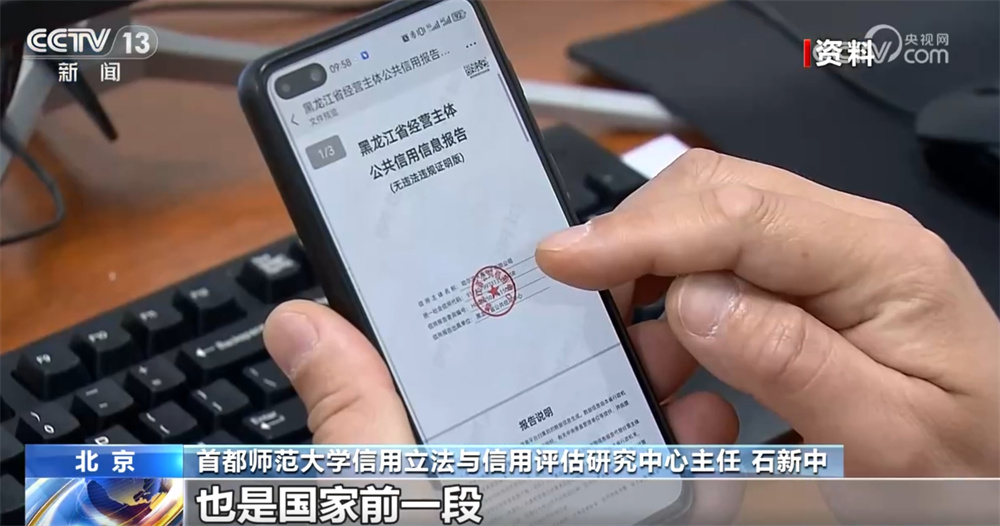
Core Viewpoint - The introduction of "credit instead of certificates" is a significant step in building a social credit system and enhancing administrative efficiency and business environment in China [1] Group 1: Policy Implementation - The National Development and Reform Commission, Ministry of Public Security, and National Data Bureau have announced the implementation of a special credit report to replace the proof of no violations from various administrative bodies [1] - The special credit report is based on a credit information sharing platform that consolidates information on violations across different fields [1] Group 2: Implications for Business - The "credit instead of certificates" can be utilized in administrative approvals, bidding, corporate financing, and applying for preferential policies [1] - The initiative is timely due to the existing foundation of credit data sharing and the expanding application scenarios [1]
“信用代证”是什么?怎样为更多市场主体“减负”?一文解读↓
Yang Shi Wang· 2025-05-10 07:01
Core Viewpoint - The introduction of "credit代证" (credit substitute certificate) by the National Development and Reform Commission, Ministry of Public Security, and National Data Bureau is a significant step in enhancing the social credit system and improving administrative efficiency and the business environment [1][3]. Group 1: Implementation and Impact - "Credit代证" will replace the need for multiple administrative certificates regarding legal violations, streamlining processes for administrative approvals, bidding, financing, and applying for preferential policies [1][4]. - The initiative is expected to reduce the burden on various market entities, including enterprises, individual businesses, and agricultural cooperatives, by consolidating the verification process into a single report [4][6]. - The implementation of "credit代证" is based on prior successful practices in various provinces, which have already integrated credit information sharing to simplify administrative requirements [4][6]. Group 2: Future Developments - Experts suggest that future efforts should focus on developing specialized credit reports and a list of certification matters, as well as promoting cross-regional recognition and use of these reports [9]. - There is encouragement for local governments to explore credit commitment systems in areas not yet covered, allowing entities to proactively commit to compliance, with consequences for violations [8][12]. - The establishment of a more comprehensive social credit system is deemed essential for building a unified national market and improving the business environment, thereby supporting high-quality economic development [12].