人类命运共同体

Search documents
重塑中欧贸易的理性与秩序
Guo Ji Jin Rong Bao· 2025-10-09 16:34
Core Viewpoint - The recent unilateral blockade of the China-Europe Railway by Poland under the pretext of "border security" highlights the increasing politicization and regionalization of international trade, particularly in the context of the ongoing Russia-Ukraine conflict [1][2] Group 1: Impact on China-Europe Trade - The China-Europe Railway has operated over 80,000 trains since its inception, connecting over 200 cities across 25 European countries, and has significantly reduced logistics costs and time for enterprises [1] - In 2024, despite various disruptions, the bilateral trade volume between China and Europe is expected to remain high at $780 billion, indicating the underlying market dynamics and industrial complementarity [1] Group 2: Geopolitical Narratives - The narrative surrounding the "border crisis" is a manifestation of "security generalization," where normal operations of the China-Europe Railway are unjustly linked to sanctions against Russia, undermining the principles of non-discrimination and free movement in international trade [2] - The intertwining of economic issues with ideological and human rights concerns by some European politicians poses a new barrier to China-Europe cooperation, simplifying complex international relations into a binary narrative of "democracy vs. authoritarianism" [2] Group 3: Strategic Responses - In response to regional trade disruptions, China is advancing the "Belt and Road" initiative, with significant progress on the "Arctic Silk Road," which promises to reduce travel time and costs significantly compared to traditional routes [3] - The Arctic route represents a shift in global logistics from a Western-dominated maritime model to a more diversified network, emphasizing cooperation with Arctic nations and promoting a peaceful, green, and shared international public good [3] Group 4: Future of China-Europe Relations - The future of China-Europe relations should not be constrained by geopolitical biases; instead, it should focus on the deep integration of industrial, supply, and value chains as a natural outcome of market dynamics [4] - China views Europe as a comprehensive strategic partner and is committed to dialogue and negotiation to resolve differences, advocating for the resumption of the China-Europe investment agreement and the maintenance of multilateralism and free trade [4]
外交部:推动全球妇女峰会成为世界妇女事业发展史上又一座里程碑
Xin Hua She· 2025-10-09 08:55
新华社北京10月9日电(记者曹嘉玥、邵艺博)全球妇女峰会将于10月13日至14日在北京举行。习 近平主席将出席峰会开幕式并发表主旨讲话。外交部发言人郭嘉昆9日表示,数十位来自各大洲的国家 元首和政府首脑、议会领导人、副总理和部长级官员、国际组织负责人及友好人士将共襄盛会。 郭嘉昆在例行记者会上回答有关提问时说,今年是联合国成立80周年,也是联合国第四次世界妇女 大会即北京世妇会召开30周年。30年前,北京世妇会通过《北京宣言》和《行动纲领》,成为世界妇女 事业发展的里程碑。2020年,习近平主席视频出席联合国大会纪念北京世界妇女大会25周年高级别会议 并发表重要讲话,倡议在2025年再次召开全球妇女峰会。 "我们期待同国际社会一道,把本次峰会办成功、办精彩,推动峰会成为世界妇女事业发展史上的 又一座里程碑。"郭嘉昆说。 郭嘉昆表示,为落实习近平主席提出的重要倡议,中方将于10月13日至14日同联合国妇女署在北京 合办全球妇女峰会。此次峰会旨在重温北京世妇会精神,推动各方加快落实《北京宣言》和《行动纲 领》,为促进全球性别平等和妇女全面发展注入新动力,推动构建人类命运共同体。 ...
全球妇女峰会将在北京举行 外交部:同国际社会一道把峰会办精彩
Xin Lang Cai Jing· 2025-10-09 08:10
Core Points - The Chinese government will co-host a global women's summit in Beijing on October 13-14, 2023, in collaboration with the UN Women, to commemorate the 30th anniversary of the Beijing World Conference on Women [1] - The summit aims to promote gender equality and women's development globally, revitalizing the spirit of the Beijing Declaration and Platform for Action [1] - President Xi Jinping will attend the summit's opening ceremony and deliver a keynote speech, with participation from numerous heads of state, government leaders, and officials from various countries and international organizations [1] Summary by Sections - **Event Overview** - The global women's summit is being held to mark the 30th anniversary of the Beijing World Conference on Women, which established significant frameworks for women's rights and development [1] - **Objectives** - The summit seeks to accelerate the implementation of the Beijing Declaration and Platform for Action, aiming to inject new momentum into global gender equality and women's comprehensive development [1] - **Participation** - The event will feature participation from dozens of leaders, including heads of state, government officials, and representatives from international organizations, highlighting its global significance [1]
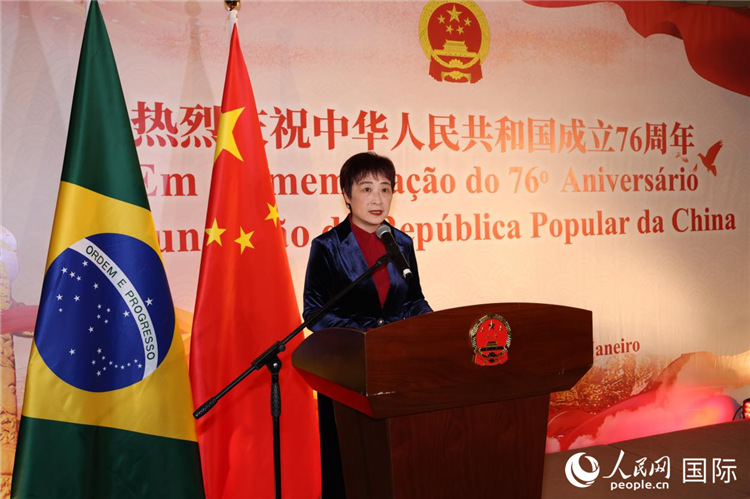
中国驻里约热内卢总领馆举行庆祝中华人民共和国成立76周年招待会
人民网-国际频道 原创稿· 2025-10-09 06:51
田敏在致辞中表示,76年来,在中国共产党坚强领导下,中国人民团结奋斗,创造了经济快速发展和 社会长期稳定两大奇迹,中国式现代化进入不可逆转的历史进程。中国始终坚持开放合作,坚定推进高质 量共建"一带一路",与包括巴西在内的各国携手构建人类命运共同体。 人民网里约热内卢10月8日电 (记者宋亦然、时元皓)当地时间10月8日晚,中国驻里约热内卢总领事 馆举行庆祝中华人民共和国成立76周年招待会。中国驻里约热内卢总领事田敏、里约市国际关系局局长伊 兰·库珀斯坦,以及巴西各界友好人士、旅巴侨胞、中资机构和孔子学院代表等近300人出席。 田敏表示,中巴建交51年来,两国始终相互尊重、彼此支持,成为全球南方国家团结合作的典范。过 去一年,两国领导人互动频繁,中巴务实合作成果丰硕,共建"一带一路"倡议与巴发展战略对接进展顺 利。东北部特高压直流输电项目开工,比亚迪卡马萨里工厂首辆新能源汽车下线,萨尔瓦多—伊塔帕里卡 跨海大桥项目签约……充分展示了两国合作的强劲活力。她强调,民心相通始终是中巴关系发展的不竭动 力。中国驻里约热内卢总领馆愿与各方携手,推动中巴各领域务实合作不断走深走实,为构建中巴命运共 同体作出新的更大贡献。 ...

生态文明主题国际研讨会在保加利亚召开
Xin Hua Wang· 2025-10-09 02:28
Core Points - The international seminar on "Ecological Civilization and the Philosophical Foundation, Cultural Dimensions, and Social Values of Sustainable Development" opened in Sofia, Bulgaria, with experts discussing the cultural roots of ecological civilization and policies for green transformation [1][2] - The event aims to promote dialogue between philosophy, social sciences, and natural sciences to enrich ecological transformation [1] - China expressed its willingness to strengthen cooperation with the international community, including Europe and Bulgaria, to address climate change and promote a fair global governance system [1] Group 1 - The seminar features participation from experts and scholars from various countries, including Bulgaria, China, Belgium, Brazil, and the United States, who will present academic reports over four days [2] - The event is organized by the Institute of Philosophy and Sociology of the Bulgarian Academy of Sciences, with support from institutions like the Xinhua News Agency [2] - The significance of the seminar lies in fostering collaboration among experts from different regions and scientific fields to address global challenges and create a better future for people worldwide [1]
中国代表:中方支持联合国同非盟合作
Xin Hua She· 2025-10-09 01:47
Core Points - China emphasizes the importance of the partnership between the United Nations (UN) and the African Union (AU) as a significant pillar of the international system, crucial for promoting peace, security, and development in Africa [1][2] - The international community is urged to respect the sovereignty and leadership of African nations, avoiding external interference and unilateral sanctions, to create a conducive environment for conflict resolution [1] - There is a call for traditional aid providers to increase their investments and for the international community to enhance support in technology and information to help Africa build its autonomous capabilities [1] - Support is needed for African countries to explore modernization paths suitable to their national conditions, addressing poverty and the root causes of violence and conflict [1] - Developed countries are urged to fulfill their commitments to development aid and climate financing, and to stop withdrawing investments and shifting blame [1] - The need for reform in the international financial architecture is highlighted to better reflect changes in the global economic landscape [1] - Emerging technologies like artificial intelligence and big data should be shared equitably to inject strong momentum into Africa's economic growth [1][2] Summary by Sections UN and AU Cooperation - China supports strengthening cooperation between the UN and AU, aligning with the common interests of Africa and the international community [1] Conflict Resolution - The UN and Security Council are encouraged to support AU and regional organizations in mediating and resolving African issues through African methods [1] Development Support - The international community should assist African nations in building their capabilities and addressing poverty and conflict root causes [1] Role of Developed Countries - Developed nations are called upon to honor their aid commitments and to cease practices that undermine African development [1] Financial and Technological Reform - There is a push for reforming the international financial system and ensuring equitable access to emerging technologies for Africa's growth [1]
中意古老文明的智慧为应对时代之变提供了可行路径
Xin Hua Wang· 2025-10-08 16:42
交流互鉴是民心相亲的重要纽带。中意人文交流充满活力、富有成果,双方首创世界遗产地结好模式, 意方两度返还中国流失文物,首届中意大学校长论坛将于年内召开,北京、米兰接续举办冬奥会,带动 了两国冰雪产业合作。意大利现已成为同中国开通最多直航的欧洲国家之一。中方对意大利实施免签政 策后,去年意大利来华人数翻番,中方将继续对意延长免签政策,让更多新时代的马可·波罗可以来一 场"说走就走"的中国之旅。 王毅表示,中意两国作为东西方文明的代表,为人类社会的发展进步作出过巨大贡献。当前国际形势复 杂动荡、危机四伏,但也危中有机,中意应总结弘扬迄今交往的成功经验,为国际关系发展提供有益借 鉴。近期习近平主席提出全球治理倡议,宣布应对气候变化新一轮国家自主贡献目标,体现了中国胸怀 天下、立己达人的负责任大国担当,展示了对多边主义的坚守和对联合国的支持。中方愿同意方一道, 继续做维护和平、稳定、发展、繁荣的建设性力量,推动国际社会团结应对全球性挑战,构建更加公正 合理的全球治理体系,携手迈向人类命运共同体。 相互尊重是国与国的正确相处之道。志同道合是朋友,求同存异也能成为朋友。文化和制度差异不应成 为对话合作的障碍,关键是要相互 ...
赵乐际在“中立之友小组”成员国议会领导人第二次会议上发表视频致辞
Bei Jing Ri Bao Ke Hu Duan· 2025-10-08 11:34
转自:北京日报客户端 新华社北京10月8日电 应土库曼斯坦国民会议主席古尔马诺娃邀请,全国人大常委会委员长赵乐际8日 在"中立之友小组"成员国议会领导人第二次会议上发表视频致辞。 赵乐际表示,"中立之友小组"成立5年多来,以倡导中立政策为核心,为志同道合的国家搭建了一个增 进理解互信、深化交流合作、践行多边主义的有益平台。今年是世界反法西斯战争胜利和联合国成立80 周年。当前,世界进入新的动荡变革期,联合国和多边主义遭遇逆风。9月初,习近平主席郑重提出全 球治理倡议,强调奉行主权平等、遵守国际法治、践行多边主义、倡导以人为本、注重行动导向,旨在 推动构建更加公正合理的全球治理体系。这是继全球发展倡议、全球安全倡议、全球文明倡议之后,习 近平主席提出的又一重大全球性倡议,受到各方普遍欢迎。 赵乐际指出,本次会议以"议会间对话——保障世界和平与信任的重要方式"为主题,恰逢其时,意义深 远。立法机构有责任为推动公正合理的全球治理、构建人类命运共同体作出积极贡献。中方愿同"中立 之友小组"成员国一道,共同践行四大全球倡议,加强团结合作,重振多边主义,改革完善全球治理, 携手维护以联合国为核心的国际体系和以国际法为基础 ...
驻挪威使馆举办庆祝中华人民共和国 成立76周年招待会
Shang Wu Bu Wang Zhan· 2025-10-07 16:02
萨代表挪政府致贺,表示挪中高层交往密切,务实合作动能强劲,愿秉持相互尊重、互利共赢理 念,推动两国友好跨越重洋、世代传承。 来宾还共同欣赏了"天涯共此时"文艺表演。 侯悦大使致辞表示,在中国共产党坚强领导下,中国人民正以中国式现代化全面推进强国建设、民 族复兴伟业,为各国共同繁荣创造新机遇。习近平主席最新提出的全球治理倡议,为加强和完善全球治 理进一步贡献中国方案。中方愿同挪方继续深化各领域互信合作,与各国携手推动构建人类命运共同 体。 (原标题:驻挪威使馆举办庆祝中华人民共和国 成立76周年招待会) 9月29日,驻挪威使馆举办庆祝中华人民共和国成立76周年招待会。挪贸工渔业部国务秘书萨格巴 肯、国防参谋长杰尔德、罗加兰郡副郡长英比约及各界人士、驻挪使节、华侨华人等400余人出席。 ...

推动共建阿中命运共同体,更好应对时代挑战(国际论坛)
Ren Min Ri Bao· 2025-10-06 22:01
第二届阿中峰会将于2026年在中国举办,这将是阿中关系史上的又一个重要里程碑。阿拉伯国家期待双 方就加强全面务实合作达成广泛共识,为阿中关系发展擘画蓝图,为推动共建阿中命运共同体注入新动 力。 阿中有着深厚的传统友谊和相近的发展理念,都主张加强国际团结协作,都提倡加强文明交流对话,都 追求克服困难推动国家发展振兴。这是阿中携手共建人类命运共同体的坚实根基 阿拉伯国家与中国传统友谊深厚,古老的丝绸之路让阿拉伯人民和中国人民相互走近。近年来,阿拉伯 国家同中国关系蓬勃发展,树立了发展中国家团结合作的典范。阿中加强合作,为当今充满不确定性的 世界注入稳定性和希望。 阿拉伯国家和中国都坚持从战略高度和长远角度看待彼此关系。2016年1月,习近平主席在阿拉伯国家 联盟总部发表重要演讲时指出,双方要做中东和平的建设者、中东发展的推动者、中东工业化的助推 者、中东稳定的支持者、中东民心交融的合作伙伴。2022年,习近平主席赴沙特利雅得出席首届中国— 阿拉伯国家峰会,双方一致同意全力构建面向新时代的中阿命运共同体。峰会发布了一系列重要文件, 阿中将在政治、经济、安全、人文等各领域加强合作,并启动了"八大共同行动",强调双方将 ...