
冰上丝绸之路

Search documents
走笔天下丨一条中欧贸易的“冰海新途”徐徐展开
Xin Hua Wang· 2026-01-29 01:26
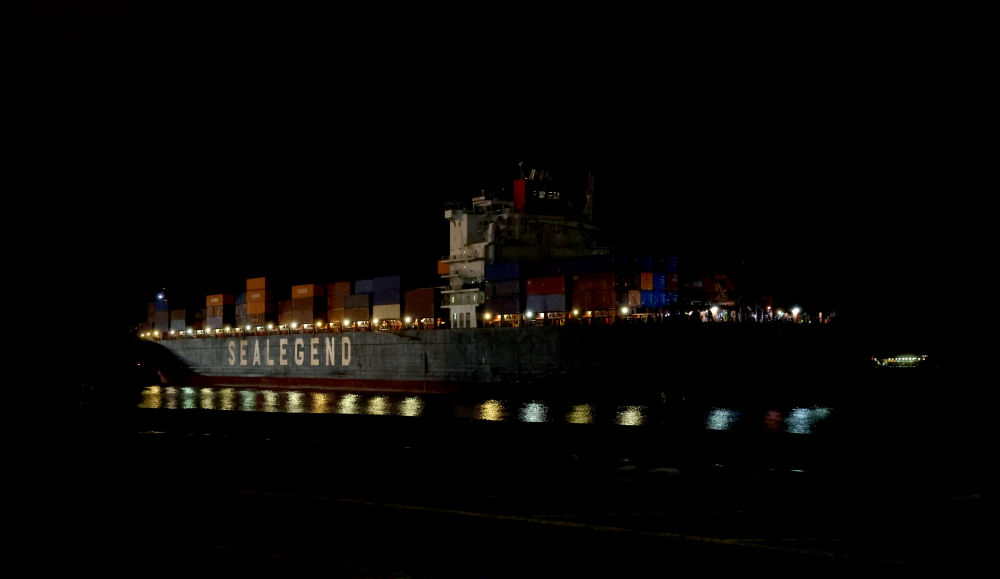
Core Viewpoint - The article discusses the significance of the first cargo ship, "Istanbul Bridge," arriving at Felixstowe Port via the new Central Europe Arctic Fast Shipping Route, highlighting the potential of Arctic shipping routes for trade between China and Europe as climate change opens up these pathways [1][3][4]. Group 1: Arctic Shipping Routes - The Northeast Passage, traversed by "Istanbul Bridge," connects the Pacific and Atlantic Oceans and is a core channel of the "Ice Silk Road," primarily along the Russian coast [4]. - The Northwest Passage, which has historical significance, requires ships to navigate through complex waterways in northern Canada, presenting unique challenges [4][6]. - Advances in navigation technology and climate change have made regular commercial shipping activities in Arctic routes feasible, marking a shift from historical exploration tragedies to modern trade opportunities [6][7]. Group 2: Trade Opportunities - The "Istanbul Bridge" completed its journey in 20 days, utilizing a favorable navigation window, which is significantly shorter than traditional routes like the China-Europe Railway Express (25 days) and the Suez Canal (40 days) [7][9]. - The cargo included high-demand products from China, such as new energy exports and e-commerce goods, indicating a growing trend in time-sensitive trade [9][10]. - The successful operation of this route enhances the potential for Chinese brands to expand internationally and provides greater supply chain reliability [10]. Group 3: Geopolitical Context - The article notes the resilience of China-Europe trade amidst complex geopolitical dynamics, with China being the largest trading partner for both the EU and the UK [13]. - The development of Arctic shipping routes faces geopolitical challenges, such as Canada's claims over the Northwest Passage and Russia's stance on the Northeast Passage, which could impact future trade [13][14]. - China's approach emphasizes pragmatic cooperation in Arctic development, as demonstrated by the "Istanbul Bridge" voyage, which seeks to avoid geopolitical disputes while promoting trade [14].

北约内部剑拔弩张,近八十年来首次,德国总理默茨:立刻敲定访华
Sou Hu Cai Jing· 2026-01-20 07:31
Group 1 - The U.S. imposed a 10% tariff on eight European countries, with a potential increase to 25% if Greenland is not acquired by June 1, 2026, marking a significant crisis in transatlantic relations [1][12] - Trump's obsession with acquiring Greenland is linked to its strategic importance for U.S. national security and military interests, particularly regarding missile defense systems [4][6] - The geopolitical implications of Greenland's resources, including rare earths and minerals, are crucial for global energy transition and high-tech industries, indicating a complex interplay of strategic, economic, and political factors [6][13] Group 2 - European nations initially showed unity in response to U.S. aggression, forming a coalition for military exercises in Greenland, but the abrupt cancellation of these exercises raised concerns about U.S. military intentions [7][8] - The EU is considering imposing tariffs on $930 billion worth of U.S. goods and restricting U.S. companies' access to the EU market as a countermeasure [7][15] - Germany's Chancellor Merz is shifting diplomatic focus towards China, planning a visit with a business delegation, reflecting a significant change in Germany's foreign policy amid rising tensions with the U.S. [10][12] Group 3 - The crisis is viewed as the most severe since NATO's formation, with economic coercion being used as a tool for territorial expansion, fundamentally altering the nature of U.S.-European relations [12][13] - The potential for military action by the U.S. to seize Greenland could signify the end of NATO, highlighting the unequal nature of U.S.-European relations [15] - The growing rift between the U.S. and Europe may provide opportunities for China, as European countries increasingly seek to strengthen ties with China in response to U.S. policies [15]

历史性一幕:特朗普把枪口对准8国,话音刚落,德国总理:去中国
Sou Hu Cai Jing· 2026-01-19 22:44
Core Viewpoint - The article discusses the escalating tensions between the United States and several European NATO allies over the Greenland acquisition proposal, highlighting the potential economic and geopolitical ramifications of Trump's threats to impose tariffs on these countries for not supporting the U.S. initiative. Group 1: U.S. Actions and Responses - Trump announced potential tariffs starting at 10% and escalating to 25% on eight European allies, including Denmark, Norway, France, and Germany, due to their refusal to cooperate with the U.S. plan to acquire Greenland [1][5] - The U.S. is using economic coercion to pressure allies into territorial concessions, undermining the principle of collective defense within NATO [5][7] - Denmark responded by deploying naval forces to Greenland and rejecting any territorial negotiations, while the EU considered imposing tariffs on U.S. goods worth €93 billion [5][7] Group 2: European Reactions and Strategic Shifts - The NATO alliance is perceived to be fracturing, with European countries reassessing their reliance on U.S. security guarantees and exploring deeper cooperation with China [9][19] - Germany's planned visit to China by Chancellor Merz, accompanied by major industrial leaders, signifies a strategic pivot towards China amidst U.S. pressures [3][13] - European nations are increasingly recognizing the risks of depending solely on the U.S. for security and are contemplating the establishment of a European defense force [9][11] Group 3: Economic Implications and Future Directions - The article notes that the U.S. tariffs could lead to significant shifts in trade relationships, with European countries seeking to reduce dependence on American markets and technology [11][15] - The concept of the "Ice Silk Road" proposed by China aligns with Northern European development plans, presenting an alternative cooperative framework compared to U.S. coercive tactics [15][17] - As more countries consider collaboration with China over confrontation with the U.S., the global governance landscape may undergo fundamental changes, moving towards a multipolar world [19][20]

形势突变!别了,北约!美国这次玩真的!
Sou Hu Cai Jing· 2026-01-13 06:52
Core Viewpoint - The article discusses the potential U.S. military takeover of Greenland, emphasizing the strategic importance of the island for U.S. national security and military operations, particularly in relation to threats from Russia and the Arctic region [1][3][10]. Strategic Importance of Greenland - Greenland is positioned at the geometric center of the Northern Hemisphere, making it a critical location for U.S. defense against intercontinental missile threats from Eurasia [1]. - The GIUK line, which includes Greenland, Iceland, and the UK, serves as a defense line against nuclear submarines that could threaten the U.S. East Coast, highlighting the necessity for the U.S. to control this strategic passage [3]. Economic and Resource Interests - The melting ice in Greenland is revealing valuable mineral resources, including rare earth elements and uranium, which are crucial for the U.S. to reduce resource dependency and revitalize its high-end manufacturing sector [3][6]. - Greenland's economy relies heavily on approximately $600 million in annual subsidies from Denmark, making it vulnerable to economic influence from the U.S. [6]. U.S. Strategy for Control - The U.S. plans to implement a "salami slicing" strategy to gradually gain control over Greenland, starting with economic penetration and support for local independence movements [6]. - The strategy involves presenting the U.S. as a benefactor to Greenland, ultimately leading to a formal agreement that would place Greenland under U.S. defense and foreign policy control while maintaining a facade of independence [6]. European Response and Implications - The potential U.S. takeover of Greenland has caused alarm among European nations, raising concerns about the stability of NATO and the possibility of further U.S. territorial ambitions in the region [7]. - Smaller European countries, like Finland, are seeking alliances with non-Western powers to counterbalance U.S. influence, indicating a shift in geopolitical dynamics [7]. Impact on Global Trade and Security - The militarization of Greenland by the U.S. could threaten China's interests in the Arctic, particularly regarding the development of the Arctic Silk Road and the safety of maritime routes [10]. - The article suggests that the current geopolitical climate reflects a return to a more primal state of international relations, where military strength is paramount for national security [10].

环球时报社评:炒作“北极中国威胁论”是混淆视听
Xin Lang Cai Jing· 2026-01-12 15:53
Core Viewpoint - The article argues against Western media's portrayal of China's activities in the Arctic as militaristic, emphasizing that China has not engaged in any military deployment in the region and highlighting its role as a responsible actor in Arctic research and environmental protection [1][2]. Group 1: China's Role in Arctic Governance - China is portrayed as a supporter of multilateral governance in the Arctic, actively participating in international frameworks and opposing geopolitical confrontations [2][4]. - The article emphasizes that non-Arctic countries, including China, have legitimate rights to conduct research and utilize resources in international waters, which should be respected [2]. Group 2: Critique of Western Narratives - The article criticizes the narrative of a "China threat" in the Arctic as a means for the U.S. to justify its military expansion and unilateral resource exploitation in the region [3]. - It argues that the U.S. is using the "China threat" narrative to divert attention from its own actions in the Arctic, which could hinder climate and ecological protection efforts [3]. Group 3: China's Arctic Policy - China's Arctic policy is characterized by principles of respect, cooperation, win-win outcomes, and sustainability, aiming to contribute to the sustainable development of the Arctic [4]. - The article states that China's activities in the Arctic are in accordance with international laws and treaties, reinforcing its commitment to responsible governance in the region [4].
2025年度宁波港航十大新闻公布
Xin Lang Cai Jing· 2025-12-31 13:41
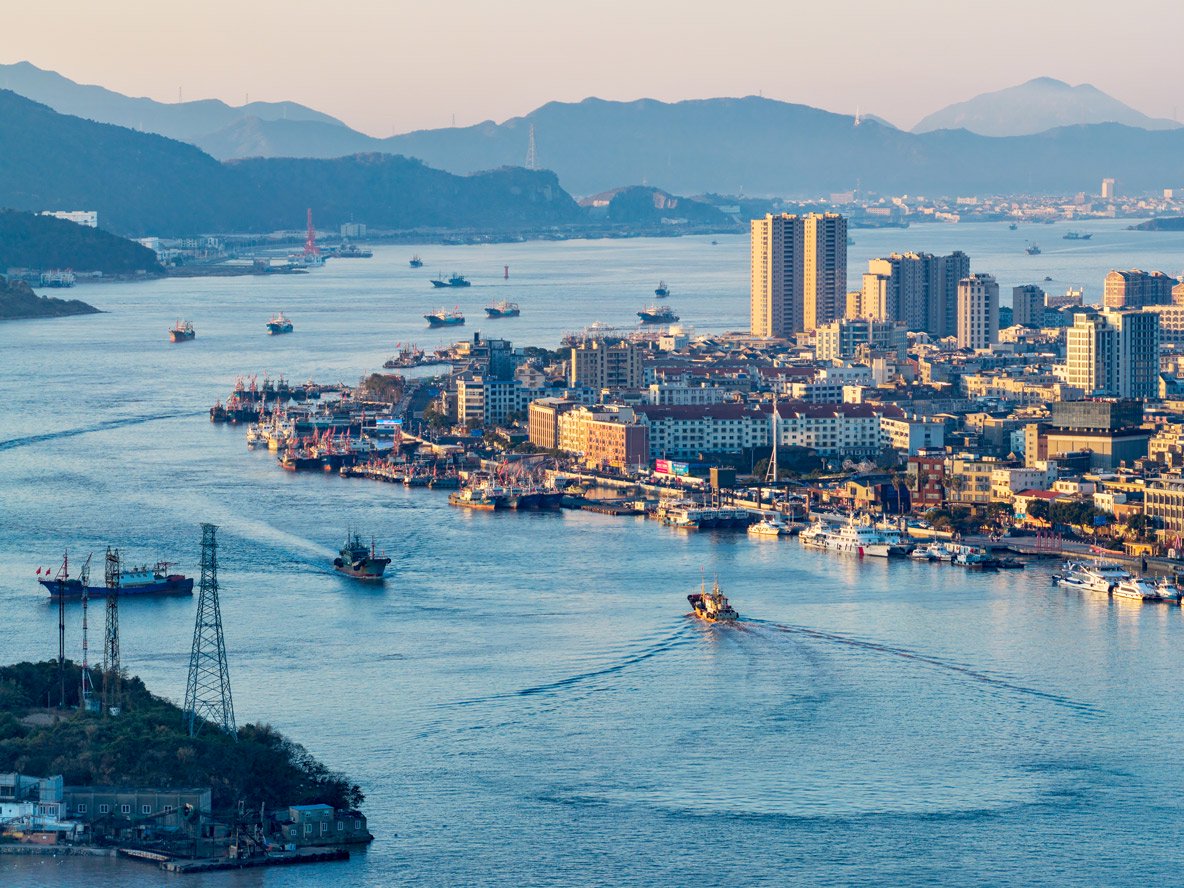
Core Insights - In 2025, Ningbo Port and Shipping achieved significant breakthroughs and milestones, showcasing its capabilities in energy enhancement, green transformation, smart development, and open cooperation [1][4] Group 1: Infrastructure Development - The core area of Ningbo-Zhoushan Port completed the second 300,000-ton deep-water main channel, making it the first core port in China with a "dual-channel" for ultra-large vessels [2][29] - The first 10,000-ton channel in the Shiyu Port area was completed, adding a "golden waterway" to the world's major ports [2][5] - Ningbo Ocean Transportation Co., Ltd. surpassed 1 million deadweight tons in self-owned capacity, becoming the first shipping company in Ningbo to reach this milestone [2][26] Group 2: Green and Smart Transformation - The world's largest and China's first 10,000-ton pure electric container ship was launched, marking the entry of coastal container transport into a zero-emission, fully electric era [2][12] - The first green methanol bunkering business in Zhejiang was established at Ningbo-Zhoushan Port, making it one of the few ports in China capable of providing multiple types of green fuel [2][18] - By 2025, all coastal berths over 1,000 tons and inland berths in Ningbo achieved full shore power coverage, optimizing the green port ecosystem [2][25] Group 3: Open Cooperation and Industry Ecosystem - Mediterranean Shipping Company (MSC) established its important ship management company in Ningbo, accelerating the rise of the "fleet manager" industry cluster [2][9] - The world's first China-Europe Arctic container fast shipping route successfully launched and docked at Ningbo-Zhoushan Port, laying a solid foundation for the "Ice Silk Road" core channel [2][22] Group 4: Safety and Innovation - Ningbo launched six waterway travel integration theme routes, promoting the integration of "transportation + tourism" [2][11] - The port safety responsibility insurance pilot project successfully passed departmental acceptance, forming a replicable "Ningbo experience" in risk prevention and insurance mechanisms [2][19]


【环球财经】中欧北极快航航线首艘货船抵达波兰
Xin Hua She· 2025-10-19 23:13
Core Viewpoint - The first cargo ship of the China-Europe Arctic Container Express Line arrived at Gdansk Port, Poland, on October 19, after a 26-day journey, highlighting the efficiency and time-saving advantages of this new shipping route compared to traditional routes [1]. Group 1: Shipping Route Details - The ship departed from Ningbo-Zhoushan Port on September 23, making stops at Felixstowe, UK, and Hamburg, Germany, before reaching Gdansk [1]. - The Arctic Northeast Passage allows for a direct route to Europe, taking only 20 days to reach Felixstowe, significantly shorter than the approximately 40 days via the Suez Canal and 50 days via the Cape of Good Hope [1]. Group 2: Operational Insights - The route is operated by Hanjin Shipping (Hong Kong) Co., with the COO, Li Xiaobin, noting that the sea conditions and temperatures are particularly suitable for transporting temperature-sensitive and time-critical goods [1]. - The China-Europe Arctic Express is considered a core channel of the "Ice Silk Road," representing a new international shipping line that connects East Asia and Europe, which is expected to optimize global supply chains and enhance economic cooperation along the route [1].
中欧北极快航航线首艘货船抵达波兰
Xin Hua Wang· 2025-10-19 16:42
Core Viewpoint - The first cargo ship of the China-Europe Arctic Container Express Line arrived at Gdansk Port, Poland, on October 19, marking a significant development in international shipping routes and supply chain optimization [1] Group 1: Shipping Route Details - The ship departed from Ningbo-Zhoushan Port on September 23 and made stops at Felixstowe, UK, and Hamburg, Germany, before reaching Gdansk [1] - The Arctic route allows for a transit time of only 20 days to reach Europe, significantly shorter than the approximately 40 days via the Suez Canal and 50 days via the Cape of Good Hope [1] Group 2: Operational Insights - The Arctic route is particularly suitable for transporting temperature-sensitive goods and products with high time sensitivity due to favorable sea conditions [1] - The operator of the route, Hanjin Shipping (Hong Kong) Co., Ltd., emphasizes the operational advantages of this new shipping line [1] Group 3: Strategic Importance - The China-Europe Arctic Express Line is a key component of the "Ice Silk Road," enhancing trade connections between East Asia and Europe [1] - The Northeast Arctic Route is positioned as an emerging international shipping line that plays a crucial role in optimizing global supply chains and promoting economic cooperation along the route [1]
“北极特快”首批“新三样”商品已送达
Xin Hua She· 2025-10-16 01:29
Core Insights - The first cargo ship of the China-Europe Arctic Container Fast Shipping Route arrived at Felixstowe, UK, on October 13, after a 20-day journey, carrying approximately 4,000 standard containers, primarily transporting "new three types" of goods such as new energy vehicles, lithium batteries, and photovoltaic products [1][2] Group 1: Shipping Route and Operational Details - The China-Europe Arctic Fast Shipping Route utilizes the Arctic Northeast Passage, providing a significant time advantage over traditional shipping routes, with transit times of about 25 days compared to the China-Europe Railway Express and 40-50 days for the Suez and Cape routes [1] - The ship encountered storm "Amy" in the Norwegian Sea, causing a two-day delay in arrival, highlighting the challenges of navigating Arctic waters [1] - The shipping company, Hai Jie Shipping (Hong Kong) Ltd., has been preparing for this route for three years, upgrading ship hardware and training crew members [1] Group 2: Strategic Importance and Future Plans - The Arctic Northeast Passage is a key part of the "Ice Silk Road," enhancing global supply chain optimization and promoting economic cooperation along the route [2] - Hai Jie Shipping plans to invest in more ice-strengthened vessels by 2026 to establish fixed summer navigation routes [2]
海运通道上新 冰上丝路启航
Ren Min Ri Bao· 2025-10-14 22:12
Core Insights - The successful maiden voyage of the "Istanbul Bridge" marks the launch of the first China-Europe Arctic container express route, which is designed specifically for cross-border e-commerce and high-value goods [1][4]. Group 1: Route Efficiency - The China-Europe Arctic Express significantly reduces transportation time, cutting the journey from Ningbo-Zhoushan Port to Felixstowe Port by 22 days compared to traditional routes, with a single trip carbon emission reduction of approximately 50% [2]. - The route is particularly beneficial for transporting lithium battery storage cabinets and components for new energy vehicles, achieving delivery times as fast as 18 days, compared to the previous 40 days via the Suez Canal [2]. Group 2: Cost Reduction - The new route allows businesses to reduce inventory levels by 40%, leading to significant decreases in capital occupation and enabling companies to respond more swiftly to market demands [3]. - The cost of transporting goods via the China-Europe Arctic Express is approximately 40% lower than traditional methods, with a single container transport cost around $7,000 [3]. Group 3: Strategic Significance - The launch of the Arctic Express completes the global shipping network for Ningbo-Zhoushan Port, connecting major oceans including the Pacific, Atlantic, Indian, and Arctic Oceans [4]. - The new route is expected to enhance trade between China and the EU, which totaled 3.88 trillion yuan in the first eight months of the year, growing by 4.3% and accounting for 13.1% of China's total foreign trade [4].