多边主义

Search documents
韩正访问科威特
Xin Hua She· 2025-11-02 13:57
Core Points - The visit of Vice Premier Han Zheng to Kuwait signifies the strengthening of China-Kuwait relations, with both sides expressing a commitment to deepen political trust and cooperation [1][2][3] - Kuwait's support for China's global governance initiatives and its willingness to collaborate on the Belt and Road Initiative highlight the strategic partnership between the two nations [2][3] - The discussions emphasized the importance of multilateralism and cooperation in addressing global challenges, particularly in the Middle East [3] Group 1 - Han Zheng conveyed President Xi Jinping's greetings to Emir Mishal, emphasizing the importance of China-Kuwait relations and the strategic guidance provided by their leaders [1] - The two countries aim to implement bilateral cooperation agreements and enhance their strategic partnership, especially as they approach the 55th anniversary of diplomatic relations [2] - Kuwait's Emir expressed appreciation for China's initiatives and reaffirmed support for the One China policy, indicating a strong alignment in foreign policy [2][3] Group 2 - The discussions with Crown Prince Sabah focused on Kuwait's unique role in the Middle East and the desire to elevate bilateral relations to new heights [2] - Both sides acknowledged the complementary nature of their economies and the potential for mutually beneficial cooperation [3] - The meeting with Prime Minister Ahmad highlighted Kuwait's commitment to accelerating the implementation of cooperation projects and achieving practical outcomes from their high-level relationship [3]
商务部:推动恢复中日韩自贸协定谈判
财联社· 2025-11-02 12:39
Core Viewpoint - The meeting between Chinese and South Korean officials emphasizes the importance of maintaining stable industrial and supply chains, enhancing regional and bilateral cooperation, and advancing trade relations between the two countries [1][3][5]. Group 1: Bilateral Cooperation - Both China and South Korea recognize each other as significant neighbors and partners, with a mutual commitment to implement the leaders' consensus to foster new developments in economic and trade relations [3]. - The establishment of communication mechanisms such as the China-South Korea supply chain cooperation hotline and export control dialogue is aimed at ensuring the stability and smooth operation of supply chains [3]. - South Korea expresses willingness to accelerate the second phase of the China-South Korea Free Trade Agreement negotiations and deepen bilateral trade and investment [5]. Group 2: Multilateral Engagement - The two countries plan to enhance cooperation within frameworks like the World Trade Organization and the Regional Comprehensive Economic Partnership to promote the resumption of China-Japan-South Korea Free Trade Agreement negotiations [3]. - There is a shared goal to uphold free trade and multilateralism, indicating a commitment to collaborative economic policies on a broader scale [3][5].


商务部:推动尽快恢复中日韩自贸协定谈判
Yang Shi Wang· 2025-11-02 11:27
Core Viewpoint - The meeting between Chinese Commerce Minister Wang Wentao and South Korean Minister of Trade, Industry and Energy Jin Jong-oh emphasizes the importance of maintaining stable industrial and supply chains between China and South Korea, as well as enhancing regional and bilateral cooperation [1] Group 1: Bilateral Cooperation - Both parties discussed the implementation of key agreements made by their leaders to promote new developments in China-South Korea economic and trade relations [1] - The establishment of communication mechanisms such as the China-South Korea supply chain cooperation hotline, export control dialogue, and trade remedy cooperation mechanisms was highlighted to ensure smooth supply chain operations [1] Group 2: Multilateral Engagement - The ministers agreed on the importance of cooperation within frameworks like the World Trade Organization and the Regional Comprehensive Economic Partnership to strengthen multilateral trade [1] - There is a mutual interest in resuming negotiations for the China-Japan-South Korea Free Trade Agreement to uphold free trade and multilateralism [1]
商务部部长:推动尽快恢复中日韩自贸协定谈判
Xin Jing Bao· 2025-11-02 11:14
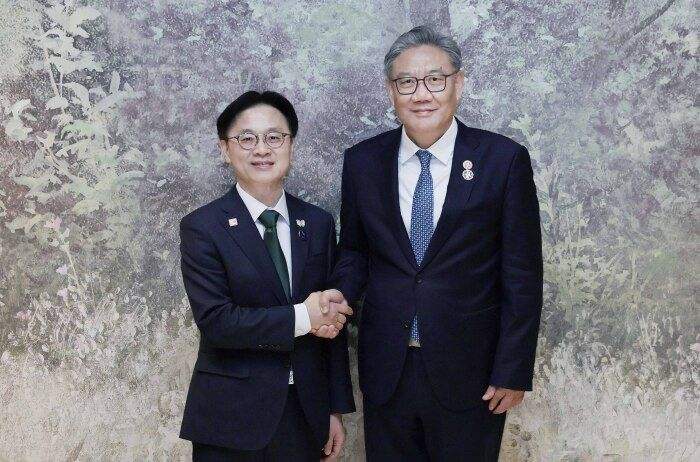
王文涛表示,中韩是重要近邻和合作伙伴,中方愿与韩方共同落实好两国领导人重要共识,推动中韩经 贸关系取得新发展。双方应通过中韩产供链合作热线、出口管制对话、贸易救济合作机制等加强沟通协 调,保障中韩产供链稳定畅通;加强在世界贸易组织、《区域全面经济伙伴关系协定》等框架下合作, 推动尽快恢复中日韩自贸协定谈判,共同维护自由贸易和多边主义。 新京报讯据商务部消息,11月1日,商务部部长王文涛在韩国庆州会见韩国产业通商部长官金正官。双 方就维护产业链供应链稳定、加强区域及多双边合作等交换意见。 金正官表示,中国是韩国重要经贸合作伙伴,韩方愿与中方一道,加快韩中自贸协定第二阶段谈判进 程,推进地方经贸合作,持续深化双边贸易投资及区域、多边合作。 ...
引航亚太开放合作 展现大国责任担当——中共中央政治局委员、外交部长王毅谈习近平主席出席亚太经合组织第三十二次领导人非正式会议并对韩国进行国事访问
Xin Hua She· 2025-11-02 10:31
Core Points - The visit of President Xi Jinping to South Korea and participation in the APEC meeting is a significant diplomatic action following the successful conclusion of the 20th Central Committee's Fourth Plenary Session, showcasing China's commitment to regional cooperation and stability [1][2] - The APEC meeting emphasized the importance of open cooperation in the Asia-Pacific region, addressing the challenges posed by the current multilateral trade system and advocating for shared opportunities and win-win outcomes [2][3] - Xi Jinping's proposals during the APEC meeting, including the "five common goals," aim to enhance multilateral trade, stabilize supply chains, and promote inclusive economic development, reflecting China's leadership role in the region [3][4] Group 1: APEC Meeting Highlights - APEC is recognized as the highest-level economic cooperation mechanism in the Asia-Pacific region, crucial for driving global open development [2] - The meeting resulted in the "Gyeongju Declaration" and statements on artificial intelligence and demographic changes, indicating a collective desire for cooperation among member economies [3] - China will host the next APEC meeting in Shenzhen in November 2024, marking its third time as host and emphasizing its commitment to regional integration and cooperation [4][5] Group 2: China-Korea Relations - The visit reinforced the strategic partnership between China and South Korea, highlighting their deep economic ties and mutual benefits [10][11] - Both countries agreed to accelerate negotiations for the second phase of their free trade agreement and explore new areas of cooperation, such as artificial intelligence and green industries [12] - The visit underscored the importance of maintaining stable and healthy relations, with both leaders expressing a commitment to mutual respect and cooperation [11][12] Group 3: China-U.S. Relations - The meeting between Xi Jinping and U.S. President Trump in Busan was a historic moment for China-U.S. relations, emphasizing the need for cooperation over confrontation [7][9] - Both leaders agreed to strengthen collaboration in trade and energy, aiming to maintain a positive trajectory in bilateral relations [8][9] - The meeting was positively received by international media, signaling a potential stabilization in China-U.S. relations and boosting global market confidence [8][9] Group 4: China's Economic Strategy - The recent plenary session outlined China's "14th Five-Year Plan," focusing on high-level opening up and providing new opportunities for global economic growth [13][14] - Xi Jinping's emphasis on sustainable development and cooperation reflects China's intention to enhance its role in the global economy and foster a favorable investment environment [14][15] - The international community views China's planning and implementation of its economic strategies as a significant advantage, contributing to its remarkable growth and stability [15]
引航亚太开放合作 展现大国责任担当
Xin Hua She· 2025-11-02 10:30
Group 1: APEC Meeting and Regional Cooperation - The APEC meeting highlighted the importance of open cooperation in the Asia-Pacific region, which is seen as a major economic growth engine globally [2][3] - Xi Jinping emphasized the need for multilateral trade systems and proposed five key areas for cooperation, including maintaining stable supply chains and promoting inclusive development [3][4] - The upcoming APEC meeting in Shenzhen in November 2024 is expected to further enhance regional cooperation and economic integration [4][5] Group 2: China-Korea Relations - The visit to South Korea reaffirmed the strategic partnership between China and South Korea, emphasizing their deep economic ties and mutual benefits [10][11] - Both countries agreed to accelerate negotiations on the second phase of their free trade agreement and explore new areas of cooperation such as artificial intelligence and green industries [11][12] - The visit resulted in the signing of over ten cooperation agreements across various sectors, showcasing the dynamic nature of China-Korea relations [11][12] Group 3: China-U.S. Relations - The meeting between Xi Jinping and U.S. President Trump marked a significant moment in U.S.-China relations, with both leaders agreeing to enhance cooperation in trade and other areas [7][8] - The leaders emphasized the importance of dialogue over confrontation, aiming to stabilize and improve bilateral relations [9] - The meeting was positively received by international media, indicating a potential period of stability in U.S.-China relations [9] Group 4: China's Economic Strategy - The recent CPC plenary session outlined the "15th Five-Year Plan," focusing on high-level opening up and sustainable economic growth [13][14] - Xi Jinping's vision for the next five years includes deepening reforms and expanding international cooperation, positioning China as a key player in global economic development [14][15] - The emphasis on a stable and favorable investment environment in China is expected to attract global business interest [15]
国际人士:中国致力于推动亚太合作
Yang Shi Xin Wen Ke Hu Duan· 2025-11-02 08:15
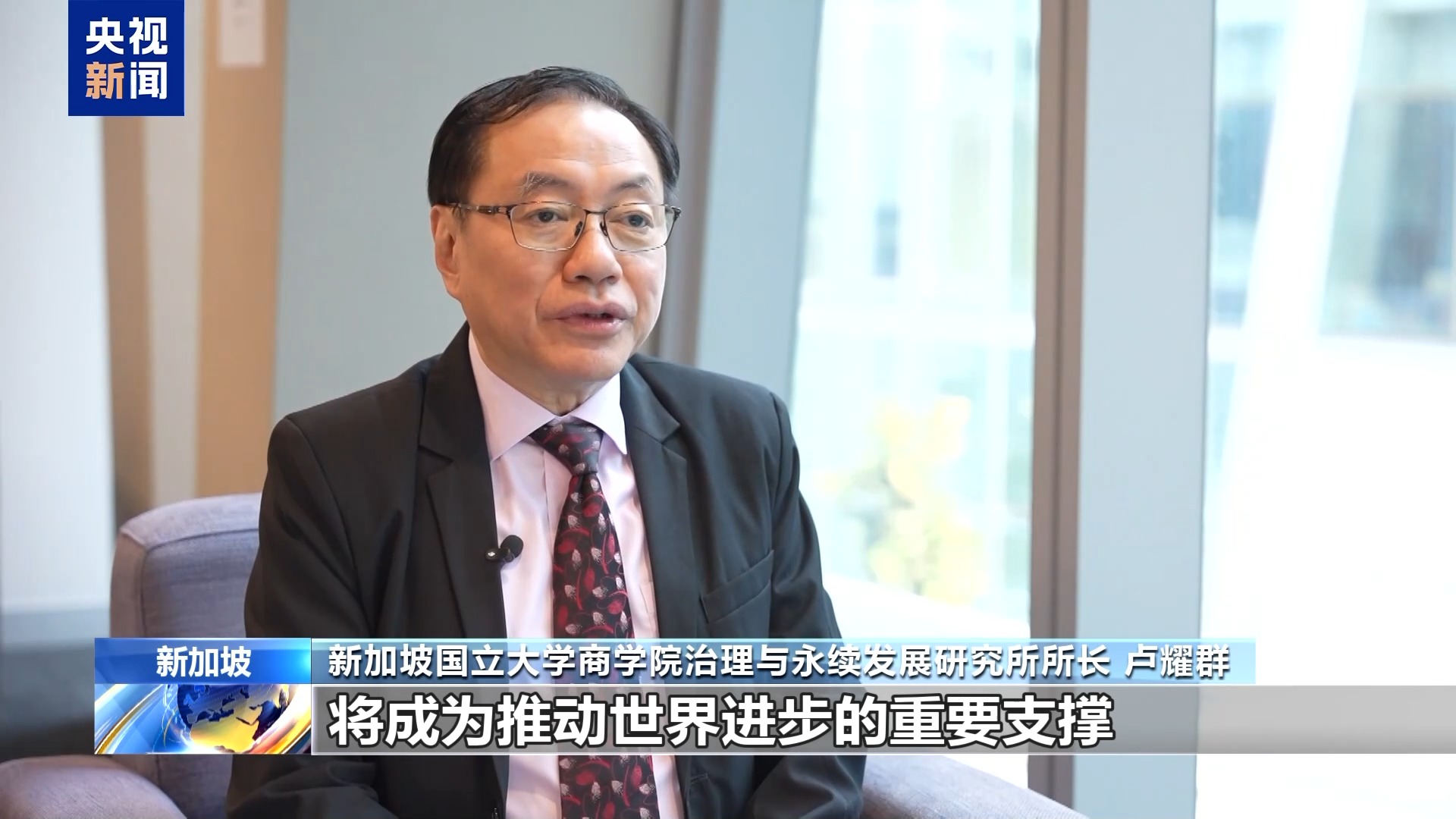
Core Points - International figures highly praise President Xi Jinping's important speeches during the APEC meeting, highlighting China's commitment to multilateralism and open cooperation in the Asia-Pacific region [1][3][5] - Xi's proposals are seen as crucial for regional economic development and are based on principles of free trade and open economies, emphasizing the importance of multilateralism and inclusivity [3][5] - China will host the APEC meeting again in 2026, which is anticipated to be a historically significant event [3] - China has played a vital role in APEC, actively participating and proposing several global initiatives, including the Global Development Initiative, Global Security Initiative, Global Civilization Initiative, and Global Governance Initiative, aligning with APEC's objectives [5][9] - The world is at a new crossroads, and China is contributing wisdom and solutions to address prominent global issues [5][9] Group 1 - International experts commend Xi Jinping's speeches for their depth and significance, viewing them as a foundation for global progress [3] - The emphasis on multilateralism and inclusivity in Xi's proposals is crucial for fostering cooperation in the Asia-Pacific region [3][5] - The upcoming APEC meeting in 2026 is expected to be a pivotal opportunity for advancing regional collaboration [3] Group 2 - China's proactive role in APEC is underscored by its introduction of various global initiatives that support multilateralism and free trade [5][9] - The initiatives proposed by China are increasingly influential in the global multilateral relationship framework [9] - The international community recognizes the importance of implementing these initiatives to address current global challenges [9]
视频丨国际人士:中国致力于推动亚太合作
Yang Shi Xin Wen Ke Hu Duan· 2025-11-02 08:09
Core Points - International figures highly praised President Xi Jinping's important speech and written remarks during the APEC meeting, highlighting China's commitment to multilateralism and open cooperation in the Asia-Pacific region, aimed at promoting global development and prosperity [2] Group 1: Importance of Xi Jinping's Speech - The speech was described as profound and significant, establishing key principles such as free trade and open economies, while emphasizing the importance of multilateralism and inclusivity [4] - The upcoming APEC meeting in 2026, which China will host again, is viewed as a crucial opportunity with historical significance [4] Group 2: China's Role in APEC - China has played a vital role in APEC in recent years, actively participating and proposing a series of global initiatives, including the Global Development Initiative, Global Security Initiative, Global Civilization Initiative, and the recently introduced Global Governance Initiative [6] - These initiatives reflect China's support for multilateralism, free trade, and further openness, aligning with APEC's objectives [6] Group 3: Global Perspectives on China's Initiatives - International experts express strong support for China's proposed global initiatives, emphasizing the potential for building a mutually beneficial international community [8] - There is a call for the implementation of China's global initiatives, which are increasingly influential in the global multilateral relationship framework [9]

新加坡部长谈贸易摩擦,无视美国主动打压,却一味劝中国忍让!
Sou Hu Cai Jing· 2025-11-02 08:08
Core Viewpoint - The article discusses the need for China to adopt a more cooperative approach in trade relations, particularly with the United States, while highlighting the complexities and underlying issues of the current trade tensions [1][2]. Group 1: Trade Relations and Cooperation - Singapore's Minister Vivian Balakrishnan suggests that China should learn to "tolerate" trade friction and avoid a tit-for-tat approach, advocating for building bridges and seeking cooperation to mitigate protectionism [1][2]. - The article emphasizes that the trade imbalance is not initiated by China but is a result of systematic containment strategies from the U.S., including tariffs and technology restrictions [1][2]. Group 2: Singapore's Position and Concerns - Singapore, heavily reliant on global trade, is concerned about international order instability and has benefited from maintaining a balance between China and the U.S. [4]. - The article points out that Singapore's attempts to act as a mediator often lean towards Western perspectives, raising questions about the impartiality of its stance [5]. Group 3: Divergent Views on Multilateralism - There is a fundamental difference in the understanding of multilateralism between Singapore and China, with Singapore favoring actions within a U.S.-defined framework, while China advocates for equality and mutual benefit among nations [7]. - The article notes that Singapore fears a "leadership vacuum" in global order, whereas China views multipolarity as an inevitable trend in global development [7]. Group 4: China's Stance and Principles - China maintains that its development path is self-determined and emphasizes two non-negotiable principles: the right to develop independently and the defense of core interests [8][12]. - The article argues that promoting cooperation should involve addressing the actions of the party that disrupts dialogue, rather than placing the burden solely on China to concede [10]. Group 5: Conclusion on International Relations - The article concludes that the world requires mutual respect and equal dialogue rather than unilateral concessions, suggesting that a balanced international order will emerge when each country focuses on its responsibilities [16].

视频丨国际人士高度评价习主席APEC会议期间重要讲话和书面演讲
Yang Shi Xin Wen Ke Hu Duan· 2025-11-02 07:34
Group 1 - Xi Jinping's speech at the APEC meeting emphasized the importance of promoting regional cooperation and building an open Asia-Pacific economy, showcasing China's commitment to providing new opportunities through its modernization achievements [2][12] - The call for maintaining a multilateral trade system and promoting inclusive development was highlighted as a significant message to the world, indicating China's efforts to stabilize future economic growth [4][10] - The focus on deepening regional cooperation and expanding trade partnerships, particularly with developing countries, was noted as a key aspect of Xi's address, reinforcing the concept of inclusive development [6][16] Group 2 - The advocacy for multilateralism and free trade was strongly supported, with emphasis on the importance of an open regional economic environment for economic development [8][10] - Xi's vision of building a community with a shared future was recognized as a means to establish new international relations and achieve win-win outcomes through cooperation [14][18] - The acknowledgment of China's role as a "stabilizing anchor" for the global economy, contributing to new opportunities for development in the Asia-Pacific region and beyond, was reiterated by multiple international figures [12][16]