
合作共赢

Search documents
中国大市场成为世界大机遇
Jing Ji Ri Bao· 2025-11-04 22:14
11月5日至10日,第八届中国国际进口博览会在上海举办。在世界经济复苏乏力、全球贸易面临挑战的 当下,这场如期而至的东方之约,以不断扩大的规模效应和创新活力,向世界传递中国持续推进高水平 对外开放的坚定决心。党的二十届四中全会提出扩大高水平对外开放,开创合作共赢新局面,释放出中 国与各国共享机遇、共同发展的强烈信号,必将为世界经济发展注入开放红利。 作为世界上首个以进口为主题的国家级展会,自2018年以来,进博会每年举办、从未间断,已成为中国 构建新发展格局的窗口、推动高水平开放的平台。本届进博会"朋友圈"进一步扩大,155个国家、地区 和国际组织齐聚"四叶草",4108家境外企业携创新产品与服务而来,展览面积突破43万平方米,规模再 创新高;290家世界500强和行业龙头企业踊跃参展,123个共建"一带一路"国家积极参会,最不发达国 家参展数量实现显著增长……不断刷新的数字,折射出中国市场在全球经贸格局中的关键地位,展现出 国际社会对中国经济前景的坚定信心。 八载进博,常办常新,中国与世界开放融通、合作共赢的信念始终如一。从缩减外资准入负面清单到优 化营商环境,从推动商品和要素流动型开放向规则、规制、管理、 ...
习言道|三组关键词看习近平韩国之行
Zhong Guo Xin Wen Wang· 2025-11-03 00:44
Group 1 - The visit of President Xi Jinping to South Korea is significant as it marks his first visit after the Fourth Plenary Session of the 20th Central Committee, highlighting the importance of China-South Korea relations [2][5] - The meeting between Xi Jinping and US President Trump is notable as it is their first meeting in six years, reflecting the evolving dynamics of China-US relations amidst recent economic tensions [3][4] - Xi emphasized the need for cooperation over confrontation, advocating for a partnership approach between China and the US, which is crucial for both nations and global stability [4][6] Group 2 - Xi's visit to South Korea is framed within the context of improving bilateral relations, with a focus on mutual respect and cooperation for long-term development [5][6] - The emphasis on "seeking common ground while reserving differences" reflects a strategic approach to enhance collaboration between China and South Korea, reinforcing their status as important neighbors and partners [5][6] - The discussions during the visit also highlighted the importance of regional cooperation in the Asia-Pacific, with Xi advocating for economic growth and shared benefits among member countries [6][7]


特稿|为开创亚太和世界更加美好的未来汇聚强大合力
Xin Hua Wang· 2025-11-02 02:10
Group 1 - Xi Jinping's speech emphasizes the importance of multilateralism and cooperation in addressing global challenges, contrasting it with unilateralism and protectionism [2][3][4] - The speech highlights China's commitment to high-level opening up and deep reforms, aiming to enhance the resilience and vitality of Asia-Pacific cooperation [1][8][9] - The call for a more inclusive and equitable economic globalization is reinforced, with a focus on supporting developing economies and bridging development gaps [6][10] Group 2 - The Asia-Pacific Economic Cooperation (APEC) is positioned as a crucial platform for promoting inclusive growth and mutual benefits among member economies [5][6] - Xi Jinping's initiatives, including the Belt and Road Initiative and various global governance proposals, are seen as pathways to enhance global governance and economic cooperation [4][10] - The speech underscores the potential for innovation and collaboration in technology and green development, which can drive economic growth and benefit all member states [9][10]
韩国各界:元首会谈推动两国务实合作
Zhong Guo Xin Wen Wang· 2025-11-01 18:05
Core Viewpoint - The visit of Chinese President Xi Jinping to South Korea is significant for enhancing practical cooperation between the two countries, marking an opportunity for strategic dialogue after 11 years [1][2]. Group 1: Bilateral Relations - The meeting between Xi Jinping and South Korean President Yoon Suk-yeol is expected to have a positive impact on Sino-South Korean relations [1]. - The establishment of a strategic partnership is based on the principle of "cooperation and mutual prosperity" [1]. Group 2: Economic Cooperation - There is a high degree of complementarity in the economic structures of China and South Korea, particularly in industries such as robotics and drones, where both countries have unique advantages and complementary demands [1]. - The potential for cooperation between China and South Korea is substantial, especially in emerging technology fields where China holds a leading position and South Korea has strengths in smart manufacturing and core components [1]. Group 3: Cultural and Social Exchange - Following the meeting, there is an expectation for substantial progress in economic cooperation, with a long-term view of deepening cultural and social exchanges in areas such as youth, culture, and sports [2].
李在明:和平是建设可持续明天的基础
Zhong Guo Xin Wen Wang· 2025-11-01 17:10
Core Viewpoint - The APEC meeting emphasized the theme of "Building a Sustainable Tomorrow," with peace as its fundamental basis, highlighting the importance of cooperation and innovation for shared prosperity [1] Group 1: Peace and Cooperation - The peace on the Korean Peninsula is seen as a catalyst for stability and cooperation in Northeast Asia and the broader Asia-Pacific region [1] - Military tensions and nuclear issues are identified as constraints on stability and collaboration in the region [1] - The South Korean government is committed to dialogue as a means to resolve issues and promote a new era of peaceful coexistence and joint development on the Korean Peninsula [1] Group 2: Initiatives for Peace - South Korea has already taken steps to alleviate military tensions and rebuild trust with North Korea [1] - The government plans to continue implementing proactive measures to maintain peace while considering the overall situation [1]
视频丨国际人士:中国践行多边主义 致力于共享繁荣
Yang Shi Xin Wen Ke Hu Duan· 2025-11-01 13:19
Core Points - International figures highly praise President Xi Jinping's important speech and written address during the APEC meeting, emphasizing China's commitment to multilateralism and shared prosperity among nations [1][5] - The advocacy for a fair and just multilateral trade system is seen as essential for global cooperation and development, reflecting the needs of the current world [1][3] - Xi Jinping's proposals for global governance and security initiatives aim to foster a community with a shared future for humanity, highlighting the interconnectedness of nations [5][9] Summary by Category Multilateralism and Trade - The emphasis on multilateralism and free trade is crucial for open economies like South Korea, which welcomes Xi Jinping's advocacy in this area [3] - The call for a multilateral trade system that benefits all partners is viewed as a necessary approach to current global challenges [1][9] Global Governance and Cooperation - Xi Jinping's global governance initiatives are designed to ensure that no country can achieve security in isolation, promoting a system that benefits all rather than a select few [5] - The need for collective commitments in trade is highlighted, with Xi's vision reflecting a commitment to inclusive development [9] Leadership and Vision - The clear leadership and pragmatic vision presented by Xi Jinping in his speech are noted as impressive, showcasing China's capability to lead in a complex international landscape [7] - The five actionable suggestions put forth by Xi Jinping demonstrate a commitment to sustainable development and regional cooperation [7]

韩国总统:和平是建设可持续明天的基础
Xin Hua She· 2025-11-01 11:25
Core Points - The APEC meeting's theme is "Building a Sustainable Tomorrow," with peace as its fundamental basis [1] - Peace on the Korean Peninsula is seen as a catalyst for stability and cooperation in Northeast Asia and the broader Asia-Pacific region [1] - The South Korean government is committed to dialogue and has initiated measures to reduce military tensions and rebuild trust with North Korea [1] Group 1 - The APEC meeting emphasizes that only under the premise of peace can connectivity expand and innovation be maximized for shared prosperity [1] - Military confrontation and nuclear issues are identified as constraints on stability and cooperation in the Asia-Pacific region [1] - South Korea aims to promote a "New Era of Peaceful Coexistence and Common Development" on the Korean Peninsula [1] Group 2 - The South Korean government has already taken steps to alleviate military tensions and will continue to pursue proactive measures for peace [1]
特稿|为开创亚太和世界更加美好的未来汇聚强大合力——习近平主席向亚太经合组织工商领导人峰会发表的书面演讲引发国际社会热烈反响
Xin Hua She· 2025-11-01 10:56
Core Points - Xi Jinping's speech at the APEC Business Leaders Summit emphasizes the importance of open cooperation and multilateralism to address global challenges and promote prosperity [1][2][3] Group 1: Multilateralism and Cooperation - Xi Jinping's assertions highlight that unilateralism and protectionism lead to fragmentation in global trade and investment, while multilateralism is essential for addressing global challenges like climate change and supply chain crises [2][3] - The speech reflects China's commitment to maintaining a multilateral trade system and promoting trade and investment liberalization, particularly benefiting developing countries [2][3] Group 2: Economic Opportunities and Growth - Xi Jinping's speech outlines China's role as a responsible major power, providing a platform for global businesses to grow and share opportunities, emphasizing that "working with China means working with opportunities" [9][10] - The speech indicates that China's ongoing reforms and high-level opening-up will contribute to global economic stability and growth, enhancing the resilience of regional supply chains [8][10] Group 3: APEC's Role in Global Economic Integration - The APEC platform is highlighted as crucial for promoting inclusive and mutually beneficial economic globalization, with Xi Jinping calling for a collective effort to enhance regional cooperation and prosperity [5][6] - The emphasis on "doing big things together" in APEC cooperation aims to ensure that development benefits all member economies, particularly addressing the needs of developing nations [6][7] Group 4: Innovation and Sustainable Development - Xi Jinping's speech underscores the importance of innovation and sustainable development, with a focus on green technology and digital economy as key areas for cooperation among APEC members [10][11] - The speech suggests that China's advancements in green technology and innovation will have positive spillover effects on neighboring economies, enhancing their integration into global value chains [10][11]
国际人士:中国践行多边主义 推动各国共同发展、共享繁荣
Yang Shi Wang· 2025-11-01 08:58
Core Points - International figures highly praise President Xi Jinping's important speeches at the APEC meeting, emphasizing China's commitment to multilateralism and shared prosperity among nations [1][5][9] - The advocacy for a fair and just multilateral trade system is seen as essential for global cooperation and development [1][3] - Xi's proposals for global governance and security initiatives aim to foster a community with a shared future for humanity [5][7] Summary by Categories - **Multilateralism and Trade** - Xi Jinping's emphasis on multilateralism is positively impacting the business community, supporting a fair trade system that benefits all partners [1] - The importance of free trade and multilateralism is highlighted, particularly from the perspective of open economies like South Korea [3] - The need for collective commitments in trade is underscored, as reliance on any single country is deemed insufficient [9] - **Global Governance and Cooperation** - The interconnectedness of nations is stressed, with a call against creating an international system that benefits only a few [5] - Xi's pragmatic leadership and actionable suggestions reflect China's capability to lead in sustainable development amidst complex global dynamics [7] - The focus on cooperative and inclusive development aligns with the broader goals of global governance initiatives [9]
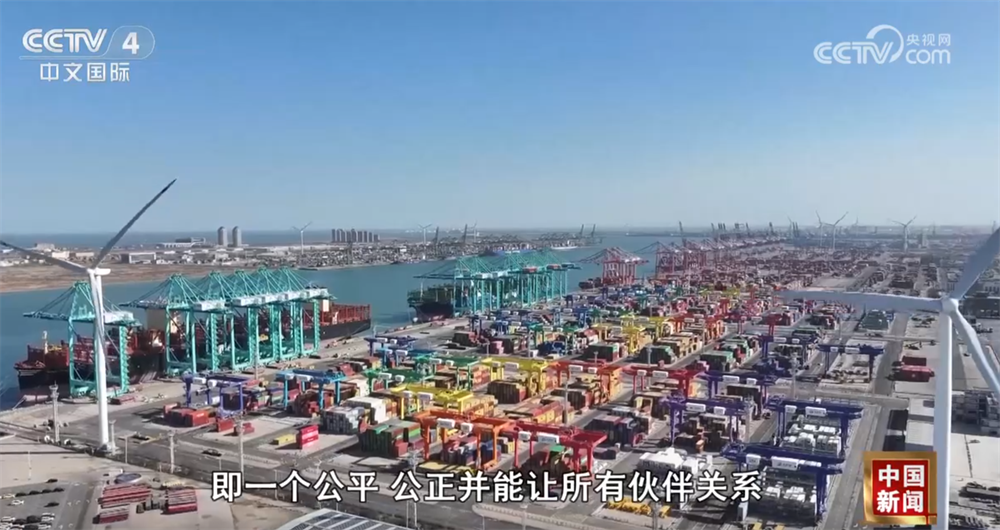
视频丨国际人士:高度赞同中国践行多边主义相关主张
Yang Shi Xin Wen Ke Hu Duan· 2025-11-01 07:37
Group 1 - The core message emphasizes China's role as a defender of the current international order and a practitioner of true multilateralism, which has received high recognition from international figures [2] - South Korea's economy benefits significantly from a multilateral trade system centered around the WTO, with experts agreeing on the importance of maintaining multilateralism and free trade [3] - South Korea, as an open economy, views the promotion of free trade and multilateralism as crucial, welcoming President Xi Jinping's advocacy in this regard [5] Group 2 - The China-South Korea Free Trade Agreement, effective since 2015, requires efforts to upgrade to a 2.0 version, with expectations for shared benefits through trade [7] - The opportunities presented by the APEC are seen as vital for maintaining an open global trade system, which aligns with Chile's aspirations for new market expansion [9] - There is a call for a long-term perspective and planning to achieve fairer, safer, and more stable global outcomes, highlighting China's potential leadership role in this context [11]
