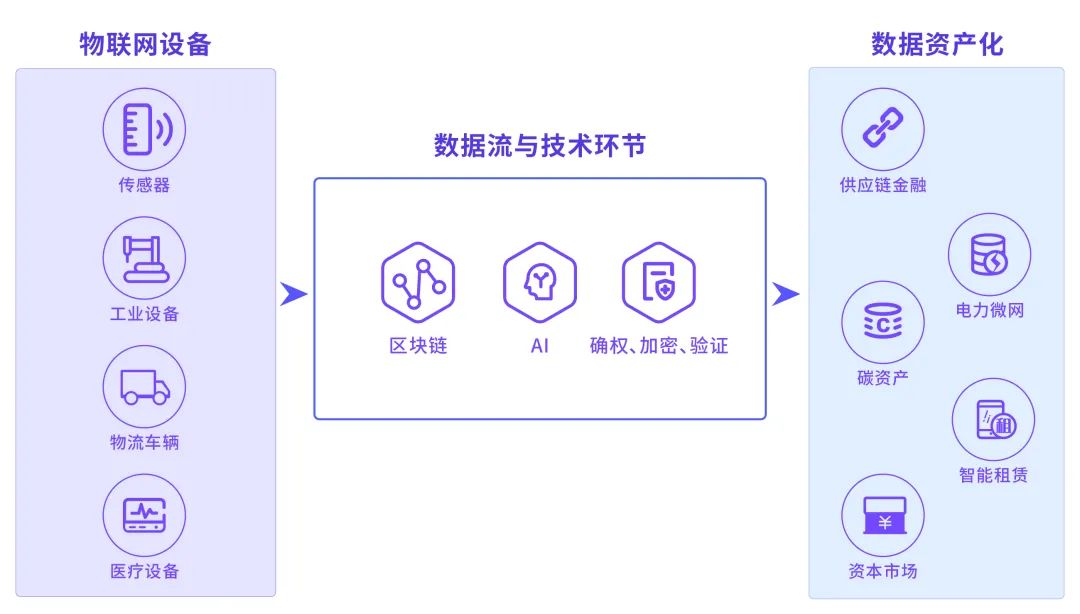
数据资产化

Search documents
西湖财政探索“数据生金”新路径
Hang Zhou Ri Bao· 2025-08-22 03:18
Core Viewpoint - Zhejiang Shiguang Coordinate Technology Co., Ltd. has completed the data asset registration and established a "Digital Content Asset" zone in collaboration with Hangzhou Data Exchange, marking a significant step in the monetization of digital content in the cultural and creative industry [1] Group 1 - The "Digital Content Asset" zone aims to create a capitalized platform for the circulation of cultural and creative assets, enhancing the value of data through industry collaboration [1] - Shiguang Coordinate is integrating its digital asset library with Zhejiang University's Oasis AI Virtual Imaging Laboratory and the Digital Imaging Asset Alliance of Chinese Universities to facilitate the transformation of academic resources into industrial resources [1] - The West Lake District will continue to promote data asset management by enhancing collaboration among various departments, including the Finance Bureau and Data Resource Bureau, to ensure effective connection of data property rights and registration [1] Group 2 - The district is focusing on areas such as smart parking and smart healthcare, forming a professional alliance for data assets with universities, accounting firms, and evaluation agencies to foster deep integration of industry, academia, and research [1] - Initiatives include the launch of the "Data Enterprise Direct Access" service and conducting over three specialized events, training more than a hundred companies to transition from "data dormancy" to "data monetization" [1]
破局“数据盲区”:银行数智生态如何重塑中小微融资新范式?
Sou Hu Cai Jing· 2025-08-20 10:09
Core Insights - The article discusses the challenges faced by small and micro enterprises in securing financing, highlighting the need for a digital transformation in the banking sector to address these issues [1][2][4][6] Group 1: Challenges in Financing - Small and micro enterprises are trapped in a "data fog," leading to difficulties in obtaining financing due to a lack of standardized financial reporting and transparency [4][6] - Over 60% of enterprises have issues with non-compliant financial statements and low information transparency, which exacerbates the information gap between banks and businesses [4] - The reliance of banks on "hard information" such as standardized financial reports and sufficient collateral creates barriers for small enterprises, which often lack these resources [6] Group 2: Technological Solutions - The integration of advanced technologies like AIGC is seen as a potential solution to the financing challenges faced by small and micro enterprises [2][13] - Companies are encouraged to embrace digital platforms and AI to streamline operations and improve data quality, which is essential for securing financing [9][12] - The introduction of the "Micro Wind Smart Selection Digital Enterprise Service System" aims to address the core financing challenges by breaking down data silos and standardizing enterprise data into recognized "financing assets" [10][11] Group 3: Financial Institution Empowerment - Financial institutions can enhance their efficiency and risk management by utilizing automated data collection and analysis technologies, such as RPA and AI [13][14] - The use of advanced algorithms and models can support banks in various financing scenarios, including risk assessment and loan management [14][15] - The collaboration between enterprises and financial institutions through digital platforms is crucial for overcoming the data blind spots that hinder financing for small and micro enterprises [15]

特需儿童康复领域首例!复米健康凭数据资产获2000万元银行授信
Zheng Quan Shi Bao Wang· 2025-08-13 06:29
Core Insights - The article highlights the transformation of data into assets within the special needs rehabilitation sector, showcasing the pioneering efforts of Fumi Health in this domain [1][2][4] Group 1: Company Overview - Fumi Health, established in 2014, focuses on services for children with autism spectrum disorders and developmental disabilities [1] - The company has accumulated over 30,000 case assessment records, nearly 200 million intervention behavior records, and over 3 million supervisory decision records [1][3] Group 2: Data Assetization Process - Fumi Health has successfully registered its data products on the Zhejiang and Shaanxi data exchange platforms, receiving multiple certifications [1] - In March 2025, Fumi Health achieved the first instance of data asset financing in the industry, with its data assets valued at approximately 30.84 million yuan [2] - The company received a bank credit approval of 20 million yuan from the Shenzhen branch of the Bank of Communications for its data assets [2] Group 3: Data Quality and Utilization - The data collected by Fumi Health is characterized by its completeness, covering the entire lifecycle of special needs children's interventions [3] - The company has implemented a comprehensive data management system that ensures high-quality data collection, storage, and application for AI training [4][5] Group 4: Industry Context and Policy Influence - The establishment of the National Data Bureau in 2023 has accelerated the marketization of data elements, providing a favorable environment for Fumi Health's data assetization efforts [4] - The company aims to address industry challenges such as low standardization and high labor costs by leveraging AI technology and data assetization [4][6]
从“亿元级”到“千亿级”:中国数据交易市场的十年飞跃
Sou Hu Cai Jing· 2025-08-12 09:49
Core Insights - The data exchange market in China has rapidly evolved since 2015, with over 50 data trading institutions established by July 2025, and the trading scale projected to exceed 300 billion yuan by 2025 [2][4][19] - Data exchanges serve as a regulated marketplace for data, allowing for the standardized transformation of data products and facilitating compliance and quality assurance [3][5] - The market is characterized by a diverse range of participants, including government entities, data service providers, and large internet companies, with buyers spanning various industries such as finance, healthcare, and AI [5][6] Group 1: Market Development - The trading scale has grown from "billion-level" in 2015 to "trillion-level" by 2024, indicating significant growth in both quantity and quality of data transactions [2][19] - The market is expected to reach approximately 2.841 trillion yuan by 2025, with a compound annual growth rate of 46.5% from 2021 to 2025 [19][34] - The introduction of policies and frameworks, such as the "Data Element ×" three-year action plan, aims to enhance the coordination between on-site and off-site trading by 2026 [6][10] Group 2: Key Players and Institutions - Major data exchanges include Beijing International Data Exchange, Shanghai Data Exchange, Shenzhen Data Exchange, and Guizhou Data Exchange, which are leading the market [4][7][12][15] - By June 2025, Beijing International Data Exchange had achieved a trading scale of 2,250 TB, with an annual growth rate exceeding 200% [12] - Shanghai Data Exchange reported over 2,000 signed data merchants and a trading amount exceeding 50 billion yuan in 2024 [13] Group 3: Emerging Trends and Technologies - The data trading landscape is expanding into new fields such as AI model training, medical diagnostics, and scientific research, reflecting the increasing importance of data in driving technological and economic development [20][34] - The introduction of advanced technologies like blockchain and privacy computing is enhancing the security and traceability of data transactions [22][28] - Data assetization is becoming a significant trend, with projections indicating that the market for data assets will reach 8,278 billion yuan by 2030 [19][34] Group 4: Case Studies - Notable case studies include the successful assetization and financing of data by companies like BAIC New Energy and the implementation of the "U235" framework by Shanghai Data Exchange, which utilizes blockchain for transparency and efficiency [24][27] - Shenzhen Power Supply Bureau's data product for enterprise electricity behavior was successfully traded, showcasing the application of privacy computing in data transactions [31] - The collaboration between Southern Power Grid and a chemical group demonstrates the practical benefits of data trading in optimizing production and reducing costs [32]

上海数据资产金融创新再提速
Jin Rong Shi Bao· 2025-08-08 07:55
Core Viewpoint - The collaboration between China Construction Bank (CCB) Shanghai Branch and Shanghai Data Exchange aims to innovate financial solutions for data asset financing, providing a credit line of 30 million yuan to Weizhi Technology, marking the highest credit amount for the "Data Easy Loan" program to date [1][2]. Group 1: Financing Innovation - Weizhi Technology, a leading spatiotemporal AI platform, has successfully completed data product certification and trading on Shanghai Data Exchange, with total transaction amounts exceeding 70 million yuan in the first half of the year [2]. - The company utilized its data product "Weizhi Address Search" for data asset pledge financing, receiving a credit line of 30 million yuan from CCB Shanghai Branch after asset evaluation using the "Jinzhun Estimate" tool [2][3]. - The new loan model provides flexible financing channels for enterprises, addressing challenges faced by small and micro enterprises in obtaining loans and equity financing [3]. Group 2: Data Asset Challenges - Data asset financing presents both opportunities and challenges, including difficulties in asset ownership confirmation, valuation, custody, and disposal [4]. - The replication nature of data and multi-party participation complicate asset ownership confirmation, necessitating clearer policies and legal frameworks regarding data asset rights [4]. - Current valuation methods for data assets are not mature enough to fully reflect market value, and the volatility of data asset values increases the difficulty of disposal [4]. Group 3: Market Practices and Regulations - Shanghai Data Exchange provides essential functions such as registration, valuation, trading, disclosure, and disposal of data assets, with the "Jinzhun Estimate" tool offering fair value analysis [5]. - The evaluation of data asset value is a rigorous process based on facts and data, supported by extensive market transaction records that help assess market dynamics and potential risks [5]. - The development of data assetization should focus on empowering the real economy, avoiding hidden liabilities and bubbles, and ensuring that business models and cash flows are closely monitored [5].

RWA代币化规模激增410%,真实世界资产或成加密领域下一个风口
Guan Cha Zhe Wang· 2025-08-07 14:55
Group 1: Core Insights - The rapid evolution of financial technology is reshaping global economic dynamics, impacting the future of dollar hegemony and China's strategic choices in the digital finance era [1][2] - The discussion at the high-end salon in Shanghai focused on key topics such as stablecoins, blockchain technology applications, and data assetization, revealing the latest trends and challenges in the fintech sector [1][2] Group 2: Stablecoins - Stablecoins represent a significant turning point in the history of cryptocurrencies, addressing issues like volatility, impact on fiat currency systems, and potential for illegal activities [2][5] - Currently, 99% of stablecoins are pegged to the US dollar, which is significantly higher than the dollar's 50% share in global payments, indicating the US's strategic advantage in expanding dollar dominance [2][5] - The potential risks associated with large-scale stablecoin issuance could marginalize traditional banking systems, reminiscent of the chaotic banking landscape in 19th century America [2][5] Group 3: China's Perspective on Stablecoins - For China, stablecoins present both challenges and opportunities, with the potential for a digital RMB stablecoin to navigate issues like SWIFT sanctions and the safety of US debt assets [5][9] - Hong Kong is identified as the optimal testing ground for a digital RMB stablecoin, allowing exploration of internationalization pathways while minimizing impacts on the mainland financial system [5][9] - The regulatory approaches in the US and Hong Kong differ significantly, with the US adopting a more lenient functional regulation compared to Hong Kong's stringent requirements [6][9] Group 4: Blockchain Technology - Blockchain technology is seen as a foundational element driving fintech transformation, addressing trust issues in the digital economy [10][11] - The Tree Graph public chain system, developed with independent intellectual property, has achieved a transaction throughput of 3,000 transactions per second, significantly outperforming Bitcoin and Ethereum [10][11] - The integration of blockchain with real-world assets (RWA) is crucial for enhancing settlement efficiency and the credibility of smart contracts [10][11] Group 5: Data Assetization - Data has been recognized as the fifth production factor, marking a new phase in digital economic development, yet challenges in data rights, pricing, and compliance remain [11][12] - The market for RWA has seen explosive growth, increasing from $5 billion in 2022 to an estimated $25.51 billion by 2025, representing a 410% growth rate [12][14] - The successful assetization of data requires collaboration across various sectors, including exchanges, evaluation agencies, and financial institutions [13][14]

从“资源”变“资产”:数位大数据核心数据产品成功入表,获得银行授信贷款
Zheng Quan Shi Bao Wang· 2025-08-06 07:02
记者从深圳数位大数据科技有限公司(以下简称"数位大数据")获悉,其核心数据产品成功通过数据资产 化认证,并凭借该资产获得银行授信贷款。与此同时,公司正式入驻陕西丝路数据交易平台及贵州省数 据流通交易服务中心。此次突破是继成功上线浙江、厦门大数据交易中心后,数位大数据在数据要素流 通领域的又一重要里程碑。 作为国内少数具备"数据采集—处理—分析—应用"全链路能力的AI大数据企业,数位大数据坚持十年线 下全域数据积累,构建了不可复制的"动态商业数据库"。通过自研地理信息采集系统与AI算法,数位大 数据精准刻画了全国300余个城市超1.2亿条POI数据,覆盖门店级位置、客流动线、存活周期等1000+维 度的稀缺字段,填补了传统公开数据的空白。 广东数联数据要素有限公司正是认准数位大数据持有数据价值,运用其数据资产金融变现能力,成功为 数位大数据实现数据资源化、资产化、资本化全链路服务,联手交通银行深圳学府支行为全国民营企业 数据资产融资变现落地再添新案例。除数据资产入表及银行融资成熟能力外,广东数联在数据资产专项 债、数据资产证券化、地方政府公共数据运营及可信数据空间等方面也均有落地能力。 此次入驻两大交易平台,数 ...
数字经济双周报(202507第2期)-20250731
Yin He Zheng Quan· 2025-07-31 10:00
Group 1: US AI Action Plan - The US AI Action Plan aims to establish global leadership in AI, focusing on "innovation-driven" and "deregulation" strategies to enhance market vitality and reduce development barriers[5] - Key policies include accelerating AI innovation, building AI infrastructure, and leading global AI order, with over 90 specific administrative orders outlined[6] - The plan emphasizes the importance of ensuring American workers benefit from AI advancements, creating high-paying jobs through infrastructure development[5] Group 2: Risks and Challenges for China - China faces risks of deepening technology blockades, with Nvidia holding a 66% market share in China's AI chip market, indicating reliance on US technology[9] - The US aims to export a "full-stack AI package" to allies, potentially sidelining Chinese technologies and creating a fragmented global AI ecosystem[13] - Infrastructure gaps in AI capabilities may widen, as the US accelerates data center and energy infrastructure development to meet AI demands[16] Group 3: Global AI Governance and Cooperation - China released the "Global AI Governance Action Plan," advocating for an inclusive and sustainable global AI governance framework, emphasizing cooperation among developing countries[19] - The plan includes 13 key tasks, such as technology innovation and data governance, aiming to unify international rules and enhance participation from the Global South[20] - Local policies in China are rapidly emerging to build regional data industry systems, with Jiangxi aiming for a 20% annual growth in data industries by 2027[21] Group 4: AI Infrastructure Investments - Major US companies, including Google and Meta, are investing significantly in AI infrastructure, with Google planning to invest $25 billion in data centers and AI facilities[33] - Trump's administration announced a $90 billion investment plan for AI and energy infrastructure, focusing on new data centers and power generation facilities[31] - The establishment of the National AI Research Resource (NAIRR) aims to provide open AI research resources, enhancing collaboration in scientific fields[35]
易华录:“易资大模型”成功入选“数据要素×AI+行业应用典型案例”
Zheng Quan Shi Bao Wang· 2025-07-30 13:26
Core Insights - The World Artificial Intelligence Conference (WAIC 2025) has commenced, highlighting significant advancements in the AI sector, particularly through the launch of the "Yizhi Big Model" by Yihualu, which focuses on data assetization [1][2] Group 1: Yihualu's Innovations - Yihualu's "Yizhi Big Model" addresses key pain points in data assetization, aiming to resolve issues related to cognitive difficulties, low efficiency, and insufficient value release [1] - The model employs a "four-layer collaboration + dual system guarantee" architecture, integrating hardware, data, technology, and application layers, along with security and standardization frameworks [1] - The model's capabilities include intelligent Q&A, data insights, knowledge management, and automation, providing comprehensive support for data assetization processes [1] Group 2: Industry Impact - The "Yizhi Big Model" has successfully created a high-quality data assetization industry corpus, enabling precise SQL generation, chart visualization, knowledge extraction, and automated processing [1] - Yihualu emphasizes the model's replicable practices that can significantly enhance the release of data value across industries [2] - The company plans to deepen the application of the model, promoting the large-scale implementation of the multiplier effect of data elements [2]

从RWA到RDA,真数据变真资产,物联网是数据资产化最佳推手
3 6 Ke· 2025-07-29 09:51
Core Viewpoint - The rapid development of data assetization is driven by the integration of the Internet of Things (IoT) and Real Data Assets (RDA), which is reshaping the industrial logic of data assetization [1][2][5]. Group 1: Data Assetization and RDA - RDA (Real Data Assets) extends the concept of RWA (Real World Assets) by focusing on the authenticity verification and value enhancement of data, encapsulating operational data from physical assets to improve credit, transparency, and regulatory compliance [5][6]. - The true breakthrough of RDA is fueled by the real-time data continuously released by IoT devices, which serve as a natural "data mine" and "value factory" for RDA [7][8]. - RDA aims to complete the entire process of data ownership, value realization, and financialization, requiring data assets to have clear ownership, traceable sources, and continuous flow to participate in capital market transactions [8][9]. Group 2: Role of IoT in RDA - IoT enables real-time data collection from various physical assets, providing high credibility, strong relevance, and traceable foundational data for RDA, facilitating the transformation of data from a "resource" to an "asset" [7][8]. - The collaboration between IoT and RDA will gradually reveal its synergistic effects in specific application scenarios, such as dynamic transparency in battery lifecycle management and real-time operational data in offshore wind power maintenance [9][10]. Group 3: Financial Implications and Innovations - The integration of IoT, stablecoins, and RDA/RWA creates a closed-loop for machine economy, allowing devices to autonomously participate in value flow and enabling real-time settlement without traditional financial intermediaries [13][14]. - The emergence of stablecoins as a financial infrastructure will significantly enhance autonomous trading and automatic settlement among devices, improving industrial collaboration efficiency [14][15]. - The dynamic credit era will see IoT devices transition from passive data contributors to active data asset owners, leading to a transformation in asset valuation and credit assessment [16][17]. Group 4: Challenges and Future Outlook - The distributed nature of data asset circulation and pricing may introduce new risk management challenges, such as data falsification, necessitating the implementation of hardware trust mechanisms to ensure data authenticity [19][20]. - The evolution of data assetization and pricing power presents both challenges and opportunities for IoT companies, potentially allowing them to transition from "data producers" to "data bankers" [20][21].