
汽车以旧换新

Search documents
京东回应造车猜想
第一财经· 2025-10-14 13:37
Core Viewpoint - JD.com is collaborating with CATL's Times Electric and GAC Group to launch a new car, which will be exclusively sold on JD.com during the Double 11 shopping festival, indicating a strategic move to enhance its automotive sales platform and attract consumer attention during major promotional events [3]. Group 1 - JD.com announced a new car launch in partnership with CATL and GAC Group, with test drives starting at the end of October and an official release during the Double 11 event [3]. - The new car will be exclusively sold on JD.com, with the company clarifying that it is not directly involved in the manufacturing process [3]. - JD.com is enhancing its promotional strategies for the Double 11 event, including significant discounts, with potential savings of up to 50% for consumers [3]. Group 2 - JD.com has previously launched a vehicle trade-in program, allowing consumers to benefit from government subsidies when purchasing new cars [4]. - JD.com Automotive serves as a comprehensive platform for vehicle selection, sales, maintenance services, and new energy solutions, with nearly 3,000 car maintenance stores currently operational [6].




产销量双超24000000辆!
中国能源报· 2025-10-14 10:53
Group 1 - The core viewpoint of the articles highlights the significant growth in China's automotive industry, with production and sales exceeding 24 million units in the first three quarters of the year, reflecting a year-on-year increase of 13.3% and 12.9% respectively [1] - New energy vehicles (NEVs) have shown remarkable performance, with production and sales surpassing 11 million units, marking a year-on-year growth of over 30%, and accounting for 46.1% of total new car sales [1] - The export of automobiles reached 4.95 million units, representing a year-on-year increase of 14.8%, with NEV exports alone amounting to 1.758 million units, a staggering growth of 89.4% [1] Group 2 - The implementation of policies such as vehicle trade-in programs has significantly stimulated the automotive market, with expectations that the total number of vehicles traded in will exceed 12 million units by the end of the year, directly driving new car sales close to 1.7 trillion yuan [2] - Approximately 60% of consumers applying for trade-in subsidies opted for purchasing NEVs, indicating a strong shift towards new energy vehicles and contributing to the transformation of the market [2] - Retail sales of NEVs maintained a robust growth rate of 24.4% in the first nine months, with a retail penetration rate reaching 57.8% in September, showcasing the effectiveness of national policies in guiding consumption upgrades and green transitions [2]
中汽协:1—9月我国汽车工业多项经济指标两位数增长
Yang Shi Xin Wen· 2025-10-14 06:10
Group 1 - The Chinese automotive industry has achieved double-digit growth in several economic indicators in the first nine months of this year, with production and sales reaching 24.33 million and 24.36 million vehicles, respectively, representing year-on-year increases of 13.3% and 12.9% [1] - New energy vehicles (NEVs) have seen significant growth, with production and sales exceeding 11 million units, both showing over 30% year-on-year growth. NEVs accounted for 46.1% of total new car sales [1] - Exports of automobiles reached 4.95 million units, marking a year-on-year increase of 14.8%. Notably, NEV exports surged to 1.758 million units, reflecting an impressive growth of 89.4% [1] Group 2 - The "trade-in" policy has significantly boosted the automotive market, with expectations that the total number of vehicles traded in will exceed 12 million by the end of the year, directly driving new car sales close to 1.7 trillion yuan [2] - Approximately 60% of consumers applying for trade-in subsidies opted for purchasing NEVs, indicating a strong shift towards new energy vehicles and contributing to the transition of market dynamics [2] - Retail sales of NEVs maintained a robust growth rate of 24.4% in the first nine months, with a retail penetration rate reaching 57.8% in September, showcasing the effectiveness of national policies in guiding consumption upgrades and green transformation [2]

“金九银十”车市升温:多地推出限时补贴,销售许诺“跨省操作”
第一财经网· 2025-10-03 11:11
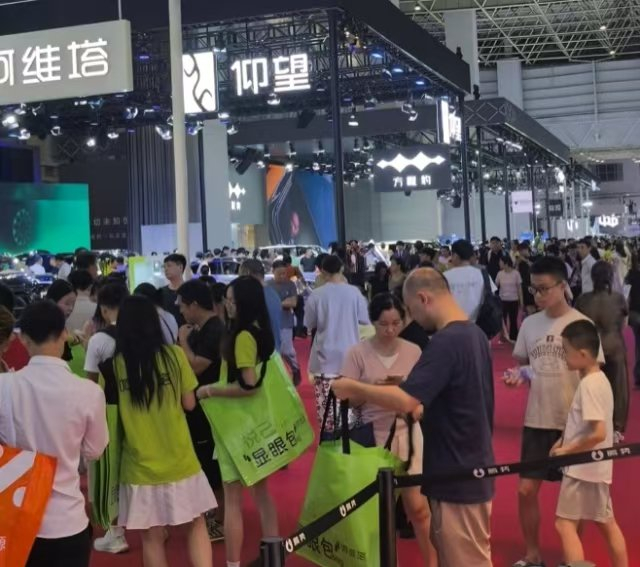
Core Insights - The automotive market is experiencing a surge in consumption during the traditional "golden September and silver October" period, with over 70 new car models entering the market and various local car exhibitions being held across more than 23 cities during the National Day holiday [1][6]. Group 1: Government Support and Subsidies - A total of 300 billion yuan has been allocated for the "old-for-new" vehicle replacement subsidy program, with the fourth batch of 69 billion yuan being distributed as planned in October [6]. - Various local governments are implementing their own automotive consumption subsidies to fill the gap left by the suspension of national subsidies in several provinces [6][7]. - For example, the government of Dongguan is offering consumption vouchers for new energy vehicles and "National VI" standard gasoline vehicles, with varying amounts based on the purchase price [4][5]. Group 2: Market Dynamics and Consumer Behavior - Despite the suspension of national subsidies in cities like Dongguan, dealers are finding ways to help consumers access subsidies from other cities, indicating a competitive market environment [3]. - The automotive industry is seeing significant promotional activities, with many car manufacturers offering substantial trade-in subsidies and promotional pricing strategies to attract customers [5][6]. - The application volume for the "old-for-new" program has reached 8.3 million as of September 10, indicating strong consumer interest in vehicle replacement [7]. Group 3: Future Outlook - The Ministry of Commerce aims to reform restrictive measures on automotive consumption and promote a shift from purchase management to usage management, which could foster new growth points in automotive consumption [7]. - The target for automotive sales in 2025 is set at approximately 32.3 million units, reflecting a year-on-year growth of about 3% [7].
“金九银十”车市升温:多地推出限时补贴,销售许诺可“跨省操作”
Di Yi Cai Jing· 2025-10-03 11:04
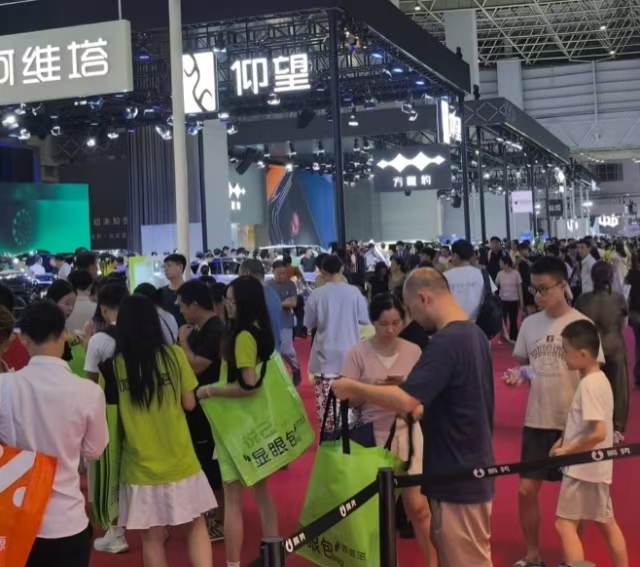
Group 1 - The fourth batch of 69 billion yuan in funding has been allocated as planned in October, contributing to the automotive market's consumption boost during the traditional peak season of "Golden September and Silver October" [1] - Over 23 cities in China held local auto shows during the National Day holiday, utilizing trade-in subsidies and local consumption vouchers to stimulate automotive consumption [1] - Various car manufacturers are offering significant trade-in subsidies and promotional deals at auto shows, with some brands providing cash discounts of up to 50,000 yuan [4][5] Group 2 - In Dongguan, trade-in subsidies have been suspended, but dealers are helping consumers obtain subsidies from other cities, indicating a competitive market for subsidies [2] - Local governments, such as the Dongguan government, are issuing consumer vouchers for new energy vehicles and "National VI" standard gasoline vehicles, with varying amounts based on the vehicle price [3][4] - The automotive industry is seeing a shift in subsidy distribution, with over five provinces having suspended their trade-in subsidy policies since August, yet the overall subsidy program continues with planned allocations [5][6] Group 3 - The Ministry of Commerce aims to reform restrictive measures on automotive consumption, transitioning from purchase management to usage management to foster new growth points in automotive consumption [6] - As of September 10, 2023, there have been 8.3 million applications for the trade-in program, indicating strong consumer interest [6] - The target for automotive sales in 2025 is approximately 32.3 million units, reflecting a year-on-year growth of about 3% [6]
政策“组合拳”激发购车热情 市场洗牌步入深水区
Zhong Guo Qing Nian Bao· 2025-09-21 23:35
Core Insights - The introduction of a personal consumption loan interest subsidy policy is expected to stimulate automobile consumption in China, providing financial relief to consumers [1][5]. Policy Implementation - The policy, effective from September 1, 2023, to August 31, 2026, offers a 1% interest subsidy on personal loans of 50,000 yuan or more for car purchases, covering expenses like insurance and maintenance [1][2]. - Each borrower can receive a maximum subsidy of 3,000 yuan, corresponding to a total eligible consumption amount of 300,000 yuan [1]. Market Response - The policy is anticipated to alleviate the financial burden on consumers, as over 60% of car buyers currently utilize loans for purchases [1][4]. - However, consumers must apply for loans through designated institutions, which may complicate the purchasing process [2]. Industry Trends - The automotive market has shown strong demand, with production and sales figures for the first seven months of the year reaching 18.23 million and 18.27 million units, respectively, marking year-on-year growth of 12.7% and 12% [4]. - Despite the positive sales figures, there is a noted divergence in profitability among car manufacturers, with less than 45% of major listed companies reporting profit growth in the first half of the year [6]. Future Outlook - The combination of the consumption loan subsidy and existing vehicle replacement policies is expected to create a synergistic effect, potentially boosting consumer demand [5]. - Analysts predict that the automotive market will gradually recover, but the process will require collaboration among policies, enterprises, and consumers to sustain growth [5][6].
商务部耿洪洲:至9月10日汽车以旧换新申请量已达830万份
Cai Jing Wang· 2025-09-15 07:23
Core Viewpoint - The Ministry of Commerce reported that as of September 10, 2023, the number of applications for vehicle trade-ins has reached 8.3 million, indicating a strong trend in the automotive industry towards vehicle replacement and upgrades [1] Group 1 - The Ministry of Commerce is collaborating with relevant departments to initiate pilot projects for automotive circulation and consumption reform [1] - The government is supporting local initiatives to eliminate restrictive measures on automotive consumption [1]
八部门:进一步加大力度促进汽车消费 支持以旧换新与后市场消费
Shang Hai Zheng Quan Bao· 2025-09-14 23:47
Core Points - The article discusses the "Automobile Industry Stabilization and Growth Work Plan (2025-2026)" issued by eight government departments, aiming to achieve specific sales and production targets for the automotive industry [1][4][7] - The plan sets a target of approximately 32.3 million vehicle sales in 2025, a 3% year-on-year increase, with 15.5 million of those being new energy vehicles, representing a 20% growth [10][12] - The plan outlines 15 measures across four dimensions to boost domestic consumption, improve supply quality, optimize the development environment, and deepen international cooperation [1][3][13] Summary by Categories Sales and Production Targets - The plan aims for 32.3 million vehicle sales in 2025, a 3% increase year-on-year [10] - New energy vehicle sales are targeted at 15.5 million, with a growth rate of 20% [10] - The automotive manufacturing industry's added value is expected to grow by around 6% [11] Measures to Promote Growth - The plan includes measures to expand domestic consumption, enhance supply quality, and optimize the development environment [1][3] - Specific initiatives include accelerating the market expansion of new energy vehicles and promoting the consumption of automobiles through trade-in programs [13][14] - The plan emphasizes the importance of smart and connected vehicle technology and its industrial application [2][3][13] Regulatory and Competitive Environment - The plan aims to standardize competition within the automotive industry, including cost investigations and price monitoring [2][20] - It proposes to strengthen supervision of product consistency and encourage key enterprises to adhere to payment commitments [2][20] - The plan also addresses the need for a healthy market environment by combating false advertising and commercial defamation [2][20] Infrastructure and Technological Development - The plan highlights the need for improved infrastructure, including charging facilities for electric vehicles [17][18] - It encourages the integration of smart technologies in vehicles and the development of new business models based on data [2][3][17] - The plan supports the establishment of a digital transformation service system for the automotive industry [17] International Cooperation and Export Enhancement - The plan aims to enhance the quality and efficiency of automotive exports by encouraging R&D tailored to foreign markets [21][22] - It emphasizes the importance of international collaboration and participation in global automotive regulatory forums [26] - The plan seeks to improve the financing and logistics support for automotive enterprises engaged in international trade [22][23]

新华财经晚报:2025年力争实现全年新能源汽车销量1550万辆左右 同比增长约20%
Xin Hua Cai Jing· 2025-09-13 11:40
Domestic News - The Ministry of Industry and Information Technology and seven other departments issued the "Automobile Industry Stabilization Growth Work Plan (2025-2026)", aiming for total automobile sales of approximately 32.3 million units in 2025, a year-on-year increase of about 3%, with new energy vehicle sales targeted at around 15.5 million units, representing a year-on-year growth of about 20% [1] - The Ministry of Industry and Information Technology will continue to optimize tax incentives for new energy vehicles, including vehicle purchase tax and vessel tax, and will promote the "new energy vehicles going to the countryside" initiative [1] - As of September 10, 2023, the number of applications for the "old-for-new" automobile policy has reached 8.3 million, effectively promoting automobile consumption growth, industrial upgrading, and resource management [2] International News - Fitch Ratings downgraded France's long-term foreign currency issuer default rating from "AA-" to "A+", with a stable outlook [4]
商务部市场运行和消费促进司耿洪洲:至9月10日汽车以旧换新申请量已达830万份
Cai Jing Wang· 2025-09-13 09:11
Core Viewpoint - The Ministry of Commerce reported that as of September 10, 2023, the number of applications for the vehicle trade-in program has reached 8.3 million, indicating strong consumer interest in upgrading vehicles through this initiative [1] Group 1: Policy and Initiatives - The Ministry of Commerce is collaborating with relevant departments to implement pilot reforms in automotive circulation and consumption, aiming to eliminate restrictive measures on automotive consumption [1] - The Ministry will focus on the effective implementation of the vehicle trade-in policy, enhancing platform functionalities to ensure that subsidy funds reach consumers promptly and conveniently [1] Group 2: Future Directions - The Ministry plans to deepen and solidify the pilot reforms in automotive circulation and consumption, using innovative approaches to foster new growth points in automotive consumption [1] - There is a strategic shift from managing vehicle purchases to managing vehicle usage, reflecting a broader transformation in consumer behavior and policy focus [1]