洗钱

Search documents
挪用洗钱50亿!前CFO领刑7年8个月,贪腐代价触目惊心!
Xin Lang Cai Jing· 2025-10-25 02:14
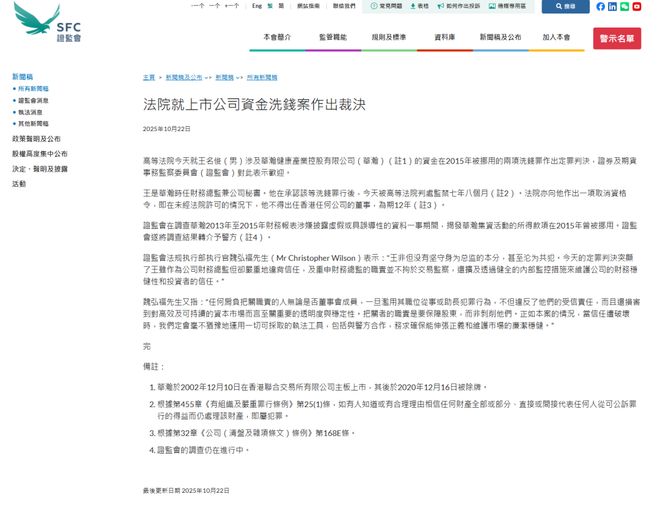
Core Points - A senior executive at a listed company misappropriated funds, leading to a significant financial scandal and imprisonment [1][12] Group 1: Who and What - The individual involved is Wang Mingjun, the Chief Financial Officer and Secretary of Huahan Health, responsible for managing the company's finances [2] - In 2015, the company raised HKD 3.8 billion from the public for hospital construction and business expansion [2] - The majority of these funds were misappropriated and transferred to accounts controlled by Wang [3] Group 2: Discovery of the Fraud - The company's accounts showed discrepancies, leading to a suspension in 2016 [5] - The Hong Kong Securities and Futures Commission (SFC) discovered the misappropriation during an investigation into financial statement fraud and referred the case to the police [5] - In 2019, nearly 100 investors reported that management had misused their funds [5] Group 3: Consequences - Wang was sentenced to 7 years and 8 months in prison [6] - He is banned from serving as a director of any Hong Kong company for 12 years without court permission, effectively ending his career [7] - The police plan to apply for the confiscation of his illegal gains, and other accomplices are still being sought [8] Group 4: Official Commentary - The SFC criticized Wang for betraying the trust placed in him as a "gatekeeper" meant to protect shareholders and the company [9] - The responsibilities of a CFO extend beyond mere financial oversight; they must establish robust systems to maintain company health and investor confidence [10] - The SFC warned all executives that any abuse of power will be met with strict enforcement actions [11]

遭美国没收150亿美元比特币后 柬埔寨“太子集团”在韩银行超910亿韩元资产被冻结
Mei Ri Jing Ji Xin Wen· 2025-10-22 09:07
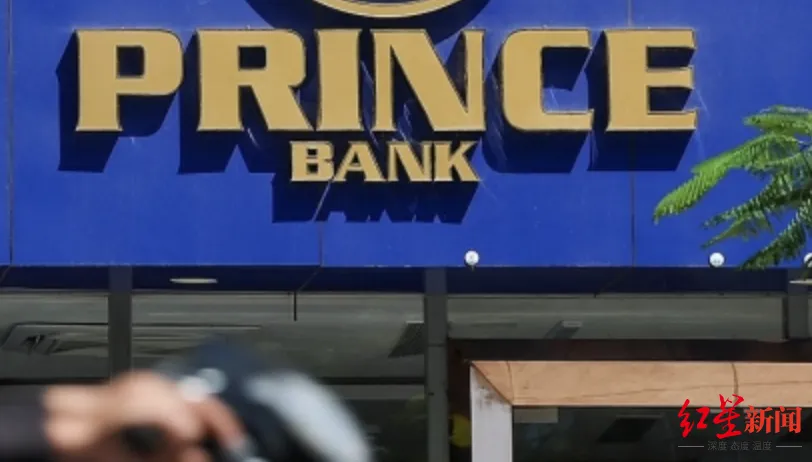
Core Viewpoint - The recent sanctions imposed by the UK and the US on Cambodia's Prince Holding Group and its founder Chen Zhi have led to a liquidity crisis at Prince Bank, prompting customers to withdraw cash en masse, resulting in temporary service disruptions [1][2]. Group 1: Sanctions and Financial Impact - Following the sanctions from the UK and the US, the South Korean government is also considering financial sanctions against the Prince Group, with plans to implement them within the month [1]. - Prince Bank, one of Cambodia's largest commercial banks, is experiencing a surge in withdrawal requests, leading to a liquidity crisis and the temporary suspension of transactions at several branches [2]. - The South Korean opposition party has reported that the Prince Group has conducted 52 transactions involving over 197 billion KRW (approximately 150 million USD) across five South Korean banks [4]. Group 2: Criminal Activities and Money Laundering - Chen Zhi, the founder of Prince Group, has been linked to a complex money laundering operation involving forced labor and cryptocurrency scams, with victims being lured into fraudulent activities [6][7]. - The group has established a sophisticated money laundering system, utilizing "money laundering houses" to process illicit funds through techniques like "spraying" and "funneling" to obscure the money's origins [7][8]. - The FBI has indicated that funds from Bitcoin mining operations are being funneled through various addresses to disguise their source, with an estimated 4 billion USD in illicit funds being laundered through the group's operations from 2021 to 2025 [11][12].
“太子集团”在韩银行超910亿韩元资产被冻结,旗下银行大批人排队取钱
Mei Ri Jing Ji Xin Wen· 2025-10-22 08:44
Core Viewpoint - The recent sanctions imposed by the UK and the US on Cambodia's Prince Holding Group and its founder Chen Zhi have triggered a liquidity crisis at Prince Bank, leading to mass withdrawals by customers and operational disruptions at several branches [1][3][6]. Group 1: Sanctions and Immediate Impact - Following the sanctions from the UK and US, the South Korean government is also considering financial sanctions against the Prince Group, with plans to implement them within the month [3][7]. - Prince Bank, one of Cambodia's largest commercial banks, experienced a surge in withdrawal requests, resulting in some branches halting transactions due to liquidity issues [6][7]. - The US Department of Justice has seized nearly 130,000 bitcoins linked to the Prince Group, valued at approximately $15 billion, while Chen Zhi remains at large [3][6]. Group 2: Financial Details and Asset Freezing - Reports indicate that the Prince Group has conducted 52 transactions involving over 197 billion Korean won (approximately $150 million) across five South Korean banks [7]. - Currently, over 91 billion Korean won (approximately $68 million) of the Prince Group's assets are frozen in various South Korean banks, including significant amounts in Kookmin Bank and Jeonbuk Bank [7][8]. Group 3: Criminal Activities and Money Laundering - Chen Zhi has been linked to a complex money laundering operation involving forced labor and cryptocurrency scams, with the group reportedly operating at least ten fraudulent labor camps in Cambodia [9][11]. - The Prince Group employs sophisticated techniques for laundering illicit funds, including the use of "money houses" and cryptocurrency mining operations to disguise the origins of their income [11][15]. - The group has been involved in online gambling operations, continuing to function despite a ban in Cambodia, utilizing mirror sites to launder funds from scams [16].

遭美国没收150亿美元比特币后,柬埔寨“太子集团”在韩银行超910亿韩元资产被冻结,旗下银行大批人排队取钱,夜店也已关门
Mei Ri Jing Ji Xin Wen· 2025-10-22 07:55
Group 1 - The core issue revolves around the panic among Cambodian customers of Prince Bank, leading to a bank run after sanctions were imposed by the UK and US on the Prince Holding Group and its founder Chen Zhi [1][3] - Prince Bank, one of Cambodia's largest commercial banks, faced a liquidity crisis, with multiple branches halting transactions due to a surge in withdrawal requests [6] - The South Korean government is considering financial sanctions against the Prince Group, with reports indicating that over 910 billion KRW (approximately 685 million CNY) of the group's assets have been frozen in South Korean banks [8][9] Group 2 - Chen Zhi, the founder of Prince Group, has been implicated in a complex money laundering scheme involving forced labor and cryptocurrency scams, with significant illegal profits being funneled through various channels [10][11] - The group has established a sophisticated money laundering system, utilizing techniques such as "spraying" and "funneling" to obscure the origins of illicit funds [11][12] - The US Treasury has disclosed that at least $4 billion in illegal funds were laundered through Huione, a key entity in the Prince Group's operations, highlighting the scale of the group's financial misconduct [16]
比特币“安全神话”破灭:电诈集团150亿美元比特币被美国政府查获,分散在25个钱包却被“一锅端”,怎么做到的?专家解读
3 6 Ke· 2025-10-22 01:00
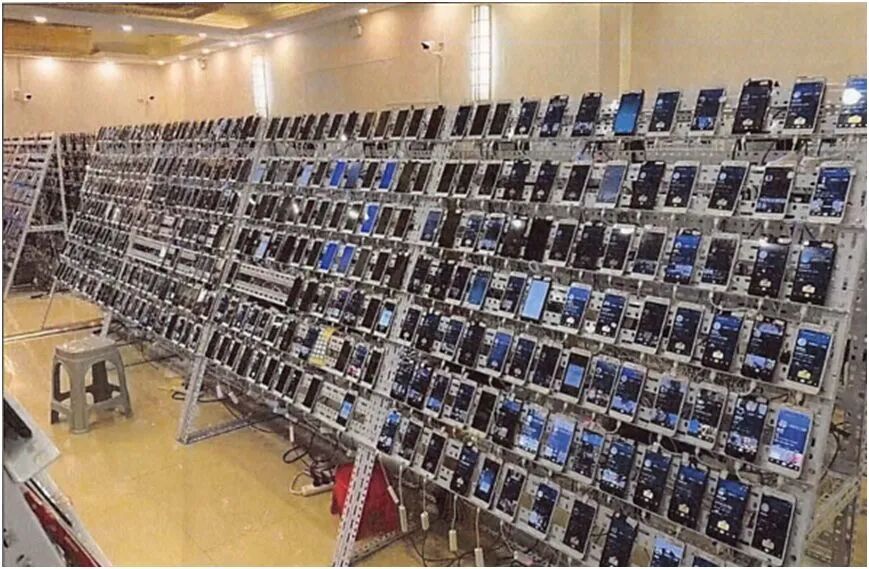
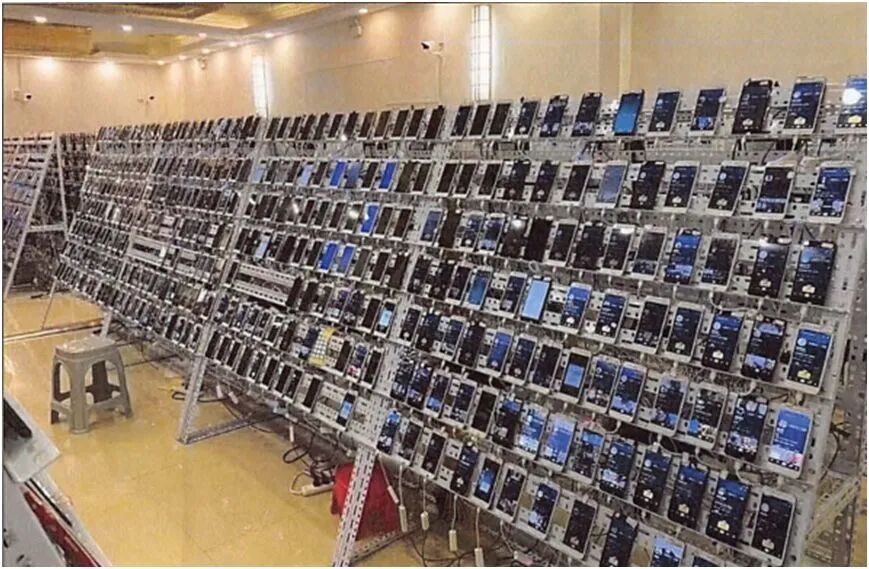
Core Viewpoint - The U.S. Department of Justice has filed criminal charges against Chen Zhi, founder and chairman of Prince Holding Group, and initiated a civil forfeiture lawsuit to seize approximately 127,271 bitcoins valued at up to $15 billion, which are linked to illegal activities such as telecom fraud and money laundering [1][4][5]. Group 1: Legal Actions and Seizures - The case represents one of the largest financial crackdowns in U.S. history and marks the highest quantity of bitcoins ever seized [5]. - The DOJ has confirmed that the seized bitcoins are derived from illegal activities, specifically telecom fraud and money laundering [4]. - The bitcoins are stored in 25 non-custodial wallets controlled by Chen Zhi, which the U.S. government has successfully locked down [1][12]. Group 2: Criminal Operations - Chen Zhi allegedly operated at least ten forced labor scam centers in Cambodia, using a vast business network to facilitate large-scale cryptocurrency investment scams, resulting in losses of billions [5]. - The operation included a "mobile farm" with 1,250 phones controlling approximately 76,000 social media accounts to maximize scam efficiency [5]. - The U.S. Treasury reported that losses from online investment scams have steadily increased, exceeding $16.6 billion, with an estimated $10 billion lost in 2024 alone due to Southeast Asian scams [5]. Group 3: Money Laundering Techniques - Chen Zhi established a complex money laundering system, utilizing "money houses" to process illicit funds through techniques like "spraying" and "funneling" [6][7]. - The "spraying" technique involves breaking large sums into numerous smaller amounts to obscure the original source, while "funneling" consolidates these amounts back into fewer addresses [7][8]. - The group also used cryptocurrency mining as a means to launder illegal proceeds, claiming that profits were derived from scam victims [10][11]. Group 4: Technical Aspects of Asset Recovery - Experts speculate that the U.S. government may have gained access to the private keys through various means, including cooperation from insiders or exploiting software vulnerabilities [16][17]. - The FBI's success in tracing these assets is attributed to advanced blockchain analysis techniques, including the use of graph neural networks and multi-source data integration [14][15]. - The case challenges the notion that non-custodial wallets are immune to government intervention, demonstrating that effective asset recovery is possible through a combination of on-chain tracking and off-chain evidence collection [18][19]. Group 5: Regulatory Implications - The case highlights the need for a comprehensive regulatory framework to combat virtual currency money laundering, emphasizing the importance of legislation, technology, international cooperation, and industry self-regulation [19][20]. - Regulatory efforts should focus on integrating new asset classes like NFTs and DeFi into anti-money laundering laws, enhancing monitoring capabilities, and fostering collaboration among financial intelligence units globally [19].
太子集团150亿美元比特币被美国查获,是“内鬼泄密”还是“暴力搜索”?
Mei Ri Jing Ji Xin Wen· 2025-10-21 08:21
Core Viewpoint - The U.S. Department of Justice has filed criminal charges against Chen Zhi, founder and chairman of Prince Holding Group, and initiated a civil forfeiture lawsuit to seize approximately 127,271 bitcoins valued at up to $15 billion, linked to telecom fraud and money laundering activities [1][4]. Group 1: Legal Actions and Seizures - The case represents the largest financial crackdown in U.S. history and the highest quantity of bitcoins ever seized [5]. - The DOJ has confirmed that the seized bitcoins are derived from illegal activities, specifically telecom fraud and money laundering [4]. - The bitcoins are stored in 25 unhosted wallets controlled by Chen Zhi, which the U.S. government has successfully locked down [1][11]. Group 2: Criminal Activities - Chen Zhi allegedly used a vast business network across over 30 countries to operate forced labor scam farms in Cambodia, where workers were coerced into cryptocurrency investment scams, resulting in losses of billions [5]. - The operation included specialized "phone farms" with thousands of mobile devices managing numerous social media accounts to facilitate scams [5]. Group 3: Money Laundering Techniques - Chen Zhi established a complex money laundering system involving "money houses" that utilized techniques like "spraying" and "funneling" to obscure the flow of illicit funds [6][7]. - The "spraying" technique involves breaking large sums into numerous smaller transactions to confuse tracking efforts, while "funneling" consolidates these dispersed funds back into fewer addresses [7]. Group 4: Technical Analysis and Law Enforcement - The FBI's success in tracing the bitcoins is attributed to advanced blockchain analysis techniques, including the use of graph neural networks to identify unusual transaction patterns [11][14]. - The investigation utilized a combination of blockchain analysis tools, data from dark web communications, and cross-border cooperation to establish a comprehensive evidence chain [14][21]. Group 5: Implications for Cryptocurrency Security - The case challenges the notion that unhosted wallets are immune to government intervention, demonstrating that effective asset recovery is possible through a combination of on-chain tracking and off-chain evidence gathering [20]. - The incident highlights vulnerabilities in wallet security, particularly those using weak random number generators, which can be exploited to recover private keys [17][18]. Group 6: Regulatory Recommendations - Experts suggest a multi-faceted regulatory approach to combat virtual currency money laundering, including legislative updates, technological enhancements, international cooperation, and industry self-regulation [21][22].

全球最大电诈集团被端!美国没收近13万枚比特币,价值1069亿元!
Sou Hu Cai Jing· 2025-10-20 03:53
Core Insights - A significant cross-border crackdown led to the seizure of 127,271 bitcoins, valued at approximately $15 billion, marking the largest asset forfeiture in U.S. history [1][3][34] - The operation targeted Chen Zhi, the owner of the Cambodian Prince Group, who is accused of telecom fraud and money laundering [3][22] - The seized bitcoins represent about 1/156 of the total global bitcoin supply, highlighting the scale of the operation [5][34] Group 1: Criminal Network and Operations - Chen Zhi established a vast criminal network in Cambodia, leveraging political connections to facilitate his operations [7][9] - The Prince Group, under Chen's leadership, was involved in various legitimate businesses while simultaneously running fraudulent schemes [9][11] - The criminal activities included a sophisticated scam operation using social media to defraud victims, alongside human trafficking practices [15][17] Group 2: International Response and Legal Actions - The U.S. and U.K. governments coordinated to freeze Chen's assets and impose sanctions on 146 individuals and entities linked to the criminal network [28][30] - The investigation utilized blockchain technology to trace the bitcoins, demonstrating the potential for law enforcement to track cryptocurrency transactions [26][41] - The crackdown is seen as a significant blow to global human trafficking and cyber fraud, with implications for future regulatory measures [30][41] Group 3: Future Implications and Victim Compensation - The fate of the seized $15 billion in bitcoins raises questions about compensation for victims, particularly in China, which has been heavily affected by such scams [37][39] - The incident underscores the need for a unified global regulatory framework for cryptocurrencies to prevent their use in criminal activities [39][41] - The downfall of the Prince Group signals a new phase in the fight against cyber fraud, emphasizing the importance of international cooperation in law enforcement [41]

12万枚比特币被扣,千亿电诈帝国崩塌:太子集团陈志的双面人生!
Sou Hu Cai Jing· 2025-10-17 15:08
Core Insights - Chen Zhi, once celebrated in Cambodia's business circles, is now the world's most wanted criminal for telecom fraud, specifically for orchestrating a global "pig butchering" cryptocurrency scam [1][6] - The U.S. Department of Justice has filed charges against him, and his assets, including 127,271 bitcoins valued at approximately $15 billion, have been seized, marking a record in U.S. asset forfeiture history [1][6] Group 1: Business Background - Chen Zhi is the founder of the Prince Group, which claims to operate in over 30 countries across various sectors, including real estate, finance, and consumer services [3] - His wealth, however, is derived from a network of scam operations in Cambodia, where victims are lured and coerced into participating in fraudulent activities [3][4] Group 2: Criminal Operations - The criminal organization established "phone farms" equipped with thousands of devices to manipulate social media accounts, posing as investment experts to defraud victims [3][4] - The group implemented "anti-routine" rules to make scams appear more credible, advising members against using overly attractive profiles to lower victims' defenses [3] Group 3: Lavish Spending and Asset Acquisition - Chen Zhi laundered his illicit gains through sophisticated cryptocurrency transactions, leading to extravagant purchases, including private jets and luxury real estate in London, with one office building valued at nearly £100 million [4] - His spending habits have drawn criticism, with officials stating that he is destroying the lives of vulnerable populations while transferring dirty money into the UK property market [4] Group 4: Legal Consequences and International Response - On October 8, 2025, the U.S. formally charged Chen Zhi with multiple offenses, including telecom fraud and money laundering, potentially facing up to 40 years in prison if convicted [6] - The UK government has also imposed severe sanctions on him and his network, freezing assets and penalizing companies linked to the Prince Group for forced labor and torture allegations [6] Group 5: Broader Implications - The case has sparked international concern regarding the prevalence of telecom fraud in Southeast Asia and the complicity of local authorities in such activities [8] - It highlights the need for global cooperation to dismantle criminal networks and protect victims, emphasizing the importance of addressing the root causes of telecom fraud to safeguard public welfare [8]

150亿美元比特币被抄!亚洲最大跨国电诈 “话事人”逃亡
商业洞察· 2025-10-17 09:50
Group 1 - The article discusses the criminal charges against Chen Zhi, founder of the Prince Group in Cambodia, for telecommunications fraud and money laundering, marking a significant action by the U.S. Department of Justice [4][5][30] - Approximately 127,271 bitcoins were seized, valued at around $15 billion, equivalent to approximately 106.9 billion yuan [4][5] - Chen Zhi is described as a key figure in Asia's largest transnational crime organization, having established businesses in over 30 countries to mask fraudulent activities [6][10] Group 2 - The criminal organization operated "phone farms" in Cambodia, utilizing 12,500 mobile phones and controlling 76,000 social media accounts for scamming purposes [12][14] - Victims were lured into investing in cryptocurrency schemes, only to have their funds stolen immediately after transfer [16] - Chen Zhi's operations included a "money laundering squad" in Brooklyn, with millions of dollars involved and at least 250 victims across the U.S. [17][18] Group 3 - The operation also involved severe human trafficking and forced labor, with hundreds of individuals being coerced into working in scam centers under threats and violence [20][21] - The U.S. Treasury identified Jin Bei Group Co. Ltd., linked to the Prince Group, as involved in extortion, fraud, and forced labor, with significant financial losses reported [23][25] - The U.S. government has frozen assets of 146 individuals and entities associated with the Prince Group, disrupting their financial operations in the U.S. [30][31] Group 4 - The U.K. has also taken action, freezing 19 properties owned by Chen Zhi in London, valued at over £100 million, highlighting the international response to his criminal activities [31][32] - Chen Zhi's network has expanded to the Pacific island of Palau, where suspicious developments related to resorts are being investigated [32]

150亿美元比特币被抄,亚洲最大跨国电诈 “话事人”逃亡
3 6 Ke· 2025-10-16 00:18
Core Viewpoint - The U.S. Department of Justice has formally charged Chen Zhi, founder of the Cambodian Prince Group, with telecommunications fraud and money laundering, marking a significant crackdown on a major transnational crime organization [1][3]. Group 1: Criminal Activities - Chen Zhi, known as "Vincent," is accused of leading Asia's largest transnational crime organization, which has established companies in over 30 countries to disguise fraudulent activities [3]. - The organization operated "phone farms" in Cambodia, using 1,250 mobile phones and controlling 76,000 social media accounts to perpetrate scams [3][5]. - Victims were lured into cryptocurrency scams, resulting in millions of dollars being stolen, with at least 250 individuals falling victim to these schemes in the U.S. alone [7]. Group 2: Money Laundering and Expenditure - Chen Zhi employed complex methods to launder money, splitting funds into smaller amounts to evade regulatory scrutiny, and then lavishly spent the proceeds on luxury items, including private jets and artwork [7][8]. - The U.S. Department of Justice seized approximately 127,271 bitcoins, valued at around $15 billion, in what is described as the largest asset forfeiture in the department's history [1]. Group 3: Human Trafficking and Forced Labor - The criminal network is implicated in severe human trafficking and forced labor, with hundreds of individuals reportedly coerced into working in scam operations under threats and violence [8]. - The U.S. Treasury Department has linked the Prince Group to various illegal activities, including extortion and forced labor, with connections to a specific group involved in the murder of a Chinese citizen [10]. Group 4: Legal Actions and International Response - The U.S. has frozen the assets of 146 individuals and entities associated with the Prince Group, effectively cutting off their financial resources in the U.S. [13]. - The U.K. has also taken action by freezing 19 properties owned by Chen Zhi in London, valued at over £100 million, highlighting the international effort to combat these crimes [14].