一站式消费

Search documents
从「中老年专属」到热门打卡地,洗浴中心为何迎来年轻化浪潮?
声动活泼· 2026-03-04 09:34
Core Insights - The bathing center industry is experiencing a significant shift, with the Z generation becoming the main consumer group, particularly in major cities like Beijing, Shanghai, and Wuhan, where individuals aged 25-35 account for over half of the customer flow [4][5] - The average stay duration in popular bathing centers has increased from 6-7 hours to over 10 hours, with some centers achieving a repurchase rate exceeding 35%, far surpassing the industry average [4][5] Industry Trends - The transformation of bathing centers from being primarily frequented by older generations to becoming popular among younger consumers is attributed to the integration of entertainment and dining options, such as KTV, gaming areas, and all-you-can-eat buffets [5][6] - The emergence of "office-friendly bathing centers" equipped with quiet workspaces and high-speed WiFi caters to young professionals, further expanding the consumer base [6][7] - The market for overnight stays in bathing centers is growing rapidly, with transaction numbers increasing by over 60% year-on-year, as consumers seek convenient and cost-effective alternatives to traditional hotels [8][10] Market Dynamics - The number of bathing-related enterprises in China has surged by nearly 50% in recent years, exceeding 1.05 million last year, significantly higher than the approximately 600,000 in 2020 [10] - The overall market size of the bathing industry reached nearly 110 billion yuan last year, with a year-on-year growth rate exceeding 20% [10] Competitive Landscape - The industry is facing challenges of homogenization, as many bathing centers adopt similar entertainment and dining offerings, leading to a lack of differentiation [11][12] - The operational costs for large bathing centers are substantial, with initial investments exceeding 50 million yuan and monthly operating costs around 3 million yuan, necessitating high customer traffic to remain viable [12][12] - There is a clear divide in the industry, with leading companies benefiting from a comprehensive model that allows for higher customer spending and repeat visits, while smaller centers struggle with competition and cost pressures [12]


淘宝还能再全面一点吗?
Sou Hu Cai Jing· 2025-09-12 16:45
Core Viewpoint - The article discusses the transformation of Taobao into a comprehensive consumption platform, expanding beyond traditional e-commerce to include services like food delivery, travel, and entertainment, reflecting the evolving needs of younger consumers [2][6][21]. Group 1: Platform Evolution - Taobao has redefined its brand to encompass a wide range of services, moving from a pure e-commerce platform to a "super platform" that meets various consumer needs [2][21]. - The recent upgrade includes the integration of food delivery and travel services, indicating a strategic shift towards becoming a one-stop shop for consumers [6][16]. - The launch of Taobao Flash Sale has seen significant growth, with daily orders exceeding 40 million shortly after its introduction, showcasing the platform's potential in instant retail [6][20]. Group 2: Consumer Engagement - Young consumers are actively seeking a super entry point for their diverse needs, as evidenced by their feedback on social media, requesting additional features like movie ticket purchases and offline group buying [4][6]. - The introduction of a unified membership system allows users to earn rewards across all services, enhancing customer loyalty and engagement [8][11]. - The platform's ability to cater to the daily needs of consumers, such as food and travel, positions it as an integral part of their lifestyle [19][37]. Group 3: Competitive Landscape - The shift from traditional e-commerce to a comprehensive consumption platform reflects a broader industry trend where platforms must either scale up or risk obsolescence [24][21]. - The competition is no longer solely based on product variety and pricing but also on capturing user time and fulfilling lifestyle needs [21][25]. - Taobao's strategy aligns with the need for platforms to optimize user experience and engagement, particularly in a market where consumer preferences are rapidly evolving [24][29]. Group 4: Future Outlook - The integration of AI is anticipated to enhance the precision of product and service distribution, further solidifying Taobao's position in the market [28][26]. - The platform's focus on younger consumers and their unique consumption habits is expected to drive future growth and engagement [36][37]. - As Taobao continues to evolve, it aims to become a lifestyle partner for users, fulfilling a wide array of needs in a seamless manner [37][29].


金牌厨柜家居科技股份有限公司关于2024年度暨2025年第一季度业绩说明会召开情况的公告
Shang Hai Zheng Quan Bao· 2025-05-29 21:30
Company Overview - The company held a performance briefing for the fiscal year 2024 and the first quarter of 2025 on May 29, 2025, via video live streaming and online interaction [1] - Key executives, including the chairman and independent directors, participated in the meeting to discuss operational results and financial indicators [1] Future Growth Points - The company aims to enhance profitability through a comprehensive strategic optimization of its "four business pillars" (retail, home decoration, refined decoration, and overseas) [2][4] - Specific strategies include: - Retail: Implementing a 140 strategy to upgrade the retail business model and transitioning to a new retail system [2] - Home Decoration: Utilizing the V8 service system to enhance collaboration with home decoration companies [3] - Refined Decoration: Strengthening partnerships with quality real estate companies and expanding product categories [3] - Overseas: Establishing a responsive product delivery system leveraging production bases in China and Thailand [3] Industry Outlook - The furniture manufacturing industry showed resilience, with a reported revenue of 677.15 billion yuan in 2024, reflecting a 0.4% year-on-year growth [5] - Government policies, such as the "Home Renovation Consumption Three-Year Action Plan," are expected to stimulate market demand, particularly in the renovation of existing homes [5] Financial Performance - In 2024, the company reported a net profit of 199 million yuan, a decrease of 31.76% compared to the previous year, attributed to reduced revenue and costs associated with new retail and overseas strategies [6] - For Q1 2025, the net profit was approximately 34.9 million yuan, a slight decline of 4.16% year-on-year, while the non-recurring net profit increased by 0.78% [6] Competitive Landscape - The overall industry performance faced challenges due to a complex economic environment, but the company's decline in performance was less severe compared to peers [7] - The company is focusing on enhancing its home decoration business to address increasing competition and meet the demands of younger consumers [8] Overseas Expansion - The company's first smart satellite factory in Dallas, Texas, commenced operations in March 2025, marking a significant milestone in its global strategy [9] - The overseas business is expected to be a key growth driver, with a focus on localized production and tailored service delivery [9] Dividend Policy - The company plans to implement a differentiated dividend plan for 2024, with a total cash dividend of approximately 95.84 million yuan, representing 48.09% of the net profit [11] - Future dividends will be adjusted based on performance and funding needs, aiming to enhance shareholder returns [11] Investor Engagement - The major shareholder has initiated a buyback plan, with an investment range of 55 million to 110 million yuan, to boost investor confidence [11]

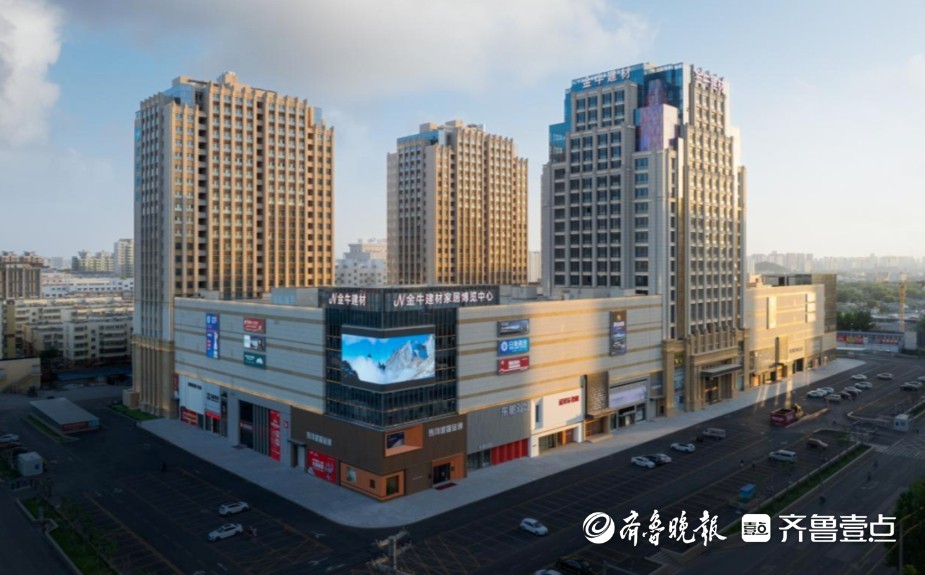
天桥金牛建材家居:“家居+体育+商务”多元发展推动商贸转型
Qi Lu Wan Bao Wang· 2025-04-30 04:25
Core Viewpoint - The article highlights the transformation and development of the Jinan-based Jin Niu Building Materials Home Furnishing Center, showcasing its evolution into a comprehensive, smart shopping experience for consumers in the building materials and home furnishing sector [3][5]. Group 1: Transformation and Upgrades - Jin Niu Building Materials Market has undergone three upgrades over 30 years, evolving from a roadside "shed-style" market to a one-stop, smart home furnishing complex [3]. - The current Jin Niu Building Materials Home Furnishing Center spans 125,000 square meters and hosts over 300 merchants, including more than 60 brand flagship stores and general agents [3]. - The center offers a wide range of products, including tiles, sanitary ware, flooring, wooden doors, smart home appliances, and whole-house customization, providing a comprehensive shopping experience [3]. Group 2: Sales and Marketing Strategies - Since its reopening, the center has implemented monthly themed promotional activities, utilizing discounts, lotteries, and flash sales to attract consumers [3]. - The sales model combines "brand promotions + full mall linkage," creating a synergistic effect where promotions in one store stimulate overall mall sales [3]. Group 3: Diversification and Ecosystem Development - Jin Niu Group has expanded its business model by integrating modern service industries such as creative design, e-commerce, and wellness entertainment into a 93,000 square meter office building [5]. - The establishment of the Jin Niu Building Materials Home Furnishing Center, along with surrounding buildings, has created a unique "Golden Triangle Business Circle" in Jinan [5]. - The group is also developing a "Sports+" commercial complex, planning the Jin Niu Sports Health City project to integrate sports events, fitness, and retail, enhancing the consumer experience [5].