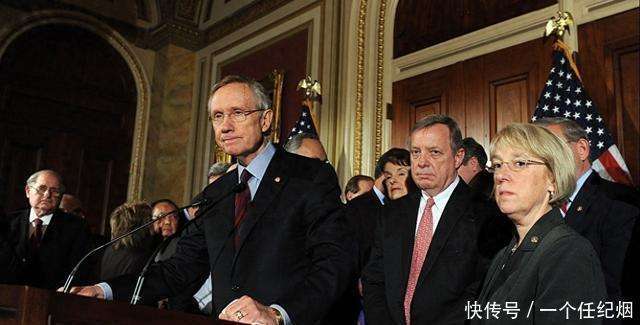
三权分立制度

Search documents
惊天豪赌!特朗普这次不是打贸易战,是在跟美国制度玩命?
Sou Hu Cai Jing· 2026-02-26 10:48
Core Viewpoint - The recent increase in global import tariffs from 10% to 15% by Trump represents a significant shift from previous trade policies, moving from an economic narrative of "America First" to a politically motivated action that challenges judicial authority and global order [3][4][13] Group 1: Legal Framework and Implications - Trump's new tariff policy is a direct challenge to the U.S. Supreme Court's ruling, which deemed his previous tariff actions unconstitutional, indicating a blatant disregard for judicial authority [4][7] - The legal basis for the new tariffs under the Trade Act of 1974, Section 122, is limited to temporary measures in cases of severe trade deficits, which does not support long-term, indiscriminate tariffs [5][6] - Unlike previous tariffs that operated within a legal framework, this new policy is characterized as a "naked violation" of constitutional principles, undermining the checks and balances of the U.S. government [4][6] Group 2: Economic Context and Consequences - The 15% tariff is implemented in a context where the U.S. economy is already under significant pressure, contrasting sharply with the economic conditions during previous tariff implementations [11] - The estimated cost of previous tariffs has already exceeded $175 billion, with the burden largely falling on American consumers, leading to increased prices across various goods [11][12] - The absence of exemptions in the new tariff policy signifies a departure from previous strategies that allowed for negotiations and targeted approaches, effectively declaring a trade war against all global partners [9][12] Group 3: Political Motivations - The tariff increase appears to be a political maneuver aimed at consolidating Trump's influence within the Republican Party ahead of the 2026 midterm elections, rather than a sound economic strategy [13] - This policy shift has provoked immediate backlash from global trade partners, with the EU and other nations signaling intentions to retaliate, thus fracturing traditional alliances [12][13] - The lack of economic rationale and negotiation space in the new tariffs indicates a shift towards using trade policy as a tool for political posturing rather than for achieving economic objectives [9][13]

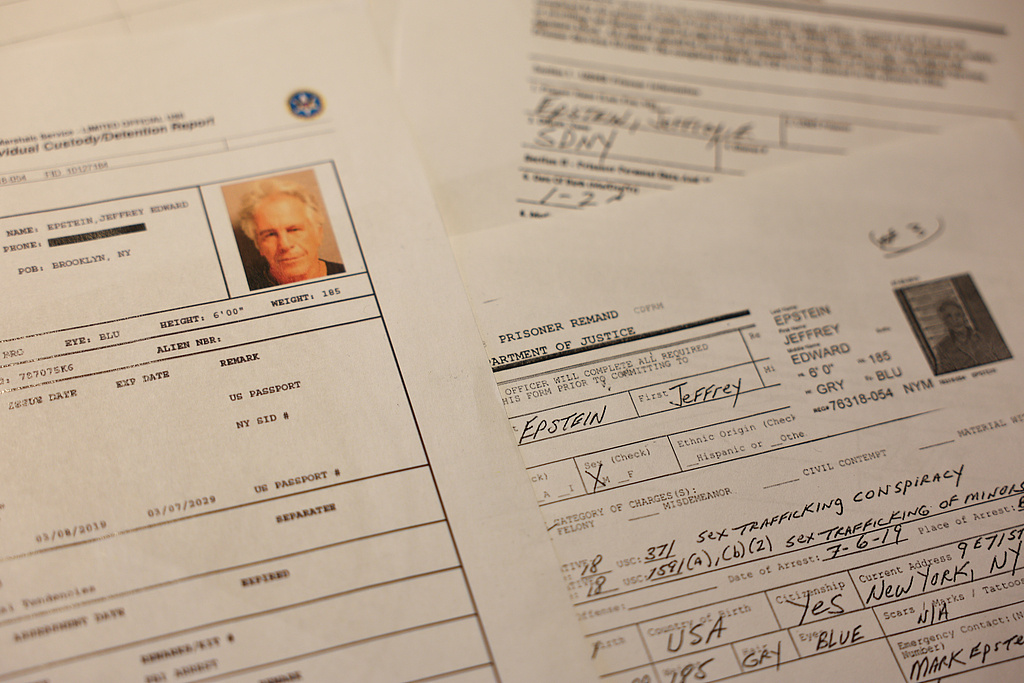
【环时深度】爱泼斯坦案照见美国制度运行之乱
Huan Qiu Shi Bao· 2026-02-08 22:46
Core Viewpoint - The release of documents related to the Epstein case has sparked significant political and judicial scrutiny in the U.S., raising questions about the effectiveness of the country's power balance and the judicial system's accountability [1]. Group 1: Judicial System and Accountability - Victims of the Epstein case have long sought justice but have faced systemic failures within the U.S. judicial system, which has been criticized for not adequately investigating allegations against Epstein since 1996 [2]. - Despite accumulating evidence, the judicial response has been minimal, with Epstein receiving a lenient plea deal in 2008 that allowed him to avoid serious charges, highlighting a perceived leniency towards powerful individuals [2][3]. - The slow pace of accountability continues, as many individuals connected to Epstein remain unpunished, with the U.S. Department of Justice stating that new criminal charges will not be pursued based on the recently released documents [3]. Group 2: Political Dynamics and Power Struggles - The release of Epstein-related documents has become a battleground for political power struggles between Congress and the White House, with accusations of the executive branch obstructing legislative oversight [4][5]. - The passage of the Epstein Transparency Act by Congress aimed to ensure the release of documents, but critics argue that the Department of Justice has not complied fully, leading to calls for legal action against the White House [5][6]. - The ongoing conflict reflects a broader trend of the executive branch encroaching on congressional authority, with concerns that this undermines the intended checks and balances of the U.S. political system [7][10]. Group 3: Systemic Issues and Public Trust - The Epstein case has exposed flaws in the U.S. system of checks and balances, particularly as political polarization has led to decreased legislative efficiency and increased reliance on executive action [9][10]. - The erosion of public trust in government institutions is a significant concern, as the handling of the Epstein case illustrates a perceived failure of the judicial system to deliver justice, further complicating the relationship between the public and the government [11].
美国制度为何管不住“帝王总统”
Xin Lang Cai Jing· 2026-01-20 21:56
Group 1 - Trump's administration has signed over 220 executive orders by January 15, 2023, which is four times the 55 signed in his first term's first year, indicating an unprecedented expansion of executive power [2] - The principle of checks and balances in the U.S. political system is being questioned, as Trump's presidency has seen a significant weakening of Congressional authority and judicial independence [2] - The historical context suggests that the accumulation of presidential power began in the early 20th century and peaked during the Cold War, leading to a serious impact on constitutional balance [2] Group 2 - The current situation in the U.S. prompts a reevaluation of the perceived superiority of Western political systems, as domestic crises challenge the narrative of American exceptionalism [3] - Richard Wolff, an American economist, argues that the U.S. capitalist system is in a structural crisis that cannot be resolved through conventional electoral changes [3] - The upcoming 250th anniversary of the Declaration of Independence and the hosting of the World Cup in 2026 may bolster Trump's narrative of victory, but the "America First" logic could lead to greater backlash [3]
特朗普最担心的来了:美国面临“生死存亡”时刻,这一次他输不起
Sou Hu Cai Jing· 2025-11-13 07:23
Core Points - The article discusses the significant legal battle in the U.S. Supreme Court regarding Trump's tariff policies, which he claims are crucial for the nation's future [1][3] - Trump's tariffs have led to increased costs for American consumers, contradicting his previous claims that foreign countries would bear the burden [3][5] - The Supreme Court's conservative justices are scrutinizing the legality of Trump's tariffs under the International Emergency Economic Powers Act, which has never been used for comprehensive tariffs [5][6] Group 1 - Trump's assertion that the case is the "most important in history" highlights its potential to redefine presidential power and impact the U.S. economy and trade for decades [3][5] - The Supreme Court's conservative majority, including justices appointed by Trump, is questioning the extent of presidential authority in imposing tariffs [6][8] - Economic analyses indicate that Trump's tariffs have resulted in over $1.2 trillion in losses for U.S. businesses, with more than half of the costs passed on to consumers [5][8] Group 2 - The core dispute centers on whether Trump has the authority to impose tariffs based on a 1977 law, with historical precedent suggesting such powers belong to Congress [5][6] - The justices expressed skepticism about the justification for tariffs, with some questioning the validity of Trump's claims regarding foreign investment resulting from these tariffs [6][8] - Potential outcomes of the Supreme Court's ruling include full support for Trump's tariff powers, complete rejection of his policies, or a compromise that partially upholds and partially overturns the tariffs [8][10]

特朗普只要再输一次,中国将完胜中美关税战,后果对美国不堪设想
Sou Hu Cai Jing· 2025-10-08 07:11
Core Viewpoint - The ongoing trade war between the U.S. and China is significantly influenced by a legal battle within the U.S., where American companies, state governments, and trade associations are challenging the legality of the tariffs imposed by the Trump administration, which could lead to a potential refund of up to $1 trillion in tariffs if the Supreme Court rules against the government [1][20]. Group 1: Legal Framework and Implications - The legal basis for the tariffs stems from the International Emergency Economic Powers Act (IEEPA), which grants the U.S. President emergency powers to impose economic measures in response to significant threats [3]. - The Trump administration utilized the IEEPA to implement extensive tariffs, escalating from an initial 10% to as high as 100%, effectively bypassing Congress [5][6]. - A significant ruling from the Federal Circuit Court in August 2025 deemed most of the global tariff policies illegal, stating that the President lacked the authority to impose such broad taxation under the invoked law [8][10]. Group 2: Economic Consequences - As of August 2025, U.S. companies had already paid over $210 billion in what are considered illegal tariffs, with potential refunds reaching $750 billion to $1 trillion if the case extends into 2026 [13][15]. - The financial implications of a Supreme Court ruling against the Trump administration could lead to a catastrophic impact on the U.S. economy, equating to the annual defense budget [13][15]. - The tariffs have resulted in significant job losses in the U.S., with over 42,000 manufacturing jobs reportedly lost since the new tariffs were implemented, affecting sectors such as automotive, appliances, and electronics [18]. Group 3: Strategic Outcomes - The trade war, initially aimed at protecting American workers and manufacturing, has ironically led to job losses and economic burdens on U.S. consumers and small businesses, while China has managed to maintain its economic stability [17][20]. - The legal challenges against the Trump administration's tariffs highlight the checks and balances within the U.S. government, particularly the judiciary's role in curbing executive power [17]. - The upcoming Supreme Court hearings scheduled for November 5, 2025, will be pivotal in determining the future of these tariffs and the broader implications for U.S.-China trade relations [22].
六年前美国挥关税大棒对华强硬:如今代表团访华,史密斯赞中国意图何在?
Sou Hu Cai Jing· 2025-09-22 16:21
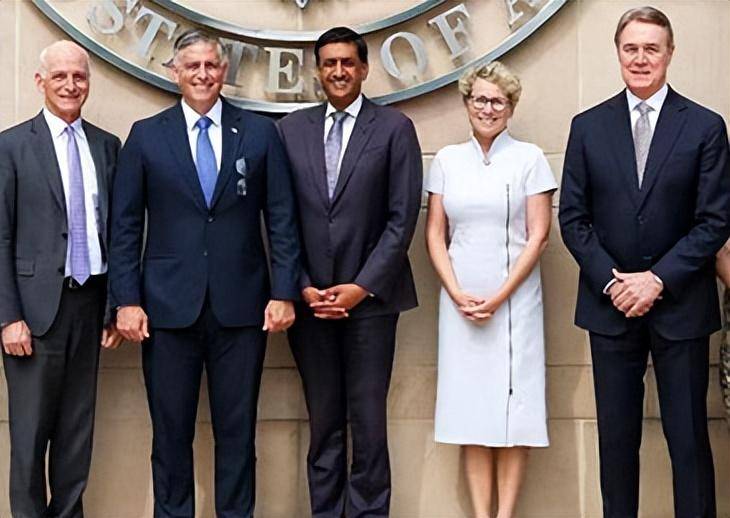
Core Viewpoint - The article discusses a significant shift in the U.S. Congress's attitude towards China, highlighting a recent visit by a bipartisan delegation that praised China as one of the "most powerful and influential countries in the world" [3][6][8]. Group 1: U.S.-China Relations - The visit marks the first official engagement by the U.S. House of Representatives with China since 2019, indicating a thaw in relations [3][6]. - Congressman Adam Smith's use of the term "most" to describe China reflects a stark contrast to previous characterizations of China as a "strategic threat" or "enemy" [6][10]. - The shift in tone suggests a recognition that the U.S. cannot isolate or completely contain China, as it has become a crucial player in global issues [10][12]. Group 2: Economic and Security Concerns - The article notes that the U.S. has faced economic backlash from its previous hardline stance, particularly in agriculture, where exports to China have significantly declined [15][17]. - The U.S. military is increasingly concerned about rising tensions in sensitive regions, with incidents of close encounters between U.S. and Chinese forces increasing by nearly 20% year-on-year [17][19]. - The lack of effective military communication channels has raised fears of unintended conflicts, prompting a reevaluation of U.S. strategies towards China [19][34]. Group 3: Political Dynamics in the U.S. - The article highlights the complexities of U.S. governance, where the legislative and executive branches may have conflicting views on foreign policy, complicating efforts to improve U.S.-China relations [21][23]. - Despite the positive rhetoric from the congressional delegation, their ability to influence significant policy changes is limited due to the separation of powers in the U.S. government [21][26]. - The need for consistent and actionable policies is emphasized, as past statements have often failed to translate into concrete actions [28][30]. Group 4: Future of U.S.-China Relations - The article suggests that while there is a newfound willingness to engage, the underlying competition between the two nations remains, with ongoing tensions in technology, supply chains, and global governance [30][32]. - The future relationship is likely to be characterized by a "dangerous balance," where both nations must manage competition while avoiding direct conflict [32][36]. - The interdependence of the two economies means that cooperation is essential, particularly in areas like climate change and regional security, despite the competitive nature of their relationship [36][38].

特朗普连遭两次经济阻击,关税裁定非法,库克起诉他,能阻止他吗
Sou Hu Cai Jing· 2025-09-07 07:44
Group 1 - Trump's economic policies, particularly tariffs and pressure on the Federal Reserve, are facing unprecedented legal challenges [1][3] - A recent ruling by the U.S. Court of Appeals determined that many of Trump's tariff policies lack explicit congressional support, categorizing them as executive overreach [1] - If the Supreme Court upholds this ruling, the U.S. government may face hundreds of billions in tariff refunds, significantly impacting fiscal policy reliant on tariff revenue [1] Group 2 - The Federal Reserve Governor Lisa Cook has formally sued Trump over his attempt to remove her, emphasizing the independence of monetary policy [3] - The judge overseeing the case, nominated by Biden, is expected to rule against Trump's dismissal, which would severely undermine his influence over the central bank [3] - The ongoing power struggle reflects a backlash against Trump's attempts to expand presidential authority, testing the resilience of the U.S. system of checks and balances [5] Group 3 - Observers are closely monitoring the outcomes of the tariff case and Cook's lawsuit, as they could redefine the boundaries of presidential power [5] - The intersection of Trump's "Make America Great Again" slogan and the rule of law may lead to a significant constitutional crisis in the U.S. political system [5]