三道红线

Search documents
招商蛇口:业绩短期探底,投资向核心城市极致聚焦-20260320
GOLDEN SUN SECURITIES· 2026-03-20 02:24
Investment Rating - The report maintains a "Buy" rating for the company, indicating a positive outlook for its stock performance in the coming months [4]. Core Views - The company experienced a significant decline in revenue and net profit in 2025, with operating income of 154.73 billion yuan, down 13.5% year-on-year, and a net profit attributable to shareholders of 1.02 billion yuan, down 74.6% year-on-year. This decline is attributed to reduced project delivery scale, a decrease in gross profit margin, and substantial asset impairment losses totaling 3.52 billion yuan [1][4]. - The company has increased its investment intensity, with over 60% of its investment allocated to first-tier cities. In 2025, it acquired 43 land parcels with a total land price of 93.8 billion yuan, marking a 92.8% increase year-on-year [2]. - The company's property management income remained stable, with a total operating income of 7.63 billion yuan, a 2.2% increase year-on-year. The property service segment also saw a revenue increase of 12.2% to 19.27 billion yuan [3]. Financial Performance - The company's total assets as of the end of 2025 were 835.4 billion yuan, a decrease of 2.9% year-on-year, while total liabilities were 564 billion yuan, down 1.7% year-on-year. The company maintained a healthy financial position with a cash-to-short-term debt ratio of 1.19 [4]. - The projected revenues for 2026, 2027, and 2028 are 143.9 billion yuan, 137.2 billion yuan, and 131.2 billion yuan, respectively, with net profits expected to recover to 1.6 billion yuan, 2.4 billion yuan, and 3 billion yuan [4][6].

房地产行业周报:“三道红线”目前约束意义已不大
Orient Securities· 2026-02-03 05:24
Investment Rating - The report maintains a "Positive" investment rating for the real estate industry, indicating an expectation of returns exceeding the market benchmark by more than 5% [5]. Core Viewpoints - The significance of the "three red lines" policy has diminished, suggesting that its policy objectives have largely been achieved, and the industry is transitioning from a "high-risk" model to high-quality development. Regulatory focus has shifted from preventing debt crises to stabilizing market expectations [3][7]. - Recent market data shows that the real estate sector index underperformed compared to the CSI 300 index, with a weekly decline of 2.2% and a relative return of -2.3% [3][8]. - New home sales in 30 cities increased by 23% compared to the previous week, totaling 141 million square meters, although year-to-date sales are down 24% [3][8]. Summary by Sections Market Performance - The real estate sector index has shown a weekly decline of 2.2%, underperforming the CSI 300 index by 2.3% [3][8]. - New home sales in 30 cities reached 141 million square meters, a 23% increase from the previous week, but a 24% decrease year-on-year [3][8]. Sales Data - New home sales increased in the fifth week compared to the fourth week, while second-hand home sales slightly decreased. The new home sales in 30 cities showed a 23% week-on-week increase, but a 24% year-to-date decline [3][8]. - Second-hand home sales in 18 cities totaled 17,000 units, a 2% decrease from the previous week, but a 14% year-to-date increase [3][8]. Investment Recommendations - The report suggests focusing on three categories of investment opportunities: 1. Quality developers with low historical burdens and strong sales growth expectations [4]. 2. Commercial real estate operations, particularly shopping centers that can maintain growth in a slowing economy [4]. 3. Real estate brokerage platforms that benefit from scale and brand advantages, which can enhance performance during market recovery [4].
“三道红线”目前约束意义已不大
Orient Securities· 2026-02-03 04:15
Investment Rating - The report maintains a "Positive" investment rating for the real estate industry, indicating an expectation of performance that is stronger than the market benchmark index by over 5% [5]. Core Viewpoints - The significance of the "three red lines" policy has diminished, suggesting that its policy objectives have largely been achieved. The industry is transitioning from a "high-risk" model to a focus on high-quality development, with regulatory emphasis shifting from preventing debt crises to stabilizing market expectations [3][7]. - Recent market data shows that the real estate sector index underperformed compared to the CSI 300 index, with a weekly decline of 2.2% and a relative return of -2.3% [3][8]. - New home sales in 30 cities increased by 23% compared to the previous week, totaling 141 million square meters, although year-to-date sales are down 24% [3][8]. Summary by Sections Market Performance - The real estate sector index has shown a weekly decline of 2.2%, underperforming the CSI 300 index by 2.3% [3][8]. - New home sales increased to 141 million square meters in the fifth week, a 23% rise from the fourth week, but year-to-date sales are down 24% [3][8]. Sales Data - New home sales in 30 cities increased, while second-hand home sales slightly decreased. The new home sales volume reflects a 23% increase week-on-week, but a 24% decrease year-on-year [3][8]. - Second-hand home sales in 18 cities totaled 17,000 units, a 2% decrease from the previous week, but a 14% year-on-year increase [3][8]. Investment Recommendations - The report suggests focusing on three categories of investment opportunities: 1. Quality developers with low historical burdens and strong sales growth expectations [4]. 2. Commercial real estate operations, particularly shopping centers that can maintain growth in a slowing economy [4]. 3. Real estate brokerage platforms that leverage scale and brand advantages for strong bargaining power [4].
五矿期货黑色建材日报-20260202
Wu Kuang Qi Huo· 2026-02-02 01:47
1. Report's Industry Investment Rating - No relevant information provided 2. Core Viewpoints of the Report - The black series is currently in a bottom - game stage with a mix of long and short factors. In the short term, it will mainly fluctuate within a range, and the trend opportunity is not clear. Attention should be paid to inventory changes around the Spring Festival, the recovery of plate demand, and marginal adjustments to "dual - carbon" policies [2] - In the medium - to - long - term, the commodity bulls are expected to continue. However, in the short term, factors such as the sharp adjustment of precious metals, the appointment of the new Fed chairman, and the "technical shutdown" of multiple US federal government departments may suppress the overall market atmosphere [8][14] 3. Summary by Related Catalogs Steel Products a. Market Information - The closing price of the rebar main contract was 3128 yuan/ton, down 29 yuan/ton (- 0.91%) from the previous trading day. The registered warehouse receipts were 17283 tons, with a month - on - month decrease of 0 tons. The position of the main contract was 1.7341 million lots, a month - on - month decrease of 51270 lots. In the spot market, the aggregated price in Tianjin was 3170 yuan/ton, unchanged from the previous day, and that in Shanghai was 3250 yuan/ton, down 10 yuan/ton [1] - The closing price of the hot - rolled coil main contract was 3288 yuan/ton, down 20 yuan/ton (- 0.60%) from the previous trading day. The registered warehouse receipts were 190323 tons, a month - on - month increase of 2655 tons. The position of the main contract was 1.5297 million lots, a month - on - month decrease of 17466 lots. In the spot market, the aggregated price in Lecong was 3290 yuan/ton, unchanged from the previous day, and that in Shanghai was 3270 yuan/ton, down 20 yuan/ton [1] b. Strategy Viewpoints - The overall sentiment in the commodity market was weak last Friday, and the prices of finished steel products continued to fluctuate within the bottom range. Domestically, the policy tone was relatively stable. Overseas, the market's dovish expectations declined, and commodity prices cooled down. The rebar output remained high, the apparent demand declined seasonally approaching the Spring Festival, and the inventory started to accumulate but the overall amplitude was controllable. The demand for hot - rolled coils was relatively stable, the output was moderately high, and the inventory continued to decline slightly [2] Iron Ore a. Market Information - Last Friday, the main contract of iron ore (I2605) closed at 791.50 yuan/ton, with a change of - 0.88% (- 7.00). The position changed by - 14164 lots to 541200 lots. The weighted position of iron ore was 894300 lots. The spot price of PB fines at Qingdao Port was 794 yuan/wet ton, with a basis of 52.04 yuan/ton and a basis rate of 6.17% [3] b. Strategy Viewpoints - In terms of supply, the overseas iron ore shipment volume increased slightly. The shipment volume from Australia increased month - on - month, and that from Brazil remained stable. The shipments of three major Australian mines increased, while that of Vale decreased slightly. The shipments from non - mainstream countries declined from a high level. The recent arrival volume continued to decline. In terms of demand, the average daily hot metal output was 227.98 tons, a month - on - month slight decline. Some blast furnaces in certain regions were undergoing annual inspections, and the复产 of blast furnaces was mainly due to the end of maintenance. The profitability rate of steel mills declined slightly. In terms of inventory, the port inventory continued to accumulate, reaching the highest level in the same period in the past five years, which put pressure on the absolute price. The inventory of imported ore in steel mills continued to rise, and steel mills continued to replenish their stocks before the festival. In general, the overseas supply was entering the off - season, the supply pressure was gradually alleviating, the structural inventory problem was not resolved, and the pre - festival procurement by steel mills after price decline provided some support. The short - term iron ore price was expected to fluctuate mainly [4] Manganese Silicon and Ferrosilicon a. Market Information - On January 30th, the main contract of manganese silicon (SM605) closed down 0.91% at 5872 yuan/ton. In the spot market, the price of 6517 manganese silicon in Tianjin was 5780 yuan/ton, equivalent to 5970 yuan/ton on the futures market, unchanged from the previous day, with a premium of 98 yuan/ton over the futures. The main contract of ferrosilicon (SF603) closed down 1.32% at 5660 yuan/ton. In the spot market, the price of 72 ferrosilicon in Tianjin was 5800 yuan/ton, unchanged from the previous day, with a premium of 140 yuan/ton over the futures [7] - Last week, the prices of manganese silicon and ferrosilicon continued to fluctuate. The weekly weighted index of manganese silicon increased by 22 yuan/ton or + 0.38%, and that of ferrosilicon increased by 10 yuan/ton or + 0.18%. Technically, there was no obvious trend for both [7] b. Strategy Viewpoints - The recent sharp fluctuations in the commodity market were triggered by the appointment of the new Fed chairman, which led to expectations of a marginal tightening of the denominator. The previous strong - performing lithium carbonate also declined significantly, suppressing the overall commodity sentiment. However, the black sector was supported by the relaxation of the "three red lines" in the real estate industry and the successful extension of Vanke's debt. In the long - term, the commodity bulls were expected to continue. In the short - term, factors such as the adjustment of precious metals, the appointment of the Fed chairman, and the "technical shutdown" of US federal government departments might suppress the market atmosphere. For manganese silicon, the supply - demand pattern was not ideal, but most of these factors were already reflected in the price. For ferrosilicon, the supply - demand structure was basically balanced and was gradually improving. The future market trends of manganese silicon and ferrosilicon would be affected by the overall market sentiment and cost - push factors for manganese silicon and supply - contraction factors for ferrosilicon [8][9] Coking Coal and Coke a. Market Information - On January 30th, the main contract of coking coal (JM2605) closed down 0.82% at 1155.5 yuan/ton. In the spot market, the price of low - sulfur main - coking coal in Shanxi was 1584.8 yuan/ton, down 5 yuan/ton from the previous day, and the equivalent price on the futures market was 1395 yuan/ton, with a premium of 239.5 yuan/ton over the futures. The price of medium - sulfur main - coking coal in Shanxi was 1300 yuan/ton, unchanged from the previous day, and the equivalent price on the futures market was 1284 yuan/ton, with a premium of 128.5 yuan/ton over the futures. The price of Mongolian 5 clean coal in Wubulangjinquan Industrial Park was 1234 yuan/ton, unchanged from the previous day, and the equivalent price on the futures market was 1209 yuan/ton, with a premium of 53.5 yuan/ton over the futures [11] - The main contract of coke (J2605) closed down 0.09% at 1721.5 yuan/ton. In the spot market, the price of quasi - first - grade wet - quenched coke at Rizhao Port was 1470 yuan/ton, up 20 yuan/ton from the previous day, and the equivalent price on the futures market was 1725.5 yuan/ton, with a premium of 4 yuan/ton over the futures. The price of quasi - first - grade dry - quenched coke in Lvliang was 1495 yuan/ton, unchanged from the previous day, and the equivalent price on the futures market was 1710.5 yuan/ton, with a discount of 11 yuan/ton to the futures [11][12] - Last week, the coking coal price continued to fluctuate widely, with a weekly increase of 0.5 yuan/ton or + 0.04%. The coke price continued to fluctuate, with a weekly decrease of 0.5 yuan/ton or - 0.03% [12] b. Strategy Viewpoints - Similar to the overall market situation, the sharp fluctuations in the commodity market affected coking coal and coke. The black sector had short - term emotional support. In the long - term, the commodity bulls were expected to continue, but in the short - term, market sentiment was suppressed. In terms of supply - demand, the supply - demand structure of coking coal and coke was gradually becoming looser. Although the downstream was still replenishing stocks, the inventory of coking coal in coking plants was approaching the level of the same period last year, and the willingness of downstream steel mills to replenish stocks was significantly weak. The short - term stock - replenishment was not expected to drive up prices strongly. However, the firm Australian coal prices and the US power shortage might have a positive impact on sentiment. In the context of global resource management, the "scarcity" premium of coking coal might be enhanced, providing some support for valuation. Overall, the short - term prices of coking coal and coke were expected to continue to fluctuate [13][14] Industrial Silicon and Polysilicon a. Market Information - Industrial silicon: Last Friday, the main contract of industrial silicon (SI2605) closed at 8850 yuan/ton, with a change of - 0.84% (- 75). The weighted contract position changed by - 13784 lots to 353139 lots. In the spot market, the price of 553 non - oxygen - blown industrial silicon in East China was 9200 yuan/ton, unchanged from the previous day, with a basis of 350 yuan/ton for the main contract. The price of 421 industrial silicon was 9650 yuan/ton, unchanged from the previous day, and the basis for the main contract was 0 yuan/ton after conversion [16] - Polysilicon: Last Friday, the main contract of polysilicon (PS2605) closed at 47140 yuan/ton, with a change of - 4.45% (- 2195). The weighted contract position changed by - 710 lots to 76114 lots. In the spot market, the average price of N - type granular silicon was 49 yuan/kg, down 0.5 yuan/kg from the previous day; the average price of N - type dense material was 50.5 yuan/kg, down 1 yuan/kg from the previous day; the average price of N - type re - feeding material was 51.3 yuan/kg, down 1.2 yuan/kg from the previous day, with a basis of 4160 yuan/ton for the main contract [19] b. Strategy Viewpoints - Industrial silicon: It showed a pattern of rising in the afternoon and then falling last Friday. In terms of supply, Sichuan's production enterprises maintained the furnace - shutdown state, and enterprises in Xinjiang and Inner Mongolia reduced production, with the weekly output continuing to decline. In terms of demand, a leading polysilicon enterprise shut down completely, and some other enterprises reduced production. The demand for industrial silicon was generally weak. In February, the production - reduction plan of a large factory in Xinjiang entered the implementation period. If the plan was implemented as rumored, the supply - demand balance sheet in February was expected to improve, and the sustainability depended on the shutdown duration. Overall, there was an expectation of improved supply - demand in the short - term, and the supply contraction provided strong support for the price. However, considering the approaching Spring Festival and the weakening downstream, the price was expected to fluctuate mainly [17][18] - Polysilicon: In the spot market, the price negotiation was intense, and the market information was chaotic. The downstream's acceptance of high prices was low, and some enterprises tried to lower the prices. The actual transaction prices declined. The silicon wafer segment was also under pressure, and the price of silicon materials weakened, which reduced the cost support. The terminal component prices continued to rise, and the battery segment's price continued to rise due to non - silicon costs and overseas demand. The supply - demand pattern was expected to improve in the first quarter as a leading enterprise shut down and some other enterprises reduced production. Policy expectations were expected to provide support for prices. The futures position and liquidity of polysilicon had fallen to a relatively low level since listing, and the futures price was expected to be under pressure due to the weakening spot prices. Attention should be paid to the feedback of terminal demand and possible new policy adjustments [20] Glass and Soda Ash a. Market Information - Glass: On Friday afternoon at 15:00, the main contract of glass closed at 1087 yuan/ton, up 1.87% (+ 20) from the previous day. The price of large - size glass in North China was 1020 yuan, up 10 yuan from the previous day, and that in Central China was 1090 yuan, unchanged from the previous day. On January 30th, the weekly inventory of float - glass sample enterprises was 52.564 million cases, a month - on - month decrease of 651,800 cases (- 1.22%). In terms of positions, the top 20 long - position holders increased their long positions by 8027 lots, and the top 20 short - position holders increased their short positions by 69570 lots [22] - Soda ash: On Friday afternoon at 15:00, the main contract of soda ash closed at 1224 yuan/ton, up 2.17% (+ 26) from the previous day. The price of heavy - soda ash in Shahe was 1184 yuan, up 26 yuan from the previous day. On January 30th, the weekly inventory of soda - ash sample enterprises was 1.5442 million tons, a month - on - month increase of 23,000 tons (+ 1.22%), including 716,100 tons of heavy - soda ash inventory, a month - on - month increase of 19,400 tons, and 828,100 tons of light - soda ash inventory, a month - on - month increase of 3600 tons. In terms of positions, the top 20 long - position holders reduced their long positions by 11413 lots, and the top 20 short - position holders increased their short positions by 8239 lots [24] b. Strategy Viewpoints - Glass: As the Spring Festival approached, the downstream processing plants were approaching the end of work, the market demand was weakening, the trading activity was decreasing, and the procurement was mainly for rigid demand. The inventory - building was almost completed. In terms of supply, a production line was restarted and ignited recently, and there was no cold - repair plan, so the overall production capacity remained stable. The demand was limited due to the Spring Festival seasonality. Overall, the market lacked strong driving factors, the wait - and - see sentiment was strong, and manufacturers were not willing to adjust prices. Most of them aimed to maintain stable prices, promote sales, and reduce inventory. The float - glass market was expected to continue to fluctuate in the short - term, with the main contract reference range of 1025 - 1125 yuan/ton [23] - Soda ash: The supply in the industry remained loose. The short - stopped devices such as Jiangsu Huachang had resumed operation, and the new production capacity was gradually being released, with the supply continuing to show an increasing trend. The demand side remained weak, with downstream enterprises mainly making rigid - demand purchases. Only a few enterprises made appropriate inventory - building before the festival, and the overall wait - and - see sentiment was strong, with limited order growth. Overall, the current supply - demand structure of the soda - ash market was relatively loose, downstream purchasing was cautious, and the price lacked upward - driving force. The market was expected to continue to fluctuate weakly and steadily in the short - term, with the main contract reference range of 1160 - 1250 yuan/ton [25]
“三道红线”或已松动,地产政策持续转变
Caixin Securities· 2026-01-30 07:45
Investment Rating - The report maintains a "Market Perform" rating for the real estate industry, indicating that the industry's performance is expected to be in line with the broader market [3]. Core Insights - The recent easing of the "three red lines" policy signifies a shift in regulatory focus from preventing debt crises to stabilizing market expectations and entities, reflecting the government's commitment to risk prevention and market stability [7]. - The adjustment in the reporting requirements for the "three red lines" is seen as a confidence-boosting measure, aligning with the government's emphasis on improving and stabilizing the real estate market [7]. - High-quality real estate companies are expected to see improved financing capabilities and operational flexibility, potentially accelerating their market share consolidation [7]. - The report emphasizes that while the "three red lines" reporting has been relaxed, it does not imply a return to high-leverage models; instead, the focus is on high-quality development and product excellence [7]. - The report suggests that investors should focus on real estate companies with strong cash flow, creditworthiness, and product strength, particularly those with quality land reserves in core cities [7]. Summary by Sections - **Industry Performance**: The real estate sector has shown a 6.21% increase over the past month, a slight decline of 0.54% over three months, and a 16.03% increase over the past year, compared to the broader market represented by the CSI 300 index [5]. - **Market Context**: The report highlights the importance of the recent policy changes in the context of the overall market environment, indicating a potential for sustained policy shifts that could benefit the real estate sector [7].
多家房企已不用上报“三道红线”指标
Feng Huang Wang· 2026-01-29 23:32
Core Viewpoint - The regulatory requirement for real estate companies to report the "three red lines" indicators monthly has been lifted for many firms, indicating a shift in oversight and a potential easing of financial pressures in the industry [1][3]. Group 1: Regulatory Changes - Many real estate companies are no longer required to report the "three red lines" indicators monthly, a change communicated verbally by regulatory authorities [1][3]. - Some distressed firms are still required to report financial indicators such as asset-liability ratios and operational recovery progress to local government task forces [1][3]. - The "three red lines" policy, introduced in 2020 to control the debt levels of real estate companies, has seen its reporting requirements relaxed as of 2026 [2][3]. Group 2: Industry Trends - The shift away from monthly reporting of the "three red lines" suggests that the policy is no longer being used as a tool for window guidance, indicating that the initial goals of limiting debt growth have been achieved [3]. - The real estate market has undergone significant adjustments over the past four years, leading companies to prioritize high-quality development over aggressive expansion [3][4]. - Analysts note that many developers have already reduced their debt levels to within the "three red lines," reflecting a broader industry trend towards lower leverage and a focus on asset management [4][5]. Group 3: Future Financing Landscape - The future of financing in the real estate sector is expected to shift towards a "lead bank system," where a single bank or syndicate is designated to manage project financing, ensuring that funds are allocated appropriately [4]. - The focus on optimizing existing debt and supporting "white list" projects is anticipated to continue, with potential extensions of loan terms for quality private firms [5]. - Overall, the financing pressure on real estate companies is expected to ease, influenced by ongoing adjustments within the industry and supportive financial policies [5].
房企“三道红线”不再上报,专家:房地产新融资模式正在形成
Feng Huang Wang· 2026-01-29 23:18
Core Viewpoint - Regulatory authorities have ceased the requirement for real estate companies to report the "three red lines" indicators, which were initially introduced to manage real estate financing and limit debt growth [1][2]. Group 1: Regulatory Changes - The "three red lines" policy was first introduced in August 2020 to monitor and manage financing for key real estate companies, with specific thresholds for debt metrics [1]. - Companies were categorized into four tiers based on their compliance with the "three red lines," which determined their debt growth limits [1]. - Multiple real estate executives confirmed that reporting on the "three red lines" has not been required since last year [1]. Group 2: Market Analysis - The real estate market has undergone a significant adjustment over the past four years, leading to a fundamental shift in the operational strategies of real estate companies towards high-quality development rather than debt-driven growth [2]. - Despite the cessation of the "three red lines" reporting, the financing environment for the real estate sector is unlikely to improve significantly in the short term due to prevailing market conditions and cautious attitudes from financial institutions [2]. Group 3: New Financing Models - A new financing model is emerging in the real estate sector, characterized by the implementation of a "lead bank system," where a designated bank or syndicate oversees project financing [3]. - This new model is expected to become the primary method for real estate financing, ensuring that companies can meet their reasonable financing needs and support project development [3]. - Real estate companies are shifting from a total-to-total financing approach to a project-based model, with limited financing options available for group-level financing, particularly for private firms [3].
房企“三道红线”不再要求上报,地产股集体大涨!专家:政策目标已经实现;业内:地产行业调整进入末期
Mei Ri Jing Ji Xin Wen· 2026-01-29 14:52
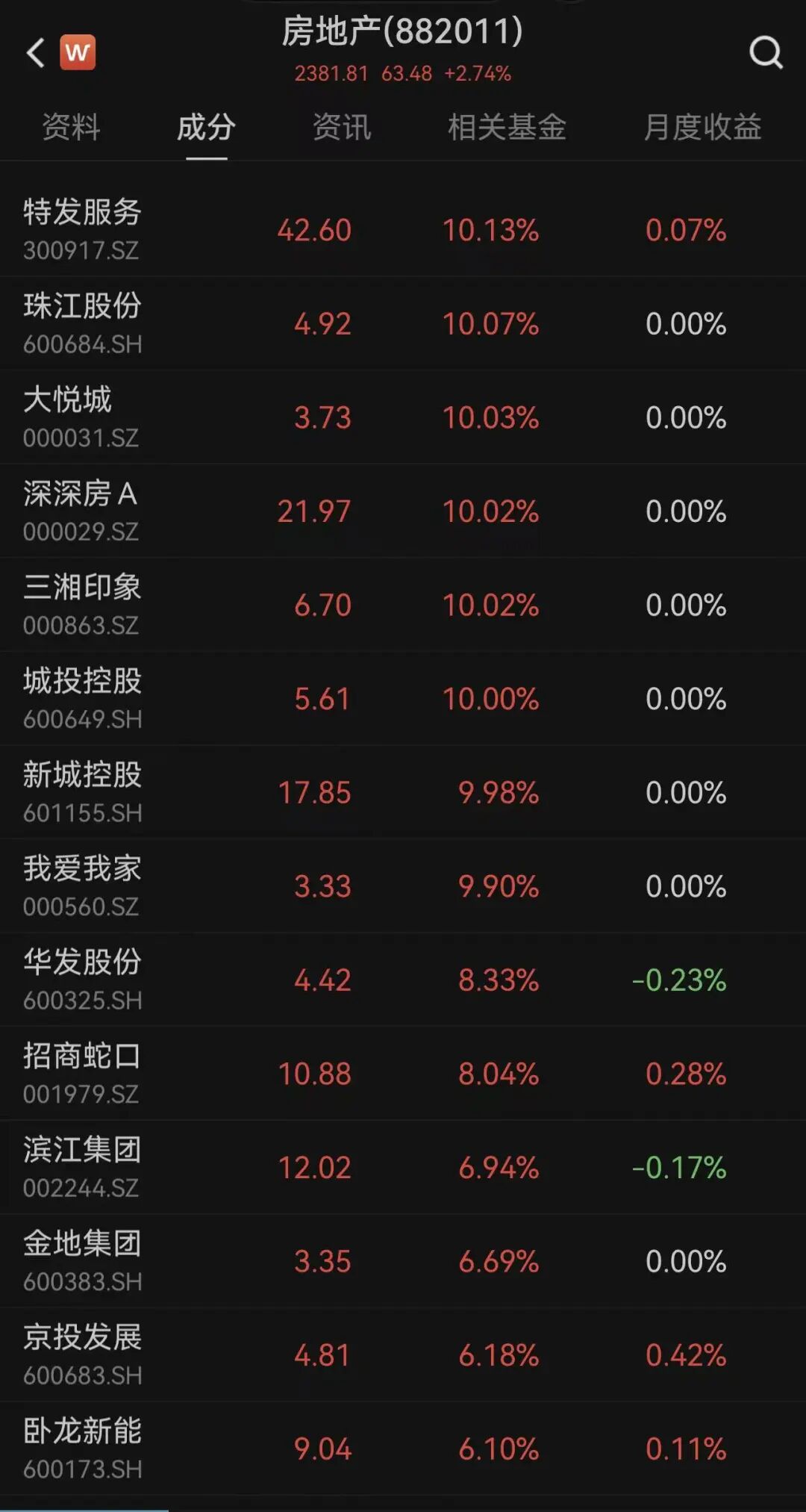
Core Viewpoint - The recent news indicates that real estate companies are no longer required to report the "three red lines" indicators to regulatory authorities on a monthly basis, leading to a significant rebound in the A-share real estate sector, with an increase of over 2.7% [1]. Group 1: Regulatory Changes - The "three red lines" policy, which was a critical assessment standard for real estate financing and operations since its pilot in August 2020, has quietly faded away as the industry undergoes deep adjustments [7][9]. - Many real estate companies have stopped monthly reporting of the "three red lines" indicators since early 2025, with some companies indicating they have not reported for a long time [6][8]. - As of December 2025, 21 distressed real estate companies have completed or received approval for debt restructuring, resolving a total debt scale of 1.2 trillion yuan, involving over 2 trillion yuan in total liabilities [7]. Group 2: Market Reactions - The A-share real estate sector has seen significant gains, with stocks such as Zhujiang Shares, Dayue City, and Shenzhen Housing A reaching their daily limit [1]. - The overall sentiment in the market has shifted positively, with many companies experiencing substantial stock price increases, reflecting renewed investor confidence [2][3]. Group 3: Industry Outlook - The "three red lines" policy aimed to limit the growth of real estate companies' debt and prevent aggressive expansion, a goal that has largely been achieved after four years of deep adjustments in the industry [10]. - The current industry context suggests that the "three red lines" are no longer suitable, as the high-leverage expansion model has ended, and leading companies are shifting towards low-leverage, refined operations [10][11]. - Analysts emphasize the need for financial institutions to support real estate financing to avoid a negative cycle of financial strain and declining sales [11].


“三道红线”悄然落幕 业内:地产行业调整进入末期,应鼓励金融机构支持房地产融资
Mei Ri Jing Ji Xin Wen· 2026-01-29 09:34
Core Viewpoint - The "three red lines" policy, which was a significant regulatory measure for real estate companies in China, is gradually fading away as many firms are no longer required to report related metrics monthly, leading to a recovery in the A-share real estate sector [1][2][3]. Group 1: Policy Changes - Real estate companies are no longer mandated to report "three red lines" indicators monthly, with many firms having ceased such reporting since early 2025 [1][2]. - The "three red lines" policy was introduced in August 2020 to control the debt levels of real estate companies, setting specific financial metrics that firms had to adhere to [2][3]. - As of December 2025, 21 distressed real estate companies have completed or received approval for debt restructuring, resolving a total debt of 1.2 trillion yuan, indicating a significant reduction in industry risk [1]. Group 2: Industry Impact - The A-share real estate sector saw a notable increase of over 2.7%, with stocks like Zhujiang Co., Dayuecheng, and Shenzhen Housing A reaching their daily limit [1]. - The shift away from the "three red lines" reflects a fundamental change in the operational strategies of real estate companies, moving from aggressive expansion to a focus on high-quality development [4][5]. - The current industry context shows a continuous decline in funding for real estate companies over the past four years, with a cautious approach from banks leading to reduced loan demand from firms [4][5]. Group 3: Future Outlook - Experts suggest that financial institutions should be encouraged to support real estate financing to avoid a negative cycle of financial strain and declining sales [5]. - The adjustment phase of the industry is nearing its end, with surviving companies focusing on delivering high-quality properties while managing risks effectively [5].
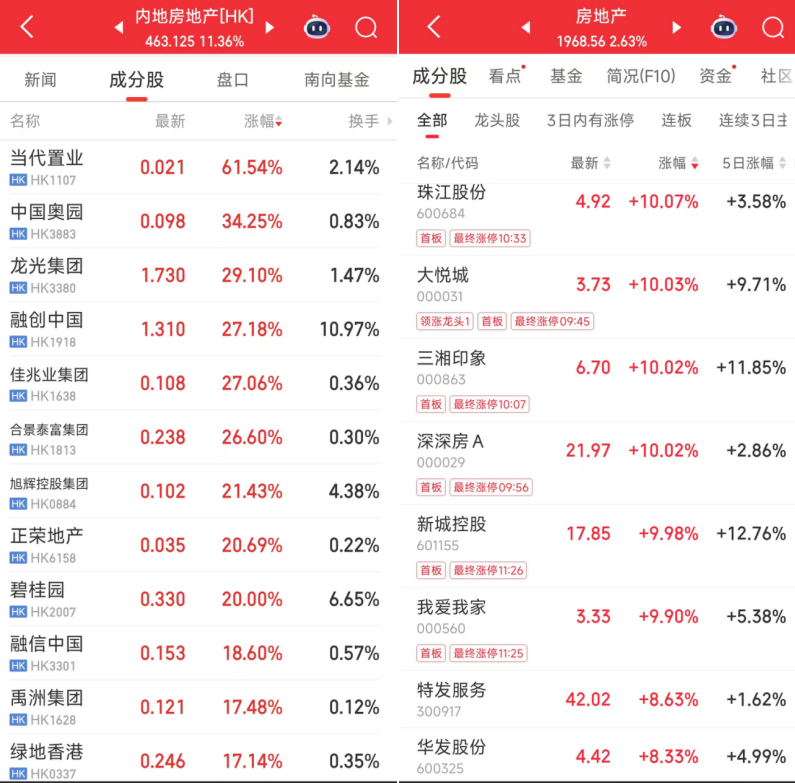
多股涨停!地产股集体冲高,房企告别“三道红线”监管
Nan Fang Du Shi Bao· 2026-01-29 06:25
Core Viewpoint - The real estate sector is experiencing a significant rebound in stock prices, with many companies seeing substantial gains, indicating a potential recovery in the market [1][2]. Group 1: Stock Performance - A-share real estate companies such as Zhujiang Holdings, Dayuecheng, Sanxiang Impression, and Shen Shen Fang A have risen over 10% [1]. - In the Hong Kong market, Contemporary Land has surged over 61%, while China Aoyuan and Longguang Group have increased by over 34% and 25%, respectively [1][2]. Group 2: Regulatory Changes - Reports indicate that some real estate companies are no longer required to report the "three red lines" indicators to regulatory authorities, which were previously mandatory since mid-2020 [2][3]. - The "three red lines" policy aimed to control leverage and prevent financial risks in real estate, with key metrics including asset-liability ratios and net debt ratios [3]. Group 3: Market Dynamics - The current market environment has led to a decline in funding for real estate companies, with a four-year average decrease of 17.5% in funds received, surpassing the 15.7% decline in new housing sales [4]. - The shift in the market has resulted in a focus on low-leverage, high-quality asset management by leading real estate firms, moving away from previous high-leverage expansion models [4][5]. Group 4: Future Financing Models - A new financing model is emerging, characterized by the "lead bank system," where a designated bank or syndicate oversees project financing, ensuring that funds are allocated appropriately [6]. - As of December 2025, 21 distressed real estate companies have undergone debt restructuring, with a total debt relief of approximately 1.2 trillion yuan, easing short-term repayment pressures [6].