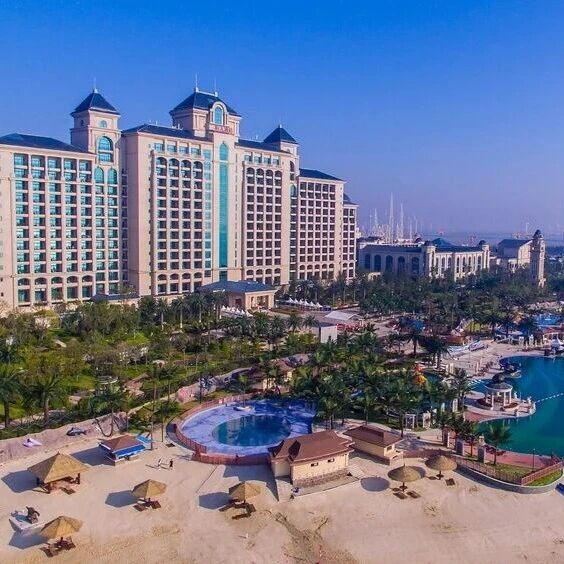
恒大海上威尼斯

Search documents
恒大是从哪个项目开始变坏的
虎嗅APP· 2025-12-10 14:17
Core Viewpoint - The article discusses the downfall of Evergrande, highlighting its rapid expansion, excessive debt, and the eventual consequences of its unsustainable business practices [4][7][56]. Group 1: Evergrande's Business Practices - Evergrande's leverage strategy involved using 39 billion yuan in capital to support 2 trillion yuan in debt, maintaining a debt ratio exceeding 85% while offering high dividend rates [10]. - The company expanded aggressively, developing over 1,300 projects in 280 cities, including large-scale tourism projects [11]. - Evergrande's marketing strategies included creating grandiose visions for projects, such as the "Evergrande Venice," which had low land costs due to innovative land acquisition methods [16][23]. Group 2: Financial Mismanagement - The company reported a staggering total debt of 2.38 trillion yuan against total assets of only 1.74 trillion yuan, resulting in a shortfall of nearly 640 billion yuan [58]. - Evergrande's financial practices included using pre-sale funds to inflate revenue figures and issuing commercial bills to suppliers, effectively transferring risk [46][49]. - The company faced scrutiny for its financial reporting, with auditors failing to identify discrepancies in its financial statements [68]. Group 3: Market Environment and Industry Context - The article emphasizes that Evergrande's issues are reflective of broader industry problems, where high leverage and rapid expansion were common practices during China's real estate boom [64][80]. - The real estate market was characterized by a belief that property prices would always rise, leading to reckless investment behaviors among developers and buyers alike [38][81]. - The article suggests that the entire industry operated under a flawed premise, where success was often attributed to market conditions rather than sound business practices [82].

中国文旅,迎来外资接盘时刻?
3 6 Ke· 2025-09-25 01:14
Core Viewpoint - The article discusses the increasing interest of foreign capital in China's cultural and tourism assets, highlighting recent investments and policy changes that facilitate this trend [10][12][15]. Group 1: Investment Opportunities - The project located in Suzhou's Yangcheng Lake Peninsula will be renamed Haihe An Suzhou Yangcheng Peninsula Park, with an additional investment of 100 million yuan, aiming to create a lakeside immersive cultural and entertainment tourism destination in the Yangtze River Delta [1]. - During its trial operation in the summer of 2025, the park is expected to attract over 350,000 visitors, with a peak daily attendance exceeding 20,000, making it a popular destination on a leading short video platform [3]. - MBK Partners, known for its opportunistic investments, previously privatized Shenzhou Car Rental at a significant premium despite the company's challenges during the pandemic [3][4]. Group 2: Foreign Investment Trends - MBK's notable acquisition of four theme parks from Haichang Ocean Park for approximately 6.5 billion yuan marks a rare case of foreign investment consolidation in China's cultural tourism sector [4]. - The article notes that foreign investments in China's tourism sector are increasing, with examples including the acquisition of high-end hotels and theme parks by various foreign entities [6][8]. - Recent policy changes by Chinese authorities aim to optimize the foreign investment environment, signaling a shift towards welcoming foreign capital in various sectors, including tourism [10][12]. Group 3: Market Dynamics - The article emphasizes that the valuation logic for cultural tourism assets in China is becoming clearer as foreign capital enters the market, with a focus on projects that can generate stable cash flow [13][15]. - The influx of foreign capital is expected to reshape the industry landscape, with a trend towards acquiring undervalued assets and enhancing their operational models [21][22]. - The article suggests that the next five years may see a significant transformation in the way cultural tourism assets are structured and valued, driven by both foreign and domestic capital [25].
从主题乐园到外滩酒店,外资出手了
Hu Xiu· 2025-09-25 00:30
Core Insights - MBK Partners has completed the acquisition of Suzhou Huayi Brothers Movie World, marking a significant investment in China's cultural tourism sector [1][4] - The project will be renamed Haihe An Suzhou Yangcheng Peninsula Park and aims to become a lakeside immersive cultural tourism destination in the Yangtze River Delta, with an additional investment of 100 million yuan [2] Investment Trends - MBK Partners is known for its strategic investments in undervalued assets, having previously privatized Shenzhou Car Rental at a premium despite market challenges [5][6] - The firm gained prominence in the Chinese cultural tourism market through the acquisition of four theme parks from Haichang Ocean Park, totaling approximately 6.5 billion yuan [7][8] - The investment strategy focuses on assets with cash flow potential and room for improvement, as evidenced by past investments like Universal Studios Japan [9][10] Market Dynamics - The valuation of cultural tourism assets in China has been declining, attracting foreign investments, including the acquisition of high-end hotels by groups like Singapore's Golden Eagle [11][12] - Recent policy changes by Chinese authorities aim to optimize the foreign investment environment, signaling a shift towards opening up the market for overseas capital [21][22][24] Future Outlook - The influx of foreign capital is expected to simplify the valuation logic of cultural tourism assets, making projects with stable cash flows more attractive for investment [27][32] - The current market is characterized by a transition phase, where high-cost projects are retreating, creating new opportunities amid supply contraction and demand recovery [40][41] - The trend indicates that undervalued cultural tourism assets in China will increasingly attract capital, leading to potential restructuring and revaluation of these assets [43][50]