
融资成本

Search documents
货币政策持续发力 支持经济平稳开局
Zhong Guo Zheng Quan Bao· 2026-02-13 20:23
Group 1 - The core viewpoint of the articles indicates that the monetary policy in China remains moderately loose, supporting economic recovery and creating a favorable financial environment for growth [1][2][3] - As of the end of January, the total social financing scale reached 449.11 trillion yuan, with a year-on-year growth of 8.2%, and the increment for January was 7.22 trillion yuan, which is 1.662 billion yuan more than the same period last year [1] - Government bonds are the main driving force behind the growth of social financing, with net financing of 976.4 billion yuan in January, an increase of 283.1 billion yuan compared to the previous year, accounting for 13.5% of the total social financing increment, the highest level since 2021 [1] Group 2 - The broad money supply (M2) reached 347.19 trillion yuan at the end of January, with a year-on-year growth of 9%, indicating a rise compared to the previous month [1][2] - The increase in M2 is attributed to a base effect and positive trends in the capital market at the beginning of the year, although future growth is expected to stabilize as the base effect diminishes [2] - In January, RMB loans increased by 4.71 trillion yuan, with a year-on-year growth of 6.1%, remaining above the nominal economic growth rate [2][3] Group 3 - Personal loans saw stable growth, with household loans increasing by 456.5 billion yuan, driven by pre-festival consumption activities [3] - The trend of "quality improvement" in credit growth is evident, with technology loans and loans for small and micro enterprises growing faster than the overall loan growth [3] - The average interest rate for corporate loans was approximately 3.2% in January, down 2.4 percentage points from the peak in the second half of 2018, reflecting a relatively abundant credit supply [3][4]
瑞安房地产:拟成立合营企业将黄浦区项目转换为境内投资
Feng Huang Wang· 2026-02-09 01:34
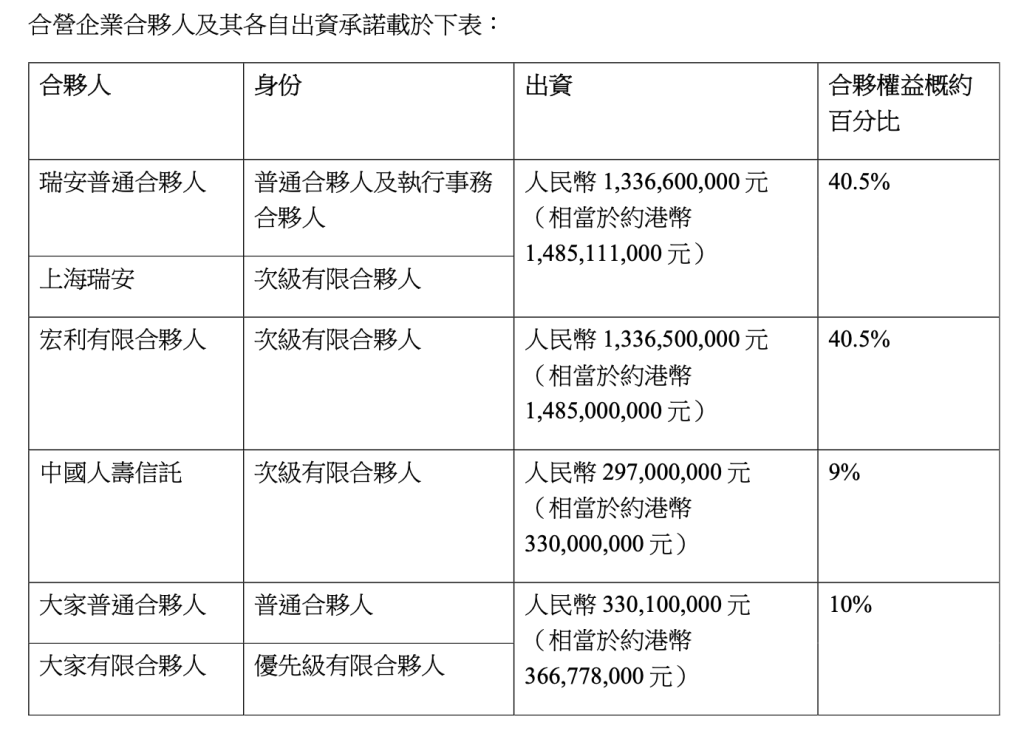
Core Viewpoint - Ruian Real Estate Limited has announced the establishment of a joint venture for equity transfer and project asset management, with a total investment commitment of RMB 3.3002 billion [1] Group 1: Joint Venture Details - The joint venture will include partners such as Ruian General Partner, Shanghai Ruian, Manulife Financial Corporation, China Life Trust, and others, with Ruian General Partner and Shanghai Ruian committing approximately RMB 1.3366 billion [1][2] - The joint venture will hold 99% of the project company, and Ruian Real Estate will own 40.5% of the partnership interests through Ruian General Partner and Shanghai Ruian [2][3] Group 2: Project Company Information - The project company, Shanghai Xingqiao Real Estate Co., Ltd., is indirectly owned by Top Fountain Limited, which is held by Ruian Real Estate (45%), Manulife Financial Corporation (45%), and China Life Insurance (10%) [3] - The project assets include office buildings, shopping malls, and other facilities in Huangpu District, Shanghai, with a total saleable and rentable area of approximately 79,000 square meters [3] Group 3: Financial Performance and Strategic Benefits - For the first three quarters of 2025, the project company reported a pre-tax profit of approximately RMB 76 million and a post-tax profit of approximately RMB 51 million, with a net asset value of about RMB 5.505 billion [3] - The transaction allows for domestic investment in project assets, enables the project company to obtain domestic bank financing, and helps mitigate foreign exchange risks associated with offshore holdings [3]


全球投资总量回升但分布失衡
Sou Hu Cai Jing· 2026-01-28 01:11
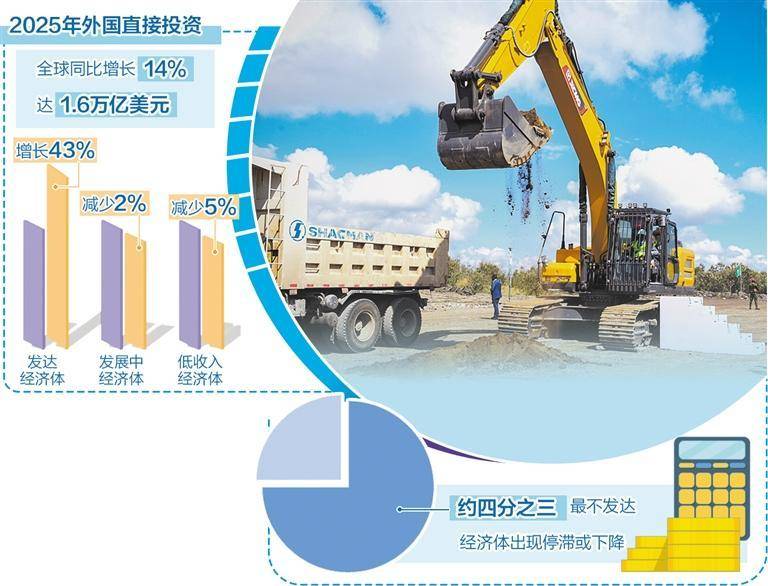
Group 1 - The core viewpoint of the report indicates that global foreign direct investment (FDI) is expected to grow by 14% in 2025, reaching $1.6 trillion, primarily due to a technical rebound rather than a comprehensive recovery in physical investments [2] - The report highlights that over $140 billion of the FDI increase in 2025 will come from financial hubs like the UK, Luxembourg, Switzerland, and Ireland, but when excluding this type of FDI, the real growth is only about 5% [2] - There is a significant disparity in global investment distribution, with developed economies experiencing a 43% increase in FDI to $728 billion, while developing economies saw a 2% decrease to $877 billion, and low-income economies faced a 5% decline [2] Group 2 - International project financing in infrastructure and other sectors has declined for the fourth consecutive year, with a drop of 16%, and the number of new greenfield projects has also decreased by 16% [3] - The report attributes the weakening of corporate investment intentions to structural reasons, as companies are more inclined to manage funds rather than commit to physical investments due to increased uncertainty in trade, industry, and investment policies [3] - Global FDI is increasingly concentrated in data centers and semiconductors, with data centers accounting for about 20% of global greenfield investment, while traditional manufacturing and renewable energy sectors are experiencing a notable decline [4] Group 3 - The report anticipates a modest recovery in FDI in 2026, but the risks of decline are significant, with unstable recovery foundations [4] - Favorable factors for potential recovery include expected decreases in inflation and financing costs, as well as a possible rebound in merger and acquisition activities [4] - Adverse factors include escalating geopolitical conflicts, increased policy uncertainty, and heightened economic fragmentation, which may lead to capital expenditures concentrating further in a few countries and strategic industries [4]
保利发展(600048):稳健底色不改 融资与布局彰显央企优势
Xin Lang Cai Jing· 2026-01-22 00:25
Core Viewpoint - Poly Development expects a significant decline in net profit for 2025, primarily due to market fluctuations and substantial asset impairment losses [1] Group 1: Financial Performance - The company anticipates a net profit of approximately 1.026 billion yuan for 2025, representing a year-on-year decrease of 79.49% [1] - Revenue for 2025 is projected at 308.261 billion yuan, a slight decline of 1.09% year-on-year [1] - The net profit, excluding impairment losses, is estimated to be around 5.2 billion yuan, with a quarterly improvement expected in Q4 [1] - As of Q3 2025, the company reported a gross profit margin of 13.37% and a debt ratio of 73.27% [1] - The cash flow management remains robust, with a net cash inflow from operating activities of 6.977 billion yuan [1] Group 2: Market Position and Sales - Despite a year-on-year decline of 21.67%, Poly Development maintained its position as the top seller in the industry with total sales of 253 billion yuan in 2025 [2] - The company secured the largest land acquisition area in the industry at 4.15 million square meters, with a total land acquisition amount of 67.1 billion yuan, ranking second in the industry [2] Group 3: Financing and Investment - The company successfully issued a total of 6 billion yuan in medium-term notes in the second half of 2025, with interest rates ranging from 1.85% to 2.21% [2] - In January 2025, Poly Development announced plans to raise up to 5 billion yuan through convertible bonds, aimed at funding nine real estate development projects in cities like Shanghai, Hangzhou, and Guangzhou [2] - Revenue projections for 2025-2027 are estimated at 308.261 billion yuan, 319.738 billion yuan, and 353.072 billion yuan, with corresponding net profits of 1.026 billion yuan, 1.992 billion yuan, and 2.664 billion yuan [3]

保利发展20251225
2025-12-26 02:12
Summary of Poly Developments Conference Call Company Overview - **Company**: Poly Developments - **Industry**: Real Estate Development Key Points Project Acquisition and Investment Strategy - In the first 11 months of 2025, Poly Developments acquired new projects with a total land price of 67 billion yuan, nearing last year's total, with over 90% located in first and second-tier cities [2][4][5] - The company maintains an equity ratio of 87%, significantly enhancing its project influence and profit recognition capabilities [2][5] - Poly Developments continues to pursue an incremental investment strategy to optimize asset structure and team capabilities [2] Financial Performance - For the first three quarters of 2025, the company reported revenue of 170 billion yuan, a slight year-on-year decline, with a gross margin of 13.4% [2][6] - Total profit and net profit attributable to shareholders were significantly impacted by project structure [2][6] - The company has disposed of over 4 million square meters of land to recover funds for incremental investments [2][6] Sales and Market Conditions - Cumulative sales from January to November 2025 reached 240 billion yuan, a year-on-year decrease of approximately 20% [3] - 65% of the sales area came from projects acquired after 2022, indicating a higher turnover and sales net ratio for these incremental projects [3] - The company anticipates stable housing prices, influenced by supply-demand dynamics, macroeconomic conditions, and income expectations [2][7] Land and Inventory Management - Poly Developments holds 57 million square meters of projects for sale, including 9 million square meters of incremental projects and 47 million square meters of existing projects [2][6] - The company has 27 million square meters of undeveloped land, primarily acquired between 2019 and 2021, with a higher proportion in third and fourth-tier cities [10] - Strategies for existing land include sales or conversion to rental housing to accelerate cash flow [2][8] Asset Impairment and Financial Health - The company has recognized a total impairment of 12 billion yuan over the past three years, with ongoing pressure expected in 2025 [4][13] - Financing costs have shown a slight decline, currently around 2.7% to 2.8% [4][14] - The company has sufficient cash reserves to manage operational expenses and debt repayments despite market fluctuations [14][15] Future Outlook and Strategy - Poly Developments plans to maintain a cautious approach to land acquisition, focusing on quality opportunities in core cities while remaining flexible in non-core areas [7][17] - The company aims to sustain an investment scale of several hundred billion yuan annually to ensure sustainable growth [17] - Future land market conditions are expected to remain competitive, with a focus on high-quality plots [9] Additional Considerations - The company is exploring innovative financing methods for its investment properties, including residential-to-rental conversions and commercial real estate [16] - Stress tests have been conducted to assess cash flow pressures under various scenarios, ensuring readiness for potential market downturns [12]
新经济背景下众多中小企业“不想上市”背后的真实想法与长远代价
Sou Hu Cai Jing· 2025-12-02 09:41
Core Viewpoint - The article discusses the misconceptions surrounding the decision of small and medium-sized enterprises (SMEs) in China to remain private and not pursue public listings, using Huawei as a benchmark for this philosophy [2][4]. Group 1: Misconceptions about Not Going Public - Many SMEs mistakenly equate "not going public" with maintaining independence, overlooking the complex internal structures and financing capabilities that companies like Huawei possess [4]. - The belief that companies should wait until they are profitable before considering an IPO is common among SMEs, yet many markets now allow unprofitable but high-growth companies to list [5][7]. Group 2: The Comfort Trap of Small Profits - SMEs with annual profits around 5 million often fall into a comfort zone, believing that they are better off without pursuing listings, despite the lowered thresholds for public offerings [8][10]. - The North Exchange and other platforms have significantly reduced listing requirements, making it feasible for companies with profits of 1.5 million to 2.5 million to go public [8]. Group 3: Short-term Thinking and Its Consequences - Many SME owners prioritize survival over growth, fearing that the IPO process will drain resources and distract from daily operations [11]. - However, this short-term focus neglects the long-term benefits of going public, such as lower financing costs and increased survival rates during downturns [13]. Group 4: Control and Compliance Concerns - Concerns about dilution of control are a primary reason for reluctance to go public, as founders fear losing their decision-making power [14]. - The introduction of special voting rights in markets like the STAR Market allows founders to maintain control despite reduced ownership percentages [16]. Group 5: The Value of Compliance - Many SMEs fear the compliance costs associated with going public, viewing them as burdens rather than investments that can enhance operational efficiency [17][19]. - The process of preparing for an IPO can lead to significant improvements in financial management and operational practices, ultimately benefiting the company [19]. Group 6: Post-IPO Realities - There is a common misconception that once a company goes public, funding will automatically follow, but this is not guaranteed [20]. - Companies must continue to demonstrate growth potential and maintain strong investor relations to secure ongoing financing and market confidence [20][22]. Group 7: Competitive Landscape - The article emphasizes that competition is no longer solely based on product quality and price but also on capital strength and talent acquisition [22]. - Companies that embrace the opportunities of the capital market can gain a competitive edge, while those that do not may struggle to keep up [22].

银行贷款利率低位运行在三方面产生积极影响
Guo Ji Jin Rong Bao· 2025-11-25 13:40
Core Viewpoint - The recent decline in loan interest rates in China's banking sector is a result of the central bank's effective monetary policy, which aims to stimulate economic recovery and consumer spending by lowering financing costs for businesses and households [1][2][3] Group 1: Impact of Low Loan Rates - The average interest rate for new corporate loans in October was 3.1%, down approximately 40 basis points year-on-year, while the rate for personal housing loans was also 3.1%, down about 8 basis points [1] - The low loan rates indicate the success of the central bank's accommodative monetary policy, which includes multiple reserve requirement ratio cuts and reductions in the Loan Prime Rate (LPR), aimed at creating a favorable borrowing environment for the real economy [1][2] - The central bank's actions, including 12 reserve requirement ratio cuts releasing about 9 trillion yuan in long-term liquidity and 9 policy rate cuts, have significantly contributed to the current low interest rates [1] Group 2: Alleviation of Financing Challenges - The release of 9 trillion yuan in long-term funds has alleviated the "expensive, difficult, and short" financing bottlenecks, creating a more relaxed credit environment for businesses and households [2] - The reduction in average corporate loan rates to 3.1% and personal housing loan rates to the same level has significantly lowered financing costs, enabling businesses to invest more in research and development and expansion [2] - A more relaxed credit environment boosts confidence among business entities and stimulates consumer demand, contributing positively to domestic demand [2] Group 3: International Financial Stability - The alignment of domestic and international interest rates helps prevent cross-border capital arbitrage and maintains financial stability in China [3] - The central bank's shift from a "prudent" to a "moderately accommodative" monetary policy is designed to support domestic economic recovery while mitigating external financial shocks [3] - By adjusting policy rates to a moderately accommodative level, the central bank aims to reduce interest rate differentials and ensure financial security amid global economic uncertainties [3]
年内险企发债规模仍处历史高位,永续债占近七成
Mei Ri Jing Ji Xin Wen· 2025-11-24 12:59
Core Viewpoint - Insurance companies are experiencing a peak in bond issuance as the year-end approaches, with significant issuance of perpetual bonds and capital supplement bonds to meet regulatory requirements and enhance risk resilience [1][4][6]. Group 1: Bond Issuance Trends - Since 2025, 19 insurance companies have successfully issued 20 bonds, totaling 741.7 billion yuan, although this represents a decline compared to the previous two years [2][7]. - In 2023 and 2024, the issuance of capital supplement bonds and perpetual bonds exceeded 100 billion yuan, with perpetual bonds becoming increasingly popular, accounting for nearly 70% of the total issuance this year [1][6]. - The issuance of perpetual bonds has reached approximately 500 billion yuan, with 10 companies participating, and the issuance scale for individual companies ranges from 1 billion to 13 billion yuan [2][3]. Group 2: Reasons for Bond Issuance - The primary drivers for the current bond issuance include the need for capital supplementation to meet business development and solvency adequacy ratio requirements [1][4]. - The trend indicates a shift towards perpetual bonds due to their stronger capital supplement effects and higher strategic value, especially for larger insurance companies [3][8]. Group 3: Financial Environment and Cost of Issuance - The current relatively loose interest rate environment has led to a decrease in bond issuance costs, with rates narrowing to between 2.15% and 2.8% this year, compared to a maximum of 2.9% last year [8][9]. - Companies are adopting strategies to replace higher-interest existing debt with lower-cost new bonds, thereby optimizing their financial structure and reducing interest expenses [8][9]. Group 4: Solvency and Capital Adequacy - As of the end of the third quarter of 2025, the comprehensive solvency adequacy ratio for the insurance industry was 186.3%, with a core solvency adequacy ratio of 134.3%, reflecting a decline from the previous year [6][7]. - The solvency adequacy ratios for property insurance companies are higher than those for life insurance and reinsurance companies, indicating varying levels of financial health across different segments [7].
透视前10月金融数据 近15万亿元新增贷款投向哪里
Xin Hua She· 2025-11-20 08:00
Core Insights - The People's Bank of China reported that nearly 15 trillion yuan in new RMB loans were issued in the first ten months of this year, indicating strong financial support for the real economy [1] - The total RMB loan balance reached 270.61 trillion yuan by the end of October, with a year-on-year growth of 6.5%, while the social financing scale stood at 437.72 trillion yuan, growing by 8.5% year-on-year [1] Loan Structure - Corporate loans, particularly medium to long-term loans, have seen significant growth, with an increase of 13.79 trillion yuan in loans to enterprises, making them the main contributor to loan growth [2] - Medium to long-term loans accounted for over 60% of the new corporate loans, with an increase of 8.32 trillion yuan [2] Loan Distribution - By the end of October, the balance of inclusive small and micro loans was 35.77 trillion yuan, growing by 11.6% year-on-year, while medium to long-term loans in the manufacturing sector reached 14.97 trillion yuan, up by 7.9% [3] - The China Construction Bank aims to support new industrialization with a financing target of over 5 trillion yuan for the manufacturing sector over the next three years [3] Monetary Policy and Interest Rates - The average interest rate for newly issued corporate loans was 3.1%, down approximately 40 basis points year-on-year, while the same rate for personal housing loans was also 3.1%, down about 8 basis points [4] - The People's Bank of China has been broadening the space for counter-cyclical monetary policy, leading to a sustained low financing cost for enterprises [4] Bond Financing - In the first ten months, the total social financing increment was 30.9 trillion yuan, with net financing from corporate bonds at 1.82 trillion yuan, an increase of 1.36 trillion yuan year-on-year [5] - Government bond net financing reached 11.95 trillion yuan, up by 3.72 trillion yuan year-on-year, indicating a rising share of government and corporate bond financing in new social financing [5] Future Outlook - The People's Bank of China plans to implement a moderately loose monetary policy to maintain relatively loose social financing conditions, focusing on supporting major national strategies and key areas of economic development [6]
美联储降息失效?融资成本高企,年底流动性压力或再升级!
Jin Shi Shu Ju· 2025-11-20 02:31
Core Viewpoint - Despite the Federal Reserve's recent easing policies, the overnight financing costs in the U.S. repo market remain high, adding pressure to an already fragile financial market [1] Group 1: Repo Market Dynamics - The general collateral repo rate (GC repo rate) opened at 4.05%, exceeding the upper limit of the Federal Reserve's target policy rate range of 3.75%-4.00% by 5 basis points [1] - On October 31, the GC rate peaked at 4.25% due to month-end pressures, as banks reduced intermediary activities to manage higher balance sheet costs [1] - Since mid-October, overnight repo rates have consistently been above the current interest on reserve balances (IORB) rate of 3.90%, indicating a concerning drop in bank reserves [1] Group 2: Hedge Fund Activity - Large hedge funds have significantly increased their long positions in U.S. Treasuries, with a surge of nearly $400 billion in long positions this year, reaching $2.4 trillion [2] - The repo financing scale for these hedge funds has also risen by nearly $700 billion this year, more than doubling compared to 2019 [2] Group 3: Liquidity Constraints - The tightening of overnight liquidity is attributed to several factors, including the U.S. Treasury's substantial issuance of Treasury bills to increase cash balances and the impact of a recent record 43-day government shutdown [3] - As new Treasury bonds are issued, investors must pay cash to the U.S. Treasury, which drains reserves from the private sector and raises borrowing costs in the repo market [3] - Analysts indicate that the recent rise in the effective federal funds rate (EFFR) is a clear signal of pressure, with the current EFFR at 3.88%, higher than the 3.86% following a recent Fed rate cut [4] Group 4: Market Risks - Some market participants warn that pressures in the repo market could trigger margin calls on leveraged trades in risk assets like stocks and Bitcoin, which have recently seen significant sell-offs [5] - The Federal Reserve has a backstop in the standing repo facility (SRF) to buffer temporary market liquidity shortages, although its effectiveness has been questioned [5] - Federal Reserve officials have encouraged banks to utilize the SRF without fear of it signaling financial distress, with discussions ongoing to ensure its effectiveness in rate management [5]