下一代移动终端

Search documents
现在是入手智能眼镜的好时候吗?
Xin Hua Wang· 2026-02-21 02:30
Core Insights - The smart glasses market in China is experiencing significant growth, with projected sales reaching 1.454 million units in 2025, representing a year-on-year increase of 211% [1] - Major tech companies such as Alibaba, Baidu, ByteDance, Huawei, and Xiaomi are entering the smart glasses sector, indicating a competitive landscape for the next generation of mobile devices [1][2] - The demand for smart glasses is driven by the need for a new mobile terminal as smartphone innovation reaches physical limits, with smart glasses offering immersive interaction and hands-free capabilities [2] Market Dynamics - The smart glasses market is characterized by a wide variety of brands, styles, and functionalities, leading to increased consumer interest [1] - The global traditional eyewear market is substantial, and capturing just 10% of it could yield over $10 billion in revenue for smart glasses [2] - The competition is shifting from hardware specifications to ecosystem development, user habit cultivation, and commercial value extraction [3] Consumer Experience - Current smart glasses are available in a price range from 1,000 to nearly 10,000 yuan, with two main categories: non-display models and those with display capabilities [3] - Consumer feedback highlights issues with weight and comfort, as mainstream smart glasses weigh between 40-80 grams compared to regular glasses at around 20 grams [4] - Battery life is a concern, with advertised durations of 4-8 hours often dropping to 2-3 hours under heavy usage [5] Industry Challenges - The "impossible triangle" of balancing weight, battery life, and display quality presents a significant challenge for the smart glasses industry [5] - Many current models rely on smartphones for processing, limiting their independence and functionality [5] - The industry is expected to transition from novelty to regular use within the next three years, with advancements in chip technology and design [6] Future Directions - The development of AI operating systems (AIOS) is seen as a key factor for enhancing user experience and interaction [7] - There is a push for full-color displays to meet consumer expectations for richer visual experiences [7] - Addressing comfort and usability will be crucial for widespread adoption, as consumers seek more than just a display but a comprehensive smart assistant experience [7]
一年三轮融资,影目INMO将“下一代AI手机”装入眼镜!
Xin Lang Cai Jing· 2026-01-15 14:10
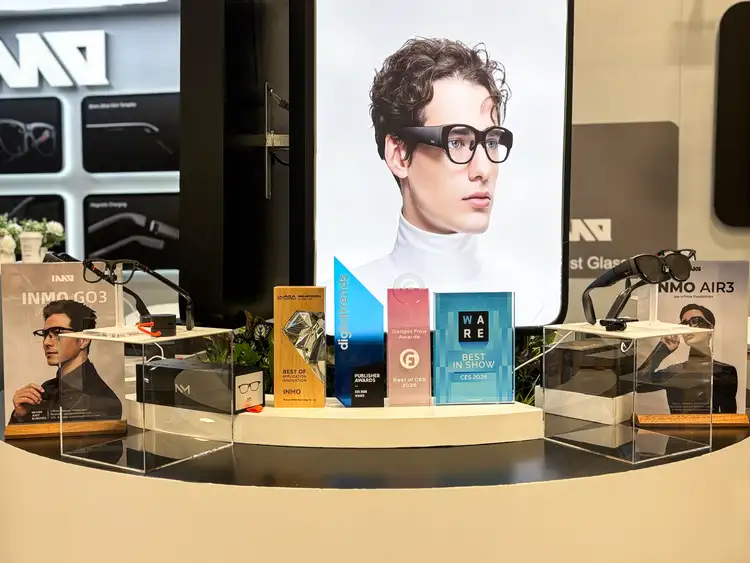
Core Insights - The AR glasses sector is undergoing an unprecedented capital arms race, with companies like影目INMO emerging as key players through significant funding rounds [1][25] -影目INMO has completed three rounds of financing within a year, raising nearly 500 million, signaling strong investor confidence in its potential as a leading player in the market [1][25] Investment Landscape - The C1 round of financing for影目INMO is notable for the diverse composition of its investors, including local government funds, regional strategic investors, and market-oriented VCs, indicating a rare consensus in the hard tech investment space [2][27] - 成都科创投 has positioned影目INMO as a "chain leader" in the AI and metaverse industries in Sichuan, which will provide not only financial support but also integration into regional industrial planning [4][27] -普丰资本's investment reflects a focus on companies with sustained dedication to their sector, highlighting影目INMO's long-term commitment to AR technology [4][27] Technological Differentiation -影目INMO is recognized as a "category creator" in the AR glasses market, having defined product forms and technical standards over the years, including the launch of the first wireless all-in-one AR glasses in China [8][29] - The company has introduced innovative products like INMO AIR and INMO GO, which have set industry benchmarks and are expected to lead the market with upcoming models [8][29][30] - The collaboration with智谱 has transformed影目INMO's AR glasses into AI Agent carriers, enhancing user interaction and functionality beyond traditional display capabilities [11][34] Market Positioning -影目INMO's strategy includes establishing a smart ecosystem independent of smartphones, with predictions that its products may partially or fully replace mobile devices [14][35] - The company has achieved significant market recognition, topping the京东智能眼镜金榜 and receiving multiple awards at CES 2026, which underscores its competitive edge in both domestic and international markets [15][39] - Influential endorsements from celebrities and strategic advertising campaigns have helped影目INMO transition from a niche tech product to a mainstream productivity tool [17][40] Distribution and Channel Strategy - The company is forming partnerships with major eyewear brands to create a comprehensive service network that integrates experience, purchase, and fitting, enhancing its market reach [24][44] - The focus on both online and offline channels indicates影目INMO's confidence in serving a broader consumer base, marking a strategic shift towards brand establishment in the physical retail space [20][40]

专访雷鸟创新CEO李宏伟:电信巨头押注下一代“手机”
Hua Er Jie Jian Wen· 2026-01-05 00:13
Core Insights - The article discusses the rapid growth and investment in the smart glasses sector, particularly in the context of AI and AR technologies, with a focus on the company Thunderbird Innovation [2][3][11] - It highlights the competitive landscape, emphasizing that while many players are entering the market, only a few will succeed in achieving sustainable sales and user retention [2][3][11] Investment and Market Dynamics - Thunderbird Innovation has secured a new round of financing, significantly oversubscribed, indicating strong investor interest in the smart glasses market [2][3][23] - The company holds a 24% global market share in AR smart glasses as of Q3 2025, maintaining its position as the market leader for two consecutive quarters [3][17] - The investment from major Chinese telecom operators marks a strategic shift, as they view smart glasses as the "next generation of mobile phones" [3][19] Product Development and Strategy - Thunderbird plans to showcase its first eSIM AR glasses at CES 2026, which will feature dual full-color displays and an integrated eSIM module [4][19] - The company aims to develop "killer applications" for its smart glasses, focusing on enhancing user experience and functionality through AI integration [10][30][36] - The CEO believes that 2026 will be the true breakthrough year for smart glasses, with products finally meeting user experience standards [6][12] Competitive Landscape and Future Outlook - The smart glasses industry is expected to evolve through three phases, with the first phase focusing on identifying who can create the next "iPhone" of smart glasses [15][17] - The article suggests that the current excitement in the industry does not equate to maturity, as many products still lack the necessary user experience [6][14] - Thunderbird's strategy includes a strong emphasis on global expansion, with expectations that overseas revenue will exceed 50% by 2026 [3][26] Technological Advancements - The company is investing heavily in R&D to enhance optical display technology, AI capabilities, and overall product performance [7][30][22] - Future products will focus on achieving low power consumption and high performance to ensure all-day wearability [30][32] - The integration of AI into smart glasses is seen as a critical area for development, with the goal of creating transformative applications that leverage AI's capabilities [31][36]