
中药配方颗粒

Search documents
神威药业发布年度业绩 净利润9.5亿元 同比上升13.1% 集采中标八大产品夯实市场基础
Zhi Tong Cai Jing· 2026-03-28 13:23
Group 1 - The company has successfully won bids for eight major products in the national traditional Chinese medicine procurement alliance, covering treatment areas such as cardiovascular diseases, respiratory diseases, and digestive system diseases, which are commonly used in clinical applications and included in medical insurance and essential drug lists [2] - The successful bidding aligns the products with DRG/DIP payment requirements, providing better medication options for more patients and enhancing future market demand, market coverage, and sales potential for the company's products [2] - The traditional Chinese medicine granule industry is entering a period of deep adjustment characterized by declining sales, with the company's sales revenue for traditional Chinese medicine granules decreasing by 14.4% due to multiple policy impacts [2] Group 2 - For the fiscal year ending December 31, 2025, the company reported a revenue of RMB 3.135 billion, a decrease of 17.0% compared to the previous year, with a gross margin of 72.3%, down from 75.0% last year [3] - The annual profit increased by 13.1% to RMB 950 million, with earnings per share at RMB 1.26, and the company declared an interim dividend of RMB 0.43 per share for 2026 [3]
神威药业发布年度业绩 净利润9.5亿元同比上升13.1%
Xin Lang Cai Jing· 2026-03-27 05:05
Group 1: Company Performance - The company reported a total revenue of RMB 3.135 billion for the fiscal year ending December 31, 2025, representing a 17.0% decrease compared to the previous year [1][4] - The gross profit margin decreased to 72.3% from 75.0% in the previous year [1][4] - The annual profit increased by 13.1% to RMB 950 million, with earnings per share at RMB 1.26 [1][4] - The company declared an interim dividend of RMB 0.43 per share for 2026 [1][4] Group 2: Product and Market Developments - In 2025, the company successfully won bids for eight key products in the national Chinese medicine procurement alliance, covering treatment areas such as cardiovascular, respiratory, and digestive diseases [1][4] - The successful bids align with DRG/DIP payment requirements, enhancing the availability of quality medications at competitive prices for patients, which is expected to boost future market demand and sales [1][4] Group 3: Industry Trends - The traditional Chinese medicine granule industry has entered a period of deep adjustment, characterized by declining sales due to the implementation of national standards, normalization of provincial procurement, and ongoing healthcare cost control [2][5] - The company's sales revenue from traditional Chinese medicine granules decreased by 14.4% during the year [2][5] - The sales team is focused on expanding into target provinces, controlling costs, and enhancing regional and product competitiveness, with expectations of regaining growth as the industry stabilizes [2][5]

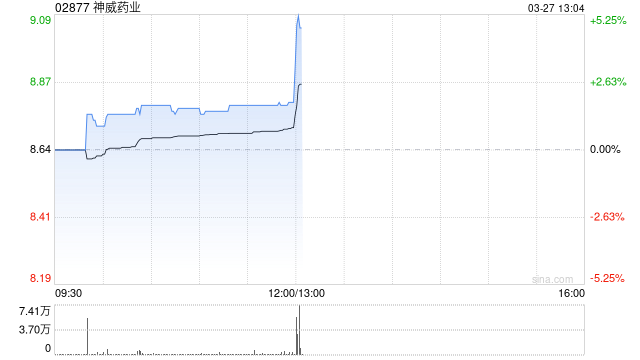
神威药业(02877)发布年度业绩 净利润9.5亿元 同比上升13.1% 集采中标八大产品夯实市场基础
Zhi Tong Cai Jing· 2026-03-27 04:31
Group 1 - The core viewpoint of the articles highlights the financial performance of Shenwei Pharmaceutical (02877), reporting a net profit of RMB 950 million, which represents a year-on-year increase of 13.1% despite a decline in revenue [1] - The company's total revenue for the fiscal year ending December 31, 2025, was RMB 3.135 billion, a decrease of 17.0% compared to the previous year, with a gross margin of 72.3%, down from 75.0% last year [1] - The company declared an interim dividend of RMB 0.43 per share for 2026, with earnings per share reported at RMB 1.26 [1] Group 2 - The traditional Chinese medicine granule industry is experiencing a significant adjustment period characterized by declining sales due to multiple policy impacts, including the implementation of national standards and the normalization of provincial centralized procurement [2] - The sales revenue of the company's traditional Chinese medicine granules decreased by 14.4% during the year, reflecting the overall industry trend [2] - The company is actively working to expand its sales team, control costs, and enhance regional and product competitiveness, with expectations of regaining growth as the industry landscape stabilizes [2]
中国中药20260324
2026-03-26 13:20
Summary of the Conference Call for China Traditional Chinese Medicine (CTCM) Company Overview - **Company**: China Traditional Chinese Medicine (CTCM) - **Fiscal Year**: 2025 - **Key Financials**: - Net loss attributable to shareholders: CNY 342 million - Net profit margin: -3.1% - Revenue: CNY 14.745 billion (down 10.7% YoY) - Total assets: CNY 32.347 billion (down 7.7% YoY) - Total liabilities: CNY 9.32 billion (down 16.3% YoY) [2][3][10] Industry Insights - **Market Dynamics**: - The Chinese herbal medicine industry is facing increased competition and pressure from centralized procurement policies. - The market for traditional Chinese medicine (TCM) is undergoing significant changes, with a focus on quality and integration across the supply chain [15][21]. Key Business Segments Performance 1. **Chinese Herbal Medicine Granules**: - Revenue: CNY 6.098 billion (down 12.5% YoY) - Gross margin: 53.8% (down 3.1 percentage points) - Impacted by increased competition and a higher proportion of centralized procurement [2][8]. 2. **Chinese Herbal Pieces**: - Revenue: CNY 3.334 billion (up 0.6% YoY) - Gross margin: 25.1% (up 1.9 percentage points) - Growth attributed to optimized sales structure and reduced procurement costs [2][8]. 3. **Traditional Chinese Medicine (TCM)**: - Revenue: CNY 4.248 billion (down 6.7% YoY) - Gross margin: 66.7% (up 3.1 percentage points) - Growth in prescription drugs and the launch of an e-commerce strategy for OTC products [2][9]. 4. **Health and Wellness Sector**: - Revenue: CNY 235 million (down 17.2% YoY) - Gross margin: 31.9% (up 7.5 percentage points) - Decline due to strategic withdrawal from low-efficiency product lines [9]. Strategic Initiatives - **2026 Strategy**: Focus on "stability, integration, and efficiency" to manage costs and enhance supply chain management [11][12]. - **Supply Chain Management**: Emphasis on strategic reserves of bulk medicinal materials and graded processing to control costs [13]. - **Digital Transformation**: Development of a data platform for full-chain management of TCM production, aiming for enhanced traceability and quality control [14][19]. Research and Development - **Innovation**: - 207 patents granted in 2025, including 126 invention patents. - Participation in drafting 57% of the national standards for herbal granules [6][7]. - **Clinical Research**: Focus on evidence-based medicine to enhance product lifecycle and efficacy [16][17]. Financial Health - **Debt Management**: Debt ratio reduced to 11.8% (down 6.7 percentage points) with cash reserves of CNY 4.045 billion [10]. - **Accounts Receivable**: Increased by 4.6% due to tight healthcare funding, with 50.4% of receivables aged under 90 days [10]. Future Outlook - **Market Conditions**: Anticipated continued pressure on the herbal granules segment due to ongoing centralized procurement policies [21]. - **Growth Expectations**: The company aims for stable revenue and profit in 2026, with a focus on transforming the herbal granules business and strengthening core segments [18][21]. Conclusion CTCM is navigating a challenging environment marked by regulatory changes and competitive pressures. The company is strategically positioned to leverage its R&D capabilities and supply chain management to enhance its market position while focusing on digital transformation and quality improvement initiatives.
政策东风下的“隐形一环”:颗粒物性测量如何筑牢中药配方颗粒质量根基?
仪器信息网· 2026-03-20 09:02
Core Viewpoint - The article highlights the transition of the traditional Chinese medicine (TCM) granule industry into a new phase of standardization and quality control, driven by recent regulatory developments and the recognition of physical properties of granules as critical factors affecting product quality [1][2]. Group 1: Policy Enhancements - The release of multiple provincial standards for TCM granules in 2026 marks a significant shift towards comprehensive quality control in the industry, moving from pilot programs to standardized practices [2][5]. - The 2026 regulations emphasize the importance of integrating modern technology into production processes, encouraging automation, digitalization, and real-time monitoring to enhance quality control [4][5]. - The focus of quality control is shifting from post-production testing to process control, expanding from single-component metrics to multidimensional quality attributes [5][6]. Group 2: Physical Properties and Quality - Research indicates that the physical properties of granules, such as particle size distribution and moisture absorption, are closely linked to the final product's solubility and consistency [6][7]. - A study on 60 types of TCM granules identified key material properties affecting solubility, including rest angle, moisture content, and specific surface area, which can be monitored to predict and mitigate quality issues [7]. - The development of physical fingerprinting as a quality control tool is emerging, allowing for the assessment of granule quality consistency based on physical attributes [8]. Group 3: Application of Measurement Instruments - Particle size control during the raw material grinding phase is crucial for extraction efficiency, with laser particle size analyzers being utilized to ensure uniformity [10]. - Online monitoring technologies, such as hyperspectral imaging, are being integrated into granulation processes to provide real-time feedback on particle size distribution and other critical parameters [11][12]. - Regular testing of key material properties, such as rest angle and particle size distribution, is becoming a standard practice in quality control within production processes [13]. Group 4: Market Dynamics - The end of the pilot program in 2021 has led to a rapid increase in the number of companies qualified to produce TCM granules, driving demand for quality control equipment and technologies [15]. - While chemical analysis instruments remain dominant in the quality control market, particle measurement technologies are carving out niche applications [15][17]. - Recent regulations allow for third-party testing services and shared use of expensive equipment within corporate groups, creating opportunities for collaborative quality management solutions [15].

中药生产监管新规正式施行
21世纪经济报道· 2026-03-05 13:42
Core Viewpoint - The implementation of the "Special Regulations on the Supervision and Management of Traditional Chinese Medicine Production" marks a significant upgrade in industry regulation, focusing on quality compliance and high-quality development in the traditional Chinese medicine sector [4][6]. Regulatory Changes - The new regulations establish legal requirements for the production of traditional Chinese medicine (TCM) products, including decoction pieces, formula granules, and injection preparations, addressing long-standing compliance gaps [9][10]. - The regulations specifically prohibit practices such as outsourcing, re-labeling, and production beyond approved scopes, which have contributed to quality issues in TCM products [10][11]. Industry Impact - The regulations are expected to accelerate industry restructuring, with a clear differentiation among segments like decoction pieces, formula granules, and injection preparations, where compliance and cost management will become core challenges for companies [7][14]. - Companies that achieve full compliance and upgrade their operations will likely dominate the market, while those lacking production capabilities and quality control will be eliminated [14][15]. Compliance Requirements - The regulations impose stricter production thresholds for formula granules, requiring companies to self-manufacture and maintain complete production capabilities, including quality traceability and risk management [11][12]. - For injection preparations, the regulations clarify the responsibilities of the marketing authorization holder (MAH) and set stringent requirements for production processes and quality control [12]. Innovation and Transformation - The regulations encourage companies to adopt modern technologies for quality management and production processes, promoting automation and digitalization in the TCM industry [14][15]. - The shift towards innovation-driven growth is expected to enhance industry concentration and extend the value chain of TCM, with 2026 anticipated to be a pivotal year for digital transformation [15].

十年首亏!净利骤降2000%,中药“大哥”罕见失血
Xin Lang Cai Jing· 2026-02-25 14:52
Core Viewpoint - The leading company in traditional Chinese medicine, China Traditional Chinese Medicine (CTCM), has issued a rare profit warning, predicting a loss of between 350 million to 500 million yuan for the fiscal year 2025, marking its first loss in a decade and a significant decline in profitability [1][13]. Group 1: Financial Performance - CTCM's net profit is expected to plummet by 1785% to 2507% year-on-year, with a 45% to 55% decline in profit even after excluding goodwill impairment [1][13]. - The company has experienced a compound annual growth rate (CAGR) of 22.95% in revenue from 2017 to 2021, benefiting from policy incentives for Chinese medicine formula granules [1][13]. Group 2: Business Segment Analysis - The Chinese medicine formula granules segment, which constitutes nearly half of CTCM's total revenue, has seen a revenue drop of 23.5% to approximately 6.97 billion yuan in 2024, and a further decline of 14.1% to about 2.99 billion yuan in the first half of 2025 [4][16]. - The decline in revenue is attributed to increased competition and the impact of centralized procurement, which has led to a significant reduction in income and profitability [4][16]. Group 3: Market Dynamics - The market for Chinese medicine formula granules peaked at 24 billion yuan in 2021 but has since stabilized between 16 billion to 17 billion yuan [5][17]. - A centralized procurement policy introduced in the second half of 2023 has resulted in an average price drop of 50.77% across 22 provinces, further pressuring the revenue and profit margins of CTCM [5][17]. Group 4: Broader Industry Impact - Other companies in the same sector, such as Hongri Pharmaceutical, are also facing significant declines, with a 95.76% drop in net profit in 2024 [6][18]. - CTCM's other business segments, including traditional Chinese medicine production and health products, have also reported varying degrees of revenue decline, with the largest drop of 40.9% in the traditional Chinese medicine production segment [6][18]. Group 5: Strategic Considerations - CTCM is focusing on transformation, emphasizing innovation in traditional Chinese medicine and secondary development of proprietary medicines, with plans to expand its reach to over 1,750 secondary medical institutions in 2025 [7][19]. - The company has undergone multiple mergers and acquisitions to strengthen its industrial base, but the ongoing performance challenges raise questions about its future strategic direction and potential privatization [8][20].
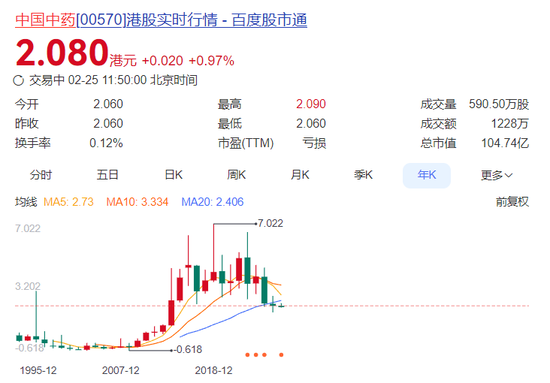
红日药业:关于公司补税详情请查阅指定网站披露的《关于补缴税款的公告》
Zheng Quan Ri Bao· 2026-02-25 11:07
Core Viewpoint - Hongri Pharmaceutical emphasizes its strategic investments in core businesses like traditional Chinese medicine formula granules to enhance competitive advantages and market share, ensuring stable profitability [2] Group 1: Tax Payment and Compliance - The company addressed investor inquiries regarding tax payment details, directing them to the official announcement on tax payment [2] - Hongri Pharmaceutical asserts that all external investments and internal fund operations comply with national laws and regulations, fulfilling necessary approval processes and disclosure obligations [2] Group 2: Strategic Investments - The investments in production capacity and supply chain for core businesses are based on national industry standard shifts and long-term market demand [2] - The strategic investments aim to solidify and enhance the company's competitive edge and market presence [2]

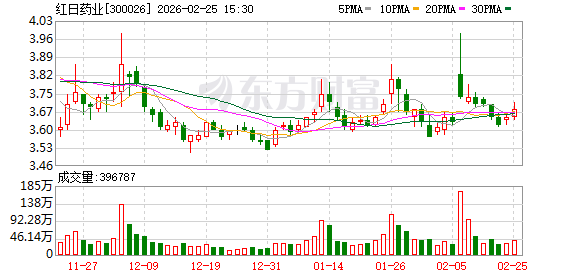
佐力药业2月24日获融资买入1847.99万元,融资余额5.92亿元
Xin Lang Zheng Quan· 2026-02-25 01:26
Group 1 - Zhaoli Pharmaceutical's stock increased by 1.75% on February 24, with a trading volume of 160 million yuan. The financing buy amount was 18.48 million yuan, while the financing repayment was 21.25 million yuan, resulting in a net financing buy of -2.77 million yuan. The total financing and securities balance reached 595 million yuan [1] - The financing balance of Zhaoli Pharmaceutical was 592 million yuan, accounting for 5.00% of the circulating market value, which is above the 70th percentile level over the past year, indicating a high position [1] - On the same day, Zhaoli Pharmaceutical repaid 7,200 shares in securities lending and sold 23,600 shares, with a selling amount of 398,400 yuan. The securities lending balance was 287,740 yuan, exceeding the 90th percentile level over the past year, also indicating a high position [1] Group 2 - As of September 30, Zhaoli Pharmaceutical had 41,400 shareholders, an increase of 7.31% from the previous period. The average circulating shares per person decreased by 6.82% to 14,562 shares [2] - For the period from January to September 2025, Zhaoli Pharmaceutical achieved an operating income of 2.28 billion yuan, a year-on-year increase of 11.48%. The net profit attributable to the parent company was 510 million yuan, reflecting a year-on-year growth of 21.00% [2] - Zhaoli Pharmaceutical has distributed a total of 1.442 billion yuan in dividends since its A-share listing, with 942 million yuan distributed over the past three years [3]

中国中药(00570.HK):2月23日南向资金增持26.4万股
Sou Hu Cai Jing· 2026-02-23 19:18
Group 1 - Southbound funds increased their holdings in China Traditional Chinese Medicine (00570.HK) by 264,000 shares on February 23 [1] - Over the past five trading days, there were three days of net reductions in southbound fund holdings, totaling a net decrease of 15.602 million shares [1] - In the last 20 trading days, there were ten days of net increases in southbound fund holdings, with a total net increase of 19.712 million shares [1] - Currently, southbound funds hold 1.612 billion shares of China Traditional Chinese Medicine, accounting for 32.0% of the company's issued ordinary shares [1] Group 2 - China Traditional Chinese Medicine Holdings Limited primarily engages in the manufacturing and sales of traditional Chinese medicine [2] - The company operates through four divisions, focusing on the production and sales of traditional Chinese medicine formula granules, health products, and traditional Chinese medicine slices [2] - The Tianjiang division also provides healthcare solutions related to traditional Chinese medicine through offline medical institutions, including consultations and prescriptions [2] - The Tongjitang division is involved in the production and sales of traditional Chinese medicine formula granules, slices, and proprietary Chinese medicines, as well as various health products [2]
